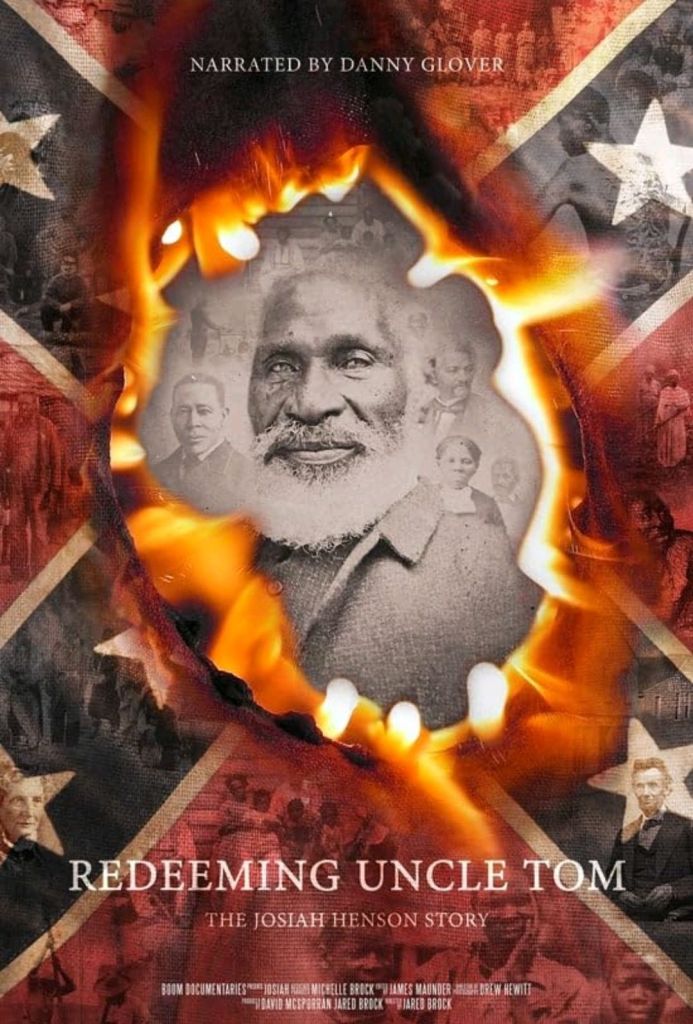
“Redeeming Uncle Tom: The Josiah Henson Story” is a vital documentary that reclaims the legacy of Josiah Henson, a man whose real-life journey was overshadowed by the fictional character he inspired in Harriet Beecher Stowe’s Uncle Tom’s Cabin. Directed by Jared Brock, the film aims to separate truth from fiction, offering a deeply researched and visually compelling account of Henson’s life.
With cinematography by David Dunlap and editing by Andrew Moir, the documentary skillfully weaves archival material, re-enactments, and expert commentary into a narrative that demands the audience reconsider one of the most misunderstood figures in American history. The film also benefits from the narration of Danny Glover, whose measured and authoritative voice adds an additional layer of authenticity and gravitas to the storytelling. While the film is engaging, it encounters a few pacing issues and lacks a fully critical examination of Henson’s legacy, aspects we will explore in this review.
Direction & Narrative Structure
Jared Brock’s direction is meticulous and historically driven. He presents Henson’s life with clarity and emotional weight, avoiding the sensationalism that often plagues historical documentaries. The narrative flows logically from Henson’s early years in slavery to his escape and leadership in Canada’s abolitionist movement. However, the pacing falters in the middle act, lingering on details that, while significant, slow the momentum of the story. A more dynamic structuring could have maintained a stronger narrative pull.
Grade: 3.8 / 4.0
Cinematography & Visual Composition
Cinematographer David Dunlap brings a cinematic depth to the film, utilizing a rich color palette and dynamic framing to elevate Henson’s journey. Re-enactments are seamlessly integrated, enhancing the historical authenticity. Archival footage and illustrations add depth without overwhelming the primary storytelling. However, some of the transitions between modern interviews and historical visuals feel slightly abrupt, detracting from the immersive experience.
Grade: 3.7 / 4.0
Narration by Danny Glover
Danny Glover’s narration is a significant asset to the film, bringing credibility and emotional depth to Henson’s story. While he does not dominate the documentary, his presence lends it an additional level of authenticity, particularly as an esteemed African American actor with a deep understanding of historical narratives. His measured cadence complements the documentary’s tone, reinforcing its educational and emotional impact.
Grade: 3.9 / 4.0
Interview Quality & Subject Depth
The documentary boasts an impressive roster of historians, literary scholars, and descendants of Josiah Henson. Their insights provide crucial context, though a broader range of voices—particularly those critiquing Stowe’s portrayal of Uncle Tom—could have added greater depth. The emotional weight of the interviews, especially from Henson’s descendants, adds a powerful personal layer to the film.
Grade: 3.9 / 4.0
Editing & Pacing
Editor Andrew Moir crafts a well-structured film, yet certain sections overstay their welcome. The early portions are tightly woven, but the latter half meanders, diminishing the overall impact. A more refined cut could have strengthened the documentary’s emotional and historical weight.
Grade: 3.5 / 4.0
Research Depth & Historical Accuracy
The documentary is thoroughly researched, drawing from Henson’s own writings, historical documents, and expert analysis. However, while it convincingly argues for Henson’s significance, it stops short of critically interrogating how his legacy has been used and misused over time.
Grade: 3.8 / 4.0
Sound Design & Score
The film’s score complements its themes, employing a mix of classical compositions and subtle percussive elements that evoke the tension and triumph of Henson’s journey. However, some sequences rely too heavily on music to underscore emotion rather than allowing the narrative to speak for itself.
Grade: 3.6 / 4.0
Cultural & Social Impact
“Redeeming Uncle Tom” is culturally significant, challenging audiences to rethink the narrative of one of the most enduring characters in American literature. It raises essential questions about historical memory, racial representation, and the power of storytelling. Its impact would be even greater if it had engaged more deeply with present-day implications of the Uncle Tom stereotype.
Grade: 3.9 / 4.0
Final Grade Calculation
Direction & Narrative Structure (20%) – 3.8
Cinematography & Visual Composition (15%) – 3.7
Narration by Danny Glover (10%) – 3.9
Interview Quality & Subject Depth (15%) – 3.9
Editing & Pacing (10%) – 3.5
Research Depth & Historical Accuracy (10%) – 3.8
Sound Design & Score (7.5%) – 3.6
Cultural & Social Impact (7.5%) – 3.9
Final Score: 3.78 / 4.0
Letter Grade: A- (Excellent)
Percentage: 94.5%
Final Thoughts
Redeeming Uncle Tom: The Josiah Henson Story is a compelling and necessary documentary, elevating the real-life figure behind one of literature’s most controversial characters.
Jared Brock’s direction, combined with David Dunlap’s cinematography, Andrew Moir’s editing, and Danny Glover’s narration, results in a visually rich and emotionally resonant narrative.
While the documentary has minor pacing and depth limitations, it stands as an essential contribution to historical discourse, offering a long-overdue reclamation of Josiah Henson’s legacy.
Additional Information
IMDb Page: https://www.imdb.com/title/tt10101666/
Featured Subjects: Josiah Henson, Harriet Beecher Stowe, historians, Henson’s descendants
Director: Jared Brock
Cinematographer: David Dunlap
Editor: Andrew Moir
Narrator: Danny Glover
Documentary Type: Biographical, Historical
This is more than a documentary—it’s a necessary revision of history.
 RMS INSIGHTS ✍🏾