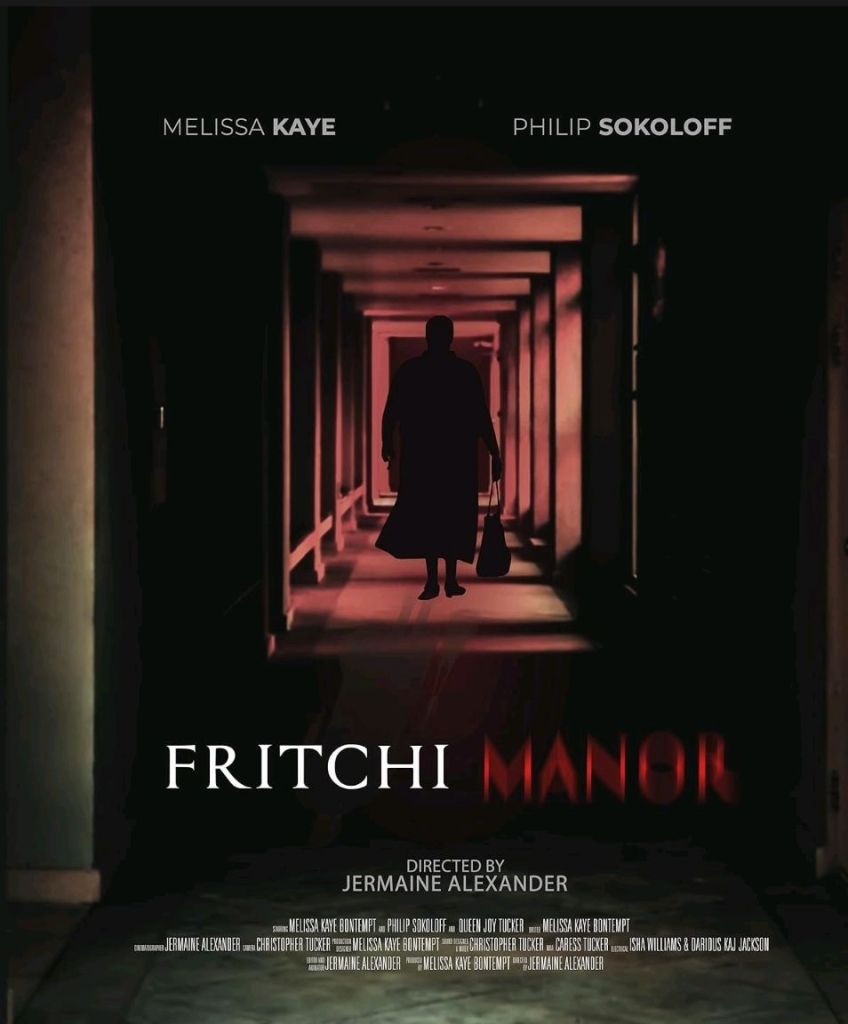
What makes a great short horror film? It is not the sheer volume of blood spilled, nor the frequency of jump scares. It is the ability to create dread, to unnerve through suggestion, and to leave something lingering long after the final frame fades.
Some of the finest horror shorts have mastered this art. David F. Sandberg’s Lights Out (2013) terrified audiences in just under three minutes by exploiting the primal fear of what lurks in the dark. Its simplicity—light on, nothing there; light off, something is—created an immediate, universal terror. Mama (2008), directed by Andrés Muschietti, built its horror around a relentless, otherworldly presence, using a single unbroken shot to escalate fear with every second. And The Smiling Man (2015) transformed a seemingly harmless grin into something deeply sinister, proving that horror often works best when it lingers at the edges of our understanding.
Fritchi Manor, the 11-minute debut film by Jermaine Alexander, embraces many of these fundamentals. While some elements could be refined, the film demonstrates a clear understanding of the mechanics of horror—offering eerie visuals, unsettling sound design, and a villain who lingers in the mind.
An Uneasy Introduction
The film begins not with terror on-screen but with horror spoken. A television broadcast recounts a gruesome incident involving senior citizens—either at this location or one disturbingly similar. The mundane nature of the setup—an elderly care home, a trusted caretaker—only heightens the unease. There is something unsettling about placing horror in the spaces meant to be safe.
Then comes the transition to Fritchi Manor itself, a grand but ominous brick home. Its walls, lined with photographs, hint at a history buried beneath the surface. Subtle details—pictures of a Black male, another of a white woman alongside a Black man—suggest layers to Caroline Fritchi’s past. Is this her origin? A clue to her lineage? The film never states it outright, but the inference lingers. This attention to detail adds richness to the world, rewarding those who pay close attention. These images, hanging quietly in the hallway, act as unspoken fragments of a backstory—suggesting a life shaped by two worlds, a history that remains just out of reach.
The Nightmare Unfolds
We are introduced to Gunderson (Philip Sokoloff), a resident of Fritchi Manor. The camera lingers on him as he sleeps, the grainy visuals and drifting smoke suggesting a dreamlike—or perhaps nightmarish—state. Time blurs. The year 1997 is displayed, though its significance remains elusive.
Then, Caroline Fritchi (Melissa Kaye Bontempt) makes her presence known. A force both physical and supernatural, she exerts her control over the manor and its residents. She taunts, she manipulates, and she punishes. With a flick of her hand, doors slam shut. When Gunderson attempts to flee, she blocks his path.
Panicked, he runs. But Caroline is never far behind. She tracks him down in the hallway, her steps slow, deliberate, inevitable. Before he can make it any further, she strikes—tasing him, the electricity crackling as he collapses to the ground. He is still conscious, twitching, but there is no escaping now. With a forceful grip, Caroline drags him back into the room, sealing his fate.
It is here, in this confined space, that her cruelty takes shape. Gunderson, regaining some sense of awareness, staggers to his feet. And that’s when Caroline makes her final move.
With eerie calm, she presents the knife, the dim light catching its sharp edge. It is a moment drawn out for maximum tension, the silence stretching as Gunderson processes what is about to happen. And then comes the line—casual, offhand, but filled with menace.
“There’s something addicting about human flesh. White meat is not really good for stew, but it makes a mean gumbo.”
It is a grotesque, unsettling line—one that adds a touch of dark humor to the terror. In this moment, Caroline Fritchi is not just a monster; she is a predator who enjoys the hunt.
Then, as if to solidify the nightmare, fire erupts around her, flickering with an unnatural glow as she moves in for the kill. While the animated fire effect is a familiar visual in horror, it does not lessen the impact of what follows. Caroline is not merely supernatural—she is something worse, something older, something that feeds on fear itself.
Cinematography & Sound: A Strength
Visually, Fritchi Manor demonstrates a strong command of perspective and composition. The use of shot-reverse shot establishes power dynamics, particularly between Gunderson and Caroline. Diagonal framing adds to the sense of unease, and double-perspective shots—capturing characters from both left and right—create an almost disorienting effect, as if the audience is caught in a loop of dread.
The film also makes smart use of sound design, helmed also by Jermaine Alexander. A pulsating undercurrent of noise keeps the tension taut, never allowing the audience to relax. Silence, when it comes, is weaponized—stretching just long enough to make the viewer uncomfortable before breaking with an unexpected sound.
Verdict: A Strong Debut with Room to Grow
Does Fritchi Manor have moments that could be refined? Yes. The fire animation, while effective, might have benefited from a more practical approach. The narrative leaves some details ambiguous, which may frustrate those looking for a clearer resolution. But these are small criticisms in the grand scheme of the film’s achievements.
Where Fritchi Manor excels is in atmosphere, sound, and an engaging antagonist. The film does not rely on conventional horror tropes but instead builds tension through careful visual storytelling. Caroline Fritchi, as played by Melissa Kaye Bontempt, has the potential to stand alongside horror’s most memorable villains—calm, controlled, and utterly terrifying.
For a first-time filmmaker, Jermaine Alexander shows promise. The film’s cinematography, editing, and ability to create unease speak to a director who understands horror’s foundations. With refinement, future projects could build upon this strong start. Fritchi Manor is not just a short horror film; it is the beginning of something far more terrifying to come.
R.M. Sydnor
 RMS INSIGHTS ✍🏾