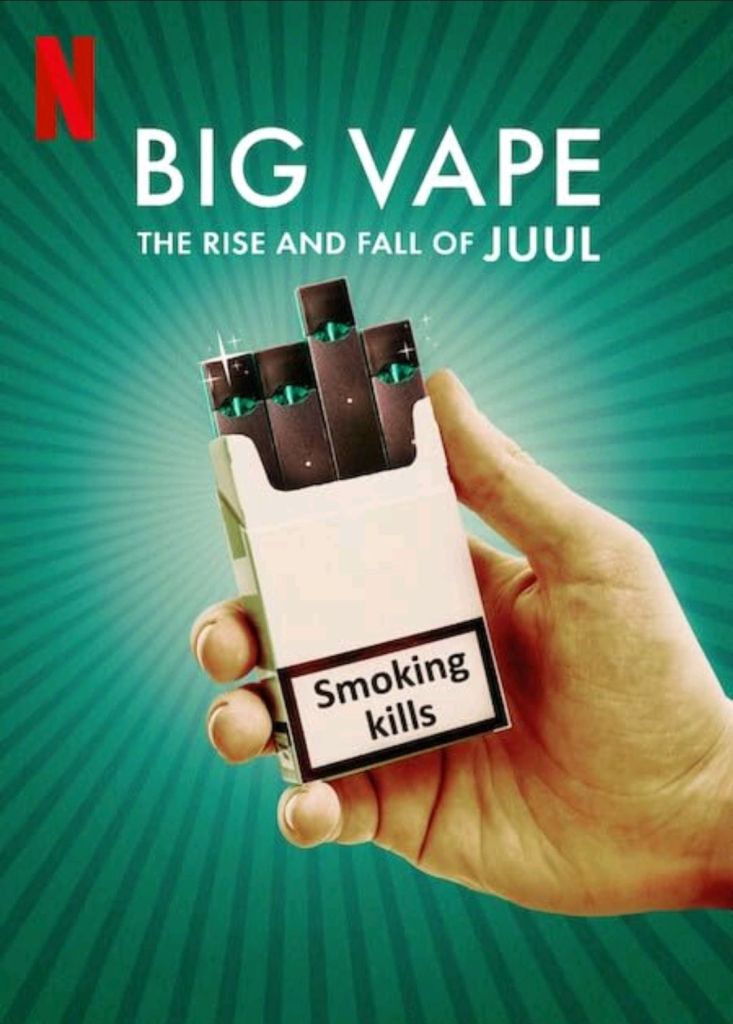
A Cautionary Tale in the Digital Age
Innovation is a fickle deity. It blesses some, curses others, and often betrays those who worship it most. Big Vape: The Rise and Fall of Juul, Netflix’s limited series, chronicles one of Silicon Valley’s most dramatic downfalls—a company that sought to end smoking but, instead, gave birth to a new epidemic.
Juul was more than a product; it was a promise. A sleeker, smarter, and safer alternative to cigarettes—until it wasn’t. Like Icarus soaring on waxen wings, Juul ascended on the thermals of disruption, only to plummet under the weight of its own ambition. The tragedy? They didn’t just take themselves down. They took millions of teenagers with them.
Context and Filmmaker Vision
Directed by R.J. Cutler, known for Billie Eilish: The World’s a Little Blurry, this four-part series is based on Jamie Ducharme’s 2021 book, Big Vape: The Incendiary Rise of Juul. Cutler’s storytelling blends investigative journalism with corporate exposé, painting Juul’s meteoric rise and catastrophic fall with both precision and flair.
Unlike traditional tobacco industry takedowns, Big Vape is not a battle between Big Business and Big Government. It is a modern morality tale, one where Silicon Valley’s “move fast and break things” ethos collides with public health policy. The documentary asks a pressing question: What happens when innovation outpaces regulation?
Technology Meets Temptation
Juul’s co-founders, Adam Bowen and James Monsees, weren’t peddlers of vice—at least, not at first. They were Stanford engineers, pitching a device that would liberate smokers from combustion. Their product was revolutionary: a USB-sized vaporizer that delivered nicotine salts, a potent and efficient alternative to traditional tobacco.
But progress often comes with unintended consequences. The very technology that made Juul a harm-reduction tool also made it dangerously addictive, especially for teenagers. Big Vape unveils this shift with chilling clarity, exposing how a sleek product, a viral marketing strategy, and regulatory blind spots combined to create a perfect storm.
A former industry insider puts it bluntly:
“Fuck it, ship it. That may work for an iPhone or a toaster, but not for chemicals going into the lungs.”
The line is as damning as it is unforgettable, a brutal indictment of Juul’s reckless expansion.
Visual and Narrative Approach
The cinematography oscillates between the slick, Apple-esque design of Juul’s marketing and the gritty reality of its unintended victims. The documentary’s editing moves at breakneck speed, mimicking the company’s own sprint from startup darling to public health villain.
Through archival footage, courtroom testimonies, and firsthand accounts from whistleblowers, Big Vape constructs a gripping narrative—one that feels less like a dry corporate investigation and more like a Shakespearean tragedy.
Juul was built to eliminate cigarettes, yet it recruited a new generation of smokers. The company positioned itself as the savior of adult smokers, yet it found itself testifying before Congress as a leading cause of youth addiction. The irony is inescapable: a company that claimed to be anti-tobacco became one of its greatest enablers.
Strengths: A Masterclass in Cautionary Storytelling
Nuanced Critique of Corporate Responsibility
The documentary does not simply demonize Juul—it interrogates the ethical dilemmas of innovation. It acknowledges that Juul filled a legitimate need for adult smokers while also exposing the catastrophic oversight that led to an explosion in teen vaping.
Compelling Media Analysis
The documentary astutely highlights how Juul’s viral marketing inadvertently turned the media into its greatest advertiser. As one commentator observes:
“It became the perfect news story: guaranteed to get views, guaranteed to get clicks. Everyone was talking about it—and inadvertently promoting it.”
Juul didn’t just sell a product—it sold a cultural phenomenon, one that spread faster than regulators could contain.
Emotional Weight & Personal Testimonies
The documentary isn’t just about a product; it’s about people. The inclusion of devastated parents, regretful executives, and conflicted regulators gives the story emotional depth beyond corporate scandal.
Weaknesses: A Limited View of Responsibility
❌ Regulatory Blind Spots
While the documentary effectively critiques Juul, it skims over the broader failures of the FDA and public health officials who failed to anticipate or contain the crisis.
❌ Simplification of Harm-Reduction Debate
While the documentary condemns Juul’s missteps, it does not fully explore the counterargument that Juul helped millions of adult smokers quit. A tobacco control expert offers a crucial but underdeveloped perspective:
“We can’t ignore the health interests of adults in the name of protecting children.”
❌ Slight Sensationalism
The rapid pacing and cinematic dramatization of Juul’s downfall occasionally feel more like a thriller than an investigative piece. While effective for engagement, it sometimes overshadows the more nuanced aspects of the story.
A Digital-Age Tobacco War
Big Vape sits in the same lineage as Inside Job and The Social Dilemma, both of which expose how unchecked ambition—whether in finance or tech—can create crises of global proportions.
However, while Inside Job presented a sweeping indictment of Wall Street’s corruption, Big Vape narrows its focus to a single company. The trade-off? A more intimate, character-driven narrative, but at the cost of a wider regulatory analysis.
Verdict
Ultimately, Big Vape is not just a documentary about Juul—it is a warning about what happens when technological disruption lacks ethical safeguards. The lesson is simple but devastating:
“Juul will always go down as the case study that when a company moves fast, it breaks things—and cannot recover.”
The film lingers long after the credits roll, leaving viewers with a sobering thought: in an era where tech companies shape public health, who is watching the disruptors?
Score: 8.8/10
✔️ Gripping storytelling, strong investigative work, and a cautionary message.
❌ Slightly sensationalized, with some gaps in regulatory analysis.
A must-watch for anyone interested in the intersection of technology, health, and corporate ethics.
IMDb Reference:
https://www.imdb.com/title/tt14081634/
 RMS INSIGHTS ✍🏾