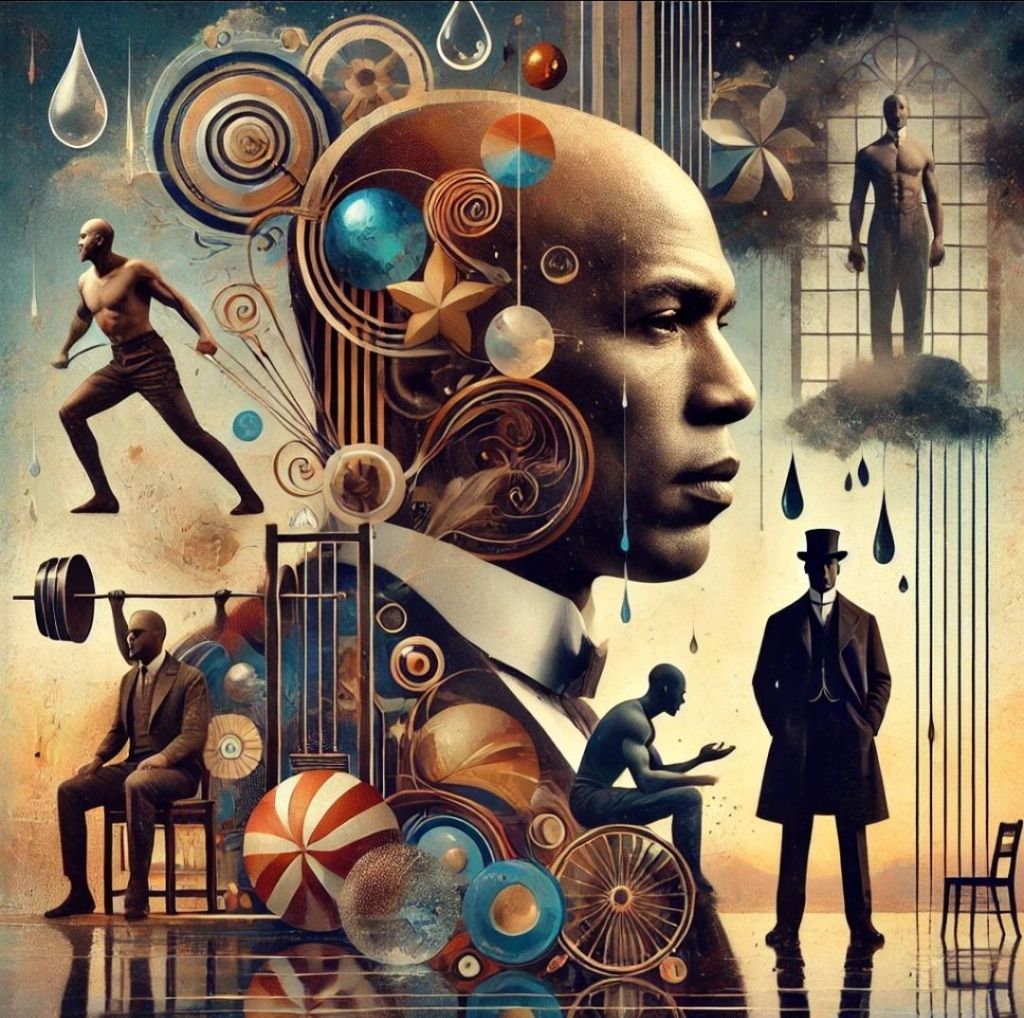
Title: The Quiet Storm
Medium: Digital Art
Reflecting Randy Sydnor’s application of his distinctive technique, Mnephonics, this digital work weaves visual symbolism with reflective storytelling to evoke memory, learning, and introspection.
Style of Art: Surrealism with Symbolic Elements
Dimensions: 1024 x 1024
Copyright: Randy Sydnor, The Mnephonist
Description:
The Quiet Storm meditates on the delicate tension between composure and chaos — a visual exploration of conflict resolution, inner resilience, and the quiet courage of restraint. Inspired by Michel de Montaigne’s assertion that “Valor is stability, not of legs and arms, but of courage and the soul,” the piece challenges traditional notions of strength, revealing that power is often forged in stillness rather than confrontation.
Medium and Technique — The Artist’s Craft
Crafted through digital art using Mnephonics, Randy Sydnor’s unique visual storytelling method, the piece employs textured layering and symbolic distortion to evoke a sense of suspended tension. Fragmented objects hover in disarray, frozen in mid-motion — a visual metaphor for the mind’s attempt to restore order amid disruption. The intentional use of negative space heightens the sensation that calm exists not in spite of disorder, but within it.
Central Figure — The Visual Heart of the Piece
At the center stands an African American man in his 50s, bald-headed and composed. His gaze is measured — not one of defiance, but of quiet resolve. His posture is firm yet relaxed, exuding the calm presence of someone who has chosen focus over reaction. He is not oblivious to the surrounding storm; rather, he is its counterbalance — a man unmoved by the chaos that swirls around him.
Suspended beside him hovers a sleek black 20-pound dumbbell — an object that transcends its function. Its flawless surface gleams like obsidian, suggesting strength tempered by control. This dumbbell’s poised, suspended state becomes an embodiment of discipline — power held back with intention.
Supporting Elements — Symbolic Imagery and Details
In the background, two shadowy figures linger. One, resembling Gatsby, stands composed and measured, his presence reinforcing the wisdom of steady resolve. The other, taller with a ponytail tied in a bun and clad in a Ronaldo jersey, is shown retreating — a visual representation of strength expressed through disengagement.
This dual presence invites the viewer to reflect on the nature of conflict: Does courage lie in facing a threat head-on or in walking away with dignity intact? The composition suggests both responses require strength — one visible, the other internal.
Rain droplets, frozen mid-fall, punctuate the air — each bead of water suspended as though time itself had halted to reflect. These droplets symbolize the fragile yet potent moments where clarity and calm interrupt impulsive reaction — a reminder that conflict can be stilled, not by force, but by presence.
Philosophical and Artistic Reflection — The Soul of the Piece
Above it all, a faint, ethereal trumpet emerges from the mist — a spectral tribute to Miles Davis. Known for his mastery over silence as much as sound, Davis’ presence underscores the value of restraint. Just as Davis wielded silence to give his notes greater power, the central figure’s stillness amplifies his strength.
Montaigne’s wisdom permeates the composition — reminding us that valor is not merely found in visible strength, but in the quiet mastery of self. True courage resides in resisting the instinct to react, in choosing stability over impulse.
Color and Composition — The Visual Language
The color palette — dominated by slate grays, muted blues, and faint gold — evokes the tension between turmoil and tranquility. Shadows ripple outward from the central figure, yet his face remains illuminated — a visual reminder that composure can radiate even in the presence of chaos. The interplay of darkness and light mirrors the delicate balance between control and release.
Closing Thought — Invitation to Reflect
The Quiet Storm stands as a testament to the power of restraint — an invitation to embrace stillness when chaos tempts us to react. In a world that mistakes noise for strength, this piece asks the viewer to consider:
When faced with conflict, will you choose reaction — or resolve?
© Randolph M. Sydnor
 RMS INSIGHTS ✍🏾