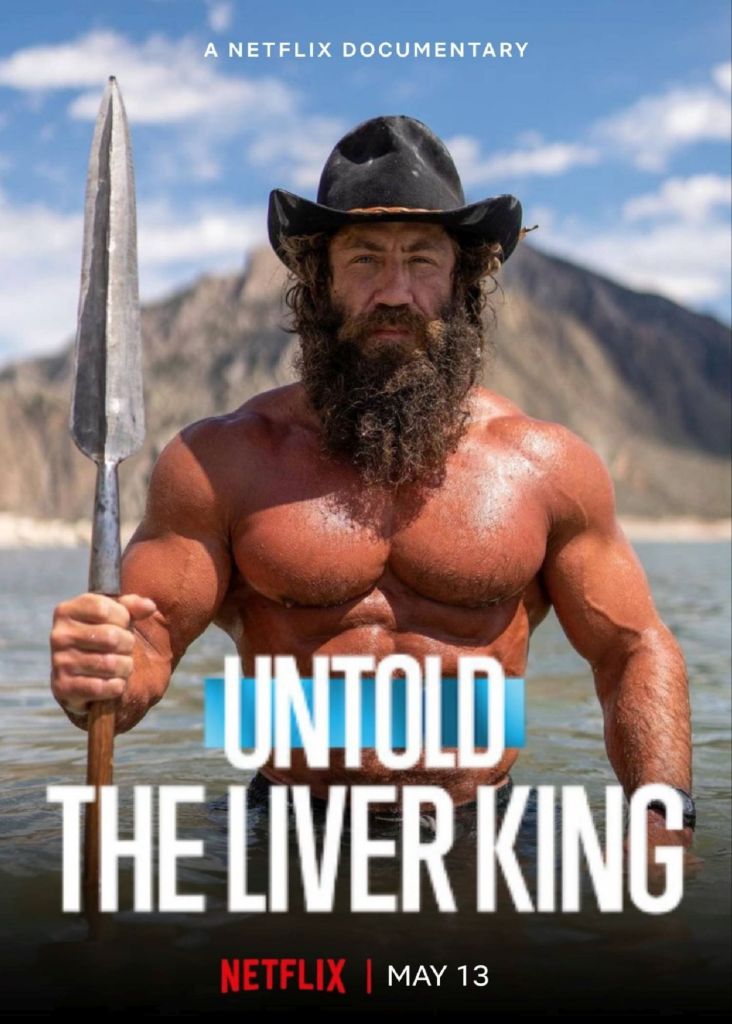
The Rise of a Carnivorous King
Brian Johnson didn’t enter the wellness arena—he charged in, half-naked and wholly committed. Known as the Liver King, he became a primal prophet of sorts, preaching a return to what he called “ancestral living.” His diet? Barbaric. His discipline? Unflinching. His presence? Viral.
He devoured bull testicles with the same ferocity he flung kettlebells, and through it all, he maintained one core message: modernity is poison. The antidote? A return to the wild. Yet, like many self-proclaimed messiahs, he was not what he appeared.
Ancestral Tenets: Selling Simplicity in a Complex World
Johnson didn’t just market meat—he marketed meaning. His philosophy, neatly packaged into Nine Ancestral Tenets, became the bedrock of his brand. These weren’t abstract values but a regimented ideology:
1. Sleep – Total blackout, no alarm clocks, and a rejection of artificial light.
2. Eat – Raw organs, bone marrow, raw milk. No vegetables. No compromise.
3. Move – Grueling functional workouts mimicking hunter-gatherer life.
4. Shield – Reject seed oils, endocrine disruptors, and EMFs.
5. Connect – Bare feet on soil. Grounding as gospel.
6. Cold – Ice baths and cryotherapy as modern rites of passage.
7. Sun – Maximize Vitamin D through shirtless, timed exposure.
8. Fight – Life is struggle; seek discomfort intentionally.
9. Bond – The nuclear family as the ultimate tribe.
Each tenet was a totem—elevated by algorithm, sold as salvation. They gave structure to chaos and ritual to recovery. But like many dogmas, they suffered from the same flaw: they excluded nuance.
The Steroid Scandal: Emails, Omnitrope, and the Fall of a King
While publicly denouncing performance-enhancing drugs, privately, Johnson was injecting them with zeal. Leaked emails revealed a pharmaceutical tab north of $11,000 a month—featuring testosterone cypionate, Deca-Durabolin, and notably, Omnitrope, a high-end synthetic HGH.
He had consulted with a hormone clinician. He knew the science. He was meticulous. These were not the desperate acts of a lost man but the calculated decisions of someone engineering a body that fit a story.
The emails were damning. “I need to build the best possible version of myself,” he wrote. But that version, it turns out, was more syringe than spleen.
His video confession, contrite in tone but corporate in structure, walked the line between accountability and damage control. But the deception ran deeper than needles. It cut to the core of what followers believed: that with enough liver and lunges, they too could transform.
The Lawsuit: When Branding Becomes Betrayal
Johnson’s revelation triggered not just backlash, but litigation. A $25 million class-action lawsuit alleged consumer fraud, false advertising, and negligent misrepresentation. Plaintiffs claimed they had spent significant sums on Liver King-branded supplements and regimens, under the belief that Johnson’s physique was the fruit of ancestral discipline—not chemical intervention.
The legal argument centered not just on truth-in-advertising laws but on emotional harm and intentional deception. The plaintiffs were not just seeking compensation; they were demanding accountability for a betrayal of trust. The courtroom became an altar where Johnson’s myth was weighed—and found wanting.
The Documentary: Visual Theater, But Missing Teeth
Netflix’s Untold: The Liver King is atmospheric and slick, but occasionally too reverent. It follows Johnson with a camera’s eye that’s more sympathetic than skeptical. It gives us gravel and kettlebells, moody Texas skies, and shirtless interviews lit like a GQ confession booth. The aesthetics are evocative. But where is the grit?
The visual language leans into Johnson’s charisma—close-ups of liver, sweat, and familial bonding. But what’s missing is a formal counterpoint. There’s little editorial interrogation, few critical voices, and no cross-examination of the public cost of his myth.
What the documentary excels at is capturing the theater of identity: the way Johnson physically transforms not just his body, but the world around him. From cold plunges to liver feasts, each act is shot like sacred ritual. But sacred to whom?
The Turn: Fruit, Vegetables, and the Softening of a Savage
In the final act, Johnson begins to soften—not just physically, but ideologically. He confesses to having malnourished himself in his meat-only crusade. He now eats fruit. Occasionally vegetables. He even admits he was wrong—something the Liver King would have once called weakness.
The transformation is striking. Gone is the growl. In its place, a kind of awkward humility. The man who once snarled at comfort now seeks balance. The rebrand is underway. Whether it’s penance or pivot, we don’t yet know.
Cultural Context: A Post-Truth Prophet
Johnson is a symptom of something deeper. We live in an age of engineered authenticity—where the appearance of grit is more bankable than the substance of virtue. Johnson offered a narrative that was simple, aggressive, and masculine—a recipe for virality in a culture craving clarity.
His story was never really about health. It was about belonging. In a world of soy lattes and cubicles, he promised a tribe, a fight, a furnace to forge yourself anew. But like all cults of personality, it asked for faith over fact.
He is not the first influencer to manufacture myth. But his myth was so total, so fleshy, so primeval—it dared us to look away. And many couldn’t.
Metaphor and Meaning: A Stoic Lens on Self-Delusion
Marcus Aurelius wrote, “The nearer a man comes to a calm mind, the closer he is to strength.” Johnson reversed this. He confused noise for power, ritual for resilience, and spectacle for virtue.
His kingdom was built not on rock but on sinew and spectacle. And like all empires of muscle, it collapsed—not under external attack, but internal rot.
Nietzsche warned: “He who fights with monsters must take care lest he thereby become a monster.” The Liver King fought weakness with such aggression that he became the very thing he feared: a mask, a performance, a synthetic vision of strength.
Verdict: The Muscle, the Myth, the Mirror
Untold: The Liver King is not just a documentary. It is a cultural x-ray. It peers into our modern marrow and finds a hunger—not for liver, but for meaning. Johnson’s fall is not just his own. It’s ours. We crave shortcuts, we sanctify confidence, and we confuse visibility for truth.
This film, though beautifully composed, misses a chance to challenge harder. But in its silences, it allows room for reflection—and that may be its quiet strength.
Rating: 9.4/10
A rich, revealing portrait of the man, the myth, and the marketplace that made him. With a few more sharp edges, it could’ve cut even deeper. Still, it flexes where it counts.

 RMS INSIGHTS ✍🏾