Zero Day: De Niro’s Political Cyber-Thriller Mirrors a Nation in Crisis

Netflix’s Zero Day is more than just a cyber-thriller—it’s a reflection of a political landscape fraying at the seams. Starring Robert De Niro in his first leading television role, the series tells the story of a former U.S. president pulled back into the chaos of governance after a crippling cyberattack sends the country into turmoil. But beyond its espionage and national security intrigue, Zero Day plays with shadows of real-world events, particularly the Biden administration’s struggles with cognitive decline and the racial and political complexities surrounding his vice president.

With a stellar cast—including Angela Bassett, Lizzy Caplan, Jesse Plemons, Joan Allen, and Connie Britton—and direction from Lesli Linka Glatter, the series is both an intimate character study and a high-stakes examination of power, media, and digital warfare. It asks uncomfortable but urgent questions: What happens when a nation’s leader can no longer lead? Who truly controls public perception in an age of misinformation? And can security ever justify authoritarian overreach?


Contextualization: A Reflection of Modern Politics

It is impossible to watch Zero Day without drawing clear parallels to the political landscape of the past decade. The show’s central figure, former President George Mullen (De Niro), is an aging, mentally deteriorating leader, a direct nod to Joe Biden’s widely speculated cognitive decline. Though Mullen is no longer in office, his struggles with memory, coherence, and decision-making create an eerie resemblance to what the public has witnessed with Biden, whose missteps have sparked debates over fitness for office.

Then there’s President Evelyn Mitchell (Angela Bassett), an African American vice president who ascends to power—a fascinating reversal of Kamala Harris’s trajectory, where her lack of public support and political momentum has led to speculation that she will never reach the Oval Office. Zero Day presents an alternate reality, one where a Black female vice president not only wins but must face a crisis that could define or destroy her presidency.

Beyond its political mirrors, the show taps into America’s growing fears over cyberattacks and information warfare, concerns that have been exacerbated by Russian interference, Chinese cyber espionage, and the increasing fragility of digital infrastructure. Zero Day positions these issues front and center, crafting a believable, terrifying scenario where the nation’s very survival hinges on digital resilience.


Storyline & Themes: Leadership, Perception, and the Fight for Truth

The plot is set into motion by a massive cyberattack that cripples the U.S. power grid, leading to chaos, economic collapse, and an unprecedented national security emergency. With President Mitchell under siege from political opponents and intelligence agencies scrambling for answers, she calls upon the one man who might be able to navigate the crisis: her predecessor, George Mullen.

What follows is a tense, methodical unraveling of power, deception, and personal redemption. As Mullen attempts to piece together who is behind the attack, he must also battle his own mental deterioration and a political machine eager to either use him or erase him altogether.


The Core Themes

Cybersecurity as the New Battlefield – The idea that wars are no longer fought with weapons but with information and infrastructure is at the heart of Zero Day. The show meticulously dissects how a well-coordinated digital strike can bring an entire nation to its knees.

Power in Decline – Mullen’s inability to trust his own mind mirrors the fears surrounding aging world leaders. Can a man who was once the most powerful in the world still make critical decisions? The series forces the audience to grapple with what happens when a leader loses control—not just of a country, but of himself.

Media, Misinformation, and the Fragility of Public Perception – The show pulls no punches when tackling the role of media as both an informant and a manipulator. In a world where the truth is up for sale, Zero Day paints a chilling picture of how reality itself is curated by those who control the narrative.

The Intersection of Race and Politics – President Mitchell’s journey is a complex look at the burdens placed on a Black woman in power. While Harris struggles to gain traction in real life, Mitchell must navigate a system that still questions her legitimacy, her authority, and her ability to lead under pressure.


Strengths & Weaknesses

Strengths

Robert De Niro’s Career-Defining Performance

DeNiro fully inhabits the role of George Mullen, delivering a performance that is equal parts commanding, tragic, and unnervingly relevant. His portrayal of a man battling both external enemies and internal decline is one of his most powerful in recent years.


Angela Bassett’s Presidential Gravitas

Bassett exudes authority and nuance as President Mitchell. Her scenes with De Niro are charged with political tension, mutual respect, and underlying power struggles.


Masterful Direction and Cinematography

Lesli Linka Glatter crafts a claustrophobic, tension-filled world, where power shifts not through battles, but through whispered conversations and strategic betrayals. The cinematography reinforces this with tight, shadowy framing that mirrors Mullen’s deteriorating mental state.

Hyper-Realistic Political and Cybersecurity Elements

Unlike many political thrillers that gloss over hacking and intelligence work, Zero Day takes a measured, research-backed approach, making its depictions of cyberwarfare and government operations chillingly realistic.


Weaknesses

Underdeveloped Supporting Characters

Lizzy Caplan and Jesse Plemons deliver strong performances, but their characters feel underwritten, particularly Caplan’s Alexandra Mullen, who could have been given more narrative agency.

Occasional Pacing Issues

While the show starts and ends with gripping urgency, the middle episodes occasionally meander, getting bogged down in bureaucratic maneuvering rather than propulsive storytelling.


Expository Dialogue at Times

Some moments spell out themes too explicitly, rather than letting the story and performances carry the weight of the message.


Verdict

Overall Impression: Zero Day is an urgent, politically charged thriller that holds a mirror to America’s vulnerabilities, both in cyberspace and in leadership. While not without flaws, it is a gripping, well-acted, and eerily relevant exploration of power in a digital age.

Final Score: 3.6 out of 4.0
Letter Grade: A-
Percentage: 91%

Legacy Factor: De Niro’s performance cements this as a must-watch series, one that will undoubtedly be referenced in political and cinematic discussions for years to come.


Final Thoughts: Why Zero Day Matters

This is more than a thriller. It’s a commentary on the precariousness of power, the manipulation of truth, and the terrifyingly real vulnerabilities of modern governance. Zero Day doesn’t just entertain—it unsettles, provokes, and forces us to question the world we think we know.

You will journey to the farthest reaches of knowledge, ascend the peaks of ambition, and descend into the abyss of doubt—only to return,..

You will journey to the farthest reaches of knowledge, ascend the peaks of ambition, and descend into the abyss of doubt—only to return, full circle, to the doorstep of your own soul. Yet this time, the familiar will be unmasked revealing what was always present but never truly seen.

The final destination is not an uncharted land but the rediscovery of home with eyes unclouded by illusion.

                          .
                                R.M. Sydnor
                (Inspired by T.S. Eliot)


Summons to Purpose

There comes a moment—you step into a place you’ve known your entire life, yet something is different. The light bends in a way it’s never did before, the air carries a note of something unspoken, and the walls, unchanged, whisper secrets you somehow failed to hear.

Nothing has moved. But you have changed.

This is the paradox of discovery: what you seek is not out there, but in how you see.

You were taught that wisdom is found in distance—in moving beyond yourself, in seeking new ground, in escaping the past. You searched, you wandered, you climbed, you descended—certain that truth was waiting beyond some final horizon. And yet, every path, every conquest, every revelation led you back to where you started.

But this time, you understand.

The landscape did not transform—you did. What was once ordinary now gleams with significance. What once seemed dull now hums with meaning. The question is not whether you will return. The question is:

Will you recognize it?

Or will you keep searching, mistaking motion for progress, mistaking distance for wisdom, mistaking the unfamiliar for truth?

Know this—if you look upon your world and see nothing new, then you have not yet begun to see.

When your purpose is clear, no hardship can unmoor you.

When your purpose is clear, no hardship can unmoor you. The weight of suffering bends those who wander without meaning, but for the one who understands the why of their existence, every how—no matter how bitter, uncertain, or cruel—becomes endurable. Purpose is not merely a reason to live; it is the anchor that steadies you when the tempests of life rage. Without it, you are adrift. With it, you are indomitable.

                                         RM Sydnor

     (Inspired by Friedrich Nietzsche)


The Weight of Purpose

Suffering, by itself, is a brute force—indiscriminate, unfeeling, and at times, seemingly unjust. It makes no distinction between the righteous and the wayward, the wise and the foolish. But suffering without purpose? That is a crushing void. When hardship arrives, as it always does, the difference between resilience and ruin is not found in circumstances but in meaning.

You may have endured moments where despair felt suffocating, where every effort seemed swallowed by an indifferent universe. What carried you forward in those moments? If you had something—someone—a purpose that tethered you to life, you found the strength to bear the unbearable. But if you lacked that anchor, if your existence was unmoored from meaning, then every burden became a weight too great to carry.

It is not suffering itself that breaks a person. It is suffering without a why.


Adrift or Anchored?

Consider the great figures of history—those who endured exile, imprisonment, betrayal, and pain—yet emerged unbroken. They were not spared suffering. What made them indomitable was their unshakable commitment to something greater than themselves.

Socrates, condemned to death, did not plead for his life because he saw his purpose as truth itself, something far weightier than mere survival. Viktor Frankl, who survived the horrors of Auschwitz, wrote that those who held onto a reason to live—love, faith, the dream of rebuilding—could endure suffering that would otherwise be unbearable. Even in literature, Odysseus, after years of torment and wandering, persevered not for glory, but for the home and family that defined his purpose.

Yet, we must acknowledge—can one endure suffering without a grand why? Some do. Some live moment by moment, improvising meaning as they go, surviving through sheer force of will rather than conviction. Not all purpose is cosmic. Some find meaning in the simplest of acts—caring for a child, creating something beautiful, helping a stranger. Even without grand declarations, the smallest spark of meaning is still enough to light the darkness.

And now the question falls to you: Are you adrift, or are you anchored?

If you find yourself faltering, exhausted by the weight of life’s burdens, do not mistake fatigue for finality. You are not powerless. But power does not come from wishful thinking—it comes from knowing what you are living for. If you cannot answer that question, then it is not hardship that threatens you most; it is meaninglessness.


Summons to Purpose

This is not a gentle reflection—it is a challenge. It is not merely an idea to admire but a command to wrestle with.

If you are lost, what will you hold onto? If you are suffering, what makes the suffering worth it? If you have not yet found your why, then let this be your summons: Seek it. Forge it. Commit to it. Do not let yourself drift in the tide of the purposeless.

You do not need to have all the answers today. You only need to take a step. Even the smallest purpose—caring for another, creating, seeking truth—can steady you. The journey toward meaning is not about arriving at perfection; it is about refusing to surrender to the void.

The storms of life will come. The only question is whether you will stand anchored in meaning—or be swept away.

The choice is yours.

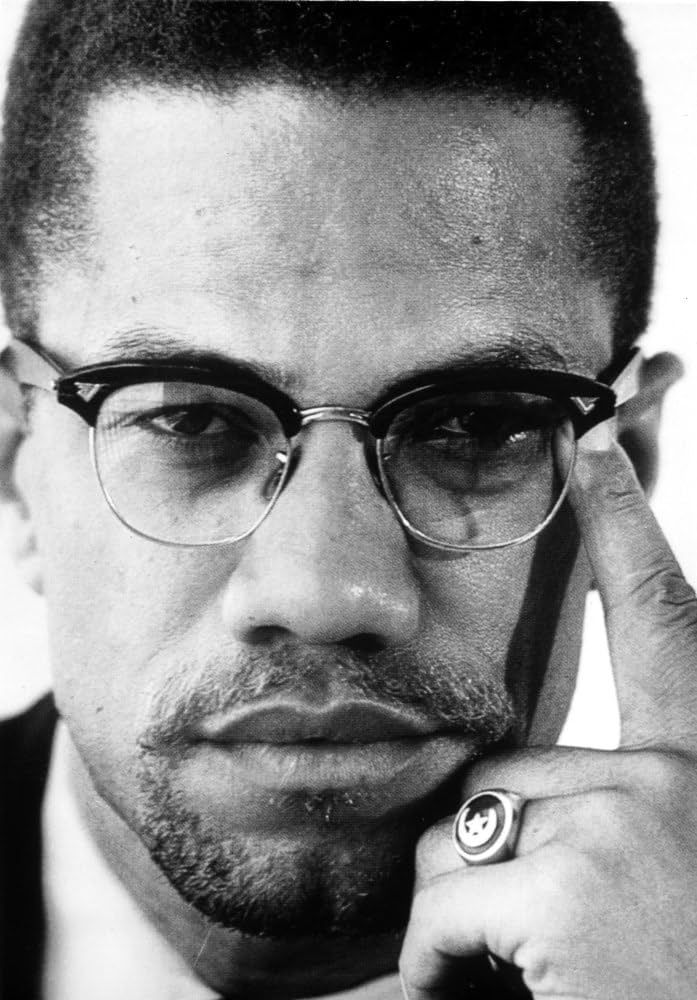
Malcolm X: Sixty Years Later


In the turbulent 1960s, a clarion voice emerged—Malcolm X. A man of fervor. A man of vision. A man whose life was abruptly silenced on February 21, 1965. Today, six decades later, I reflect upon his legacy, juxtaposing the era he sought to transform with the present landscape of African American progress and persistent challenges.

The 1960s: A Crucible of Change

The 1960s were a maelstrom of social and political upheaval. Segregation’s chains bound the African American community, while systemic disenfranchisement stifled our voices. In this milieu, Malcolm X rose, advocating for Black nationalism and self-reliance. He derided the mainstream civil rights movement’s focus on integration, famously criticizing it as a quest for “a desegregated lunch counter, a desegregated theater—and a desegregated public toilet. That’s no revolution.”

I was there. I was not yet ten years old when Malcolm was murdered. Yet, even as a child, I felt the tremors of change rumbling beneath my feet. I saw the faces of my elders—stoic, burdened, yet resolute. I heard the murmurs of grief, the whispered fears, and the unspoken question: What now? The world shifted that day, though I was too young to fully grasp how.

Malcolm X’s rhetoric was incendiary, yet it ignited a sense of pride and urgency among African Americans. He emphasized the need for political autonomy, urging Black communities to control their own destinies. His philosophy was encapsulated in the mantra: “The Ballot or the Bullet,” suggesting that African Americans must exercise their right to vote or risk more confrontational means to achieve justice.

Malcolm X vs. Martin Luther King Jr.: A Tale of Two Philosophies

Malcolm X and Martin Luther King Jr. stood as towering figures in the fight for Black equality, yet their methods diverged sharply. King, guided by the principles of nonviolent resistance, sought to dismantle segregation through peaceful protest and moral persuasion. He believed that love and unity would pave the way to justice. “Darkness cannot drive out darkness; only light can do that. Hate cannot drive out hate; only love can do that,” he proclaimed.

Malcolm X, on the other hand, saw the struggle in starker, more confrontational terms. He viewed integration as a mere appeasement tactic and championed self-defense and Black nationalism as a means of securing true freedom. “Be peaceful, be courteous, obey the law, respect everyone; but if someone puts his hand on you, send him to the cemetery,” he once warned.

Their differences were not just philosophical but strategic. King appealed to the conscience of white America, urging systemic reform. Malcolm X, in contrast, demanded that Black Americans take their destiny into their own hands—through economic self-sufficiency, political mobilization, and, if necessary, self-defense.

A Pilgrimage to Transformation: Malcolm X’s Evolution

Yet Malcolm X’s ideology was not static; it evolved dramatically, particularly in the final year of his life. In 1964, his pilgrimage to Mecca proved transformative. Witnessing Muslims of all races worshiping side by side reshaped his perspective on race and unity. In a letter from Mecca, he wrote that his experiences compelled him to “rearrange much of [his] thought-patterns previously held, and to toss aside some of [his] previous conclusions.”

This revelation led him to advocate for a broader, more inclusive movement. No longer seeing the struggle purely in racial terms, Malcolm began addressing global oppression, seeking alliances beyond the African American community. His rhetoric softened, though his passion remained unbridled. Love, he realized, could be a weapon as powerful as resistance.

This evolution in his outlook highlights the dynamic nature of his advocacy, underscoring the importance of personal growth in the pursuit of social justice. He was no longer simply the firebrand separatist; he had become an emissary of universal human rights.

2025: Progress and Paradox

Fast forward to 2025. The African American community has traversed a remarkable journey. Opportunities have burgeoned, especially in arenas like sports and entertainment. Athletes such as Jaylen Brown have not only achieved professional acclaim but have also leveraged their platforms to advocate for social justice and economic empowerment. Brown, for instance, has initiated programs aimed at fostering generational wealth in underserved communities.

However, this success is a double-edged sword. While individual triumphs are celebrated, they often mask the enduring systemic disparities. The racial wealth gap remains a gaping chasm. Recent studies reveal that the mean household wealth gap between Black and white Americans has surpassed $1 million, a stark reminder of persistent economic inequities.

Moreover, the concentration of wealth in high-profile sectors like the NBA or NFL does not reflect the broader economic reality for most African Americans. The narrative of a few achieving astronomical success can create a “decadent veil,” obscuring the systemic barriers that continue to impede widespread economic advancement.

R.M. Sydnor

The Mystery of Sydnor: A Name Wrapped in Enigma, Dipped in History


People have always asked me: What does “Sydnor” mean? They say it like they’ve stumbled upon a lost treasure map, expecting an answer that will shake the foundations of linguistic history. Well, I aim to please—so grab your intellectual pickaxe, and let’s dig.

The Etymology: More Than Just a Name

Like all great surnames, Sydnor didn’t just materialize out of thin air. It’s a name with roots, mystery, and—depending on how far back we go—probably a few dubious ancestors who owed the wrong people money.

Linguistically speaking, Sydnor is believed to have Anglo-Saxon origins, likely stemming from Old or Middle English locative surnames. Many names with “Sid-” or “Syd-” referenced landscapes near water or open fields. According to The Oxford Dictionary of Family Names in Britain and Ireland, similar surnames—like Sidney or Sydnam—originated from estates and villages in Gloucestershire and Norfolk.

And if you think that’s fascinating, remember: some people’s last names just mean son of John. I’d rather be linked to an old English countryside than some random guy named John, wouldn’t you?

Sydnor Through the Ages: Nobility or Notoriety?

Historical records suggest that Sydnor may have belonged to minor nobility—though “minor nobility” is just a polite way of saying people with just enough land to feel important but not enough to get invited to royal dinners.

Some branches of the family name pop up in colonial America, particularly in Virginia and Maryland. Whether these early Sydnors were daring settlers or just running from old debts remains a mystery, but one thing is certain: they left their mark.

Even today, the name carries intrigue. I once had someone insist Sydnor must be French aristocracy—probably because they saw the silent “d” and figured it was hiding a château somewhere. I hated to disappoint them, but I let them believe whatever made them happy.

A Name That Stands Out

Unlike the Smiths and Johnsons of the world, Sydnor has flair. It’s not one of those names that people nod at absentmindedly—it prompts questions. “Is it English? Is it noble? Is it part of an underground society?”

I let people wonder.

But here’s what I do know: Sydnor is distinct. It’s a name people remember, whether they hear it at a dinner party or in a courtroom (hopefully as a distinguished attorney and not the defendant).

What’s in a Name? Everything.

At the end of the day, a name is more than just a label—it’s a story. And Sydnor? It’s a name that hints at something ancient, something unique, and something just a little bit mysterious.

So the next time someone asks me, “Where does Sydnor come from?” I’ll smile and say:

“From history, legend, and a long line of people who knew how to make an entrance.”

Final Thought: If you meet a Sydnor, assume greatness. If you are a Sydnor, act accordingly.

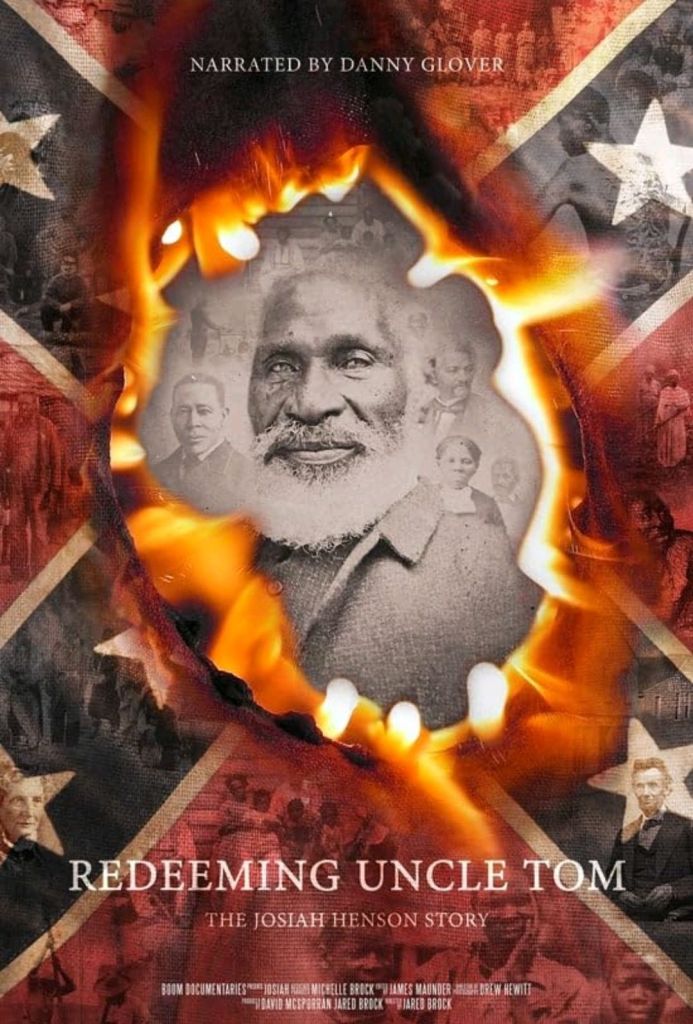
“Redeeming Uncle Tom: The Josiah Henson Story” – Reclaiming a Legacy


“Redeeming Uncle Tom: The Josiah Henson Story” is a vital documentary that reclaims the legacy of Josiah Henson, a man whose real-life journey was overshadowed by the fictional character he inspired in Harriet Beecher Stowe’s Uncle Tom’s Cabin. Directed by Jared Brock, the film aims to separate truth from fiction, offering a deeply researched and visually compelling account of Henson’s life.

With cinematography by David Dunlap and editing by Andrew Moir, the documentary skillfully weaves archival material, re-enactments, and expert commentary into a narrative that demands the audience reconsider one of the most misunderstood figures in American history. The film also benefits from the narration of Danny Glover, whose measured and authoritative voice adds an additional layer of authenticity and gravitas to the storytelling. While the film is engaging, it encounters a few pacing issues and lacks a fully critical examination of Henson’s legacy, aspects we will explore in this review.


Direction & Narrative Structure

Jared Brock’s direction is meticulous and historically driven. He presents Henson’s life with clarity and emotional weight, avoiding the sensationalism that often plagues historical documentaries. The narrative flows logically from Henson’s early years in slavery to his escape and leadership in Canada’s abolitionist movement. However, the pacing falters in the middle act, lingering on details that, while significant, slow the momentum of the story. A more dynamic structuring could have maintained a stronger narrative pull.

Grade: 3.8 / 4.0


Cinematography & Visual Composition

Cinematographer David Dunlap brings a cinematic depth to the film, utilizing a rich color palette and dynamic framing to elevate Henson’s journey. Re-enactments are seamlessly integrated, enhancing the historical authenticity. Archival footage and illustrations add depth without overwhelming the primary storytelling. However, some of the transitions between modern interviews and historical visuals feel slightly abrupt, detracting from the immersive experience.

Grade: 3.7 / 4.0


Narration by Danny Glover

Danny Glover’s narration is a significant asset to the film, bringing credibility and emotional depth to Henson’s story. While he does not dominate the documentary, his presence lends it an additional level of authenticity, particularly as an esteemed African American actor with a deep understanding of historical narratives. His measured cadence complements the documentary’s tone, reinforcing its educational and emotional impact.

Grade: 3.9 / 4.0


Interview Quality & Subject Depth

The documentary boasts an impressive roster of historians, literary scholars, and descendants of Josiah Henson. Their insights provide crucial context, though a broader range of voices—particularly those critiquing Stowe’s portrayal of Uncle Tom—could have added greater depth. The emotional weight of the interviews, especially from Henson’s descendants, adds a powerful personal layer to the film.

Grade: 3.9 / 4.0


Editing & Pacing

Editor Andrew Moir crafts a well-structured film, yet certain sections overstay their welcome. The early portions are tightly woven, but the latter half meanders, diminishing the overall impact. A more refined cut could have strengthened the documentary’s emotional and historical weight.

Grade: 3.5 / 4.0


Research Depth & Historical Accuracy

The documentary is thoroughly researched, drawing from Henson’s own writings, historical documents, and expert analysis. However, while it convincingly argues for Henson’s significance, it stops short of critically interrogating how his legacy has been used and misused over time.

Grade: 3.8 / 4.0


Sound Design & Score

The film’s score complements its themes, employing a mix of classical compositions and subtle percussive elements that evoke the tension and triumph of Henson’s journey. However, some sequences rely too heavily on music to underscore emotion rather than allowing the narrative to speak for itself.

Grade: 3.6 / 4.0


Cultural & Social Impact

“Redeeming Uncle Tom” is culturally significant, challenging audiences to rethink the narrative of one of the most enduring characters in American literature. It raises essential questions about historical memory, racial representation, and the power of storytelling. Its impact would be even greater if it had engaged more deeply with present-day implications of the Uncle Tom stereotype.

Grade: 3.9 / 4.0


Final Grade Calculation

Direction & Narrative Structure (20%) – 3.8

Cinematography & Visual Composition (15%) – 3.7

Narration by Danny Glover (10%) – 3.9

Interview Quality & Subject Depth (15%) – 3.9

Editing & Pacing (10%) – 3.5

Research Depth & Historical Accuracy (10%) – 3.8

Sound Design & Score (7.5%) – 3.6

Cultural & Social Impact (7.5%) – 3.9


Final Score: 3.78 / 4.0
Letter Grade: A- (Excellent)
Percentage: 94.5%


Final Thoughts

Redeeming Uncle Tom: The Josiah Henson Story is a compelling and necessary documentary, elevating the real-life figure behind one of literature’s most controversial characters.

Jared Brock’s direction, combined with David Dunlap’s cinematography, Andrew Moir’s editing, and Danny Glover’s narration, results in a visually rich and emotionally resonant narrative.

While the documentary has minor pacing and depth limitations, it stands as an essential contribution to historical discourse, offering a long-overdue reclamation of Josiah Henson’s legacy.


Additional Information

IMDb Page: https://www.imdb.com/title/tt10101666/

Featured Subjects: Josiah Henson, Harriet Beecher Stowe, historians, Henson’s descendants

Director: Jared Brock

Cinematographer: David Dunlap

Editor: Andrew Moir

Narrator: Danny Glover

Documentary Type: Biographical, Historical


This is more than a documentary—it’s a necessary revision of history.

Beware the seductive clamor of a busy life, for motion is not meaning, and toil is no substitute for purpose

Beware the seductive clamor of a busy life, for motion is not meaning, and toil is no substitute for purpose. You may fill your days with endless pursuits, yet find your soul an empty vessel, echoing with the absence of what truly matters. Pause. Reflect. Ask yourself not how much you have done, but whether any of it has nourished the marrow of your being.

                                         — RM Sydnor
                           (Inspired by Socrates)


Detailed Analysis for the Reader

1. The Opening Warning:

“Beware the seductive clamor of a busy life…”


Right from the start, you are warned—not just about busyness, but its seductive nature. The word “clamor” evokes an incessant noise, a chaotic rush that distracts you from the deeper currents of existence. Busyness is not neutral; it is a trap, whispering that productivity is purpose when, in truth, it may be an illusion.

2. The Illusion of Productivity:

“For motion is not meaning, and toil is no substitute for purpose.”


Movement is not progress. Effort is not fulfillment. You can be in constant motion yet arrive nowhere. This line confronts you with a stark existential truth: your labor, your exhaustion, your full calendar—do they carry meaning? Or are they merely distractions from the harder, quieter work of becoming?

3. The Emptiness Hidden in Activity:

“You may fill your days with endless pursuits, yet find your soul an empty vessel, echoing with the absence of what truly matters.”


This is a direct challenge: Have you mistaken activity for fulfillment? The image of an “empty vessel” suggests that despite your accomplishments, something essential is missing. The phrase “echoing with the absence” paints a haunting picture—your soul reverberating not with meaning, but with the void left by what you neglected.

4. The Call to Pause:

“Pause. Reflect.”


This interruption forces you to stop. To resist the momentum of habit. These two simple imperatives demand stillness, breaking the trance of perpetual motion. Reflection is not a luxury; it is a necessity for those who refuse to drift through life unexamined.

5. The Existential Question:

“Ask yourself not how much you have done, but whether any of it has nourished the marrow of your being.”


Here lies the final and most piercing challenge. The question is not about quantity but depth. Have your actions fed your soul, your essence, your irreplaceable core? Or have they merely been a performance, a fevered chase toward nothingness?

This line strikes at the existential paradox of modern life: We accomplish much, yet feel so little. We build careers, legacies, and reputations, yet the most crucial part—our inner life—remains underfed, neglected, barren.


Final Message to the Reader

This is not just a reflection; it is a summons. A demand that you examine the architecture of your days and ensure they are not merely filled, but fulfilled.

Beware the barrenness of busyness. Life is not measured in motion, but in meaning.

And meaning is a choice. Yours to make.

Do not waste your breath pleading for ease, for ease breeds nothing but stagnation. Instead, cultivate the fortitude to embrace struggle, for in hardship, you unearth the raw material of your becoming..

Do not waste your breath pleading for ease, for ease breeds nothing but stagnation. Instead, cultivate the fortitude to embrace struggle, for in hardship, you unearth the raw material of your becoming.

Adversity is not an obstacle; it is the architect of your strength, the crucible where your character is forged. The life worth living is not one smoothed by comfort but one sculpted by resistance. Strength is not granted; it is earned in the fire of difficulty, where the self is tempered and revealed.

                                          — RM Sydnor
                         (Inspired by Bruce Lee)


You who seek comfort,

Detailed Analysis & Personal Address to the Reader

Opening Command: The Refusal of Ease

“Do not waste your breath pleading for ease, for ease breeds nothing but stagnation.”

Here, the language is both direct and urgent. The phrase “Do not waste your breath” immediately dismisses the notion of praying for an easy life as futile—breath itself, the essence of existence, should not be squandered on such a request. The word pleading evokes desperation, reinforcing the idea that yearning for comfort is an act of self-imposed weakness.

Moreover, the assertion that ease breeds stagnation presents comfort as a deceptive trap. What you seek as relief often arrests your growth, dulls your potential, and lulls you into complacency. In avoiding struggle, you inadvertently forfeit evolution.

The Call to Fortitude: Strength as an Active Pursuit

“Instead, cultivate the fortitude to embrace struggle, for in hardship, you unearth the raw material of your becoming.”

This line shifts from negation to instruction. “Cultivate” is a deliberate word choice—it implies effort, care, and ongoing refinement. Strength is not passively received; it must be nurtured, grown, and fortified through continuous engagement with adversity.

Notice the phrase “embrace struggle” rather than endure it. To endure is to suffer through passively, but to embrace is to acknowledge hardship as essential, even welcome. The existential weight here is undeniable—you are not merely enduring life; you are being sculpted by it.

And what is the result? “You unearth the raw material of your becoming.” This line demands reflection. Who are you beneath convenience, beyond the soft contours of a life without challenge? That self, the one hidden under layers of avoidance and fear, is revealed in hardship. In this way, adversity is not an affliction but an excavation, a peeling away of the untested, inauthentic layers of who you think you are.

Adversity as the Architect: The Transformative Role of Struggle

“Adversity is not an obstacle; it is the architect of your strength, the crucible where your character is forged.”

Here, the metaphor shifts from struggle as discovery to struggle as creation. The reader is challenged to reconsider adversity—not as a hindrance but as a designer, a craftsman shaping them into something greater.

The word architect elevates adversity to something almost divine, a force that constructs rather than destroys. Instead of being a wall that blocks your path, it is a set of hands sculpting your potential. The crucible metaphor reinforces this idea—adversity is fire, searing away the inessential and leaving behind something purer, stronger. It is a place of transformation, where the raw, unshaped self is molded into something resilient and refined.

A Life Sculpted by Resistance: The Rejection of Passivity

“The life worth living is not one smoothed by comfort but one sculpted by resistance.”

This statement draws a stark contrast between two modes of existence: one passive, one active. A life smoothed by comfort is featureless, unremarkable, like a stone eroded by time, worn down to nothing. In contrast, a life sculpted by resistance bears definition, form, and meaning.

To be sculpted is to be shaped by something external—by struggle, by effort, by pain. The implicit question to the reader is: What will shape you? Will you allow resistance to carve you into something remarkable, or will you dissolve into mediocrity, untouched by difficulty?

Strength as an Earned Condition: The Final Challenge

“Strength is not granted; it is earned in the fire of difficulty, where the self is tempered and revealed.”

This final line dismantles any remaining illusions of entitlement. Strength is not bestowed upon you, nor does it arrive through passive hope. It is earned, and the means of earning it is suffering.

The phrase “fire of difficulty” is deliberate—fire is both destructive and purifying. It consumes the weak, but for those who endure, it tempers, making them unbreakable. You are not merely tested by hardship; you are revealed by it.

The ultimate question this quotation poses to you, the reader, is simple but profound: Are you willing to be forged in that fire?


Final Reflection: Why This Quote Matters

This expanded quotation forces the reader to confront an existential truth—life is suffering, and the only meaningful response is to face it with intentionality. It rejects passive endurance in favor of active transformation, urging you not to pray for ease but to seek strength in struggle.

Unlike Bruce Lee’s original version, which suggests strength as a divine gift in response to prayer, this version positions strength as something only you can cultivate. It strips away any notion of reliance on external forces and places the responsibility squarely on your shoulders. You must cultivate, embrace, earn.

This is not merely a motivational statement—it is a command, an existential reckoning. The question is no longer whether life will be difficult (it will be), but whether you will allow difficulty to define you or refine you.

The choice is yours.

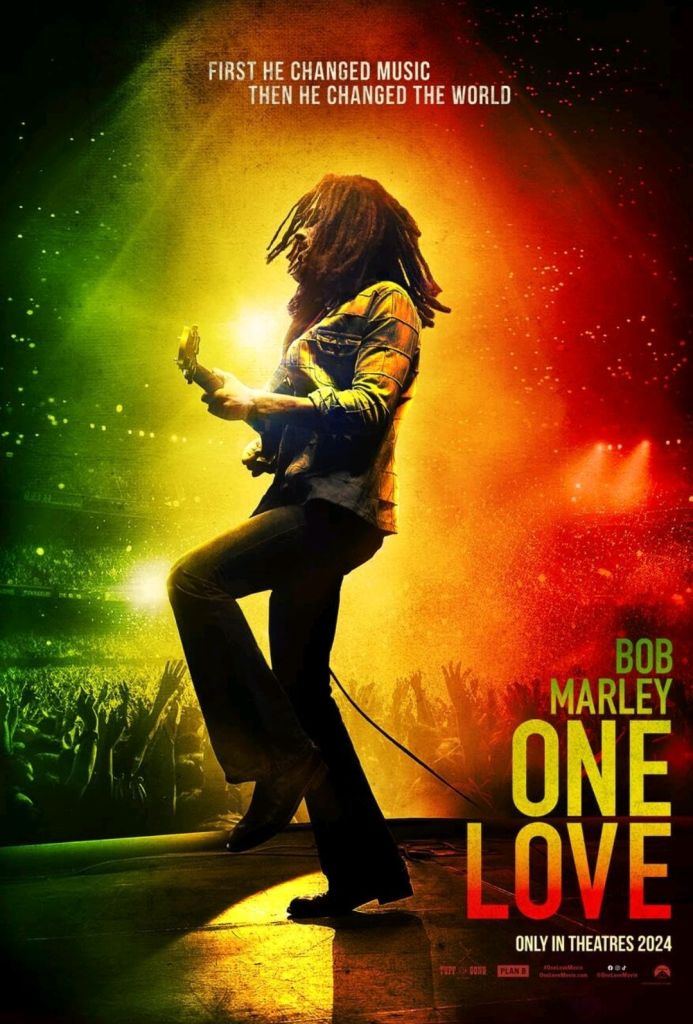
Riding the Rhythm, Missing the Message: Bob Marley: One Love


Bob Marley: One Love aspires to encapsulate the essence of the reggae legend, yet its execution leaves much to be desired. While visually immersive and bolstered by a charismatic lead performance, the film struggles with narrative cohesion, often presenting a series of vignettes rather than a fully realized biopic. Despite its reverence for its subject, it ultimately lacks the depth and complexity necessary to honor Marley’s multifaceted legacy.

A significant factor influencing the film’s outcome is the extensive involvement of the Marley family—Ziggy, Rita, and Cedella Marley—alongside Hollywood figures such as Brad Pitt, Dede Gardner, Jeremy Kleiner, and Robert Teitel. Their collective vision aimed to balance authenticity with mainstream appeal, but the result is a film that occasionally feels over-curated. The multitude of voices in the creative process may have led to a diluted singular vision, causing One Love to oscillate between a reverential tribute and a compelling cinematic narrative. This is evident in its structure, which at times lacks fluidity, as if each contributor had a slightly different perspective on portraying Marley’s story.


🎬 Direction – B- (3.0/4.0)
.
Director: Reinaldo Marcus Green (King Richard) approaches Marley’s life with affection but inconsistency. While he adeptly recreates the era’s atmosphere, his storytelling lacks the depth and focus required to fully engage with the complexities of Marley’s journey. The film often resembles a highlight reel rather than a cohesive narrative, prioritizing reverence over revelation. Green’s direction excels in musical sequences, particularly in recreations of Marley’s live performances, but falters when delving into his internal conflicts and ideological struggles.

The numerous producers, many with personal stakes in Marley’s legacy, may have contributed to the film’s cautious approach, resulting in a reluctance to explore more challenging aspects of his life.


🎭 Acting – B+ (3.5/4.0)

Kingsley Ben-Adir delivers a dedicated portrayal of Bob Marley, capturing his mannerisms and stage presence with impressive fidelity. However, the screenplay does not afford him the opportunity to fully explore the musician’s inner conflicts. While his physicality and vocal inflections are convincing, the material lacks the depth needed to convey the emotional complexities behind Marley’s public persona.

Lashana Lynch shines as Rita Marley, infusing the role with quiet resilience and emotional gravity. She provides some of the film’s most poignant moments, depicting Rita’s strength as both a partner and an artist in her own right. The chemistry between Ben-Adir and Lynch is palpable, offering some of the film’s most engaging scenes.

Supporting performances include James Norton as Chris Blackwell, Tosin Cole as Tyrone Downie, and Umi Myers as Cindy Breakspeare. While these actors contribute competently, their characters are not sufficiently developed to leave a lasting impact.


✍🏾 Writing – C+ (2.7/4.0)

The screenplay offers glimpses into Marley’s artistic and political influences but fails to construct a compelling narrative arc. It presents key events in Marley’s life without weaving them into a larger, emotionally resonant story. The dialogue occasionally feels forced, relying too heavily on exposition rather than organic interactions. While the film highlights his role as a unifier during Jamaica’s political unrest, it does not fully explore the ideological weight behind Marley’s activism. The lack of deeper insights into his spirituality and struggles results in a film that acknowledges his significance but does not allow the audience to experience it profoundly.

One of the film’s most significant oversights is its superficial exploration of Rastafarianism—a faith central to Marley’s music, philosophy, and life. The narrative touches on Haile Selassie’s influence but fails to provide sufficient context on how Rastafari connects to biblical prophecy, the African diaspora, and Marley’s spiritual mission. His music was not merely about peace and love; it was a call for justice and divine revolution. The absence of a deeper discussion on this aspect weakens the film’s ability to convey the full weight of his message.


📽️ Cinematography – B (3.3/4.0)

Cinematographer: Robert Elswit (There Will Be Blood) delivers a rich visual palette, effectively capturing the vibrancy of 1970s Jamaica and London. The concert sequences pulsate with energy, immersing the viewer in the experience of a live Marley performance. The lighting and framing successfully capture the intimate and electric nature of these events. However, the film does not take many creative risks, often defaulting to conventional biopic compositions. A more daring visual approach—perhaps embracing the surrealism of Marley’s spiritual visions—could have provided the film with a distinctive visual identity.


✂️ Editing & Pacing – C+ (2.8/4.0)

Editor: Pamela Martin (The Fighter) struggles to maintain a consistent rhythm. Some sequences flow naturally, while others feel abrupt or meandering. The film’s fragmented structure hampers its emotional impact, making it difficult to fully invest in Marley’s personal and political struggles. Transitions between his personal life, music, and activism lack fluidity, leaving key moments feeling disjointed rather than interconnected. A more cohesive editing strategy could have enhanced the film’s momentum and emotional depth.


🎨 Production Design & Costumes – A- (3.7/4.0)

Production Designer: Chris Lowe (Bohemian Rhapsody) meticulously recreates Marley’s world, from recording studios to concert stages. The detailed set designs transport the audience to pivotal moments in his life, grounding the film in historical authenticity.

Costume Designer: Caroline Duncan (Respect) ensures period accuracy, dressing characters in era-appropriate attire that enhances the film’s immersive quality. The wardrobe choices not only reflect the 1970s aesthetic but also subtly highlight Marley’s evolving identity—from a burgeoning artist to an international icon. This attention to detail bolsters the film’s credibility, even when the storytelling falters.


🎼 Sound & Score – B (3.2/4.0)

The soundtrack, featuring Marley’s timeless hits, stands as the film’s most robust element. However, the sound mixing and score could have been leveraged more effectively to enhance emotional beats, often serving as a passive backdrop rather than an active storytelling component.


🤔 COACH SYDNOR’S GRADE: B- (76%)

Essential Film Information

🏢 Production Company: Plan B


🎞️ Distributor: Paramount Pictures


🎬 Director: Reinaldo Marcus Green


📝 Screenwriters: Terence Winter, Frank E. Flowers, Zach Baylin, Reinaldo Marcus Green


🎥 Cinematographer: Robert Elswit


✂️ Editor: Pamela Martin


🎭 Main Cast: Kingsley Ben-Adir, Lashana Lynch, James Norton, Tosin Cole, Umi Myers


🎨 Production Designer: Chris Lowe


👗 Costume Designer: Caroline Duncan


🎼 Music Composer: Kris Bowers


📇 Producers: Ziggy Marley, Rita Marley, Cedella Marley, Robert Teitel, Dede Gardner, Jeremy Kleiner, Brad Pitt


🔗 IMDb Link: https://www.imdb.com/title/tt11199302/


🔗 Wikipedia Link: https://en.wikipedia.org/wiki/Bob_Marley:_One_Love

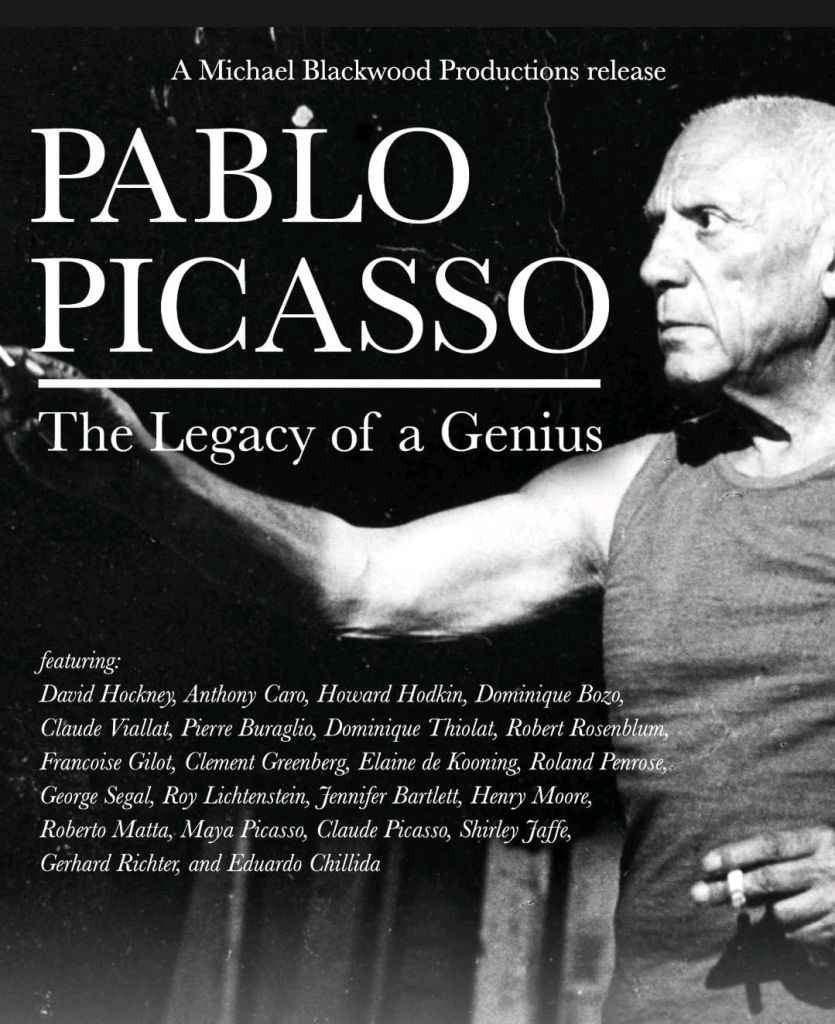
🎥 Legacy of a Genius – Pablo Picasso: A Portrait in Art and Controversy


Michael Blackwood’s Legacy of a Genius offers an expansive and illuminating portrait of Picasso’s life, artistry, and the people who shaped his world. Through a meticulous blend of archival footage and intimate testimonials from family members and acquaintances, the documentary constructs a multifaceted image of the man behind the genius. But does it fully capture the complexity of his legacy, or does it leave gaps in its exploration of his artistic and personal evolution?

Direction – A- (3.7/4.0)

Blackwood’s direction is confident, allowing Picasso’s story to unfold naturally through the voices of those who knew him. The decision to interweave film archives with contemporary reflections creates a layered narrative that respects both history and personal memory. While comprehensive, the documentary occasionally glosses over some of Picasso’s more controversial aspects, opting for admiration over deep critique.


Writing & Narrative Structure – B+ (3.4/4.0)

The film is structured across multiple episodes, each examining different facets of Picasso’s life. The pacing is steady, but some sections meander, particularly when delving into well-trodden territory. A tighter thematic focus could have heightened the impact of certain revelations.


Cinematography & Visual Composition – A (3.8/4.0)

Visually, Legacy of a Genius excels in its use of archival footage, seamlessly blending past and present. The restoration quality is impressive, and the juxtaposition of Picasso’s artworks with his personal life adds depth to the storytelling.


Interview Quality & Subject Depth – A (3.9/4.0)

The documentary’s greatest strength lies in its interviews. The participation of family members and women who shared personal relationships with Picasso brings authenticity and emotional resonance. These firsthand accounts illuminate the artist’s temperament, creative process, and relationships in ways that go beyond mere biography.


Editing & Pacing – B (3.2/4.0)

The film’s multi-part format allows for a thorough exploration of Picasso’s life, but at times, the pacing drags, particularly in sequences that reiterate known aspects of his persona. A more streamlined approach could have kept the momentum stronger.


Research Depth & Accuracy – A (3.9/4.0)

Blackwood’s team has clearly done their homework. The documentary covers Picasso’s artistic innovations and personal struggles with a richness that reflects extensive research. However, a more critical lens on his personal controversies could have balanced the narrative further.


Sound Design & Score – B+ (3.4/4.0)

The soundtrack complements the film well, with musical selections that evoke Picasso’s era and artistic intensity. At times, however, the score feels slightly repetitive, relying on familiar motifs instead of fully embracing Picasso’s own relationship with sound and movement.


Cultural & Social Impact – A- (3.7/4.0)

Legacy of a Genius contributes significantly to Picasso’s enduring cultural relevance. It reinforces his artistic innovations while reminding viewers of the personal and societal forces that shaped his work. While it may not challenge prevailing narratives, it enriches them with personal depth.


Final Score: A- (3.7/4.0) – 92.5%

Verdict:

Michael Blackwood’s Legacy of a Genius is a masterfully constructed documentary that offers an intimate and historically rich portrait of Picasso. While it leans toward admiration rather than deep interrogation, its extensive use of archival footage and personal testimonies makes it an essential watch for art enthusiasts and historians alike.


COACH SYDNOR’S GRADE: A-


Featured Subjects:

• Jennifer Bartlett – Renowned painter known for her conceptual and minimalist works.

• Dominique Bozo – Former director of the Musée Picasso in Paris.

• Pierre Buraglio – French artist associated with the Supports/Surfaces movement.

• Anthony Caro – Influential British sculptor recognized for his abstract metal works.

• Eduardo Chillida – Spanish Basque sculptor famed for his monumental abstract works.

• Elaine de Kooning – American abstract expressionist painter and art critic.

• Françoise Gilot – Accomplished painter and author, and Picasso’s former partner.

• Clement Greenberg – Prominent American art critic closely associated with modern art.

• David Hockney – Celebrated British painter and photographer.

• Howard Hodgkin – British painter known for his abstract works.

• Shirley Jaffe – American abstract painter based in France.

• Roy Lichtenstein – Leading figure in the pop art movement.

• Roberto Matta – Chilean abstract expressionist painter.

• Henry Moore – Eminent British sculptor known for his semi-abstract monumental works.

• Roland Penrose – English artist, historian, and biographer of Picasso.

• Claude Picasso – Photographer, filmmaker, and Picasso’s son.

• Gerhard Richter – German visual artist known for his abstract and photorealistic paintings.

• Robert Rosenblum – American art historian and curator.

• George Segal – American painter and sculptor associated with the pop art movement.

• Dominique Thiolat – French artist and art critic.

• Claude Viallat – French painter and a founding member of the Supports/Surfaces movement.

• Maya Widmaier Picasso – Art historian and Picasso’s daughter.


Filmmaker Context:

Michael Blackwood is a veteran documentarian known for his work chronicling the lives and influences of major artists, architects, and cultural figures. His films often adopt a patient, observant style that allows subjects to narrate their own stories through interviews and archival material. Legacy of a Genius aligns with his broader commitment to documenting the arts, though it leans toward celebration rather than critical dissection.


Documentary Type

🎬 Biographical / Art Documentary

IMDb Page:
http://www.imdb.com/title/tt1832425/

25-2-16-S WQ 📖  Hermeneutics

WORDQUEST ✍🏾 📖


IPA PRONUNCIATION

/ˌhɜːməˈnjuːtɪks/


BREAKDOWN

/ˌhɜː/ – Open-mid central unrounded vowel with stress, as in ‘her’.

/mə/ – Schwa, mid-central vowel, as in ‘sofa’.

/ˈnjuː/ – /n/ voiced alveolar nasal, as in ‘new’; /j/ palatal approximant, as in ‘yes’; /uː/ close back rounded vowel, as in ‘food’.

/tɪks/ – /t/ voiceless alveolar plosive, as in ‘top’; /ɪ/ near-close near-front unrounded vowel, as in ‘kit’; /k/ voiceless velar plosive, as in ‘cat’; /s/ voiceless alveolar fricative, as in ‘sun’.


PHONEMIC PRONUNCIATION

her·me·neu·tics ˌhɜː-mə-ˈnjuː-tɪks


DEFINITIONS

1. Noun: The study or theory of the methodical interpretation of texts, especially sacred or philosophical texts.


ETYMOLOGY

Derived from the Ancient Greek word ἑρμηνευτικός (hermēneutikós), meaning ‘of or for interpreting’, which comes from ἑρμηνεύω (hermēneúō), ‘to interpret’ or ‘translate’.

This, in turn, is derived from ἑρμηνεύς (hermēneús), meaning ‘interpreter’ or ‘translator’.

The term was introduced around 360 BCE by Aristotle in his work Perì Hermeneías (On Interpretation).


ENLIGHTENMENT

Ah, hermeneutics—a term that might sound like a spell from a Harry Potter novel but is, in fact, the art and science of interpretation. Imagine you’re handed a centuries-old manuscript filled with archaic language and obscure references. Deciphering its true meaning without hermeneutics would be like trying to assemble IKEA furniture without instructions—a recipe for confusion and a few extra screws.

Historically, hermeneutics began as a method for interpreting sacred texts. Scholars would pore over religious scriptures, attempting to unravel divine intentions. Over time, this practice expanded beyond theology. Philosophers like Friedrich Schleiermacher and Hans-Georg Gadamer (both notable figures in the field) applied hermeneutic principles to understand human experiences and historical contexts. Schleiermacher emphasized understanding the author’s intent, while Gadamer focused on the interplay between the interpreter’s perspective and the text.

In today’s world, hermeneutics isn’t just for theologians or philosophers. It’s a valuable tool in law, literature, and even daily conversations. Ever tried to decode the subtext of a friend’s ambiguous text message? That’s hermeneutics in action. So, the next time you’re delving into a dense novel or deciphering a cryptic email, remember: you’re engaging in the noble art of hermeneutics. And who knows, with enough practice, you might just become the Sherlock Holmes of interpretation.


SAMPLE SENTENCES (LITERAL)

1. During the conference, Dr. Smith’s presentation on hermeneutics was so profound that even the coffee seemed enlightened.


2. The professor’s passion for hermeneutics was evident when he started analyzing the hidden meanings in his grocery list.


3. In their study group, the students debated the hermeneutics of ancient texts while dressed as their favorite philosophers.


4. Jane’s attempt to apply hermeneutics to her cat’s behavior led to a 20-page thesis and a very confused feline.


5. The detective’s hermeneutic approach to the mystery novel resulted in him solving the case before the protagonist did.


6. At the dinner party, discussing hermeneutics became the latest trend, replacing last week’s obsession with sourdough starters.


7. The author’s use of hermeneutics was so advanced that readers needed a decoder ring to understand the plot.


8. Applying hermeneutics to the assembly instructions, Bob finally managed to build the bookshelf—upside down.


9. The debate team’s hermeneutic analysis of nursery rhymes revealed a deep-seated commentary on societal norms.


10. After a week of studying hermeneutics, Lisa began interpreting her dog’s barks as existential critiques.


FIGURATIVE DEFINITION

Figuratively, “hermeneutics” refers to the practice of interpreting complex or ambiguous situations, behaviors, or communications. It’s the art of reading between the lines to uncover underlying meanings or intentions.


SAMPLE FIGURATIVE SENTENCES

1. The journalist’s hermeneutics of the politician’s speech unveiled promises hidden beneath layers of rhetoric.


2. In the world of fashion, interpreting trends requires a hermeneutic eye to predict the next big thing.


3. The therapist’s hermeneutic skills helped clients uncover the deeper meanings behind their recurring dreams.


4. Analyzing the hermeneutics of social media posts can reveal societal shifts and emerging subcultures.


5. The art critic’s hermeneutic approach turned a simple painting into a profound statement on human existence.


6. Deciphering the hermeneutics of office politics is essential for climbing the corporate ladder unscathed.


7. The chef’s hermeneutic interpretation of traditional recipes led to innovative dishes that delighted patrons.


8. In the courtroom, lawyers often engage in hermeneutics to interpret the nuances of the law in favor of their clients.


9. The coach’s hermeneutic analysis of the team’s dynamics brought to light unspoken tensions affecting performance.


10. Navigating the hermeneutics of family traditions can be challenging during holiday gatherings.


11. The scientist’s hermeneutic examination of data patterns led to groundbreaking discoveries.


12. Understanding the hermeneutics of cultural rituals provides deeper insights into a community’s values.


13. The director’s hermeneutic vision transformed a classic play into a modern commentary on technology.


14. In literature, a hermeneutic reading of a text can uncover themes that resonate across generations.


15. The diplomat’s hermeneutic finesse in negotiations prevented potential conflicts between nations.


SYNONYMS

Interpretation

Exegesis

Analysis

Decipherment

Elucidation


ANTONYMS

Misinterpretation

Obfuscation

Confusion

Misunderstanding

Ambiguity


LITERARY GEM

In his seminal work Truth and Method, philosopher Hans-Georg Gadamer delves into the essence of hermeneutics. He writes, “Hermeneutics is above all a practice, the art of understanding and of making something understood to someone else.” Here, Gadamer emphasizes that hermeneutics is not just a theoretical framework but an active engagement in bridging understanding between individuals and texts.


MNEPHONICS

Imagine a African American female detective, magnifying glass in hand, meticulously examining an ancient, dusty manuscript. As he deciphers each line, hidden meanings and secrets emerge,


LOGOPHILE HUMOR

A philosopher, an African American lawyer, and a cryptic text walk into a bar.

The native American bartender says, “What’ll it be?”

The philosopher squints. “That depends… are we discussing textual hermeneutics or existential hermeneutics?”

The lawyer interrupts. “Before answering, let’s define the terms of this contract.”

The cryptic text just sits there, unreadable.

The bartender sighs. “Great. Another night of over-interpretation.”

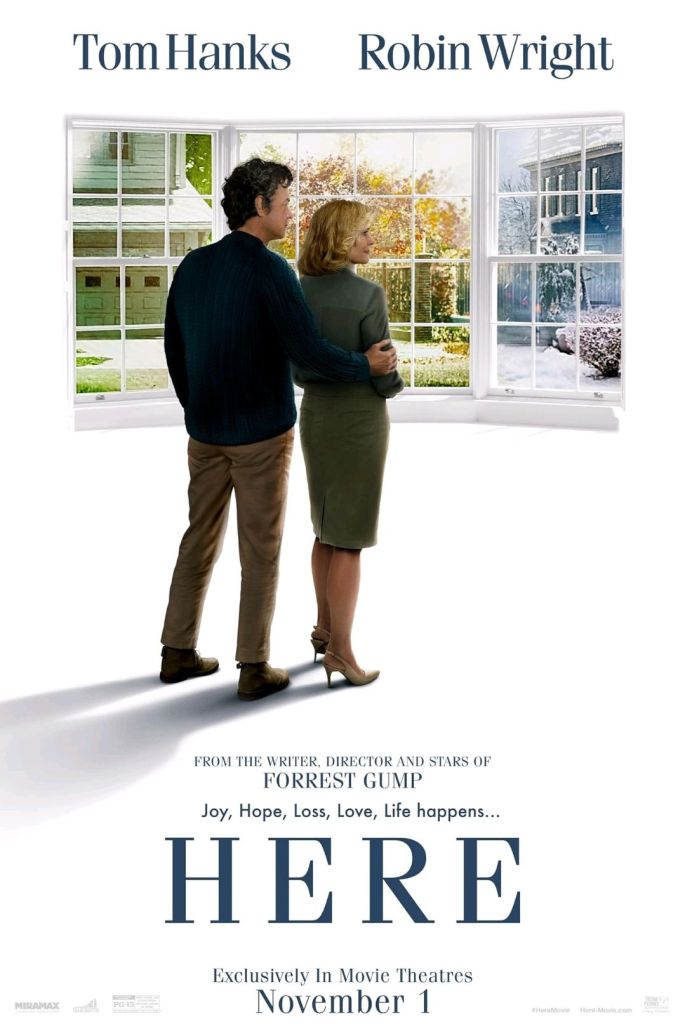
“Here and Gone: Zemeckis’s Temporal Experiment Fades Into the Past”


Robert Zemeckis has long been a filmmaker enamored with technological innovation, from the pioneering motion capture of The Polar Express to the seamless blending of past and present in Forrest Gump.

With Here, he takes on perhaps his most ambitious concept yet—a film that unfolds entirely within the confines of a single room, spanning decades of history and human experience. The idea is fascinating, but the execution? Less so. Despite moments of visual beauty and the ever-reliable presence of Tom Hanks, Here stumbles under the weight of its own ambitions, resulting in a film that is intriguing in theory but uneven in practice.


Direction – C+ (2.8/4.0)

Zemeckis is no stranger to weaving multiple timelines together, yet Here lacks the narrative fluidity of his previous works. The film’s conceptual ambition is admirable—telling the story of a single location through shifting time periods—but its execution feels more like an experiment than a fully realized vision. The seamless transitions between past and present are sometimes striking, but the film struggles to find an emotional throughline that binds these moments together.


Writing – C (2.5/4.0)

The screenplay, based on Richard McGuire’s graphic novel, attempts to transform a static setting into a dynamic, emotional journey. Unfortunately, it often buckles under the weight of its own structure. The dialogue oscillates between profound and perfunctory, with stretches that feel more like scripted monologues than organic conversations. The result is a film that, while rich in visual transitions, lacks a truly compelling narrative drive.


Cinematography – C+ (2.7/4.0)

Visually, Here operates within a unique constraint. The camera remains largely stationary, emphasizing the passage of time through shifting décor, lighting, and staging rather than movement. In some ways, this approach works, allowing for quiet moments of reflection. However, the reliance on de-aging technology—often veering into the uncanny valley—diminishes the overall effect. Instead of enhancing immersion, the artificiality of certain scenes pulls the viewer out of the experience.


Acting – C+ (2.8/4.0)

Tom Hanks, Robin Wright, and Paul Bettany are all seasoned performers, and their presence lends Here a sense of gravitas. Yet, they are often constrained by the film’s rigid structure and awkward pacing.

Tom Hanks delivers moments of quiet brilliance, but the fragmented storytelling prevents his character from feeling fully realized.

Robin Wright, similarly, does her best with what she’s given, though her emotional arcs feel stifled.

Paul Bettany stands out in several key sequences, but even his performance struggles to escape the film’s disjointed rhythm.


The chemistry among the leads flickers rather than burns, leaving many interactions feeling more like staged table reads than organic moments of lived experience.


Editing & Pacing – C (2.4/4.0)

For a film that spans generations, Here struggles with rhythm. Certain transitions between time periods feel jarring rather than fluid, and key emotional moments lack the necessary build-up. Scenes that should resonate are sometimes rushed, while others linger unnecessarily, resulting in a disjointed viewing experience.


Production Design & Costumes – B (3.2/4.0)

One of the film’s strongest aspects is its meticulous attention to detail in set design. The evolution of the single location—from an empty plot of land to a modern home, to its gradual decay—is handled with care. Subtle shifts in color palettes, furniture, and props effectively convey the passage of time, serving as one of the film’s few consistently successful storytelling devices.

Costume design, while not flashy, is surprisingly effective in anchoring the film’s time shifts. The period-accurate wardrobe choices add authenticity, ensuring that each era feels distinct. While some outfits feel slightly too pristine for their respective time periods, the overall execution is commendable, making the film’s costuming one of its more reliable elements.


Sound & Score – C+ (2.9/4.0)

The film’s score, composed by Alan Silvestri, complements its meditative tone but occasionally leans too heavily into sentimentality. The sound design itself is competent, reinforcing the sense of space, but nothing about it stands out as particularly inventive.


Visual & Special Effects – C (2.5/4.0)

Zemeckis’s affinity for digital effects is well documented, and while Here doesn’t rely on spectacle, its use of CGI de-aging proves to be more of a distraction than an enhancement. The film would have benefitted from a subtler approach, as the reliance on technology often overshadows the story itself.


Final Grade: C+ (2.71/4.0) – 67.8%


Verdict:

Here is a film with a fascinating premise that ultimately falls short of its potential. While it boasts moments of visual ingenuity, solid performances, and strong production design, its uneven storytelling, artificial visuals, and lack of emotional depth prevent it from truly resonating. Zemeckis is no stranger to bold cinematic experiments, but in this case, the concept outweighs the execution.


Coach Sydnor’s Grade: C+


Essential Film Information

🎬 Film Title: Here (2024)
🏢 Production Company: Sony Pictures Entertainment
📺 Showrunner: N/A
🎬 Director: Robert Zemeckis
🎥 Cinematographer: Don Burgess
✂️ Editor: Jeremiah O’Driscoll
🎭 Main Actors: Tom Hanks, Robin Wright, Paul Bettany


🔗 IMDb Page: https://www.imdb.com/title/tt15398776/

25-2-16-S RMSDJ 🌄 Rest & Reckoning: The Currency of Energy & Thought

Last night, I surrendered to sleep at 2300 and did not emerge from slumber until 0905—a rare indulgence, yet one my body demanded. The data confirmed what intuition whispered: a stellar sleep score of 94, paired with an energy rating of 90. Despite my initial doubts, my restless moments failed to sabotage the quality of my repose. My body, fatigued from the previous day’s grueling workout, had silently brokered a deal with itself—recovery in exchange for resilience.

Physical Fortitude: A Testament to Discipline

This morning’s exercise session proved gentler than anticipated. Surpassing my usual 20 minutes, I pressed on for 25, burning an unexpected 145 calories. My body, recalibrated from its slumber, moved with greater ease than yesterday. After a satisfactory bowel movement—an extra-large Type 3, in case medical science takes an interest—I proceeded with my habitual wardrobe test. The blue pants of my youth, once defiant, now conceded more room, a testament to my regimen. The silent mechanisms of ketosis and autophagy had begun to pay dividends. Fourteen hours of fasting seamlessly stretched into fifteen, my hunger negligible, my energy stable.
I might have discovered something here.

A session in the jacuzzi awaited, a perfect companion to my ritualistic listening of Masters of Greek Thought. Knowledge, like the body, thrives on discipline. Learning is the perpetual feast—one that never requires fasting.


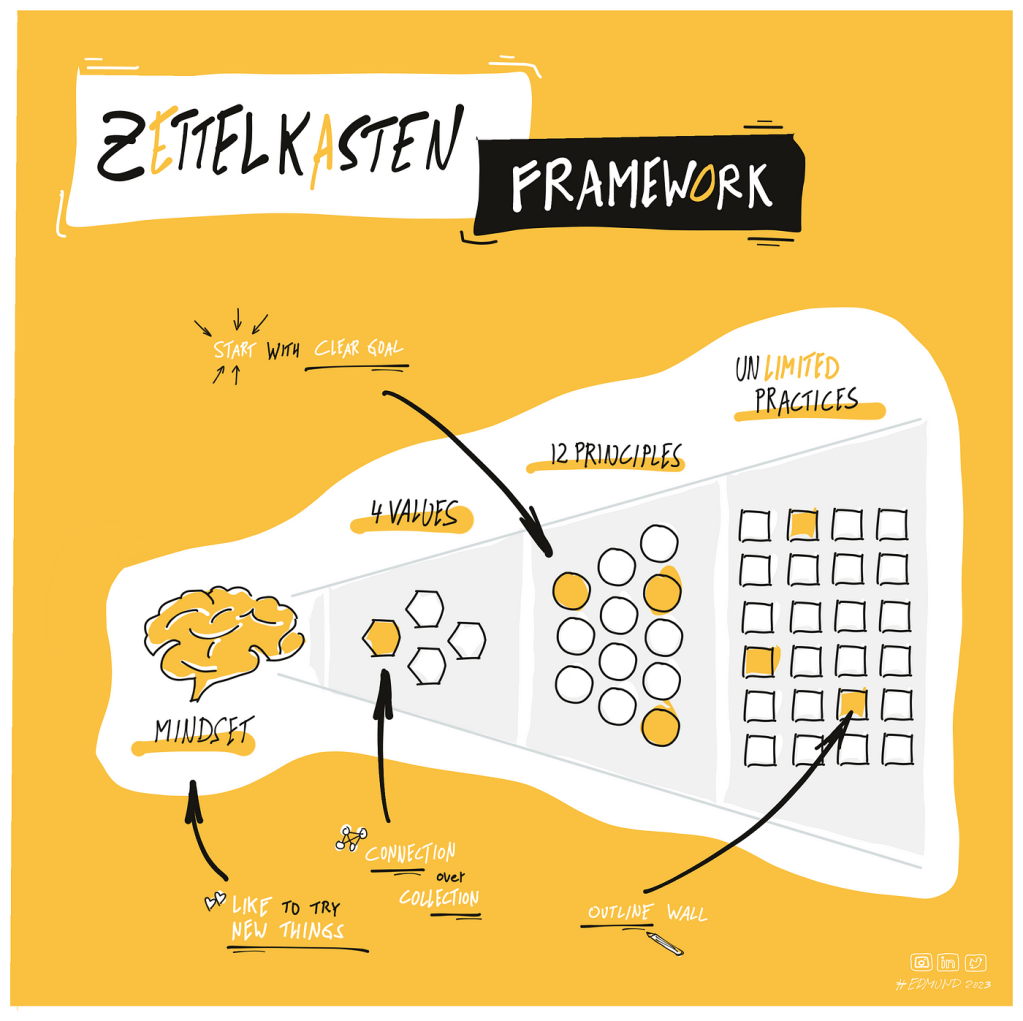
Zettelkasten: A Solution in Search of a Problem?

The term Zettelkasten—from Zettel (note) and Kasten (box)—carries the weight of centuries, yet what truly differentiates it from the modern mind map? The allure of a rebranded idea, wrapped in the sophistication of German etymology, does little to disguise its redundancy. I remain skeptical.

The migration toward every novel system, drawn by the siren song of enhanced productivity, often leads to the same destination: complexity disguised as utility. Samsung Notes, Obsidian, or any number of platforms offer nearly identical functions. Click a node, retrieve a note—no magic in that. Tagging achieves the same interconnectivity. Cesar’s introduction of Obsidian piqued my curiosity, but a 4.2 rating coupled with reports of server instability signals a hustle wrapped in a user interface. Ninety-six dollars for a system that mirrors existing tools? Unwise.

Nonetheless, I reserve judgment. Inquiry precedes dismissal. If there is hidden value, I will unearth it. Until then, the time investment remains unjustified. Simplicity remains the truest sophistication.

♨️ Rescue, Reflection & Renewal


A Moment of Unexpected Rescue

The anticipation of a tranquil soak in the jacuzzi, accompanied by Masters of Greek Thought, set the stage for a moment of restoration. Yet, as I approached the water’s edge, I noticed an unanticipated visitor—a bee, floundering in the turbulent surface, its fragile existence teetering on the brink. Instinct cautioned against a direct rescue; the sting of gratitude need not be literal. Instead, I took a measured approach, crossing the pool deck to retrieve the net designed for clearing leaves. With a careful hand, I lifted the beleaguered creature from the abyss, restoring its chance at flight.

I had set out to rejuvenate myself, yet my first act of the morning became one of preservation. A simple rescue, but one laden with meaning.


Disruptions & Adaptations

With the bee safely deposited beyond harm’s reach, I turned my attention back to the jacuzzi, ready to surrender to its warm embrace. Yet, as I dipped a toe into the water, a sharp chill met my skin. The heat had been extinguished! A quick survey of the pool’s mechanisms revealed the culprit—someone, likely one of the children playing nearby, had triggered the master shut-off, silencing the warmth.

Disappointment flickered. A morning ritual interrupted, a simple pleasure denied. Yet, rather than linger in frustration, I redirected my course. If the water could not offer solace, then my home would. I made my way back to the apartment, where breakfast awaited, along with the continuation of my audiobook. Knowledge, unlike water, never loses its warmth.

Lessons in Adaptability & Appreciation

Though my original plan had been foiled, the day still unfolded with quiet richness. The audible selection proved enlightening, a reminder that even small fragments of wisdom accumulate into something greater. The disappointment of a lukewarm morning was overshadowed by the deeper satisfaction of learning. And lunch—ah, lunch—delicious beyond expectation, a small indulgence that reaffirmed the importance of savoring life’s simplest joys.

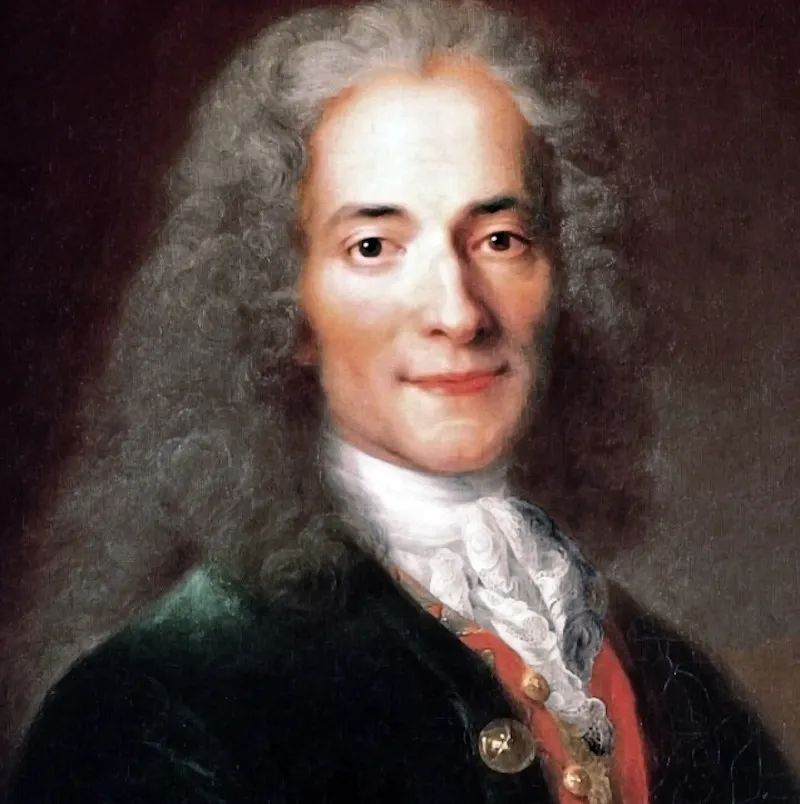
Voltaire

“Doubt is an uncomfortable condition, but certainty is a ridiculous one.”
                  

This morning, I am grateful for the paradox of energy—how proper rest fuels action, and action demands rest. I am grateful for the quiet discipline of fasting, the ability to sustain hunger without suffering. I am grateful for the mind’s resilience, its capacity to reassess, adapt, and decide: to forgive Aubrey’s debt or to press upon it, to embrace new systems or discard them. Every decision, no matter how small, defines the architect of my life.


I am grateful for the small acts that shape the day—the unexpected rescues, the lessons disguised as inconveniences, the quiet moments where knowledge finds its way in. I am grateful for the presence of mind to shift course when necessary, to find fulfillment beyond rigid expectations. Even in disruption, there is grace.

Wrongly Convicted!

Dan, that Instagram post you sent made me pause. The image—him embracing, I assume, his sister—held a weight that I couldn’t ignore. Given the work you’ve done defending the wrongly convicted, I knew this was more than just another headline.


I read into it, and what I found was infuriating. His 1993 murder conviction was vacated after thirty years—three decades stolen. No ruling can restore that time. No apology can undo that loss. And the worst part? He’s not the exception. He’s the pattern. Kirk Bloodsworth, sentenced to death in Maryland, later exonerated by DNA. Gary Gauger, convicted of his parents’ murder, imprisoned for years before the truth surfaced. The system gets it wrong far more often than people admit.


The courts will call it a regrettable mistake. The system will move on. But for him, it wasn’t a mistake—it was a sentence, and it lasted thirty years.


As Voltaire put it, “It is better to risk saving a guilty person than to condemn an innocent one.” But America does the opposite. It rushes to close cases, to assign blame—truth be damned.


This isn’t just another overturned conviction. It’s another man whose life was erased because the system values certainty more than accuracy. And if we don’t demand better, it’ll keep happening. Not because it’s rare. Because it happens all the time.

Wrongly Convicted

James Lonhorne

Dan, that Instagram post you sent made me pause. The image—him embracing, I assume, his sister—held a weight that I couldn’t ignore. Given the work you’ve done defending the wrongly convicted, I knew this was more than just another headline.I read into it, and what I found was infuriating. His 1993 murder conviction was vacated after thirty years—three decades stolen. No ruling can restore that time. No apology can undo that loss. And the worst part? He’s not the exception. He’s the pattern.

Kirk Bloodsworth, sentenced to death in Maryland, later exonerated by DNA. Gary Gauger, convicted of his parents’ murder, imprisoned for years before the truth surfaced. The system gets it wrong far more often than people admit.The courts will call it a regrettable mistake. The system will move on. But for him, it wasn’t a mistake—it was a sentence, and it lasted thirty years.As Voltaire put it, “It is better to risk saving a guilty person than to condemn an innocent one.”

But America does the opposite. It rushes to close cases, to assign blame—truth be damned.This isn’t just another overturned conviction. It’s another man whose life was erased because the system values certainty more than accuracy. And if we don’t demand better, it’ll keep happening. Not because it’s rare. Because it happens all the time.

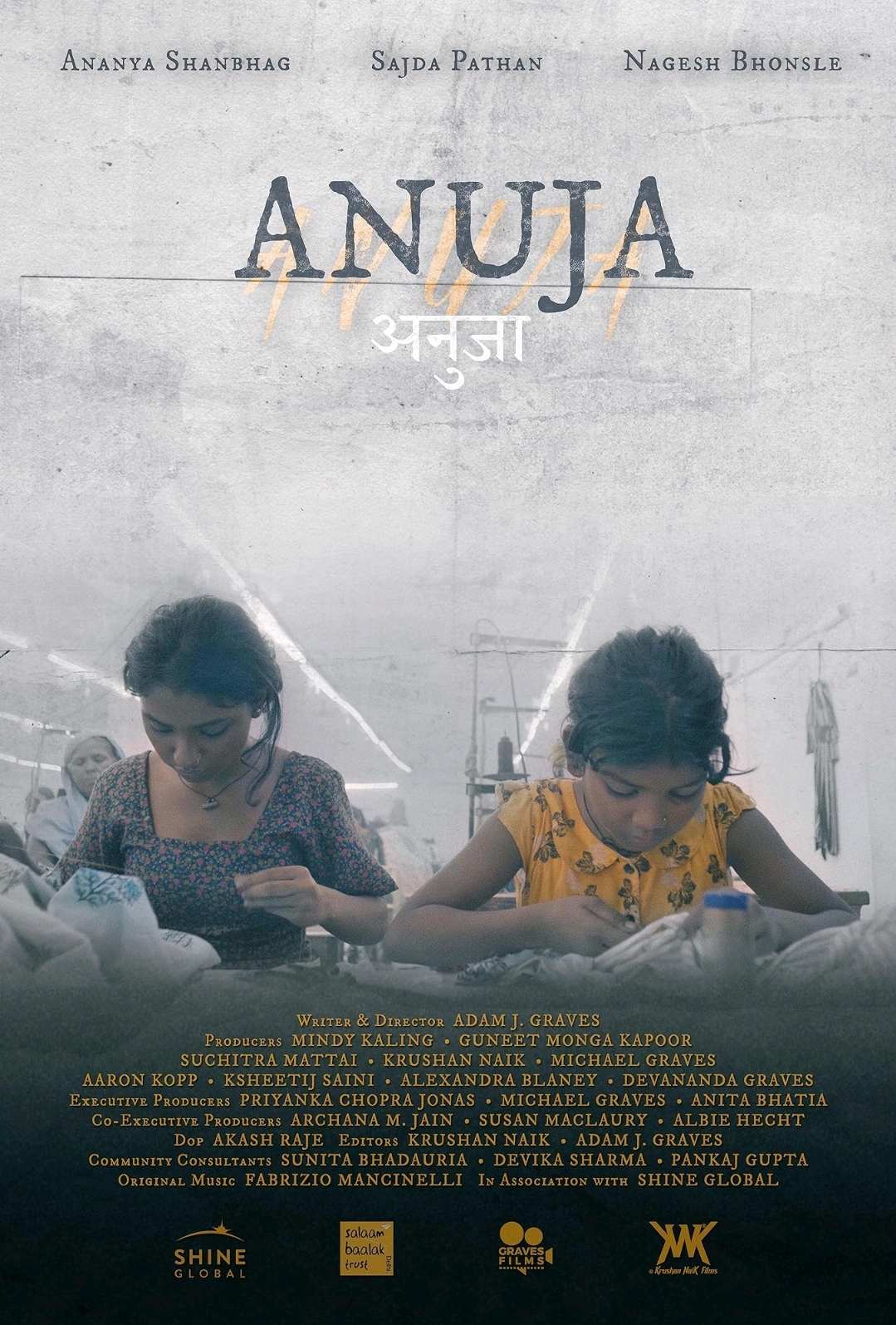
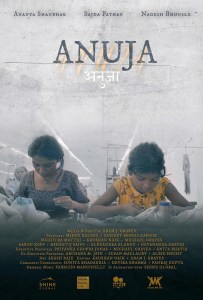
Anuja: A Tender Portrait of Sisterhood, Sacrifice, and Silent Dreams

An Indian film with English subtitles, Anuja is a 22-minute meditation on childhood, resilience, and the precarious balance between sacrifice and aspiration. Shot in the bustling streets and shadowed factories of New Delhi, director Adam J. Graves crafts a narrative that is both intimate and unflinching—a story of a young girl whose mathematical brilliance offers her an escape. But at what cost?

Sajda Pathan delivers a remarkable performance as Anuja, a girl barely ten yet already hardened by factory work. Her sister Palak (Ananya Shanbhag) shoulders the burden of both sibling and surrogate mother, navigating their meager existence with an almost defiant warmth. Their relationship—rooted in playfulness, yet shadowed by necessity—forms the film’s emotional core. And in that relationship, the film finds a subtle poetry: Anuja is not just a name. In Sanskrit, it means “younger sister”—one born after, one who follows. It is a name that carries with it the weight of inheritance, of lives shaped by those who came before. The story, too, echoes this meaning, tracing the invisible thread of duty that binds the sisters together.

The cinematography by Akash Raje amplifies this intimacy. Close-ups linger on the sisters’ quiet moments, the camera embracing their laughter as tightly as their struggles. The streets of New Delhi pulse with life, textured with grime, movement, and light. Without relying on CGI or over-stylization, the film captures the city in all its raw immediacy—both a place of suffocating limitation and distant possibility.

The supporting cast deepens the film’s authenticity. Nagesh Bhonsle embodies a familiar villain—the paan-chewing factory boss whose indifference to child labor is as habitual as his spitting. But the film’s most intriguing tension comes from the well-meaning but transactional Mr. Mishra (Gulshan Walia), whose offer of an elite boarding school education dangles between salvation and disruption.

Yet Anuja is more than a social issue film. Graves, a philosopher-turned-filmmaker, resists sentimentality. The story unfolds with restraint, letting the audience absorb the unspoken: the weight of decisions, the pull of familial duty, the uneasy space between opportunity and abandonment. Anuja is a child, but also a symbol—a girl who, for one fleeting moment, holds two futures in her hands.

Despite its many strengths, the film’s brevity leaves certain depths unexplored. Palak’s character, in particular, could have been given more room to develop beyond her selflessness. And while Anuja avoids heavy-handed messaging, some viewers may find its understated approach too restrained, yearning for a more definitive resolution.

Still, Anuja lingers. It is a story of two roads diverging—not just for one girl, but for countless others like her. The choice is hers, yet not entirely. And perhaps that is the film’s quiet tragedy.

Anuja has garnered critical acclaim, culminating in a nomination for Best Live Action Short Film at the 97th Academy Awards. The film is available for streaming on Netflix.

corybantic


CORYBANTIC

IPA PRONUNCIATION FOR CORYBANTIC

/ˌkɒrɪˈbæntɪk/

PHONEMIC PRONUNCIATION

cor·y·ban·tic ˌkȯr-ə-ˈban-tik

DEFINITIONS

Adjective: Wildly excited; frenzied, especially in reference to ecstatic dancing or rituals.

ETYMOLOGY

Derived from the name of the Corybantes, the frenzied priests of the Phrygian goddess Cybele, who engaged in wildly ecstatic dances and music as part of their worship. The term entered English via Latin Corybantici and Greek Korubantikos in reference to such ecstatic behavior.

ENLIGHTENMENT

Imagine an ancient religious festival where the air is thick with incense, drums pound like a frenzied heartbeat, and worshippers whirl in a state of euphoric madness. That’s the origin of CORYBANTIC.

SAMPLE SENTENCES (LITERAL)

  1. The CORYBANTIC drumming of the street performers attracted a growing crowd of fascinated onlookers.
  2. During the festival, dancers entered a CORYBANTIC trance, twirling and leaping without restraint.
  3. The orchestra’s percussionist, lost in the music, played with a CORYBANTIC intensity that left the audience breathless.
  4. At the rave, neon lights flashed over a sea of bodies moving in CORYBANTIC ecstasy.
  5. The CORYBANTIC energy of the crowd at the championship parade was both thrilling and slightly terrifying.
  6. When the heavy metal band took the stage, the audience erupted into a CORYBANTIC frenzy of headbanging and moshing.
  7. The chef’s CORYBANTIC chopping rhythm made even the most experienced sous-chefs nervous.
  8. A CORYBANTIC cheer exploded in the stadium as the underdog team scored the winning goal.
  9. The child’s CORYBANTIC excitement over his new puppy made it impossible to get him to sit still.
  10. At Mardi Gras, the streets pulse with CORYBANTIC music, laughter, and untamed celebration.

SAMPLE SENTENCES (FIGURATIVE)

  1. The stock market’s CORYBANTIC fluctuations left investors in a state of panic.
  2. The actor’s CORYBANTIC acceptance speech was so intense, security had to guide him off the stage.
  3. Thanksgiving at Aunt Martha’s was a CORYBANTIC mess of flying turkey legs, screaming toddlers, and an overcooked pie.
  4. The professor’s CORYBANTIC lecture was a whirlwind of passion, theories, and barely legible whiteboard notes.
  5. After winning the lottery, she ran through the streets in a CORYBANTIC celebration, hugging strangers.
  6. The novelist, in a CORYBANTIC burst of inspiration, wrote 20 pages before realizing she hadn’t eaten all day.
  7. Twitter erupted in a CORYBANTIC storm of opinions when the celebrity posted an ambiguous tweet.
  8. His CORYBANTIC proposal involved fireworks, a parade, and a live band—she was more terrified than charmed.
  9. The kindergarten classroom was in a CORYBANTIC state after the teacher announced an unexpected ice cream party.
  10. As the courtroom erupted into chaos, the judge banged his gavel in a CORYBANTIC attempt to restore order.
  11. The CORYBANTIC energy of the political rally escalated when the candidate unexpectedly leaped onto a table to deliver an impassioned speech.
  12. The toddler’s CORYBANTIC meltdown in the grocery store was so intense that shoppers in aisle five mistook it for a fire drill.
  13. After hearing the news of the canceled flight, the airport terminal descended into CORYBANTIC confusion as passengers scrambled to rebook.
  14. The tech startup’s CORYBANTIC launch event featured flashing lights, a DJ, and executives riding in on scooters.
  15. The courtroom became CORYBANTIC when the surprise witness revealed a shocking piece of evidence.

SYNONYMS

frenzied

manic

ecstatic

unrestrained

tumultuous

exuberant

wild

ANTONYMS

calm

tranquil

measured

subdued

restrained

LITERARY GEM

In Euripides’ play The Bacchae, the followers of Dionysus engage in wild, CORYBANTIC dancing, surrendering to divine madness.

MNEPHONICS

Picture a group of grandmothers at a bingo hall. Suddenly, the host calls out, “Bingo jackpot!” Chaos erupts—grandmas leap onto tables, flinging bingo cards, waving purses like battle axes. One even breaks into a breakdance. This is CORYBANTIC energy at its finest.

LOGOPHILE HUMOR

A philosopher, a DJ, and a toddler walk into a bar.
The philosopher muses, “True joy is a state of tranquil reflection.”
The DJ cranks up the bass, shouting, “Nah, man, it’s pure rhythm!”
The toddler throws his sippy cup and screams, “CORYBANTIC!”
The bartender sighs. “Great. Another Friday night.”

peregrination

IPA Pronunciation

/ˌpɛrɪɡrɪˈneɪʃən/

Phonemic Pronunciation Key

per·e·gri·na·tion ˌper-ə-grə-ˈnā-shən

Definitions

1. A long journey or voyage, especially one taken on foot.

2. The act of traveling from place to place, often with a sense of wandering or exploration.

3. A metaphorical journey, often referring to a search for knowledge or self-discovery.

Etymology

Derived from Latin peregrinatio (meaning ‘a journey abroad’), which stems from peregrinus (‘foreigner’ or ‘traveler’), itself composed of per- (‘through’) and ager (‘field, land’). It passed into Old French as peregrinacion before being adopted into Middle English in the 15th century. The term originally signified a pilgrimage but gradually evolved to describe any prolonged journey or wandering.

Enlightenment

From medieval pilgrims trekking across continents to modern digital nomads bouncing between co-working spaces, peregrination has always been a defining element of human experience. The legendary Ibn Battuta (1304–1369), one of history’s greatest travelers, exemplified this word, covering nearly 75,000 miles over 30 years—an astonishing feat before the advent of modern transportation.

The idea of peregrination is also deeply ingrained in literature. Homer’s Odysseus spent a decade navigating the seas in his tumultuous journey home, a classic tale of perseverance and discovery. Similarly, Jack Kerouac’s On the Road transformed the word into a modern metaphor for existential exploration.

In the digital age, peregrination has taken new forms. Influencers and travel bloggers have made a career of their wanderings, documenting their perpetual motion across continents. Even in the corporate world, the idea of “job hopping” has become a kind of peregrination, as professionals move from one opportunity to another in search of fulfillment.

Sample Sentences (Literal)

1. Marco Polo’s peregrination through Asia introduced Europeans to the wonders of China.

2. Tolkien’s Frodo embarked on a perilous peregrination to Mount Doom.

3. In his later years, Leonardo da Vinci engaged in a constant peregrination between royal courts.

4. During her solo peregrination across South America, the explorer documented indigenous cultures.

5. Ernest Hemingway’s peregrination through Spain inspired The Sun Also Rises.

6. Theodore Roosevelt’s Amazonian peregrination nearly cost him his life.

7. The monks’ annual peregrination through the Himalayas was both a test of endurance and faith.

8. Jack Kerouac chronicled his peregrination across America in On the Road.

9. The journalist’s peregrination across war zones earned her international acclaim.

10. Vasco da Gama’s peregrination to India revolutionized global trade.

Figurative Definition

Beyond physical travel, peregrination can describe a person’s journey through life, education, or even personal transformation. It often implies meandering, self-discovery, or deep reflection.

For instance, Albert Einstein’s intellectual peregrination led him from patent clerk to the father of modern physics. Oprah Winfrey’s career peregrination took her from local news anchor to media mogul.

Sample Figurative Sentences

1. Nikola Tesla’s peregrination through scientific discovery illuminated the future of electricity.

2. Frida Kahlo’s peregrination through pain and art made her an icon of resilience.

3. The company’s decade-long peregrination through failed ventures finally led to success.

4. The young musician’s peregrination through jazz clubs shaped her unique sound.

5. Malcolm X’s spiritual peregrination led him to Mecca and transformed his worldview.

6. The scientist’s intellectual peregrination led to groundbreaking discoveries in genetics.

7. The poet’s emotional peregrination was evident in his deeply personal verses.

8. Martin Luther’s peregrination through theological conflict reshaped Christianity.

9. After years of corporate peregrination, he found peace in a simple rural life.

10. The film captures the protagonist’s peregrination through love, loss, and redemption.

11. The artist’s stylistic peregrination took her from realism to surrealism.

12. Heraclitus’ philosophical peregrination resulted in the idea that “change is the only constant.”

13. The author’s literary peregrination explored themes of identity and belonging.

14. From punk rock to classical symphonies, his musical peregrination was remarkable.

15. The chef’s global peregrination influenced her innovative fusion cuisine.

Synonyms

1. Odyssey

2. Journey

3. Expedition

4. Trek

5. Pilgrimage

6. Voyage

7. Quest

8. Roaming

9. Wandering

10. Sojourn

Antonyms

1. Stagnation

2. Immobility

3. Inactivity

4. Rest

5. Stability

6. Stillness

7. Settlement

8. Rootedness

9. Fixation

10. Inertia

Literary Gem

In Laurence Sterne’s A Sentimental Journey Through France and Italy, the protagonist reflects on his travels:

“The soul of a journey is liberty, perfect liberty, to think, feel, do just as one pleases.”

Here, peregrination represents more than movement—it embodies freedom, introspection, and the unpredictable beauty of exploration. Sterne’s novel transforms travel into an existential pursuit, where the act of journeying itself becomes an art form.

Mnephonics

Imagine an old-school pirate setting out on a long peregrination across the seas—except instead of treasure, he’s searching for the world’s best Wi-Fi signal.

Or picture a snail in hiking boots with a tiny backpack, inching across a vast landscape on a grand peregrination to find the perfect lettuce leaf.

If you have trouble making up images, create a story and record it on your phone’s recording app. Play it back to help you retain the word.

Logophile Humor

Two snails are talking.

“I just returned from a peregrination around the garden.”

The other snail sighs.

“Show-off. I barely made it past the flowerpot.”


synastry


WORDQUEST

IPA 

/sɪˈnæstri/

/sɪ/ – lowercase s, voiceless alveolar fricative, as in sit,
/ɪ/ – near-close front unrounded vowel, as in kit.

/ˈnæs/ –
/n/ – voiced alveolar nasal, as in no,
/æ/ – near-open front unrounded vowel, as in cat,
/s/ – voiceless alveolar fricative, as in sun.

/tri/ –
/t/ – voiceless alveolar plosive, as in top,
/r/ – voiced alveolar approximant, as in red,
/i/ – close front unrounded vowel, as in see.

PHONEMIC PRONUNCIATION

syn·as·try ˈsi-nə-strē

DEFINITIONS

1. (Noun) The comparison of two or more astrological charts to determine compatibility, particularly in relationships.

2. (Noun) An interaction between two or more entities that results in a harmonious or discordant relationship.

ETYMOLOGY

Derived from Greek *syn-* meaning “together” and *astron* meaning “star.” The term originated in the 17th century in astrological studies to describe the alignment and interactions of celestial bodies influencing human relationships.

ENLIGHTENMENT

Synastry has fascinated humans for centuries, from ancient astrologers mapping celestial connections to modern relationship counseling. Did you know that Nancy and Ronald Reagan famously consulted an astrologer for synastry charts to guide their public and private lives?

Astrology aside, the concept has found a metaphorical home in science and culture. For instance, the groundbreaking collaboration between Steve Jobs and Steve Wozniak at Apple could be described as a form of professional synastry—a perfect alignment of vision and technical skill.

On a historical note, Emperor Augustus supposedly used early forms of synastry to ensure favorable marriages among Roman elites. He believed that harmonious unions could stabilize his empire, demonstrating how synastry transcends romance, spilling into politics and governance.

SAMPLE SENTENCES (LITERAL)

1. Princess Diana and Prince Charles’s SYNASTRY chart showed intense challenges and karmic connections.

2. Astrologers analyzed the SYNASTRY between Marilyn Monroe and Joe DiMaggio, claiming their union was doomed by clashing planetary alignments.

3. The SYNASTRY of Barack and Michelle Obama’s charts reveal mutual respect and shared goals.

4. Cleopatra might have consulted a seer for SYNASTRY insights before wooing Julius Caesar.

5. The Beatles’ SYNASTRY revealed how their unique personalities and talents harmonized into legendary success.

6. Shakespeare’s SYNASTRY with the stars suggests why his plays resonate universally.

7. Madonna’s SYNASTRY with collaborators like Nile Rodgers spurred her chart-topping hits.

8. A SYNASTRY reading hinted that Brad Pitt and Jennifer Aniston had unfinished karmic business.

9. J.K. Rowling’s SYNASTRY with her creative muse aligns with her literary triumphs.

10. A SYNASTRY analysis of Mahatma Gandhi and Jawaharlal Nehru might explain their shared vision for India.

FIGURATIVE DEFINITION

Figuratively, synastry describes any relationship, professional or personal, where two or more entities interact with harmonious or discordant outcomes. It’s used to describe partnerships, collaborations, and even the interplay of ideas or ideologies.

SAMPLE FIGURATIVE SENTENCES

1. The SYNASTRY between Tesla and Edison lit up the world—quite literally.

2. Einstein and Bohr’s intellectual SYNASTRY reshaped modern physics.

3. Taylor Swift’s SYNASTRY with heartbreak has crafted chart-topping albums.

4. The SYNASTRY of Picasso and Cubism created a revolution in art.

5. Kanye West and controversy seem to have an uncanny SYNASTRY.

6. Greta Thunberg’s SYNASTRY with climate activism has inspired a generation.

7. The SYNASTRY between Marie Curie and radiation changed the world.

8. Elon Musk’s SYNASTRY with innovation has fueled SpaceX and Tesla’s success.

9. The SYNASTRY between Adele’s voice and her lyrics creates pure magic.

10. Oprah Winfrey’s SYNASTRY with authenticity keeps her at the heart of popular culture.

11. The SYNASTRY of rival chess masters Carlsen and Nakamura keeps fans on edge.

12. Beyoncé and Jay-Z’s SYNASTRY have made them a cultural powerhouse.

13. The SYNASTRY between Roosevelt and Churchill helped defeat the Axis powers.

14. A SYNASTRY of bold ideas and calculated risks defines Silicon Valley startups.

15. Frida Kahlo’s SYNASTRY with Diego Rivera fueled both passion and pain.

SYNONYMS

Harmony
Alignment
Compatibility
Interplay
Congruence

ANTONYMS

Discord
Disharmony
Conflict
Incompatibility
Dissonance

LITERARY GEM

In Jane Austen’s Pride and Prejudice, Elizabeth Bennet and Mr. Darcy exhibit a gradual SYNASTRY of intellect and emotion. Initially at odds, their growing compatibility unfolds as their mutual respect and understanding develop.

This illustrates how synastry, even in its figurative sense, reflects the evolving dynamics of relationships, whether celestial or grounded in human interaction.

MNEPHONICS

Picture two stars tangoing across a cosmic dance floor, perfectly in sync, creating a dazzling light show. That’s SYNASTRY—a celestial ballroom where relationships are choreographed by the cosmos.

If you have trouble making up images, create a story and record it on your phone using a recording app. Play it back to help you retain the word.

LOGOPHILE HUMOR

Synastry isn’t just for the stars—it’s for the astrologer trying to explain why your ex was “written in the stars” while secretly thinking, “They should’ve stayed in their lane!”


GAINSAY

IPA

/ˈɡeɪnˌseɪ/

– /ˈɡeɪn/:
– /ɡ/: Voiced velar plosive, as in “go.”
– /eɪ/: Diphthong, combining a close-mid front unrounded vowel and near-close near-front unrounded vowel, as in “say.”
– /n/: Voiced alveolar nasal, as in “net.”

– /ˌseɪ/:
– /s/: Voiceless alveolar fricative, as in “sun.”
– /eɪ/: Diphthong, combining a close-mid front unrounded vowel and near-close near-front unrounded vowel, as in “say.”

PHONEMIC PRONUNCIATION

gain·say ˈɡeɪnˌseɪ

DEFINITIONS

  1. Verb (transitive): To declare false or deny something.
  2. Verb (transitive): To oppose or contradict, often with authority or determination.

ETYMOLOGY

Derived from Middle English *gainsayen*, meaning “to contradict,” a combination of *gain-* (against) and *sayen* (to say).
The prefix *gain-* stems from Old English *gegn* (against, toward), while *say* originates from Old English *secgan* (to speak, declare).

ENLIGHTENMENT

The term *gainsaid* carries the weight of dissent and defiance. Historically, it was a weapon of choice for contrarians like Galileo Galilei,
who gainsaid the Church’s geocentric dogma. Today, “gainsaying” thrives in political discourse and debate, where facts and opinions are endlessly challenged.
The beauty of this word lies in its applicability to both grand philosophical debates and petty arguments over who left the milk out.

The art of gainsaying also finds a home in literature. Consider the Brontë sisters, whose characters often gainsay societal norms with rebellious determination.
In *Jane Eyre*, Jane’s quiet but firm resistance to Rochester’s entreaties can be seen as a testament to the power of saying “no.” Gainsaying, thus, is not just
an act of opposition but also an assertion of identity and principle.

SAMPLE SENTENCES (LITERAL)

  1. Galileo GAINSAYED the Church’s teachings, risking his freedom for the truth of heliocentrism.
  2. Marie Curie GAINSAYED the skeptics, proving that women could excel in scientific discovery.
  3. Mark Zuckerberg GAINSAYED critics of Facebook’s algorithms with a complex yet evasive explanation.
  4. Serena Williams GAINSAYED her detractors by winning the Grand Slam while pregnant.
  5. Winston Churchill often GAINSAYED his war advisors when their plans seemed overly cautious.
  6. Frida Kahlo GAINSAYED societal expectations with her bold, self-revealing art.
  7. Ruth Bader Ginsburg GAINSAYED gender discrimination with a sharp legal mind and relentless persistence.
  8. LeBron James GAINSAYED doubters by leading his team to victory against all odds.
  9. Greta Thunberg GAINSAYED world leaders, demanding urgent action on climate change.
  10. Nikola Tesla GAINSAYED Thomas Edison’s DC current system, promoting the superiority of AC current.

FIGURATIVE DEFINITION

To oppose or challenge an idea, assumption, or norm metaphorically, often representing resistance against an established belief or dominant power.

SAMPLE FIGURATIVE SENTENCES

  1. Beyoncé GAINSAYED the music industry’s standards by dropping a surprise visual album.
  2. Picasso GAINSAYED traditional art styles, creating his groundbreaking cubist masterpieces.
  3. Oprah Winfrey GAINSAYED stereotypes of daytime talk shows, transforming them into platforms for inspiration.
  4. Malala Yousafzai GAINSAYED the Taliban’s oppression by advocating for girls’ education.
  5. The punk rock movement GAINSAYED societal conformity with its raw, rebellious energy.
  6. Albert Einstein GAINSAYED Newtonian physics with his theory of relativity.
  7. Shakespeare GAINSAYED the rigid norms of his time, writing female characters with profound depth.
  8. The Wright brothers GAINSAYED skeptics, proving that heavier-than-air flight was possible.
  9. Lady Gaga GAINSAYED conventional fashion with her infamous meat dress.
  10. Gandhi GAINSAYED colonial rule with nonviolent resistance, inspiring millions worldwide.
  11. Martin Luther King Jr. GAINSAYED systemic racism with his eloquent calls for justice and equality.
  12. JK Rowling GAINSAYED traditional fantasy tropes, crafting a world where love and bravery triumph.
  13. Simone Biles GAINSAYED the limits of gymnastics, executing moves previously deemed impossible.
  14. Steve Jobs GAINSAYED mediocrity, insisting on innovation and perfection at Apple.
  15. The Beatles GAINSAYED musical norms, experimenting with styles that redefined popular music.

SYNONYMS

contradicted

disputed

denied

refuted

opposed

ANTONYMS

agreed

confirmed

validated

endorsed

accepted

LITERARY GEM

In Shakespeare’s *Julius Caesar*, Cassius gainsays Caesar’s godlike status, sowing the seeds of rebellion.
His words, “Why, man, he doth bestride the narrow world like a Colossus,” challenge Caesar’s perceived invincibility.
This gainsaying sets the tone for the conspirators’ dissent.

MNEPHONICS

Picture a lawyer passionately *gaining* ground in a courtroom, as they *say* something to dispute their opponent’s claims.
The opposing lawyer turns red with fury, slamming their fist on the table.

If you struggle with visualization, record a story about someone dramatically gainsaying a ridiculous idea (like claiming pigs can fly), and replay it to embed the word in memory.

LOGOPHILE HUMOR

What did the skeptic say to the optimistic calendar?
“I GAINSAY your claim that every day is a good day!”