25-09-14-S | 12:52 PST | 🌥️ ☀️ | 🌡️90° – 63° | Northridge, CA 🌗 Last quarter moon is in ♊➝♋ 🌿 Season (Late Summer) 📍 Week 38 | Day 257/365 | 108 Days Remaining 🌇 Sunset: 19:01 National Day 🙅🏽♀️ Parents Day Off!
Today unfolded less in motion and more in quiet reckoning. After submitting to the flu shot and yesterday’s blood draw at Kaiser, I felt unmistakably enervated—not shattered, but subtly drained, as if the body had paid its dues to medicine and now demanded a day of recompense. A caffeine pill at 10:35 lifted the curtain briefly, enough to power through my abdominal routine with the ab-carver, but the energy never settled into permanence. My left knee, healing but not yet trustworthy, urged me to listen. Rest was no indulgence; it was instruction.
The morning found me in conversation. A call to Bank of America became a conversation of depth when DeMarcus, a young man on the other end, turned a routine transaction into a forty-two–minute exploration of The Fasting Life. He pulled up my web pages, lingered on the vision behind the book, and pledged to buy it. I felt the familiar satisfaction of seeing words take root in unexpected soil.
Later came my exchange with Mark, which stretched to two hours and thirty-eight minutes, a length that revealed both kinship and concern. We spoke of many things, but his Subaru became the central emblem of the dialogue. He had finally let go of his father’s Lincoln Continental, unwilling to risk questionable smog tests, and traded it for a Subaru Outback Touring XT—an investment of $42,000 that he now calls one of his wisest decisions. For his niece Azra, preparing for the California Bar in November, he purchased a separate Subaru, a new model valued at $32,000. To him, Subaru represents not only reliability but loyalty: a company that stands by its product with a generous five-year warranty, covering service and mileage with assurance he finds rare.
Mark now uses his own Subaru as a work vehicle, fitting for the new chapter he is entering. Together with his siblings Marsha and Mike, he manages the Henry properties, and the car has become his companion for electrical jobs and maintenance tasks. He praises its power, its comfort, and the sense that it will serve him faithfully for years. In a way, the Subaru is both a workhorse and a symbol: a bridge from the relics of his father’s past to the practical needs of his present.
Our conversation, of course, roamed wider. ScreenPappy, the service I helped name, continues to demand his energy. He spoke of a Filipino woman whose intended marriage has unraveled, of clients unsure whether to return devices, of the daily uncertainty in work and human dealings. I, in turn, spoke of my own purchase: a Seagate four-terabyte hard drive for $130 with tax. Mark steered me away from the glamour of SSDs, better left to gamers, toward the practical solidity of HDDs—more space for less cost, a machine made for capacity rather than speed. Memory, whether human or mechanical, benefits from breadth as much as brilliance.
By evening, I was aware that the flu shot had left its subtle but undeniable mark. Though caffeine masked the weakness for a time, the truth was inescapable: energy had ebbed, and the only wisdom was stillness. Fasting, too, had carried me far: 24 hours, then 25, then 19 today, before breaking the fast with pasta and meatballs, corn, cake, cookie, pie. Not indulgence, but balance. Not waste, but reward.
The day closed as it began—with a quiet reminder that life’s machinery must be serviced, its strength rebuilt. Energy wanes, but it is in the ebb that renewal begins.
🏛️ Wisdom’s Lens
Hippocrates: “If you are not your own doctor, you are a fool.”
🔎 Hippocrates reminds us that wisdom lies in heeding the body’s counsel before illness forces its command.
🏛️ Wisdom’s Lens
Heraclitus: “Even sleepers are workers and collaborators in what goes on in the universe.”
🔎 Heraclitus shows us that rest is not idleness; even in stillness, we remain part of the world’s unfolding.
🌅 Closing Meditation
Rest is not retreat; it is the art of replenishment, the pause between notes that makes the music whole.
🔎 By giving the body its interval of quiet, strength is tuned again to harmony.
🎨 Painterly Caption
In late sunlight: a Subaru gleams at the curb, its hood lifted like a beast ready for labor. Beside it, a hard drive hums on a desk, while a half-finished plate of food hints at the discipline of fasting interrupted by necessary reward.
Reflections of Gratitude
I am grateful for DeMarcus, whose curiosity affirmed the power of words to spark connection. For Mark, whose loyalty to Subaru mirrors his own sense of duty. For Azra, whose preparation for the Bar reminds me that every generation must prove itself. For the flu shot, subtle though its toll, that nudged me toward rest. For fasting, which continues to refine both discipline and body. These, woven together, remind me that life is not simply endured but cultivated—one day, one decision, one conversation at a time.
🌹 Message to Rose Apartments Staff — September 2025
The Invisible Thread
There are ties you cannot see, and yet they hold everything together.
At Rose Apartments, that thread runs through your work. It shows in the voice that greets a tenant with kindness. In the hand that tightens a bolt so a railing does not give way. In the quiet check-in with a neighbor whose light stayed off too long.
You may not always notice the thread you weave, but without it, the fabric frays. Without it, the building weakens. Without it, the community loses shape.
This is no small thing. It is the difference between walls that merely stand and walls that shelter; between a property and a place.
You do not just maintain apartments — you maintain trust. You do not simply fix things — you hold them together. And in doing so, you remind us all that the strongest forces are often unseen.
So let this month carry an often forgotten truth: the thread you weave runs deeper than you know, and it keeps our community whole.
It hums without sound, a current beneath stone. Hands unseen bind walls, hearts unseen bind home.
Not steel, not wood, but kindness instead — the strongest frame is an invisible thread.
—R.M. Sydnor
🪶 Affirmation
I carry connection in my work. I weave strength even when unseen. I turn labor into loyalty and care into community. Today, I will be the thread that holds.
🌅 Closing Meditation
What is invisible often proves indestructible.
🔎 Strength that hides itself lasts longer than strength that demands to be seen.
🗓️ 25-08-29-F | 11:13 PST | 😎 | 🌡️95° – 69° | Northridge, CA 🌒 Waxing crescent moon is in ♍ | 🌿 Season (Late Summer) 📍 Week 35 | Day 241/365 | 124 Days Remaining 🌇 Sunset: 19:23 National Day 🏈⚾🏀 Sports Sampling Day
The day’s exchanges remind me of how language functions not only as a tool of commerce but as a vessel of persuasion, meditation, and subtle art. What began as a letter for a team became, in truth, a mirror for myself: a reminder that every line I write bears a dual purpose. One purpose is outward—speaking to a reader, a partner, or an audience. The other purpose is inward—refining my own clarity of thought.
When I strip away the dialogue, I see the shape of my conviction: that language can sell without selling, can persuade without pressure. It is not merely a doorway into a book or an idea; it is a doorway into recognition, into the unspeakably perfect miracle of attention itself. What I sought in these words was not decoration but architecture, not ornament but structure.
There is always the temptation to let prose drift into abstraction, to decorate with “are” and “is.” But strength rests in verbs that act. Verbs move; they reach, they open, they punctuate, they echo. They are the scaffolding that turns a message into a structure able to hold weight.
When I write, I remind myself: a reader does not remember the construction but the current it carries. If my words flow with rhythm and clarity, they can transform a website into a meditation, and a transaction into a journey. In this way, writing becomes less about selling and more about initiating—an invitation to begin again, with clarity and with renewal.
🙏🏿 Reflections of Gratitude
I am grateful today for the reminder that clarity is not accidental; it is crafted. Every word chosen with care is a gesture of respect for the reader, and every trimmed excess is an offering of attention.
Wisdom’s Lens
Walt Whitman: To me, every hour of the day and night is an unspeakably perfect miracle.
🔎 Whitman teaches that language, when it leans into wonder, has the power to transform the most ordinary act into revelation.
This is not an ordinary tea. It is my tea—prepared across two days, transformed by patience, and consumed as both nourishment and meditation. What begins as leaves in water becomes, through time and ritual, a fasting assurance blend: steadying hunger, sharpening clarity, and sustaining the discipline of fasting.
Why Not the Pills?
Pharmaceutical appetite suppressants like Ozempic and Mounjaro promise easy hunger control. Yet their story is shadowed by side effects—nausea, digestive distress, fatigue—and long-term safety remains uncertain. Worse, they create dependency: discipline outsourced to a prescription.
My blend chooses another path. It is not about reliance; it is about resilience. Rooted in tradition, powered by compounds proven safe over centuries, it cultivates autonomy instead of dependency.
The Two-Day Steep (The Science of Preparation)
Each morning, I boil water in my Cosori kettle and pour it over a green tea bag. I cover the cup and let it steep for hours. Around noon, I transfer the tea into a metal container, seal it, and let it rest overnight. By the next morning, the liquid has transformed—mellow, rounded, and enriched with active compounds.
What the Long Steep Unlocks
Catechins (e.g., EGCG): Tea antioxidants that support fat metabolism, reduce oxidative stress, and soften hunger signals.
Flavonoids: Plant compounds that regulate inflammation, strengthen circulation, and stabilize metabolism.
Theanine (L-theanine): Tea’s unique amino acid; it crosses the blood-brain barrier and promotes alpha brain waves—calm, focused alertness.
Polyphenols: The broad family of plant antioxidants (including catechins and flavonoids) that defend cells, metabolism, and cardiovascular health.
Extended steeping concentrates these benefits. Bitterness fades, antioxidants deepen, and the tea acquires both softness and power.
Why Green Tea Works
For centuries, green tea has anchored both ritual and remedy. Science explains why:
Catechins spark fat-burning pathways and blunt hunger.
Caffeine sharpens focus while curbing appetite.
Theanine balances caffeine, turning jitters into calm focus.
Polyphenols shield metabolism and cells with broad antioxidant defense.
This synergy—discipline in ritual, strength in science—turns green tea into a fasting companion.
Energy and the Brain: Why Tea Sharpens the Morning
Fasting is not only about appetite control; it is about clarity of thought and steadiness of energy. Tea excels here because it nourishes both metabolism and neurotransmission.
Caffeine blocks adenosine, the brain’s sleep signal, lifting alertness. Unlike coffee, its dose in green tea is gentler, avoiding the crash.
Theanine enters the brain, boosts calming alpha waves, and balances caffeine for calm, sharp focus.
Catechins and Polyphenols protect mitochondria, the cell’s energy engines, reducing oxidative stress and helping energy systems run more efficiently.
Neurotransmitters: Tea naturally elevates dopamine (motivation), serotonin (mood), and norepinephrine (focus). Together, these chemicals set the mind into clear drive—steady energy with heightened perception.
This is why, in the morning, tea doesn’t just wake the body—it aligns the mind. Where coffee jolts, tea tunes.
Types of Green Tea
Not all green teas taste the same, and each offers its own personality:
Each variety carries the same health benefits but sings in a different voice. My daily choice? Costco’s green tea. Balanced, reliable, accessible, and—at 38 cents per cup—the perfect partner for daily discipline.
The Morning Blend
Day two: the steeped tea becomes the foundation. Into a Vitamix, I add:
L-glutamine (½ tsp): An amino acid that calms cravings, stabilizes gut health, and tempers sugar impulses.
Beta-alanine (¼–½ tsp): An amino acid that builds carnosine in muscle, delaying fatigue. (Known for a harmless tingling called paresthesia at higher doses.)
Lion’s Mane Mushroom (¼–½ tsp): A medicinal mushroom rich in hericenones (fruiting body) and erinacines (mycelium). These compounds stimulate nerve growth factor (NGF), supporting brain clarity and resilience.
L-theanine (¼ tsp or 200 mg): The calming amino acid that smooths caffeine into steady focus.
Cinnamon (pinch–¼ tsp): A spice loaded with polyphenols; it regulates blood sugar and warms the blend.
Lemon juice (1 tsp): Brightens flavor, aids digestion, and refreshes the palate.
Blended for 10–20 seconds, the mixture turns velvety and even. Reheated to steaming, it becomes my morning companion. Within fifteen minutes, appetite fades and focus heightens—fasting holds with ease.
How It Tastes
Taste is the forgotten proof of discipline. My fasting blend earns its place not only by science but by sensation.
Aroma: The fragrance opens bright with lemon, deep with green tea, and warm with cinnamon. Steam carries woodland notes from lion’s mane—earthy, grounding, contemplative.
First Sip: Crisp and clarifying, like a mountain stream rushing over stone. The lemon awakens, tea steadies, cinnamon whispers warmth.
Mouthfeel: Smooth, rounded, almost broth-like in body. Glutamine softens the edges, while beta-alanine leaves a subtle spark beneath the tongue—a flicker of energy without agitation.
Flavor Layers: Cinnamon glows quietly in the background. Lion’s mane lends a woodland richness, grounding the brightness. Theanine rounds the sharpness of caffeine, turning it into composure.
Finish: Lemon lingers sharp, cinnamon hums low, and green tea leaves a mellow, satisfying completeness. Restraint made delicious.
Reheat Evolution: Each reheat shifts the profile slightly—cinnamon rising in one cup, lemon brightening in another, green tea’s nutty undertone deepening with time.
It is not deprivation. It is flavor as discipline—proof that austerity can taste exquisite.
Autophagy — The Body’s Renewal System
Autophagy (Greek auto = self, phagein = to eat) is the body’s way of cleaning house: dismantling damaged cells, recycling their parts, and renewing function. Fasting amplifies this process, which is why it has profound health benefits.
Do these additions stop autophagy? No. In the amounts used, they do not meaningfully affect insulin, nor do they halt fasting’s repair cycle. The blend supports the fast rather than breaking it.
Purists vs. Practitioners
Fasting purists declare that even a drop of lemon or a spoonful of lion’s mane breaks the fast. Their rigidity misses the point. The body responds to physiology, not dogma.
Discipline is not about brittle denial; it is about sustainable practice. Supplements that calm hunger, sharpen clarity, and extend endurance do not sabotage fasting—they make it livable. My blend proves that fasting can be rigorous without becoming punishment.
Empowering, Not Enslaving
Compare the two approaches:
Pharmaceuticals: Dependency, side effects, uncertainty.
My Blend: Autonomy, ritual, tradition, proven safety.
Pharmaceuticals: Suppress appetite chemically.
My Blend: Harmonizes body and mind through daily ritual.
Each cup is not dependency but empowerment—discipline brewed daily.
Cost Confidence
At roughly 38 cents per serving, the blend is radically affordable. Appetite-suppressant drugs like Ozempic and Mounjaro can cost hundreds to more than a thousand dollars per month without insurance. Even with coverage, co-pays accumulate. My tea provides strength without draining resources.
Over a year, it saves hundreds compared to coffee chains or energy drinks. But the deeper savings are intangible: no crashes, no jitters, no restless nights. Only clarity, patience, and balance.
The Promise
In fifteen minutes, appetite dissolves. Focus sharpens. Fasting stretches with ease. All for less than forty cents—a cup of patience and clarity.
Glossary of Key Terms
Green Tea Catechins (EGCG): Antioxidants that aid fat burning and ease hunger.
Caffeine: Natural stimulant that boosts alertness while calming appetite.
Theanine (L-theanine): Amino acid that balances caffeine, creating calm focus.
Glutamine: Amino acid that nourishes the gut, eases cravings, and soothes digestion.
Beta-Alanine: Amino acid that forms carnosine, buffering acid in muscle and delaying fatigue.
Lion’s Mane Mushroom: Contains hericenones and erinacines, compounds that stimulate nerve growth factor (NGF), supporting brain clarity and resilience.
Cinnamon: Spice rich in polyphenols, regulates blood sugar, and adds warmth.
Lemon Juice: Brightens, aids digestion, and refreshes flavor.
Polyphenols: A family of plant antioxidants (including catechins and flavonoids) that protect metabolism and cells.
Norepinephrine: The body’s own neurotransmitter for focus and alertness; fasting naturally elevates it.
Autophagy: The body’s process of “self-eating”—breaking down damaged cells and recycling them for renewal.
Steam rises like dawn from the waiting cup, patience steeped in silence, discipline poured in heat. Green leaves surrender their secrets slowly, time coaxing catechins, theanine, and calm.
Into the blender—hum of morning thunder— glutamine whispers, lion’s mane clears the fog, cinnamon warms, lemon flashes bright, a choir of powders dissolving into harmony.
Purists may cry, “It is broken!”— but their creed is brittle glass. This cup is no heresy, it is refinement, endurance, a vow renewed.
Sip by sip, hunger bends its knee, focus sharpens like a blade on stone. Not austerity, but clarity. Not deprivation, but discipline.
For less than a coin, I drink composure, a ritual richer than lattes or cans. Each swallow a meditation, each morning a promise kept in heat and silence.
A window defines both what it admits and what it excludes. Light floods through its frame not because the sun changes, but because the aperture allows it. In fasting, our “windows of consumption” are not about how much food passes through the body, but when. By narrowing that frame, we do not diminish abundance—we concentrate it.
For me, this practice has become second nature. I often fast 18 hours a day, sometimes stretching to 22 or 23. My window of consumption opens in the late afternoon—14:00, 15:00, sometimes 19:00—and within that compressed span the day’s nourishment is taken in. At nearly 70 years old, I attribute much of my vitality, lean figure, and clarity of mind to this discipline. But what is happening physiologically when we shrink the window of eating, even if the total calories remain unchanged?
Science is beginning to answer. Researchers call it time-restricted eating (TRE), a practice that sits at the intersection of nutrition and chronobiology. Unlike calorie restriction, which simply reduces intake, TRE synchronizes eating with the body’s circadian rhythm. Human metabolism is not a flat line; it follows the rise and fall of light. Hormones, enzymes, and cellular repair all operate on clocks. To eat against that rhythm is to confuse the system; to eat with it is to amplify efficiency.
Consider insulin, the hormone that escorts glucose into cells. A controlled study led by Courtney Peterson and Satchidananda Panda found that early time-restricted feeding—an eating window that closed by mid-afternoon—reduced fasting insulin by ~26 mU/L and improved insulin sensitivity by over 30%, independent of weight loss. Even when calories were identical, timing changed how the body handled them. This means the same meal at 09:00 and 21:00 does not land the same way in the bloodstream.
In people with metabolic syndrome, a 10-hour window improved not only weight and abdominal fat, but also blood pressure, cholesterol, and glucose regulation. In type 2 diabetics, a 12-week trial of TRE lowered blood glucose, improved insulin sensitivity, and induced modest weight loss—again, without requiring calorie reduction or added exercise. The act of eating within rhythm became its own form of medicine.
Meta-analyses reinforce these findings. A synthesis of 20 studies showed that TRE reduced body weight by ~1.4 kg, fat mass by ~0.75 kg, and waist circumference by ~1.87 cm—even when total calories were controlled. Early windows (aligned with daylight) proved most effective. Notably, benefits extended beyond body composition: markers of inflammation, oxidative stress, and cardiovascular strain were improved.
The mechanism lies deeper than digestion. By lengthening the daily fast, we activate autophagy—cells clearing debris, proteins folding correctly, mitochondria repairing themselves. We allow insulin to rest, cortisol to follow its natural morning peak, and melatonin to anchor night. TRE is less about subtraction than about allowing the body’s symphony to play on time.
Yet science also issues cautions. A Johns Hopkins randomized trial showed that time restriction, when calories were tightly controlled, did not outperform standard calorie reduction for weight loss. The message is not that windows don’t matter, but that discipline in timing is not magic. It is rhythm—most powerful when paired with restraint, sleep hygiene, and movement.
Philosophically, this makes sense. A window is not a feast; it is a frame. It is the difference between light scattered and light focused, between noise and music. Fasting narrows the span, not to deny abundance, but to direct it. Each pang is a reminder: freedom often lives inside form.
Across cultures, this truth has echoed. From Islamic Ramadan to the Vedic traditions of Ekadashi, from Stoic discipline to monastic hours, windows of consumption have always existed. They were not counted in calories but in hours of prayer, work, and rest. In the modern age, science now speaks what wisdom long intuited: to live well, we must not only ask what we eat, but when.
So the question becomes: What is your window of consumption? Where do you frame the day so that nourishment, clarity, and presence all align? Mine is a pane of glass, narrow and deliberate, through which the rest of life feels sharper, leaner, more luminous.
Wisdom’s Lens
Satchidananda Panda: “The benefits of fasting may come less from how much we eat and more from when we eat.”
🔎 Panda reframes fasting as timing, not tally—reminding us that rhythm itself can be the medicine.
Affirmation
I honor the rhythm of my body by narrowing the window through which I feed it.
🪶 Poem
Windows of Consumption
The frame is narrow, but the view expands. Light gathered, time contained.
Hunger waits, not as absence, but as aperture— a window that steadies the soul.
1. Sutton EF, Beyl R, Early Time-Restricted Feeding Improves Insulin Sensitivity, Blood Pressure, and Oxidative Stress Even Without Weight Loss in Men with Prediabetes. Cell Metabolism. 2018.
This landmark study tested a 6-hour eating window (8am–2pm) in overweight men with prediabetes. Despite identical calorie intake, participants improved insulin sensitivity by 31%, reduced blood pressure, and lowered oxidative stress—all without losing weight. Timing alone improved metabolic health.
2. Wilkinson MJ, Manoogian ENC, Zadourian A, et al. Ten-Hour Time-Restricted Eating Reduces Weight, Blood Pressure, and Atherogenic Lipids in Patients with Metabolic Syndrome. Cell Metabolism. 2020.
In this 12-week trial, adults with metabolic syndrome shifted to a 10-hour eating window. Participants lost weight, reduced waist circumference, lowered blood pressure, and improved cholesterol markers—demonstrating TRE’s impact in high-risk populations.
3. Jamshed H, et al. Early Time-Restricted Feeding Improves 24-Hour Glucose Levels and Fasting Insulin in Men with Prediabetes. Diabetes Care. 2019.
By compressing eating into an early window, men with prediabetes saw significant drops in fasting insulin and improved glucose control. The findings show that early alignment with circadian rhythms provides an edge over late-night eating.
4. Liu K, et al. Effect of Time-Restricted Eating Combined with Caloric Restriction on Weight Loss: A Systematic Review and Meta-Analysis. European Journal of Clinical Nutrition. 2023.
Reviewing 20 studies, this analysis found that TRE consistently reduced weight, fat mass, and waist circumference, even when calories were matched. It highlighted that early TRE (daylight aligned) yielded the strongest effects.
5. Chow LS, et al. Time-Restricted Eating Effects on Weight Loss and Other Metabolic Parameters in Adults with Obesity. JAMA Internal Medicine. 2022.
This large randomized controlled trial tempered enthusiasm, showing that TRE did not outperform calorie restriction for weight loss when calories were strictly controlled. The study cautions that TRE is not a silver bullet but part of a broader lifestyle strategy.
6. Cienfuegos S, et al. Effects of 4- and 6-Hour Time-Restricted Feeding on Weight and Metabolic Disease Risk Factors. Nutrition and Healthy Aging. 2020.
Tested ultra-short eating windows (4–6 hours). Results showed reduced calorie intake, weight loss, and improvements in insulin resistance. Suggests that extreme narrowing of the window amplifies benefits, but sustainability remains a question.
7. Panda S. The Circadian Code: Lose Weight, Supercharge Your Energy, and Transform Your Health from Morning to Midnight. Rodale, 2018.
Panda’s book synthesizes years of circadian biology research, arguing that aligning eating, sleeping, and activity with circadian rhythms restores metabolic health. It popularizes TRE with scientific grounding and practical application.
🗓️ 25-08-23-Sa | 11:55 PST | 🥵 | 🌡️100° – 72° | Northridge, CA 🌒 Waxing crescent moon is in ♍ | 🌿 Season (Late Summer) 📍 Week 34 | Day 235/365 | 130 Days Remaining 🌇 Sunset: 19:30 National Day 🥖 Cuban Sandwich
Time does not tick—it flows. I’ve come to see it less as a clock and more as a current. You may try to measure it with your watch, but that is only the surface. Beneath, the water carries us all the same.
When I fast, I notice this more clearly. The night feels like a deep tide, pulling me downstream while the body repairs itself in silence. And then the day arrives, not with the weight of hours, but with a brightness to each moment. Hunger doesn’t feel like deprivation—it sharpens the senses, pulls me into the present. Breath becomes the tether, the one rhythm I can hold as the river runs on.
I want you to consider this: time is not yours to command, but breath is. You can’t stop the current, but you can choose how to ride it. Every inhale, every exhale, becomes an anchor. And if you let fasting and breath work together, you’ll find yourself steadier even when life rushes hard against you.
I write this because I know how easy it is to feel carried away, as though life is nothing but deadlines and obligations. But it need not be so. The river is vast, yes—but you are not helpless within it. Your breath is enough to steady you.
Reflections of Gratitude
I am grateful that fasting allows me to feel the texture of time—not as a burden to be managed, but as a flow to be trusted. And I am grateful for breath, that quiet anchor, always near, always faithful.
Wisdom’s Lens
Heraclitus: “You cannot step into the same river twice, for other waters are ever flowing onto you.”
🔎 Heraclitus reminds us that change is inevitable, yet not unmanageable. The waters never stop moving, but our breath allows us to meet each new current with steadiness.
🗓️ 25-08-22-F | 11:55 PST | 🥵 | 🌡️104° – 74° | Northridge, CA 🌑 New moon is in ♌➝♍ | 🌿 Season (Late Summer) 📍 Week 34 | Day 234/365 | 131 Days Remaining 🌇 Sunset: 19:32 National Day 🍰🥜 Pecan Torte Day
Forged by Refusal
Lessons from a Stubborn Machine
The machine is stubborn, yes, but it is also a teacher. Its refusal to comply forced me to sit longer in my own discomfort, to endure the silence of failure without fleeing. Each time the file dissolved into nothing, each time the download betrayed me, I felt my temper rise — yet I stayed. I wrestled, not with wires and circuits, but with myself.
In this way technology teaches resilience. The errors and refusals are not punishments but invitations — to persist, to adapt, to discover that patience is not passive but muscular. Just as steel is tempered in fire, so too is the human spirit tempered in the heat of technological resistance.
Machines expose our illusions of control. They reveal how fragile our sense of mastery is, and in doing so, they compel us to practice endurance. If a mind map can take four hours and still refuse to appear, what then? The only answer is to endure four hours more. The very obstinacy of the machine becomes the grindstone upon which resilience is sharpened.
Reflections of Gratitude
I am grateful that the day did not bend easily to my will.
I am grateful that the stubbornness of a tool became the stubbornness of my own spirit, refusing to quit.
I am grateful that frustration transformed into fortitude, proving once again that resilience is never abstract but always earned in trial.
Wisdom’s Lens
Patience and fortitude conquer all things. — Ralph Waldo Emerson
🔎 Emerson reminds us that strength is not loud or sudden but enduring. To wait, to persist, to keep pressing even when the world resists — that is conquest. The machine’s defiance becomes the stage upon which the drama of human resilience is performed.
🪶 Forged by Refusal
The code refused, the circuits balked, The silent screen in riddles talked.
Yet in its pause I learned to stay, To breathe, endure, and find my way.
For stubborn steel must meet the flame, And spirit forged will not be tame.
Resilience born from trial’s demand, A stronger heart, a steadier hand.
— R.M. Sydnor
Title Explanation
Literal frame: The title Forged by Refusal names the process of being shaped by what resists us — the “refusal” of technology, the balking circuits, the obstinate machine.
Symbolic weight: The word forged suggests not only creation but trial by fire: the human soul refined by hardship. The refusal of the machine symbolizes all obstacles that force us to grow.
Philosophical gesture: The title gestures toward the paradox that resistance is not destruction but transformation. Refusal, paradoxically, is the very forge of resilience.
🔎 Reader key: The poem shows that it is precisely when we are denied what we seek that strength is hammered into us.
📖 Part I: Line-by-Line Analysis
“The code refused, the circuits balked, The silent screen in riddles talked.”
Literal meaning: The technology fails, giving only errors instead of solutions.
Implied meaning: Obstacles are often cryptic, speaking in “riddles” we must interpret.
Tone: Frustration tinged with irony; the machine is anthropomorphized.
Philosophical gesture: Even silence teaches; the riddle forces attention and patience.
“Yet in its pause I learned to stay, To breathe, endure, and find my way.”
Literal meaning: The speaker waits instead of abandoning the task.
Implied meaning: The refusal creates an occasion for inner growth.
Tone: Shift from irritation to patience.
Philosophical gesture: Stillness is not defeat but discipline.
“For stubborn steel must meet the flame, And spirit forged will not be tame.”
Literal meaning: Steel requires fire to be shaped.
Implied meaning: Human character requires trial to mature.
Tone: Stronger, declarative; pride emerges.
Philosophical gesture: Hardship is not punishment but the very condition of transformation.
“Resilience born from trial’s demand, A stronger heart, a steadier hand.”
Literal meaning: Trials create resilience, inner strength, and stability.
Implied meaning: True resilience is learned only in failure.
Tone: Resolution, calm strength.
Philosophical gesture: What once was frustration becomes a gift — an instrument of steadiness.
✒️ Part II: Literary Devices — Defined and Illustrated
1. Metaphor — An implicit comparison between two unlike things.
Example: “stubborn steel must meet the flame.”
Function: Life’s trials are fire, and the human spirit is steel shaped by them.
2. Personification — Attributing human qualities to non-human things.
Example: “The code refused, the circuits balked.”
Function: Technology is given will and defiance, mirroring human stubbornness.
3. Symbolism — Use of a concrete image to represent a larger concept.
Example: “The silent screen in riddles talked.”
Function: The screen symbolizes all obstacles that appear inscrutable in life.
4. Alliteration — Repetition of consonant sounds.
Example: “stubborn steel,” “stronger… steadier.”
Function: Creates rhythm, emphasis, and musicality.
5. Imagery — Descriptive language appealing to the senses.
Example: “must meet the flame.”
Function: Evokes vivid heat, hardness, and transformation.
6. Juxtaposition — Placing contrasting ideas close together.
Example: “Refused… balked” vs. “learned to stay, / To breathe, endure.”
Function: Shows growth emerging directly from resistance.
7. Isocolon — Parallel structure in successive lines.
Example: “A stronger heart, a steadier hand.”
Function: Balance and emphasis on endurance as dual strength.
8. Enjambment — Running over of sense across lines.
Example: “Yet in its pause I learned to stay, / To breathe, endure, and find my way.”
Function: Mimics the flow of breathing and perseverance.
🪞 Part III: Final Reflection
The poem Forged by Refusal captures a paradox both ancient and modern: resistance strengthens. Just as iron is useless until heated and hammered, so too are human beings incomplete until tested by obstacles. Technology’s stubbornness here is no mere inconvenience — it is the spark that reveals resilience.
In a world where ease is idolized, refusal is the truer teacher. The screen that denies us, the file that vanishes, the code that balks — these are the tutors of endurance. They remind us that life’s deepest lessons are not handed over smoothly but pried out through trial.
And so the poem becomes a meditation: frustration is not the end of the story. It is the beginning of strength.
Title: Forged by Refusal (2025)
Medium: Digital Art
Reflecting Randy Sydnor’s application of his unique technique, Mnephonics, this medium blends the heat of digital textures with the weight of symbolic language. The result is not merely an image but a mnemonic tableau, designed to anchor memory and reflection in the viewer’s mind.
Style of Art: Semi-Realism with Symbolist Inflections
Opening Statement – Central Theme Refusal is not the end but the crucible. Forged by Refusal captures the paradox that resistance, when endured, becomes the very forge in which resilience is born.
Medium and Technique – The Artist’s Craft
The glowing textures of digital fire, layered through Sydnor’s Mnephonics method, transform pixels into embers. By weaving symbolic motifs into the very fabric of the image, the piece becomes a visual lexicon — a map of endurance, one that embeds itself in memory as firmly as a well-placed word. The digital medium here imitates the layered patience of oil, yet carries the immediacy of code — bridging the eternal with the contemporary.
Central Figure – The Visual Heart At the heart lies the anvil and the heated steel, a slab of stubborn matter struck into obedience. Within its reflective sheen appears a spectral human face — calm, resolute, ageless. This visage is not portraiture but archetype: the anonymous reflection of every viewer who has ever wrestled with resistance. It is the mirror of patience discovered only after the fire has burned.
Supporting Elements – Symbolic Imagery
Sparks arc outward like errant stars, reminding us that transformation is not a clean line but a scatter of moments, each painful and incandescent. In the background, faint circuits ghost the wall of the forge — a motherboard’s geometry etched into shadow. Here the ancient fire of the blacksmith collides with the modern resistance of technology, each insisting that the human spirit endure.
Philosophical Reflection – The Soul of the Piece
Montaigne once wrote that “difficulty is a coin the gods spend to buy our wisdom.” The stubborn machine, like the stubborn ore, is not an enemy but a teacher. Its refusal forces us into patience, its balking becomes the tutor of resilience. In the clash of steel and screen, the viewer is reminded that progress has always required heat, whether from flame or frustration.
Color and Composition – Visual Languag
The palette burns with incandescent oranges and reds, swallowed by deep blacks that cradle the eye in chiaroscuro. Silver-blue tones glimmer at the steel’s surface, offering both cool relief and an echo of circuitry. Composition drives the gaze from fire to face, from face to forge, ensuring the viewer’s journey mirrors the act of discovery itself — from resistance to reflection.
Closing Thought – Invitation to Reflect The lesson of Forged by Refusal lingers long after the gaze departs: every stubborn wall is a mirror. What resists us does not diminish us; it shapes us. The forge is not against us — it is for us.
🗓️ 25-08-16-Sa | 14:00 PST | 🌤️ | 🌡️85° – 63° | Northridge, CA 🌘 Waning crescent moon is in ♉➝♊ | 🌿 Season (Late Summer) 📍 Week 33 | Day 228/365 | 137 Days Remaining 🌇 Sunset: 19:39 National Day 🧘🏾♂️ Relaxation Day
💭 RMS MEDITATIONS
Cracks in the Shield — On Arbitration and Inner Justice
The exchange with Dan lingers in my thoughts. Arbitration, that polished word, has so often been less a bridge to justice than a wall built to shield the powerful. I find myself asking: how many of our human arrangements are like this—polished on the outside, biased within?
Brian Flores stands as the reformer, unwilling to be bought; Jon Gruden, the pragmatist, eager to restore what was lost. Each reveals a different face of struggle—one for principle, the other for return.
And yet beneath it all lies a deeper current. We live in a world where institutions tilt the scales and individuals must decide whether to endure, resist, or retreat. Arbitration becomes a metaphor for life: some of us accept the closed rooms, others demand open courts. The choice, always, is between silence and voice.
What I learn from rumination is not about Flores or Gruden alone, but about myself: where do I accept arrangements too easily, where do I mistake convenience for fairness? Justice in sport may echo justice in the soul. To refuse bias is to insist on truth, even when it comes at a cost.
Reflections of Gratitude
I am grateful for the clarity that comes through texting with a friend of forty years. His words press me to think harder, to strip away illusion.
Gratitude also for the stubborn ones—Flores among them—who remind us that some battles cannot be settled with money, because they are about something larger than the self.
Wisdom’s Lens
“Not everything that is faced can be changed, but nothing can be changed until it is faced.” — James Baldwin
🔎 Baldwin reminds me that the first act of courage is confrontation itself. To face what is unjust, even when change feels beyond reach, is to open the only door through which transformation may pass.
🪶 Poem
Cracks in the Shield
Cracks in the shield, light seeping through stone, the quiet voice rising where silence once reigned.
One man resists, another restores, yet both remind me: truth is the only home worth fighting for.
— R.M. Sydnor
Cracks in the Shield
Literal frame: A shield is an object meant to protect — solid, unyielding, impervious. A crack signals weakness, exposure, the beginning of failure.
Symbolic weight: The “shield” here stands for entrenched systems of power and silence — institutions, habits, or inner defenses built to conceal truth. The cracks represent vulnerability in these structures, small breaks where honesty, light, or resistance may enter.
Philosophical gesture: The title tells us that even the mightiest barriers of injustice cannot remain whole forever. Cracks are not endings but beginnings — they allow the intrusion of light, the emergence of voice, the possibility of transformation.
🔎 Title explanation
The title suggests that the strongest defenses of falsehood eventually collapse under pressure. Truth enters through cracks, and those fissures are the first signs of justice breaking through.
📖 Part I: Line-by-Line Analysis
Line 1: “Cracks in the shield,”
Literal meaning: A shield has been fractured, no longer whole.
Implied meaning: The protective barriers of power or injustice begin to fail. Cracks are entry points for light, truth, or resistance.
Tone/voice shift: Defiant — the poem begins by naming weakness in what once seemed impenetrable.
Philosophical gesture: Even the strongest structures of oppression eventually erode; justice always finds a way in.
Line 2: “light seeping through stone,”
Literal meaning: Light enters through breaks in stone, soft but persistent.
Implied meaning: Truth and clarity cannot be fully contained; they infiltrate slowly, quietly, inevitably.
Philosophical gesture: Truth is subtle but unstoppable, seeping through barriers once thought permanent.
Line 3: “the quiet voice rising”
Literal meaning: A voice once hushed begins to speak.
Implied meaning: Those silenced by injustice are gaining strength, rising with courage.
Tone/voice shift: Intimate and courageous — a whisper that grows into a declaration.
Philosophical gesture: Change begins not in thunder but in whispers; resistance often starts in silence breaking.
Line 4: “where silence once reigned.”
Literal meaning: A place once dominated by silence is now broken.
Implied meaning: Oppression thrived on silence; its rule has been ended by voices daring to rise.
Tone/voice shift: Reflective, almost elegiac.
Philosophical gesture: Silence can govern only until truth finds its tongue.
Line 5: “One man resists,”
Literal meaning: A single figure stands against force.
Implied meaning: Resistance often begins with one courageous individual — Flores in this context, or anyone who chooses principle over comfort.
Tone/voice shift: Admirative, heroic.
Philosophical gesture: Change requires individuals willing to say “no.”
Line 6: “another restores,”
Literal meaning: Another figure repairs or rebuilds what was lost.
Implied meaning: Some fight for reform, others for return — different but equally human aims.
Tone/voice shift: Balanced, inclusive.
Philosophical gesture: Justice wears many faces: one of defiance, one of restoration.
Line 7–9: “yet both remind me: / truth is the only home / worth fighting for.”
Literal meaning: Whether resisting or restoring, both paths point to truth as the ultimate cause.
Implied meaning: Beyond personal battles lies the universal pursuit of truth, which gives every struggle meaning.
Tone/voice shift: Resolute, moral, universal.
Philosophical gesture: Truth transcends roles, motives, and divisions; it is the dwelling place of justice and the worthiest cause for which to struggle.
✒️ Part II: Literary Devices — Defined and Illustrated
1. Metaphor
Definition: An implied comparison between two unlike things.
Example: “Cracks in the shield.”
Function: The shield symbolizes entrenched systems of power; cracks symbolize their vulnerability.
2. Symbolism
Definition: The use of symbols to represent larger ideas.
Example: “light seeping through stone.”
Function: Light symbolizes truth, stone symbolizes oppression.
3. Imagery
Definition: Descriptive language that appeals to the senses.
Example: “the quiet voice rising where silence once reigned.”
Function: Creates a vivid picture of courage growing from silence, engaging the ear and heart.
4. Juxtaposition
Definition: Placing two contrasting ideas side by side.
Example: “One man resists, / another restores.”
Function: Highlights the duality of human response — resistance and restoration — both contributing to justice.
5. Alliteration
Definition: Repetition of consonant sounds at the beginning of nearby words.
Example: “resists… restores.”
Function: Reinforces contrast while binding the two roles rhythmically.
6. Personification
Definition: Giving human qualities to non-human elements.
Example: “silence once reigned.”
Function: Depicts silence as a ruler, dramatizing its oppressive power.
7. Enjambment
Definition: The continuation of a sentence beyond a line break.
Example: “yet both remind me: / truth is the only home / worth fighting for.”
Function: Carries the reader forward, creating momentum toward the moral climax.
8. Isocolon (Bicolon)
Definition: Use of parallel structures of equal length.
Example: “One man resists, / another restores.”
Function: Balances the two opposing yet complementary actions, giving symmetry.
9. Irony (Subtle)
Definition: Expression of meaning by suggesting its opposite or by contrast.
Example: “silence once reigned.”
Function: Irony lies in the fact that silence — the absence of sound — is described as ruling, exposing the absurdity of oppression.
🪞 Part III: Final Reflection
The poem’s heart beats in its tension: cracks in shields, light in stone, silence replaced by voice. It reminds us that justice does not roar fully formed but emerges through fractures, whispers, and courage.
The figures of the reformer and the restorer embody the dual nature of human striving: some tear down, others build up. Both serve truth, and truth alone endures as the only worthy home.
For the reader, the lesson is intimate: where do we accept shields too easily, where do we let silence reign? Baldwin’s reminder that change requires facing what is difficult hovers over this meditation. The poem insists that cracks are not flaws but beginnings, and that our voices, however quiet, may be the first beams of light through the stone.
Perhaps the lingering question is this: What shield in your own life waits to be cracked so that light may enter?
Cracks in the Shield
Cracks in the Shield (2025)
Medium: Digital Art
Reflecting Randy Sydnor’s application of his unique technique, Mnephonics, this medium blends visual storytelling with symbolic language to evoke memory, learning, and reflection.
Style of Art: Symbolic Realism with Surrealist Undertones
Dimensions: 1024 x 1024
Copyright: Randy Sydnor, The Mnephonist
Description
Opening Statement — The Central Theme
Every shield, no matter how polished or fortified, eventually bears the testimony of time. Cracks in the Shield reminds us that no structure of silence, no edifice of power, remains impermeable forever. The fissures that emerge are not failures, but invitations—portals where light, truth, and courage enter.
Medium and Technique — The Artist’s Craft
Through digital rendering, the image achieves both sharpness and radiance: fractured metal juxtaposed with streams of luminous gold. This union of breakage and brilliance is amplified by Sydnor’s Mnephonics technique, which turns symbolism into a mnemonic key—an image that teaches as it lingers in memory.
The digital medium sharpens edges, magnifies cracks, and heightens the play of shadow and light, embodying the collision between power’s collapse and truth’s emergence.
Central Figure — The Shield
The shield dominates the composition: ancient, circular, scarred by fractures. It leans forward not as a weapon of defense but as a confession of vulnerability. Light gushes through its wounds, like dawn breaking through a fortress of night. The shield’s surface is etched with faint patterns, suggesting both history and fragility—a palimpsest of battles fought, and of the silence it once enforced.
Supporting Elements — Symbolic Imagery
Around the shield lies stone and shadow, symbols of the walls institutions erect to preserve themselves. Yet the shadows retreat where light escapes, signifying the inevitability of illumination. Each ray is a metaphorical voice, once hushed, now insistent. The imagery suggests the poem’s duality: one figure resisting, another restoring, yet both in service to truth.
Philosophical Reflection — The Soul of the Piece
This work resonates with James Baldwin’s enduring insight: “Nothing can be changed until it is faced.” The shield is the system, the cracks are the act of facing. History reminds us—whether in the fall of empires, the collapse of ideologies, or the persistence of reformers—that cracks are beginnings, not endings. Like Marcus Aurelius observing the cracks in marble or Du Bois tracing fissures in society, Sydnor’s art positions fracture not as ruin, but as revelation.
Color and Composition — The Visual Language
The interplay of dark metallic tones with radiant beams creates chiaroscuro: oppression against revelation, silence against voice. The composition guides the viewer’s eye from fracture to light, insisting that meaning lies in the intersection. The balance of solidity and dissolution gives the piece its meditative weight, a paradox made visual.
Closing Thought — Invitation to Reflect
The shield asks the viewer a personal question: Where in your life are the cracks forming, and will you fear them—or welcome the light they allow to enter?
🗓️ 25-08-16-Sa | 14:41 PST | 🌤️ | 🌡️85° – 63° | Northridge, CA 🌘 Waning crescent moon is in ♉➝♊ | 🌿 Season (Late Summer) 📍 Week 33 | Day 228/365 | 137 Days Remaining 🌇 Sunset: 19:39 National Day 🧘🏾♂️ Relaxation Day
The Compass of Dialogue
There is a quiet sanctity in dialogue, one that I have come to cherish. Words, when released into the space between two minds, do not remain idle; they sharpen, they gather light, and they return transformed. It astonishes me how, through these conversations, I begin to hear not merely a reflection of myself but a refinement, as though the scattered threads of thought were gathered, combed, and returned as a single, lustrous cord.
Dialogue, I now see, is a discipline not unlike fasting itself. Where fasting asks the body to master its impulses, dialogue asks the mind to master its solitude. Alone, my thoughts might circle endlessly; in dialogue, they are startled awake, called to order, and made to account for themselves. It is a paradox—one gives away one’s words only to receive them back, brighter and truer than when first spoken.
And perhaps this is why I treasure it so: the kinship forged not in sameness but in attunement, where one voice listens so deeply to another that it returns the sound as music. It is here, in this shared cadence, that wisdom takes shape.
Reflections of Gratitude
I am grateful for the art of conversation, for the way it draws out what might have remained unspoken, and for the companionship it lends to thought itself. Gratitude swells in knowing that learning does not reside in hoarded certainties, but in the exchange—the passing of words like bread across a table.
Philosophical Quote
Minds are sharpened in collision, as steel upon stone; yet it is the quiet edge that endures.
—R.M. Sydnor
Poem
Two rivers meet, their waters blend, A current stronger at the bend. My thought alone, a muted flame, But spoken, it returns with name.
The compass stirs, the needle true, It points to wisdom, born of two. What once was mine, alone, obscure, Through dialogue becomes more pure.
🪶 Poem Title: The Compass of Dialogue (2025)
Two rivers meet, their waters blend, A current stronger at the bend. My thought alone, a muted flame, But spoken, it returns with name.
The compass stirs, the needle true, It points to wisdom, born of two. What once was mine, alone, obscure, Through dialogue becomes more pure.
—R.M. Sydnor
📖 Part I: Line-by-Line Analysis
1. “Two rivers meet, their waters blend,”
Literal meaning: Two streams of water join together.
Implied meaning: Two minds or voices enter conversation.
Tone: Harmonious, natural.
Philosophical gesture: Truth grows through union, not isolation.
2. “A current stronger at the bend.”
Literal meaning: The confluence makes the river’s flow more powerful.
Function: The compass symbolizes orientation, guidance, and truth.
4. Alliteration — Repetition of consonant sounds.
Example: “mute flame… returns with name.”
Function: Enhances musicality, echoing the poem’s reflective rhythm.
5. Juxtaposition — Placing contrasts side by side.
Example: “Alone, obscure / more pure.”
Function: Highlights the transformation from isolation to clarity.
6. Personification — Human traits to non-human objects.
Example: “The compass stirs.”
Function: The compass becomes alive, mirroring awakening through dialogue.
7. Isocolon (balanced clauses) — Parallel structure of equal length.
Example: “Calm and clarity, appetite and satiety.” (earlier meditation echoed here).
Function: Reinforces balance and symmetry in thought.
8. Chiasmus — Reversal of structure for emphasis.
Example: “What once was mine, alone, obscure / Through dialogue becomes more pure.”
Function: The reversal mirrors transformation.
9. Assonance — Repetition of vowel sounds.
Example: “Two… true.”
Function: Creates cohesion and harmony, reflecting the theme.
10. Enjambment — Continuation of meaning beyond a line break.
Example: “Two rivers meet, their waters blend, / A current stronger at the bend.”
Function: Flow mirrors the literal merging of rivers.
🪞 Part III: Final Reflection
This poem, The Compass of Dialogue, captures a perennial truth: wisdom emerges not in solitude but in communion. The imagery of rivers, flame, and compass transforms dialogue into a natural and philosophical force—flowing, kindling, orienting.
In the history of thought, from Socratic dialogues to Montaigne’s essays, the deepest insights have always been relational. One mind alone may ponder, but two minds together refine. This poem asks us to see conversation not as casual exchange, but as a crucible—where ideas are purified and truth is oriented.
The lingering question for the reader is this: What conversations in my life serve as compasses, pointing me toward greater clarity, strength, and wisdom?
Compass of Dialogue
The Compass of Dialogue (2025)
Medium: Digital Watercolor
Reflecting Randy Sydnor’s application of his unique technique, Mnephonics, this medium blends visual storytelling with symbolic language to evoke memory, learning, and reflection.
Style of Art: Symbolist Watercolor with Figurative Silhouettes
Dimensions: 1024 x 1024 (printable up to 24” x 24”)
Copyright: Randy Sydnor, The Mnephonist
Description:
Opening Statement – The Central Theme At the heart of The Compass of Dialogue lies the mystery of encounter: when two currents meet, something greater is born. The work evokes the rare alchemy of conversation—where solitude dissolves into communion, and ideas flow more clearly when shared.
Medium and Technique – The Artist’s Craft
Created in digital watercolor, the image employs translucent washes and gradients that capture the mutability of water itself. Minimalist silhouettes are integrated into the natural scene with quiet restraint, allowing the viewer to sense presence without intrusion. In keeping with Sydnor’s Mnephonics, each visual element acts as a glyph of memory and symbol, guiding the mind toward deeper resonance.
Central Figure – The Visual Heart Two rivers—one golden, one blue—meet at a bend, their waters merging into a brighter, more luminous current. The confluence itself becomes the central figure, glowing with the suggestion of hidden power. Two faint silhouettes stand on opposing banks, their contemplative postures mirroring one another, silent keepers of the encounter.
Supporting Elements – Symbolic Imagery
At the heart of the current, eddies form a subtle compass shape, half-seen, half-imagined. This hidden geometry symbolizes orientation: the way dialogue directs thought toward wisdom. Twilight light glances across the water, a reminder that truth often emerges at thresholds—between day and night, between self and other.
Philosophical Reflection – The Soul of the Piece
Marcus Aurelius taught that the soul is “dyed with the color of its thoughts.” Here, the rivers dye one another, their distinct hues blending into a greater force. Dialogue, the work suggests, is the compass of human growth: it orients, purifies, and strengthens. Like the confluence of rivers, wisdom is not hoarded, but shared—born in the mingling.
Color and Composition – The Visual Language
The golden and blue waters embody contrast and complementarity—warmth and coolness, individuality and universality. The silhouettes stand as witnesses, yet it is the water that speaks. Compositionally, the bend pulls the eye inward, while the outward sweep of the current carries it forward—mirroring the way dialogue gathers us only to release us changed.
Closing Thought – Invitation to Reflect
The Compass of Dialogue asks: What currents in your life meet and shape you? For in every exchange lies the possibility of transformation—one voice and another, merging into clarity neither could find alone.
🗓️ 25-08-09-Sa | 11:00 PST | 😎 Hot❗ | 🌡️96° – 67° | Northridge, CA 🌕 Full moon is in ♒➝♓ | 🌿 Season (Late Summer) 📍 Week 32 | Day 221/365 | 144 Days Remaining 🌇 Sunset: 19:47 National Day 📚 Book Lovers Day
✍🏾 MOOD
Weighted, yet resolved.
🧭 THEME
Maintaining focus and composure under the shadow of financial strain and creative deadlines.
🗝️ KEYWORD
Resilience
📚 SUBJECT OF EXCHANGE
The lingering anxiety of impending book releases, the quiet discipline of physical training, and the unexpected diversions of misplaced chocolates.
✍🏾 RMSDJ
I rose rather late—near to eight—under the pall of a restless night. My sleep score, that modern arbiter of rest, was poor indeed. Yet in truth, the more vital matter is that I remain in sound health, and that focus—chaste and steady—has not deserted me. Still, the anxieties of The Fasting Life and Questions of Value hover like oppisans at the edge of my thoughts, their publication delayed yet, if Providence allows, to emerge in the coming week. I must draft a letter to Steve Harrison and complete the analysis of SAT Underground—tasks that stand in my mind like redoubts against the erosion of purpose.
I have considered, in these next few nights, the use of a mild draught to coax a deeper sleep. For of late I have awakened at that ungodly hour—three o’clock—when the house is silent, and the mind becomes a tourbillion of accounts and anxieties. Chief among them is the $8,000 laid upon my MasterCard for Amazon’s marketing—a wager that, though heavy, is not without hope. I must recall that in October the efflux will reverse, the sum returning, and that payments from Amazon in August and December may yet ease the strain. Should I sell two thousand books at eight dollars apiece, sixteen thousand will flow my way—enough to set the ledger right. Yet when coin departs, worry enters like an ombrophobe into rain—shrinking from the cold, damp touch of uncertainty.
This morning’s stretches were no flummery of motion, but deliberate acts, my attention fixed on the flexion of the abdominals and the guarding of the spine. This chaste discipline, whether seated or standing, shapes not only the body but the mind. I am convinced such a practice merits place upon The Fasting Life blog, for it marries form to intention.
In a moment of domestic inquiry, I sought my Sanders chocolates, convinced they lay in the alcove near the great window by the television. But they were gone. Could an entire year’s worth of restraint and indulgence have effaced them from the cupboard? I doubt it. My search became an exercise in funanbulism—balancing between determination and the creeping suspicion of folly. Half an hour passed before I conceded the point, though the finding of a hidden box of chocolate almonds—rendering my recent Costco purchase superfluous—offered its own Panglossian consolation.
Meditation followed, and though my mind wandered—flitting from Amazon’s sales to the fate of SAT Underground—I did not scold it. The stillness, however fractured, was a redoubt against the day’s oppisans.
Then came the planks: sixty-seven minutes, each breath an oyez from the body, commanding full attention. I imagined the precise abdominal regions in motion, and the minutes slipped past in the flow—where thought and action are bound as one.
Yet vexation returned with the matter of FedEx Office and Vanessa’s work. Pages had been mangled in the scanning, their edges cut, their order marred. For this, I paid $150? I will demand a full rescanning, and if they fail, the oppisans will meet not only my displeasure but MasterCard’s authority. Such negligence must find no redoubt to shelter in.
📖 WORDQUEST
Panglossian /pæŋˈɡlɒsiən/ Definition: Excessively optimistic, especially in the face of difficulty. Etymology: From Dr. Pangloss, the optimistic tutor in Voltaire’s Candide (1759). 🧠 Memory Hook: A man grinning under storm clouds while holding an umbrella made of lace. 🌍 Literal Sentence: Despite the grim financial forecast, she remained Panglossian, convinced brighter days were imminent. 🔎 She holds optimism even when the evidence is scarce. 🔥 Figurative Sentence: His Panglossian faith was the lantern in our cavern of doubt. 🔎 Optimism personified becomes a guiding light through uncertainty.
Chaste /tʃeɪst/ Definition: Pure, modest, or restrained in style, behavior, or intention. Etymology: Middle English, from Old French chaste, from Latin castus (pure). 🧠 Memory Hook: A crystal goblet untouched by wine. 🌍 Literal Sentence: The chaste lines of the whitewashed chapel evoked a serene simplicity. 🔎 Purity expressed through aesthetic restraint. 🔥 Figurative Sentence: His chaste devotion to truth was unsullied by personal ambition. 🔎 Purity as a moral rather than physical quality.
Redoubts /rɪˈdaʊts/ Definition: Strongholds or fortifications; figuratively, a place of refuge. Etymology: From French redoute, from Italian ridotto (“place of retreat”). 🧠 Memory Hook: A solitary tower standing against a crimson sky. 🌍 Literal Sentence: The soldiers fell back to the redoubts as the enemy advanced. 🔎 Physical fortifications meant for defense. 🔥 Figurative Sentence: Her bookshelves were redoubts against the erosion of her imagination. 🔎 Mental and emotional fortresses that protect inner life.
Flummery /ˈflʌməri/ Definition: Nonsense; empty compliment or trivial talk. Etymology: Originally a Welsh dish of soft porridge, later figuratively meaning “empty talk.” 🧠 Memory Hook: A silver platter holding nothing but air. 🌍 Literal Sentence: The speech was laced with flummery, offering little substance. 🔎 Superficiality disguised as substance. 🔥 Figurative Sentence: He learned to smile politely at the flummery of false praise. 🔎 A shield against shallow flattery.
Tourbillion /ˈtʊrbɪljən/ Definition: A whirlwind or vortex. Etymology: From French tourbillon, diminutive of tourbe (whirl). 🧠 Memory Hook: A golden leaf spinning endlessly in an invisible gyre. 🌍 Literal Sentence: The desert wind rose into a sudden tourbillion, scattering the sand. 🔎 A visible spiral of movement in nature. 🔥 Figurative Sentence: Her thoughts became a tourbillion of fears and ambitions. 🔎 Inner turmoil given the form of a storm.
Oyez /ˈoʊjeɪ/ Definition: A call for silence or attention, especially in a court of law. Etymology: From Anglo-Norman French, “hear ye.” 🧠 Memory Hook: A bell ringer halting a marketplace with a single word. 🌍 Literal Sentence: The bailiff shouted “Oyez!” as the judge entered. 🔎 A formal summons for attention. 🔥 Figurative Sentence: The thunder was nature’s oyez, commanding all to listen. 🔎 An authoritative call beyond the courtroom.
Oppisans /ˈɒpɪzənz/ Definition: Those who oppose or resist. Etymology: From Latin opponere (to oppose). 🧠 Memory Hook: Two silhouettes locked in silent defiance at sunset. 🌍 Literal Sentence: The reform bill faced fierce opposition from entrenched oppisans. 🔎 Identifying adversaries by their stance. 🔥 Figurative Sentence: Our greatest oppisans were the doubts within. 🔎 Internal resistance personified.
Efflux /ˈɛflʌks/ Definition: A flowing out; an outward movement. Etymology: From Latin effluxus, from effluere (to flow out). 🧠 Memory Hook: A stream of gold pouring from a cracked amphora. 🌍 Literal Sentence: The efflux of water from the reservoir was carefully monitored. 🔎 A literal outward flow. 🔥 Figurative Sentence: The efflux of ideas from her mind was unstoppable. 🔎 Mental energy streaming outward.
Funanbulism /fjʊˈnæmbjʊˌlɪzəm/ Definition: Tightrope walking; skill in balancing. Etymology: From Latin funambulus (rope-walker). 🧠 Memory Hook: A man crossing a silver thread strung between two moons. 🌍 Literal Sentence: The circus performer’s funambulism held the crowd breathless. 🔎 Physical mastery of balance. 🔥 Figurative Sentence: Negotiating the deal required the funambulism of a diplomat. 🔎 Skillful balance in non-physical arenas.
Ombrophobe /ˈɒmbrəˌfoʊb/ Definition: One with an aversion to rain. Etymology: From Greek ombros (rain) + phobos (fear). 🧠 Memory Hook: A cat glaring at a single raindrop. 🌍 Literal Sentence: The ombrophobe watched the gathering clouds with dismay. 🔎 Discomfort with rain as an environment. 🔥 Figurative Sentence: He was an ombrophobe of emotion, avoiding even gentle tears. 🔎 Emotional avoidance cast in meteorological terms.
🏛️ APHORISM
Voltaire: “Optimism is the madness of insisting that all is well when we are miserable.”
🔎 COMMENTARY Voltaire exposes the folly of blind cheerfulness, urging us to distinguish between hope and denial. The mind’s clarity depends on its willingness to name the shadows without extinguishing the light.
❓ QUESTIONS OF VALUE
When does optimism become a mask for fear? 🔎 Sometimes the smile hides the trembling beneath.
🛠️ PRINCIPLE IN PRACTICE
Approach challenges with clear eyes and steady hands — optimism tempered with realism.
🪶 POEM
The Ledger of Night
Coins of worry clink in the dark, Counting debts the dawn will never pay. Yet the breath, steady as oars in water, Carries me beyond the shore of fear, Into the redoubt of my own keeping.
✍🏾 ELEGANT TURN OF PHRASE
“Redoubts of thought”
The mind built redoubts of thought against the siege of anxiety. 🔎 Mental fortresses protect against intrusive worry.
Her chaste patience was the redoubt in which his temper could not enter. 🔎 Purity of restraint becomes a defense.
In the tourbillion of change, our redoubts were the books that steadied us. 🔎 Knowledge serves as shelter in turbulent times.
🔎 INTERPRETIVE SUMMARY Strongholds are not always stone; sometimes they are the silent chambers of the mind.
🏛️ STILLPOINT
The Stoics teach that control lies not in the storm’s strength, but in the pilot’s grip on the rudder.
🔎 Calm is not the absence of danger, but the presence of mastery. When the world spills over its banks, hold your course — your peace depends not on the tide, but on your hands.
🧎🏾♂️ REFLECTIONS OF GRATITUDE
For the discipline of morning stretches that knit posture to breath. For the redoubts of books, music, and stillness. For the sweet absurdity of searching for chocolates as though they were holy relics. For the quiet triumph of a meditation not free of thought, but anchored in it. For the resilience that turns financial anxiety into a sharper resolve.
🪔 AFFIRMATION
I build my redoubts not in stone, but in strength of spirit, and there I am unconquered.
POEM ANALYSIS
🪶 The Ledger of Night
Coins of worry clink in the dark, Counting debts the dawn will never pay. Yet the breath, steady as oars in water, Carries me beyond the shore of fear, Into the redoubt of my own keeping.
📖 Part I: Line-by-Line Analysis
Line 1: “Coins of worry clink in the dark,”
1. Literal meaning: The speaker imagines worries as coins, making a metallic sound in a dark space.
2. Implied meaning: Anxieties accumulate like currency—tangible, countable, yet ultimately valueless—kept hidden in the darkness of the mind at night.
3. Tone or voice shift: An intimate, almost confessional tone; we hear the inner life made physical.
4. Philosophical gesture: Worry is presented as self-created wealth of suffering—something we mint ourselves.
Line 2: “Counting debts the dawn will never pay.”
1. Literal meaning: These “coins” represent debts that morning will not settle.
2. Implied meaning: Some fears are illusory, built on expectations of events that never occur. The dawn—symbol of renewal—cannot solve what exists only in the imagination.
3. Tone or voice shift: From quiet observation to an undercurrent of futility.
4. Philosophical gesture: A Stoic reminder that imagined debts hold no true claim over us.
Line 3: “Yet the breath, steady as oars in water,”
1. Literal meaning: The speaker’s breath is compared to the rhythmic dipping of oars into water.
2. Implied meaning: Breath is a tool of navigation, each inhalation and exhalation moving the self toward calm.
3. Tone or voice shift: Hope enters here—the “yet” breaks from despair into agency.
4. Philosophical gesture: Mindful breathing becomes an act of self-piloting, a deliberate steering toward peace.
Line 4: “Carries me beyond the shore of fear,”
1. Literal meaning: The breath moves the speaker away from a figurative shore lined with fear.
2. Implied meaning: Fear is not a constant terrain—it can be left behind through deliberate, disciplined action.
3. Tone or voice shift: Expansive and liberating, the imagery moves from confinement to open possibility.
4. Philosophical gesture: Courage is movement—one cannot will fear away, but can row past it.
Line 5: “Into the redoubt of my own keeping.”
1. Literal meaning: The journey ends in a fortified place under the speaker’s control.
2. Implied meaning: True safety is an internal fortress, not dependent on the outer world.
3. Tone or voice shift: Resolute and self-reliant, closing with strength.
4. Philosophical gesture: Peace is not found but built; sovereignty over the self is the truest form of protection.
✒️ Part II: Literary Devices — Defined and Illustrated
1. Metaphor – An implicit comparison between two unlike things. Example: “Coins of worry” — Worries are likened to coins, implying accumulation and self-created value. Function: Makes the intangible (anxiety) tangible, allowing the reader to see and “hear” it.
2. Symbolism – Use of concrete objects to represent abstract ideas. Example: “Shore of fear” — The shoreline symbolizes the boundary between anxiety and freedom. Function: Gives a physical boundary to an emotional state, making escape imaginable.
3. Imagery – Language that appeals to the senses. Example: “Clink in the dark” — Appeals to sound and sight. Function: Creates an immediate, sensory experience of worry.
4. Simile – Comparison using “like” or “as.” Example: “Steady as oars in water” — Breath compared to rowing. Function: Conveys rhythm, effort, and direction in calming the mind.
5. Personification – Giving human qualities to non-human elements. Example: “The dawn will never pay” — Dawn is personified as a debtor. Function: Highlights the futility of expecting external events to resolve inner fears.
6. Alliteration – Repetition of initial consonant sounds. Example: “Shore of fear” — Repetition of the “s” sound. Function: Creates cohesion and softens the transition between imagery.
7. Enjambment – Continuation of a sentence without pause beyond the end of a line. Example: “Yet the breath, steady as oars in water, / Carries me beyond…” Function: Mimics the flow of breath, reinforcing the poem’s meditative movement.
8. Caesura – A deliberate pause within a line. Example: “Coins of worry clink in the dark,” — The comma creates a natural pause. Function: Gives weight to the image, inviting reflection.
9. Juxtaposition – Placing contrasting elements close together. Example: “Coins of worry” vs. “redoubt of my own keeping” — Accumulation of anxiety contrasted with fortified peace. Function: Shows the transformation from vulnerability to strength.
10. Isocolon – Parallel structure in successive clauses or lines. Example: “Counting debts the dawn will never pay.” — Balanced structure with rhythm in “dawn will never pay.” Function: Adds a formal, almost ledger-like tone, reinforcing the financial metaphor.
🪞 Part III: Final Reflection
The poem is a meditation on the journey from anxiety to inner sovereignty. It begins in darkness, where worries clink like self-forged coins, debts counted in a futile economy of fear. Yet through breath—a deliberate, rhythmic act—the speaker crosses away from fear’s shore and into a self-built redoubt.
It speaks to a truth known to the Stoics, the mystics, and the disciplined: the mind’s harbor is of its own making. We cannot ask dawn to pay our debts; we must row ourselves to safety. Breath is not merely respiration here—it is agency, the means by which we navigate.
And so the lingering question remains: when next the tourbillion of thought rises, will you stay on the shore and count your debts—or take up the oars and leave them behind?
The Ledger and the Sea (2025)
Medium: Digital Art, rendered in the style of classical oil painting Reflecting Randy Sydnor’s application of his unique technique, Mnephonics, this work fuses visual storytelling with symbolic language, drawing the viewer into a scene where memory and meaning are in constant dialogue. The layering of light, shadow, and object placement turns the surface into a mnemonic map — an image designed to anchor thought and invite return.
Style of Art: Romantic Realism with Symbolist undertones
Dimensions: 1024 x 1024
Copyright: Randy Sydnor, The Mnephonist
Description:
The sea at night is a silent ledger — not of coin, but of conscience. In The Ledger and the Sea, an African American figure rows steadily into moonlit waters, his oars dipping with the deliberate rhythm of breath. Before him, illuminated by an unseen hand of light, lies an open ledger flanked by scattered gold coins, each clinking in the mind’s ear like the “coins of worry” from The Ledger of Night.
Rendered in deep indigo and warm gold, the composition makes use of Mnephonics to imprint the symbolic weight of the scene upon the viewer’s memory. Here, the ledger is no mere book — it is the accounting of fears and labors, of debts both real and imagined. The coins are the oppisans of the mind, glittering with the false weight of anxiety. The water is the efflux of thought, flowing outward to the horizon, while the distant fortress — the redoubt of the self — waits in shadow for the rower’s arrival.
The figure’s posture is chaste in its resolve, his shoulders set against the tourbillion of imagined debts. There is no flummery in his journey; every movement is functional, born of necessity. The oars in water recall the ancient Stoic discipline of focusing on what is within one’s grasp — an oyez from the body to the mind: row forward.
Light and dark interplay in chiaroscuro fashion, guiding the eye from the open ledger to the steady hands, then out across the silvered path on the water toward the fortress. The composition whispers of Romanticism’s fascination with solitude and the sublime, yet it also holds the Symbolist conviction that objects — a book, a coin, a fort — are never just themselves, but carriers of the soul’s geography.
Ultimately, The Ledger and the Sea invites the viewer to contemplate their own account of fears and labors: Are your coins of worry worth the weight you give them, or can you row past the shore of fear into the redoubt of your own keeping?
🗓️ 25-07-24-Th | 12:56 PST | ☀️ Sunny | 🌡️89° – 63° | Northridge, CA | 🌑 New moon in ♋➝♌ (arrives this evening) | Week 30 | Day 205/365 | 160 Days Remaining National Day 🔥 Thermal Engineering Day
RMSDJ 🤔💭✍🏾
What Remains Unshaken
There are conversations that begin in procedure and end in presence. My call with Mike Kia was meant to tidy loose legal threads—documents, omissions, the looming procedural minefield of litigation. But it became something else entirely. Something I am still sitting with.
Mike has been my guide through this legal labyrinth—a legal aid assistant with quiet authority and a gift for navigating the gray zones others fear to enter. Today, he spoke clearly: one point in my response must go. Superfluous. Possibly damaging. He requested every document I had previously sent to Samuel Frasher. Not as an act of suspicion, but as an act of certainty. We must leave no hinge unwatched, no opening unsecured.
He believes the opposing counsel’s strategy is transparent: delay, flood, press, and press again—until the scaffolding collapses under its own weight and the only thing left to bargain with is money. That moment, he believes, will come. But not before the test.
I trust his instinct. He’s precise. Unflinching. But beneath that firmness, something broke through—something I wasn’t expecting.
Mike has been fighting colorectal cancer for five years. His voice, usually composed, cracked just slightly when he told me. There was no melodrama—only fact. Every six months, a checkup. Every day, a hidden device in a fanny pack administers measured poison through his body in the name of keeping him alive. He coughed several times during our conversation. Not the cough of inconvenience, but the cough of consequence.
“I don’t have a choice,” he said.
And there it was. A sentence that carried more than the weight of one man’s struggle. It carried the dignity of endurance.
He continues to work from home—his office fully wired, his son-in-law helping with legal work, a man of thirty and steeped in AI. Mike pays him, as one pays a craftsman. With respect.
He spoke of introducing us one day, perhaps soon. I heard it as both invitation and defiance. Despite the ache in his body, Mike is still building bridges. Still preparing ground for others. Still choosing relevance over retreat.
The law was the reason we spoke. But life was the subject.
🙏🏾 Reflections of Gratitude
Today I am grateful for the quiet resilience of others—their hidden battles, their unsought heroism. Mike reminded me that purpose doesn’t retire in the face of pain. It sharpens.
🏛️ Philosophical Quote
“What lies behind us and what lies before us are tiny matters compared to what lies within us.” — Ralph Waldo Emerson
🪶 POEM
The Man Who Works Through Fire
He speaks in notes of legal steel, But underneath, a slower song— Of battles fought in silence real, Of carrying the hurt too long.
A fanny pack—a coil, a cord, A chemical, a prayer in stride— And yet his focus never blurred, His duty stands, unturned by tide.
No trumpet cries, no medals gleam, But there he sits, behind the screen A soldier in a quieter war, A mind still bright, a heart still keen.
He coughs, and still the work gets done. He aches, but does not leave the field. What we ignore, he does not shun— He faces all, and does not yield.
So if you ask what strength looks like, It is not loud. It does not shout. It holds its breath, and types its brief, And fights, while never counting out.
🤔 POETRY ANALYSIS
For “The Man Who Works Through Fire”
🪶 Poem Title: The Man Who Works Through Fire
He speaks in notes of legal steel, But underneath, a slower song— Of battles fought in silence real, Of carrying the hurt too long.
A fanny pack—a coil, a cord, A chemical, a prayer in stride— And yet his focus never blurred, His duty stands, unturned by tide.
No trumpet cries, no medals gleam, But there he sits, behind the screen A soldier in a quieter war, A mind still bright, a heart still keen.
He coughs, and still the work gets done. He aches, but does not leave the field. What we ignore, he does not shun— He faces all, and does not yield.
So if you ask what strength looks like, It is not loud. It does not shout. It holds its breath, and types its brief, And fights, while never counting out.
📖 Part I: Line-by-Line Analysis
Stanza 1
1. He speaks in notes of legal steel,
Literal: The man communicates with firmness and precision.
Implied: His language is structured, disciplined—indicative of his profession and inner resolve.
Tone: Steely, composed.
Philosophical: Strength in life is often expressed through quiet structure rather than emotional display.
2. But underneath, a slower song—
Literal: Beneath his stern exterior lies something gentler.
Implied: His inner life is vulnerable, tender, human.
Tone: Revealing, softening.
Philosophical: All outer armor conceals a pulse.
3. Of battles fought in silence real,
Literal: He fights real battles silently.
Implied: His pain is not performative—it’s lived, ongoing.
Tone: Somber, authentic.
Philosophical: The truest struggles often make no sound.
4. Of carrying the hurt too long.
Literal: He has borne pain for an extended time.
Implied: There’s exhaustion, but also endurance.
Tone: Weary, enduring.
Philosophical: Endurance is the art of hurting with grace.
Stanza 2
5. A fanny pack—a coil, a cord,
Literal: Description of his chemotherapy delivery device.
Implied: His life depends on something both fragile and mechanical.
Tone: Technical, intimate.
Philosophical: Survival often hangs on quiet machines and quiet courage.
6. A chemical, a prayer in stride—
Literal: Chemotherapy; walking with hope.
Implied: Faith and poison walk side by side.
Tone: Poignant.
Philosophical: Hope does not replace hardship—it accompanies it.
7. And yet his focus never blurred,
Literal: He stays sharp despite illness.
Implied: Illness hasn’t taken his clarity or sense of duty.
Tone: Admirational.
Philosophical: The mind can remain whole even when the body suffers.
8. His duty stands, unturned by tide.
Literal: His commitment is unwavering.
Implied: Circumstances do not shake his resolve.
Tone: Firm, resolute.
Philosophical: Principles are proven when tides rise.
Stanza 3
9. No trumpet cries, no medals gleam,
Literal: He receives no fanfare.
Implied: He is unsung.
Tone: Quiet, humble.
Philosophical: Heroism often lacks witnesses.
10. But there he sits, behind the screen—
Literal: He works on a computer.
Implied: He continues despite what we cannot see.
Tone: Steady.
Philosophical: Persistence in silence is its own triumph.
11. A soldier in a quieter war,
Literal: He is compared to a soldier.
Implied: His battle is internal, slow, ongoing.
Tone: Metaphoric, reverent.
Philosophical: Not all wars are fought with guns.
12. A mind still bright, a heart still keen.
Literal: He retains intellect and will.
Implied: His inner fire persists.
Tone: Warm, admiring.
Philosophical: The spirit often outlives the strength of the flesh.
Stanza 4
13. He coughs, and still the work gets done.
Literal: He labors through discomfort.
Implied: His pain does not impede his purpose.
Tone: Respectful, unflinching.
Philosophical: Courage is continuing amid discomfort.
14. He aches, but does not leave the field.
Literal: He remains present despite pain.
Implied: He does not retreat.
Tone: Heroic, understated.
Philosophical: The strongest stay when others would leave.
15. What we ignore, he does not shun—
Literal: He faces what others avoid.
Implied: He bears truths we sidestep.
Tone: Thoughtful.
Philosophical: Confronting what is hard is itself a noble act.
16. He faces all, and does not yield.
Literal: He refuses to give in.
Implied: His defiance is quiet but total.
Tone: Strong.
Philosophical: Yielding is a choice; so is resistance.
Stanza 5
17. So if you ask what strength looks like,
Literal: A question of definition.
Implied: A redefinition of masculinity, power, and grit.
Tone: Inquisitive, challenging.
Philosophical: Strength isn’t what we’ve always assumed.
18. It is not loud. It does not shout.
Literal: True strength is quiet.
Implied: The strongest do not advertise.
Tone: Declarative.
Philosophical: Stillness is often mightier than noise.
19. It holds its breath, and types its brief,
Literal: Even in pain, he works.
Implied: Persistence under pressure.
Tone: Measured.
Philosophical: Even mundane acts become profound when done under duress.
20. And fights, while never counting out.
Literal: He never assumes defeat.
Implied: He continues, no matter the odds.
Tone: Triumphant, quiet.
Philosophical: The real battle is staying in the fight.
✒️ Part II: Literary Devices — Defined and Illustrated
1. Metaphor
Definition: A direct comparison between two unlike things.
Example: “He speaks in notes of legal steel”
Effect: Evokes both precision and emotional armor—he is strong but restrained.
2. Symbolism
Definition: Use of objects or imagery to represent ideas.
Example: “A fanny pack—a coil, a cord”
Effect: Symbolizes his struggle and the weight he carries daily.
3. Alliteration
Definition: Repetition of initial consonant sounds.
Example: “Bright… a heart still keen”
Effect: Creates rhythm and cohesion between ideas.
4. Personification
Definition: Giving human traits to non-human things.
Example: “It holds its breath, and types its brief”
Effect: Gives strength a quiet persona—an actor in the scene.
5. Imagery
Definition: Language that appeals to the senses.
Example: “He coughs, and still the work gets done.”
Effect: Allows us to feel his physical pain and mental discipline.
6. Juxtaposition
Definition: Placing two contrasting elements together.
Example: “No trumpet cries… behind the screen”
Effect: Highlights the contrast between public glory and private sacrifice.
7. Enjambment
Definition: The continuation of a sentence across lines.
Definition: Contrast between expectation and reality.
Example: “No medals gleam… A soldier in a quieter war”
Effect: Reminds us that heroes often live outside our notice.
9. Apostrophe
Definition: Directly addressing an absent or abstract idea.
Example: “So if you ask what strength looks like…”
Effect: Invites the reader to introspect and participate.
10. Isocolon
Definition: Parallel structure in successive clauses.
Example: “It is not loud. It does not shout.”
Effect: Emphasizes the poem’s thesis with rhythmic weight.
🪞 Part III: Final Reflection
The Man Who Works Through Fire delivers a reverent portrait of unsung courage—of the strength that labors, aches, and refuses to yield without a single headline to its name. In a world conditioned to equate noise with power, this poem counters with a different theology: that strength is often quiet, often unseen, and often sitting just across the screen.
Mike’s life becomes emblematic—not just of cancer’s challenge, but of every person working through unseen difficulty.
The question the poem leaves us with is simple, and it echoes like a slow-burning ember: What if true heroism is not defined by what we conquer—but by what we carry, and still do well?
Quite Valor
Title: Quiet Valor (2025)
Medium: Digital Mixed Media Reflecting Randy Sydnor’s application of his unique technique, Mnephonics, this medium blends visual storytelling with symbolic language to evoke memory, learning, and reflection.
Style of Art: Impressionistic Realism with Symbolist Overtones
Dimensions: 1024 x 1024 pixels
Copyright: Randy Sydnor, The Mnephonist
Description:
Not all warriors wear armor. Some wear cardigans, house slippers, and the weight of their own breath.
Quiet Valor invites the viewer into a space where resilience speaks without raising its voice. The scene is humble: a middle-aged man sits at a wooden desk under the glow of a single lamp, the light embracing his labor with quiet reverence. Yet within that modest frame lies a staggering depth of spiritual and physical persistence—an homage to strength not as spectacle, but as sacrifice.
Rendered through digital mixed media, the composition leans on the subtle layering of Mnephonics, a technique pioneered by Randolph Sydnor to awaken associative memory through embedded symbolism. Here, texture and restraint are the vehicle for metaphor. The desk’s worn grain echoes endurance. The faint reflection of the computer screen in his glasses suggests both clarity and containment. Every detail is intentional.
The central figure—a man whose expression weds fatigue with dignity—becomes the silent axis of the piece. His posture is erect, his hands steady, even as his unseen body endures the private weight of illness. A faint line from his fanny pack loops upward—a device that quietly administers chemotherapy. That cord, understated and thin, becomes the symbolic lifeline of valor itself: courage not celebrated but carried.
Supporting elements build on this theme: a corkboard with pinned reminders (one reads “Never count out”), a closed door in soft shadow, and shoes that rest ambiguously elevated—as if part shrine, part staging ground. Whether they rest on a step or float slightly above the plane is never clarified—an ambiguity that honors the man’s dual nature: both grounded and ascendant.
The philosophical heartbeat of the piece beats in rhythm with Stoic thought—particularly Marcus Aurelius’ meditations on quiet duty: “Waste no more time arguing what a good man should be. Be one.” The figure in Quiet Valor is not posturing for admiration. He is simply fulfilling his work, not despite his struggle, but because of it.
Visually, the painting employs chiaroscuro to frame the scene: a warm golden glow radiates from the desk lamp, while the surrounding room dissolves into gentle shadow. This compositional choice draws the viewer inward, toward the heart of the scene—his hands, his task, his courage. Muted browns, ochres, and slate blues infuse the scene with the dignity of earth and endurance.
And as for valor—the titular word is not emblazoned, but embodied. It resides in the man’s presence, in the decision to show up. Not with fanfare, but with faith.
Closing Thought: If courage had a color, it would be lamplight.
🗓️ 25-07-27-S | 11:42 PST | ☀️ Sunny | 🌡️85° – 61° | Northridge, CA | 🌒 Waxing crescent moon is in ♍ | Week 31 | Day 208/365 | 157 Days Remaining National Day 🇺🇲 Korean War Veterans Armistice Day
RMSDJ 🤔💭✍🏾
A Reflection in Honor of Patricia Woodlin
There are days when memory arrives not as a visitor, but as a resident—settling itself gently in the folds of morning light. Today was such a day.
It is Patricia Woodlin’s birthday.
A woman whose presence in my life spans over a quarter of a century, though the years seem to have tiptoed past rather than marched. Time, in her case, wears soft shoes.
Patricia, now in her eighth decade, has lived her life as one lives a prayer—not loudly, not clamorously, but with steady intention and luminous effect. For many years, she served first as an assistant and then as an associate professor of art at Cal State Los Angeles. But titles, like frames, only border the work. They do not define its meaning.
She taught collage, yes. But what she truly taught was the art of composition—the boldness to tear, the courage to arrange, and the vision to see beauty in fragments. Her students learned not just to paste but to perceive. They learned that life itself is a collage—layered, textured, torn in places, and always unfinished.
On this day, I did not wish to count her years but to measure her influence. It is not the length of her career I admire—it is the texture. The fabric of a woman who stitched aesthetic insight into the minds of those who walked her classroom floor.
And so I wrote her a message. A quiet note stitched with affection, framed with memory, and tied gently with the words of Thomas Merton:
Art enables us to find ourselves and lose ourselves at the same time.
I believe Patricia offered that very possibility to every student, every colleague, and every quiet observer she encountered.
There is something profoundly spiritual in her medium. Collage is not merely about assembling—it is about recovering. It is, in some way, redemptive. To look at a scrap, a torn edge, a discarded remnant, and say—you still belong. That, I think, is the work Patricia has done all her life.
I imagined creating a digital tribute for her: not a painting, but a collage—a gentle echo of her own language. Torn vintage paper. Gold leaf fragments. Pressed botanical prints. Perhaps even a texture or two that carries the smell of an old studio and the murmur of jazz in the background. Something that feels lived in. Something that feels her.
It is not always the celebrated who shape the soul of a place. Sometimes it is the quietly luminous—the ones who give more than they gather, who create without spectacle. Patricia is such a one.
And today, I remembered that.
🤲🏾 Reflections of Gratitude
Gratitude, today, is not a thunderous declaration. It is a whisper. A nod to a woman who taught the world to see beauty in pieces. And who reminded me, again, that no life is ever whole without art—and no art, ever whole, without love.
🏛️ Philosophical Note
“There is no exquisite beauty… without some strangeness in the proportion.” — Sir Francis Bacon
Patricia understood this. She did not fear the asymmetrical. She embraced it.
🪶 POEM
“Fragments in the Light”
She gathers silence like linen threads, Each strand a whisper, torn but true, And lays them down in patient reds In ochre, plum, and muted blue.
Her hands, not hurried by the years, Compose the worn, the soft, the strange, She stitches sorrow into spheres, And makes the fractured gently change.
Where others see the castaway, She sees the shape of what could be, A scrap, a leaf, a sallow ray— All part of her deep artistry.
No trumpet sounds, no banner flies, Just edges soft and stories rough, Yet in her quiet, something cries: That loving well is art enough.
So let her canvas not be framed, But carried in the souls she stirred— Where broken bits are not ashamed, And silence speaks the final word.
POETRY ANALYSIS for “Fragments in the Light” by R.M. Sydnor
🪶 Poem Title: Fragments in the Light
She gathers silence like linen threads, Each strand a whisper, torn but true, And lays them down in patient reds In ochre, plum, and muted blue.
Her hands, not hurried by the years, Compose the worn, the soft, the strange, She stitches sorrow into spheres, And makes the fractured gently change.
Where others see the castaway, She sees the shape of what could be, A scrap, a leaf, a sallow ray— All part of her deep artistry.
No trumpet sounds, no banner flies, Just edges soft and stories rough, Yet in her quiet, something cries: That loving well is art enough.
So let her canvas not be framed, But carried in the souls she stirred— Where broken bits are not ashamed, And silence speaks the final word.
📖 Part I: Line-by-Line Analysis
Stanza 1
1. She gathers silence like linen threads
Literal: The subject collects silence as though it were soft fabric.
Implied: She works in stillness, and finds substance in what others overlook.
Tone: Reverent, intimate.
Philosophical Gesture: Even silence has texture and worth.
2. Each strand a whisper, torn but true
Literal: Each thread of silence resembles a whisper—damaged but honest.
Implied: Beauty lies in imperfection and authenticity.
Tone: Soft with admiration.
Philosophical: Truth survives even in the frayed edges of life.
3. And lays them down in patient reds—
Literal: She places these threads deliberately, using red tones.
Implied: She approaches her work with calm and passion.
Tone: Calm, restrained intensity.
Philosophical: Patience and warmth often walk hand in hand.
Philosophical: Our lives are colored by layered emotion.
Stanza 2
5. Her hands, not hurried by the years,
Literal: She works slowly, not rushed by age.
Implied: Wisdom brings grace, not haste.
Tone: Respectful, admiring.
Philosophical: Aging is not decay—it is a deceleration toward depth.
6. Compose the worn, the soft, the strange,
Literal: She arranges odd, old, or tender things.
Implied: She finds beauty in what others discard.
Tone: Embracing, inclusive.
Philosophical: Nothing is without value; everything belongs somewhere.
7. She stitches sorrow into spheres,
Literal: She transforms pain into rounded, complete forms.
Implied: Grief becomes art.
Tone: Tender and transformational.
Philosophical: Sorrow, when shaped with care, becomes healing.
8. And makes the fractured gently change.
Literal: She causes broken things to evolve.
Implied: Through love and art, she mends.
Tone: Hopeful.
Philosophical: Art is not about repair—it’s about rebirth.
Stanza 3
9. Where others see the castaway,
Literal: Others see trash.
Implied: Most overlook what she treasures.
Tone: Observant, reflective.
Philosophical: Vision is seeing worth where none is assumed.
10. She sees the shape of what could be,
Literal: She sees potential.
Implied: She imagines futures for the forgotten.
Tone: Optimistic.
Philosophical: Imagination redeems what reality rejects.
11. A scrap, a leaf, a sallow ray—
Literal: Simple discarded things.
Implied: All fragments carry light.
Tone: Gentle and observational.
Philosophical: Even the faintest light is part of the illumination.
12. All part of her deep artistry.
Literal: These make up her work.
Implied: Her process is soulful and intentional.
Tone: Respectful.
Philosophical: Art is not built from perfection, but presence.
Stanza 4
13. No trumpet sounds, no banner flies,
Literal: She is not publicly celebrated.
Implied: True artistry does not require acclaim.
Tone: Subdued.
Philosophical: Greatness often walks in quiet shoes.
14. Just edges soft and stories rough,
Literal: Her materials are humble.
Implied: Life is both gentle and raw.
Tone: Honest and textured.
Philosophical: Art is made not of ideal things, but real ones.
15. Yet in her quiet, something cries:
Literal: There’s a deep message in her stillness.
Implied: Her silence contains power.
Tone: Mysterious, soulful.
Philosophical: Silence may be the most eloquent sound.
16. That loving well is art enough.
Literal: Love, when done right, is a masterpiece.
Implied: Living with love is her truest creation.
Tone: Reverent, concluding.
Philosophical: The highest art is the way we love.
Stanza 5
17. So let her canvas not be framed,
Literal: Don’t confine her work.
Implied: Her legacy defies boundaries.
Tone: Commanding yet gentle.
Philosophical: We should not limit what was meant to expand.
18. But carried in the souls she stirred
Literal: Her influence lives within others.
Implied: She shaped people, not just paper.
Tone: Uplifting, spiritual.
Philosophical: The truest legacy is how we live in others.
19. Where broken bits are not ashamed,
Literal: The broken are welcomed.
Implied: Her art offered dignity to the discarded.
Tone: Compassionate.
Philosophical: Healing is when shame is replaced by belonging.
20. And silence speaks the final word.
Literal: In the end, silence remains.
Implied: The deepest truths are beyond speech.
Tone: Solemn, profound.
Philosophical: Some truths need no echo—only stillness.
✒️ Part II: Literary Devices — Defined and Illustrated
1. Metaphor
Definition: A direct comparison between two unrelated things.
Example: “She gathers silence like linen threads”
Function: Compares silence to fabric, lending it texture and tactility, turning the abstract into something tangible.
2. Simile
Definition: A comparison using “like” or “as.”
Example: “She gathers silence like linen threads”
Function: Evokes a delicate, intimate tone, showing how she treats quietude as a craft.
3. Symbolism
Definition: The use of symbols to signify ideas beyond the literal.
Example: “Fragments,” “spheres,” “canvas”
Function: Represents the life she’s lived, the students she’s shaped, and the healing she’s offered.
4. Personification
Definition: Attributing human qualities to non-human things.
Example: “Silence speaks the final word”
Function: Gives silence agency, casting it as a character in the moral and artistic climax of the poem.
5. Alliteration
Definition: Repetition of initial consonant sounds.
Example: “scrap, a leaf, a sallow ray”
Function: Creates rhythm and unity among seemingly disparate objects.
6. Imagery
Definition: Descriptive language that appeals to the senses.
Example: “In ochre, plum, and muted blue”
Function: Paints the emotional palette of her work—earthy, rich, and quiet.
7. Juxtaposition
Definition: Placing contrasting elements side by side.
Example: “edges soft and stories rough”
Function: Highlights life’s dualities—gentleness and hardship—as the material of her artistry.
8. Irony
Definition: A contrast between expectation and reality.
Example: “No trumpet sounds, no banner flies”
Function: Underscores how greatness often exists outside of public acclaim.
9. Enjambment
Definition: A line that flows into the next without a pause.
Example: “Compose the worn, the soft, the strange, / She stitches sorrow into spheres”
Function: Creates fluid movement, echoing the process of layering in collage.
10. Assonance
Definition: Repetition of vowel sounds.
Example: “Ochre, plum, and muted blue”
Function: Softens the tone, adds lyrical smoothness.
11. Anaphora
Definition: Repetition of a word or phrase at the beginning of successive lines.
Example: “She gathers… / She stitches…”
Function: Emphasizes her quiet, enduring action—creating rhythm and structure.
🪞 Part III: Final Reflection
Fragments in the Light reminds us that art need not shout to be heard. It invites us to find beauty not in completion, but in composition. Patricia’s work, and by extension this poem, tells a universal truth: what we do with what is broken reveals who we are.
In a world racing to finish, she teaches the elegance of arrangement. The poem honors not just an artist, but a philosophy—that love, gently layered, becomes its own masterpiece.
We are left with a gentle question: What do we discard too quickly that, if seen through love’s eyes, might become part of our collage?
Collage for Patricia (2025)
🎨 Wall Art Description Prompt – Patricia’s Collage for Patricia
Title: Collage for Patricia (2025)
Medium: Digital Collage Reflecting Randy Sydnor’s application of his unique technique, Mnephonics, this medium blends visual storytelling with symbolic language to evoke memory, learning, and reflection.
Style of Art: Botanical Surrealism Dimensions: 1024 x 1024 px
Copyright: Randy Sydnor, The Mnephonist
Description:
In the quiet elegance of Collage for Patricia, memory finds form through torn edges, textured echoes, and botanical whispers. The piece is a reverent meditation on the art of collage—layered not only in paper, but in purpose. At its center is the word collage itself, woven invisibly through every juxtaposition, every fragment made whole.
The medium—digital collage—serves as a vessel of restoration. Like Patricia Woodlin herself, an artist and associate professor of art whose career blossomed through the medium of collage, the work revels in recomposition. Mnephonics, the technique pioneered by Sydnor, breathes symbolic cohesion into the composition: fern and column, bloom and pigment, shadow and texture, all unite in a silent grammar of remembrance and reflection.
The focal imagery—an ancient Ionic column flanked by a sprig of rose hips and a fern frond—represents knowledge, growth, and timeless structure. These emblems echo Patricia’s dedication to teaching, to art, and to nurturing minds with both discipline and grace. Her life’s work, like the structure of collage itself, demanded intuition, care, and harmony amid seeming disarray.
Subtle visual metaphors abound. Circular green elements invoke the eternal cycle of creativity. Ochre washes recall aged parchment, evoking both the artist’s classroom and the enduring warmth of memory.
Collage for Patricia nods gently toward the Dadaists and Surrealists—art movements that redefined meaning by rearranging reality. Yet it departs from their rebellion and enters a realm of reverence: for legacy, for pedagogy, for the art of assembling the broken into beauty.
The muted palette—sepia, sage, clay, and cloud—guides the viewer’s gaze like a docent of tone. No color shouts. Every hue listens. Texture rises softly off the canvas, beckoning touch even in digital silence.
In the spirit of Montaigne’s essays or Hildegard of Bingen’s luminous visions, this work asks not only to be seen—but pondered.
What, after all, is a life but a collage of chosen fragments, lovingly arranged?
🗓️ 25-07-23-W | 11:19 PST | 🌥️☀️ Sunny | 🌡️86° – 60° | Northridge, CA | 🌘 Waning crescent moon is in ♋ | Week 30 | Day 204/365 | 161 Days Remaining National Day 🍋 Lemon Day
RMSDJ ✍🏾
Coach’s Reflections on Azra’s Letter
There are moments—rare, quiet moments—when someone writes to me and I hear not just the words on the page, but the tone of their transformation. Azra’s letter was one of those. She wasn’t asking for reassurance. She wasn’t flailing in anxiety. No. She was centering. She was grounding herself.
What struck me most wasn’t what she said, but what she didn’t say. She didn’t speak of panic. She didn’t list every rule of evidence or cry out about essay prompts. Instead, she wrote with the breath of someone who had done the work and was now tending the soil. Not scrambling. Cultivating. That’s the difference between a student and a practitioner. Between desperation and discipline.
She said she was fine-tuning. That told me everything I needed to know.
I’ve known too many who try to wrestle the bar exam to the ground with brute memorization. But Azra—she’s chosen understanding over accumulation. She’s reached that place where facts begin to orbit principles, and knowledge becomes wisdom. That’s not cramming. That’s ripening.
I wrote her a letter. Or rather, I dictated it from the center of my belief in her. I reminded her that the law is not a stack of codes—it’s a rhythm. A rhythm she’s finally in step with. I told her what I know to be true: when you stop fearing the exam, it usually means you’ve stopped fearing yourself.
And I couldn’t resist giving her a wink. A line about examiners having to Google perpetuities themselves. Because sometimes we need to remember that the mountain isn’t just high—it’s full of humans who climbed it with trembling legs too.
But make no mistake—Azra has already passed the exam in the way that matters. She has become the kind of lawyer I would trust with a hard truth and a harder case.
Let the paperwork catch up.
Reflections of Gratitude
Today I’m grateful for Azra’s letter. For what it showed me not only about her—but about how far I’ve come, too. To witness someone mature under pressure is to remember how we are all, in some way, still becoming. I’m thankful for her trust in my words, and my own trust in silence when words aren’t needed.
Philosophical Thread
“No man is free who is not master of himself.” — Epictetus
Azra is stepping into her freedom.
🪶 Poem Title: The Passing Score
She did not shout, nor beg the light, She walked instead with tempered pace— No sword in hand, no will to fight, Just wisdom woven into grace.
Where others cram, she chose to know, To till the ground, not chase the gale— The roots go deep before they show, And those who trust their steps don’t fail.
The Passing Score
Title: The Passing Score (2025)
Medium: Digital Oil on Canvas Reflecting Randy Sydnor’s application of his unique technique, Mnephonics, this medium blends visual storytelling with symbolic language to evoke memory, learning, and reflection.
Style of Art: Contemporary Realism with Symbolist Undertones
Dimensions: 1024 x 1536 px
Copyright: Randy Sydnor, The Mnephonist
Description:
There is a kind of triumph that doesn’t roar. It doesn’t charge. It doesn’t demand notice. Instead, it walks softly—barefooted, grounded, and radiant in restraint. The Passing Score captures this quiet triumph through the lens of a young woman in transformation.
Rendered in oil-inspired digital textures that echo the tactile humility of the earth, the piece employs Randy Sydnor’s Mnephonics technique to encode meaning through memory—every visual element whispering a lesson. This is not a portrait of conquest, but cultivation.
The central figure—a young Black woman with long braided hair—walks alone down a field-worn path. Her hands rest behind her back, not in hesitation, but in contemplation. She bears no sword. No briefcase. No visible armor. And yet, she is prepared. Her entire being radiates the word of the artwork: score—not as numerical achievement, but as composure, readiness, and rhythm.
Beneath her feet, ghosted beneath the soil, we see the symbolic roots of her preparation—deep, unseen, and unshakable. The choice to walk, not sprint, and to sow, not scramble, is woven through every blade of tall grass that flanks her stride. There is no finish line in sight, only openness. She is not rushing toward the bar—she is arriving.
Montaigne once wrote, “To compose our character is our duty, not to compose books, and to win, not battles, but ourselves.” This artwork reflects that belief in full. It is a meditation on the internal over the external, on the score that cannot be graded because it has already been integrated into the soul.
The palette—muted ochres, pale greens, and weathered sky blues—creates an atmosphere of earned serenity. No hue distracts from the central theme. Instead, color operates as echo: warmth for maturity, coolness for clarity, and the deep brown of the soil as the truth buried beneath performance.
The Passing Score is not a celebration of victory. It is a portrait of what precedes it: quiet clarity, cultivated will, and the decision to grow rather than rush.
She did not shout, nor beg the light, She walked instead with tempered pace— No sword in hand, no will to fight, Just wisdom woven into grace.
Where others cram, she chose to know, To till the ground, not chase the gale— The roots go deep before they show, And those who trust their steps don’t fail.
📖 Part I: Line-by-Line Analysis
She did not shout, nor beg the light,
1. Literal meaning: She did not cry out or plead for attention or help.
2. Implied meaning: She faced the challenge quietly, without seeking validation or spectacle.
3. Tone or voice shift: A tone of calm restraint; the voice favors composure over clamor.
4. Philosophical gesture: Suggests the power of quiet confidence and self-possession.
She walked instead with tempered pace—
1. Literal meaning: She moved forward steadily and with control.
2. Implied meaning: Her approach is deliberate and mature, not hurried or frantic.
3. Tone or voice shift: Reinforces stillness and thoughtfulness.
4. Philosophical gesture: A nod to the Stoic idea that calm progress outpaces anxious ambition.
No sword in hand, no will to fight,
1. Literal meaning: She is not armed for battle, nor is she combative.
2. Implied meaning: Her preparation is not about confrontation—it’s about understanding.
3. Tone or voice shift: Gentle defiance against the typical metaphor of legal battle.
4. Philosophical gesture: Peaceful mastery is more powerful than aggression.
Just wisdom woven into grace.
1. Literal meaning: She carries knowledge that’s blended with elegance.
2. Implied meaning: Her preparation is integrated, embodied, natural.
3. Tone or voice shift: Moves from contrast to culmination.
4. Philosophical gesture: Wisdom, when mature, becomes indistinguishable from character.
Where others cram, she chose to know,
1. Literal meaning: Others memorize; she seeks understanding.
2. Implied meaning: Her approach sets her apart through intention.
3. Tone or voice shift: A gentle juxtaposition with her peers.
4. Philosophical gesture: Knowledge for its own sake transforms the learner.
To till the ground, not chase the gale—
1. Literal meaning: She tends the soil patiently rather than running after the wind.
2. Implied meaning: She’s invested in long-term understanding, not reactive cramming.
3. Tone or voice shift: Earth-bound realism versus futile frenzy.
4. Philosophical gesture: Patience and preparation yield real growth.
The roots go deep before they show,
1. Literal meaning: Roots grow underground long before anything is visible.
2. Implied meaning: Her mastery is internal before it becomes outward success.
3. Tone or voice shift: Warm, affirming, almost maternal.
4. Philosophical gesture: True strength develops in silence and secrecy.
And those who trust their steps don’t fail.
1. Literal meaning: Confidence in one’s path leads to success.
2. Implied meaning: Her steady preparation ensures she will endure.
3. Tone or voice shift: Conclusion, with quiet resolve.
4. Philosophical gesture: Faith in process, rather than panic, defines mastery.
—
✒️ Part II: Literary Devices — Defined and Illustrated
1. Metaphor
Definition: A figure of speech that describes something by comparing it to something else without using “like” or “as.” Example: “Just wisdom woven into grace.” Function: Compares wisdom to a fabric, suggesting it is seamless, beautiful, and durable. Reinforces the naturalness of her mastery.
2. Juxtaposition
Definition: Placing two contrasting elements side by side for effect. Example: “Where others cram, she chose to know.” Function: Highlights the difference between superficial effort and deep understanding, creating contrast and admiration for her path.
3. Alliteration
Definition: Repetition of the same consonant sound at the beginning of nearby words. Example: “wisdom woven” Function: Creates a lyrical softness; makes the line more memorable and musical.
4. Symbolism
Definition: The use of symbols to signify ideas and qualities. Example: “To till the ground, not chase the gale.” Function: The ground symbolizes steady, fruitful effort; the gale symbolizes distraction or chaos. A clear preference for rootedness over restlessness.
5. Imagery
Definition: Descriptive language that appeals to the senses. Example: “The roots go deep before they show.” Function: Gives a visual and tactile sense of hidden growth, anchoring the reader in nature’s logic.
6. Irony
Definition: The expression of meaning by using language that signifies the opposite, often for emphasis. Example: “No sword in hand, no will to fight.” Function: Subverts the usual metaphor of preparing for the bar exam as a battle. Shows strength through nonviolence.
7. Isocolon
Definition: A rhetorical device that involves parallel structure in successive phrases or clauses. Example: “No sword in hand, no will to fight.” Function: Creates a balanced, rhythmic emphasis. The repetition and structure convey certainty and poise.
8. Personification
Definition: Giving human traits to abstract concepts or inanimate objects. Example: “She wasn’t flailing in anxiety. No. She was centering.” (from prose setup) Function: Transforms emotional states into actions, making the internal journey feel physical and deliberate.
9. Enjambment
Definition: The continuation of a sentence or clause over a line-break in poetry. Example: “To till the ground, not chase the gale— / The roots go deep before they show,” Function: Encourages forward movement in thought and rhythm, mimicking steady momentum.
🪞 Part III: Final Reflection
This poem is a meditation on quiet power—the kind that grows in the shadows, that ripens without applause. Azra’s strength isn’t declared; it’s revealed, line by line, through metaphor, rhythm, and restraint. The poem echoes the central idea that mastery is not measured in panic or noise, but in composure, clarity, and care.
It reminds us that those who walk with grace don’t need weapons. Those who cultivate patience over panic will outlast the storm. In a world obsessed with speed and results, this poem whispers a countertruth: those who trust their steps don’t fail.
And so I ask the reader— Where in your life are you still cramming, when you could be cultivating?
What makes a planet a planet? What makes a question worth asking? In “Maestro & Me,” Mac—a perceptive six-year-old with big eyes and bigger questions—wonders aloud about things many adults stopped thinking about long ago. With every quiet step through the park and every word exchanged with his digital companion Maestro, Mac challenges the definitions the world hands him.
Why did scientists change their minds about Pluto? Is knowledge fixed, or do our categories shift with time and understanding? As Mac listens, he begins to grasp a deeper truth: that knowledge isn’t just about answers—it’s about the courage to keep asking.
🗓️ 25-07-14-M | 10:14 PST | 🌤️ Sunny | 🌡️88° – 61° | Northridge, CA | 🌖 Waning gibbous moon is in ♓ | Week 29 | Day 195/365 | 170 Days Remaining National Day 🍴 Mac and Cheese Day
✍🏾 MOOD
Agitated at the edges. I woke knowing a long strategic call with Steve Harrison of Amazon KDP lay ahead, and anticipation kept tugging at the sleeve of my calm.
🧭 THEME
Preparation commands the next best thing: poise.
🗝️ KEYWORD
Deliberateness
RMSDJ
Sleep score: 75. Not glorious, not grim. Yet I rose lighter than the number suggested. The morning unfolded with an almost ceremonial grace: kettle to flame, chamomile to cup, linens drawn smooth. That cup was a boîte of calm—a small vessel whose warmth held intention as surely as liquid. I will not tarry past 9:30 again if I can help it; early rest remains the hinge upon which good mornings swing. I suspect the chamomile conspired with that early hour to lengthen my sleep and soften my waking.
At 09:00 I entered the pool for forty-five steady minutes. Water accepts truth; it does not negotiate. My usual post near the Jacuzzi was littered with small stones. Some encourageable spark—a parvenu of disruption—had scattered them across the floor like improvised stars. I chose not to inveigh against the mischief. I shifted lanes and kept rhythm.
Jacuzzi after. Heat imperfect but kind enough. I listened to a Great Courses lecture on Descartes and the rationalists, and the material split my thinking like a perspectival prism—angles, refractions, reconsiderations. Then memory opened: Blake—To see the world in a grain of sand…—a line I once copied to my grandmother forty-five years ago. Memory keeps longer than we deserve.
Late morning I prepared for the 15:00 call with Steve Harrison. Outline first. Then a SimpleMind Pro map that looked like stained glass on the tablet—arched panes of sequence and intent. When the call ended (just under an hour), I routed the Otter transcript through Maestro. In minutes: summary, structure, strengths, weaknesses. Otter, once a bromide of routine, is reborn when paired with analysis.
I built yet another map from the call. Most people diagram; I build cathedrals. This living exchange between human intent and machine structure—this is the ground of the book taking shape in my head: AI Dialectic.
Late afternoon walk through Cal State Northridge. Wide paths. Quiet trees. Twain in one ear, Elizabeth Taylor in the other. The ignominy of the day’s heat began to fall away by 17:30, like a disgraced monarch backing down the marble steps.
Evening closed with The Gilded Age on HBO Max. Episode three. Gilt, ambition, social climb. Parlors as moral laboratories. Every scene an acrostic of intention—letters of wealth, class, and hunger forming words no one dares to pronounce aloud.
boîte /bwaːt/ Small box; by extension, an intimate room or container. French: box. 🧠 Imagine a velvet jewelry case that opens to release steam and violin music. The chamomile cup was a boîte of calm, a small container holding warmth, scent, and composure. 🔎 Shows boîte as a literal vessel that contains something tangible. Her one-bedroom apartment became a boîte of survival, tiny yet packed with resolve. 🔎 Recasts boîte figuratively as any tight space storing emotional energy.
Bromide /ˈbroʊ.maɪd/ Trite remark meant to soothe; from sedative bromide salts. 🧠 Picture a dusty bottle labeled Comfort Phrases—expired. Otter once sat in my toolkit like a bromide: familiar, dull, barely effective until paired with Maestro. 🔎 Demonstrates bromide as something overused and weak. He offered bromides about patience while deadlines burned around us. 🔎 Figurative: empty comfort replacing action.
parvenu /ˈpɑːr.və.nuː/ Newcomer who has gained status but lacks acceptance. French: arrived. 🧠 A gold watch worn over a garden glove. The child tossing rocks was a parvenu of disruption, new to pool etiquette and rank. 🔎 Uses parvenu literally-as-metaphor: newcomer to a social order. Tech money made him a parvenu in old publishing circles—present, not yet admitted. 🔎 Figurative social outsider newly elevated.
tarry /ˈtɑː.ri/ To delay; linger. Middle English tarien. 🧠 A carriage waiting after the gates have shut. If I tarry past 9:30, morning clarity leaves without forwarding address. 🔎 Directly shows tarry as dangerous delay. He tarried at apology’s edge until friendship cooled. 🔎 Figurative emotional hesitation.
inveigh /ɪnˈveɪ/ To protest or speak vehemently against. Latin invehere, carry in violently. 🧠 A storm of words slamming a door. I did not inveigh against the stones in the pool; I changed lanes and kept my peace. 🔎 Demonstrates choice not to launch a verbal attack. Critics inveighed against the new edition, but readers kept buying. 🔎 Figurative public denunciation.
conspired /kənˈspaɪərd/ Secretly agreed or acted together toward a purpose. Latin conspirare, breathe together. 🧠 Two candles leaning to share a flame. The early bedtime and chamomile conspired to gift me deeper rest. 🔎 Shows cooperative cause leading to good effect. Circumstance and silence conspired to teach me patience. 🔎 Figurative forces aligning unseen.
encourageable /ɪnˈkɝː.ɪ.dʒə.bəl/ Capable of improvement through guidance; heart may be strengthened. From Latin cor (heart) via encourage. 🧠 A young vine soft enough to train along wire. That pebble-throwing swimmer is encourageable; show him the lanes and he’ll respect them. 🔎 Literally: behavior can be shaped. A discouraged writer proved encourageable once given one good reader. 🔎 Figurative growth under support.
ignominy /ˈɪɡ.nə.mɪ.ni/ Public shame or humiliation. Latin ignominia. 🧠 A crown turned green with tarnish. By 17:30 the ignominy of the heat—heavy, oppressive—slid off the pavement. 🔎 Maps public discomfort of weather to shame. He carried the ignominy of failure like mail he refused to open. 🔎 Figurative persistent humiliation.
perspectival /ˌpɜr.spəkˈtaɪ.vəl/ Relating to perspective or viewpoint. From Latin perspectiva (optics). 🧠 A rotating kaleidoscope of angles. The Descartes lecture split my thinking into perspectival panes—each view altering the last. 🔎 Demonstrates multiple angles of thought. Grief shrinks under perspectival time; distance reframes loss. 🔎 Figurative shift in emotional scale through viewpoint.
Bromide of routine Otter was a bromide of routine—reassuring but worn—until analysis gave the old tool reason to matter. 🔎 Uses bromide as tired comfort revived through function.
🏛️ APHORISM
Augustine of Hippo: Patience is the companion of wisdom.
🔎 COMMENTARY
Wisdom seldom travels alone; it walks beside restraint. Augustine reminds us that understanding ripens only when given time—and that impatience is ignorance dressed for speed.
❓ QUESTIONS OF VALUE
If we cannot control the outcome, can preparation still rescue the dignity of the effort?
🔎 Preparation honors the self even when the results belong to chance.
🪶 POEM
Preparation Is a Candle
I set the cup, I smooth the sheet, I draw a lane through shallow heat, I mark the hour before the ring— Preparation does the humbling thing: It lights the wick before the dark can speak.
🛠️ PRINCIPLE IN PRACTICE
Before any consequential call, create a written outline and a visual map. When conversation wanders, return to the map. Clarity is recoverable if anchored.
✍🏾 ELEGANT TURN OF PHRASE
Boîte of calm The chamomile cup was a boîte of calm, a small box of steam and steadiness that steadied the rest of me. 🔎 Demonstrates boîte as a container; shows mood held within vessel.
Bromide of routine Otter was a bromide of routine—reassuring but worn—until analysis gave the old tool reason to matter. 🔎 Uses bromide as tired comfort revived through function.
Parvenu of disruption The pebble-flinging swimmer was a parvenu of disruption, newly arrived in my lane hierarchy and unaware of its laws. 🔎 Parvenu signals newcomer lacking standing.
Tarry with truth When I tarry with truth—stay past the hour of rest—the morning’s edge dulls and discipline frays. 🔎 Tarry = to linger too long; consequence shown.
Inveigh no more I could have inveighed against the rocks, but silence conserved energy for the work that mattered. 🔎 Inveigh = attack verbally; restraint illustrated.
Conspired with stillness Early sleep and chamomile conspired with stillness to smuggle rest into my bones. 🔎 Conspired = joined forces, quietly purposeful.
Encourageable spark That child’s mischief is an encourageable spark; a word of guidance could turn it toward grace. 🔎 Encourageable = improvable under guidance.
Ignominy of heat The ignominy of heat lay over the campus like public embarrassment—felt by all, owned by none. 🔎 Ignominy = shared discomfort/shame.
Perspectival prism The lecture turned thought into a perspectival prism; shift the angle and a new color of reason appears. 🔎 Perspectival = dependent on viewpoint.
Acrostic of intention My mapped day formed an acrostic of intention—each first act spelling discipline across the hours. 🔎 Acrostic = hidden structure carrying message.
INTERPRETIVE SUMMARY When words teach as they move, memory keeps them.
🏛️ STILLPOINT
The Stoic prepares not to guarantee success but to be unbroken by surprise. If the pool is cluttered, change lanes. If the call runs long, return to the outline. Sovereignty lives in the response, not the condition.
🔎 Preparation is interior armor; circumstance bends around it.
🧎🏾♂️ REFLECTIONS OF GRATITUDE
For the boîte of calm that morning tea became. For the pool that received me even when my place was taken. For outlines that tame agitation. For memory that returns Blake when I need him. For tools—old bromides—made new by use.
🪔 AFFIRMATION
I prepare in small acts so the large hours cannot scatter me.
Title: Preparation is a Candle (2025)
Medium: Digital Art Reflecting Randy Sydnor’s application of his unique technique, Mnephonics, this medium blends visual storytelling with symbolic language to evoke memory, learning, and reflection.
Style of Art: Symbolist Realism with Quiet Mysticism
Dimensions: 1024 x 1024 pixels
Copyright: Randy Sydnor, The Mnephonist
—
Description:
To prepare is not merely to plan, but to light something within—a flame against the formless dark. Preparation is a Candle invites the viewer into a meditation on readiness: not as performance, but as ritual. The scene breathes with stillness. It glows, not with spectacle, but with intention.
This digital rendering—honed through Sydnor’s distinctive Mnephonics technique—uses visual metaphor as mnemonic cipher. The medium’s smooth gradients and subtle light textures allow the symbolic elements to whisper rather than shout. The work doesn’t just show; it reminds. The candle, in its singular glow, serves as both anchor and whisperer—an image meant to etch itself into the mind.
At the center, a modest candle burns atop an open book. This is no flamboyant centerpiece. It is quiet and exact. The wick stands straight, its flame teardrop-shaped, unwavering. The book beneath it rests open—pages splayed, words partially visible, as if learning itself has paused mid-breath. The candle becomes a figure of discipline. This is not illumination for illumination’s sake. It is earned light—deliberately positioned, quietly authoritative.
Scattered shadows and the blurred earth-toned background lend further resonance. There are no other figures here because none are needed. The viewer is the second presence in the room, asked only to witness. The interplay between text and flame becomes metaphor: we read by light, but we also prepare the light by what we read.
Drawing on the tradition of Marcus Aurelius and Hesiod, the work echoes an ancient refrain: he who prepares is he who governs. In the Stoic tradition, preparation is virtue in motion—ordered, modest, and eternal. The book beneath the candle becomes a perspectival prism—holding both the burden and blessing of anticipation.
Compositionally, Sydnor leans into chiaroscuro—a classical technique that marries dark with light not to dramatize, but to direct. The eye is drawn, not by color, but by glow. There is only one source of light in the image, and that is the flame of Preparation itself. The surrounding darkness is not menace but contrast—a visual bromide that places intention at its brightest.
The colors are sparse: umber, parchment, wax. But they sing in their simplicity. This is not a palette of variety, but of necessity.
Preparation is a Candle reminds us that readiness is not flash, nor performance. It is quiet decision—lit early, held long.
I set the cup, I smooth the sheet, I draw a lane through shallow heat, I mark the hour before the ring— Preparation does the humbling thing: It lights the wick before the dark can speak.
📖 Part I: Line-by-Line Analysis
Line 1: “I set the cup, I smooth the sheet,”
1. Literal meaning: The speaker performs quiet, intentional acts—placing a cup, smoothing bedding.
2. Implied meaning: These gestures are symbols of emotional readiness and the calm before a storm.
3. Tone or voice shift: Quiet intimacy—there’s reverence here, a whisper rather than a declaration.
4. Philosophical gesture: Meaning lives in small rituals. Order is a prelude to clarity.
Line 2: “I draw a lane through shallow heat,”
1. Literal meaning: The speaker begins swimming or exercising, carving movement into water warmed by the sun.
2. Implied meaning: The “lane” becomes metaphorical—a path of intention cut through resistance.
3. Tone or voice shift: Movement enters. Stillness gives way to quiet momentum.
4. Philosophical gesture: Progress requires movement within boundaries; even effort can be graceful.
Line 3: “I mark the hour before the ring—”
1. Literal meaning: The speaker prepares mentally and physically before an appointment or call.
2. Implied meaning: This is emotional girding—the discipline of anticipating responsibility.
3. Tone or voice shift: There’s tension beneath this calm—a flicker of anxiety.
4. Philosophical gesture: True preparation acknowledges time’s presence but is not ruled by it.
Line 4: “Preparation does the humbling thing:”
1. Literal meaning: Preparing brings the speaker into a posture of humility.
2. Implied meaning: The phrase suggests submission—not to fear, but to purpose.
3. Tone or voice shift: A sober insight enters, almost proverbial in delivery.
4. Philosophical gesture: Humility is not defeat—it is a position of strength earned through readiness.
Line 5: “It lights the wick before the dark can speak.”
1. Literal meaning: A candle is lit—symbolically, preparation is completed before danger or confusion arises.
2. Implied meaning: Preparedness is silent courage. It anticipates uncertainty and meets it with grace.
3. Tone or voice shift: Poetic finality—the metaphor crystallizes. A gentle triumph is declared.
4. Philosophical gesture: Wisdom is foresight in action. Darkness need not be feared if light is kindled early.
✒️ Part II: Literary Devices — Defined and Illustrated
1. Metaphor
Definition: A direct comparison between two unrelated things without using “like” or “as.”
Example: “Preparation does the humbling thing: It lights the wick before the dark can speak.”
Function: Frames preparation as a candle—elevating it from action to illumination. The metaphor deepens the theme of mental and emotional readiness.
2. Symbolism
Definition: The use of a symbol to represent ideas or qualities beyond the literal.
Example: “The wick” and “the dark”
Function: The candle wick symbolizes readiness and inner light; the dark symbolizes uncertainty or fear. Preparation becomes both shield and signal.
3. Imagery
Definition: Descriptive language that appeals to the senses.
Example: “I set the cup, I smooth the sheet,”
Function: Creates a tactile, visual intimacy. These domestic gestures suggest emotional ritual and grounding.
4. Alliteration
Definition: Repetition of the same consonant sound at the beginning of words.
Example: “shallow heat”
Function: Enhances rhythm and fluidity. The softness mirrors the calm pacing of the poem.
5. Personification
Definition: Assigning human qualities to non-human things.
Example: “before the dark can speak.”
Function: The dark is imagined as an entity with a voice. Preparation silences it—not through force, but light.
6. Anaphora
Definition: Repetition of a word or phrase at the beginning of successive lines.
Example: “I set… I smooth… I draw… I mark…”
Function: Establishes rhythm, builds momentum, and emphasizes the intentionality of each action.
7. Enjambment
Definition: The continuation of a sentence without pause beyond the end of a line.
Example: “Preparation does the humbling thing: / It lights the wick…”
Function: Carries meaning over the line break, mimicking how preparation bridges thought to action.
8. Isocolon
Definition: A rhetorical device that involves a succession of sentences, phrases, or clauses of equal length.
Example: “I set the cup, I smooth the sheet”
Function: Emphasizes balance and routine. Reflects the measured grace of preparation.
9. Tone Shift
Definition: A change in the speaker’s attitude or emotional register.
Example: From tactile calm (“I set the cup…”) to philosophical insight (“It lights the wick…”)
Function: The poem evolves from domestic ritual to symbolic meaning, guiding the reader toward reflection.
10. Juxtaposition
Definition: Placing two contrasting elements close together for effect.
Example: “before the dark can speak”
Function: Contrasts preparation (light) with darkness (uncertainty), suggesting the silent triumph of readiness.
🪞 Part III: Final Reflection
This poem is not merely a meditation on tasks—it is a devotion to presence. Preparation Is a Candle reminds us that greatness rarely arrives in grand gestures; it is birthed instead in measured movements, in quietly drawn lanes through warmth, in anticipation that honors what is coming without fear.
The flame we tend is not reaction—it is readiness. As Marcus Aurelius might say, we are not shaken by events when we have made peace with discipline. The speaker does not merely light a candle—they become the keeper of it, ensuring it burns before the dark ever arrives.
What are we kindling each day before uncertainty enters the room? And can we learn to trust the small acts enough to silence the dark before it speaks?
🗓️ 25-07-08-Tu | 10:14 PST | ☀️ Sunny | 🌡️95° – 68° | Northridge, CA | 🌔 Waxing gibbous moon is in ♐ | Week 28 | Day 189/365 | 176 Days Remaining National Day 😊 Raspberry Day
✍🏾 MOOD
Despite some pain in my back I maintain poise.
🧭 THEME
The quiet mastery of stillness in motion.
🗝️ KEYWORD
Patience
✍🏾 RMSDJ
I woke with the sluggish temperament of a phlegmatic bishop—dignified, deliberate, and faintly irritated by a lingering ache in my lower left back. The discomfort wasn’t mysterious; it had, quite evidently, exacted its rage upon me from yesterday’s ill-advised duet with the red resistance band. I had reached too far, pulled too hard, and the muscle had answered in protest. My enthusiasm had become a burden—a fardel I now carried, quite literally, beneath my ribcage.
Instead of stretching again this morning, I opted for stillness. A meditation—an interior nidification—where thoughts fluttered in like swallows and settled into coherence. Supine planks gave me the chance to gently elongate the lower abdominals without inciting further rebellion from my back. I may add these modest poses two or three times a week as a form of measured penitence.
The pool, after nearly two weeks of being sealed off for maintenance, now gleamed like a fresh sheet of parchment. I slipped into its cool embrace, moving deliberately through water that felt both forgiving and invigorating. I avoided any stretching, letting the resistance of the pool suffice. The Jacuzzi, on the other hand, had not yet completed its resurrection. It looked as though it had been visited by Heliogabalus himself—grand in structure but mired in residue, a once-ornate ruin now in need of a draining and a blessing. I would later speak with Fred about its condition; no recon was necessary. He already knew.
After the pool, I rinsed beneath the shower and scrubbed off what chemicals I could. When I returned to my apartment, I discovered the Amazon delivery had arrived—my new ab carver and an additional red exercise rope. The blagert I’d previously purchased from Big 5 had faulty recoil and no paperwork, as if it were the black sheep of a factory line. This new model felt more promising—its smooth glide a quiet nod to competence. I prepared the old one for return. Good riddance to impostors.
Then came a call from Aubrey Divens. His voice, slightly trilled with congestion and fatigue, bore the unmistakable residue of COVID. He explained that he had been in a clinic the day before and was still contending with symptoms. We didn’t speak long, but I offered a few leal words of encouragement, urging him to rest and monitor things carefully. In these times, even minor ailments deserve serious attention.
Afterwards, I turned to my legal obligations—specifically, assembling the exhibits related to last week’s deposition. What I assumed would be an afternoon’s slog revealed itself to be a neat fascicle of documents, each already sorted, labeled, and largely self-explanatory. I was, admittedly, surprised by my own foresight. The task took less than an hour. Perhaps even the law, at times, allows for efficiency.
Around 17:15, I ventured out for a walk, detouring first to Fred’s office to remind him—politely but firmly—that the Jacuzzi needed a thorough cleaning. He nodded with a faint smile. I suspect my tone did not invite debate. I then saw Anna Sanchez, who hadn’t been well of late. She’s gained noticeable weight, which she acknowledged before I even commented. She attributed it to poor sleep and general malaise. I didn’t say it outright, but the word mumpsimus floated through my mind—clinging to old habits in the face of better knowledge. Still, she listened as I suggested she take a COVID test, if only for peace of mind. Her work as a leasing agent exposes her to a daily parade of microbes, personalities, and invisible risks.
Just as I was about to continue walking, my phone rang—Kaiser Permanente. On the other end was Brian, a web support technician who introduced himself with the restrained weariness of a man who had reset too many passwords today. At first, I was irritable. Not at Brian, but at the labyrinth of their digital interface, which seemed engineered more for obfuscation than clarity. A jape of a website. My contempt for it was real. But Brian, to his credit, remained calm. He walked me through the reset, all while I sat on a bench near the tennis courts on Cal State Northridge’s campus.
We discussed the absurdity of the messaging system: why, I asked, should one not be able to simply click on the photo of one’s doctor and send a message directly? Brian agreed. We exchanged ideas. He mentioned his dogs. Back pain. He’s in his mid-thirties. I spoke to him about posture, about The Fasting Life, about Questions of Value, about my lectures at UCLA. I explained how poor design—whether in websites or in life—often arises from failing to ask the most basic questions. Who is this for? What do they need? How can we serve them without confusing them?
By the end of the conversation, I had walked well over 10,000 steps—my highest count in nearly two months. That alone was a quiet triumph. I returned home with renewed energy, listening to a fascinating biography on Elizabeth Taylor, whose life swung between Hollywood sanctum and scandalous spectacle with operatic flair.
The evening concluded with my review of Steven Harrison’s letter from KDP. A soft defense. It read like an apologetic essay written by a man who believes he must speak but doesn’t know what to say. A well-intentioned mumpsimus—trying to defend a position that no longer needs defending. Still, I recognized the effort. One cannot fault a man for offering a rationale, even if it comes wrapped in yesterday’s logic.
And so the day, filled with movement, missteps, and mild revelations, softened into stillness. The burdens I carried—physical, professional, emotional—felt lighter. Some had been sublimated, some simply seen. I closed the evening with the calm of one who knows tomorrow will bring its own forms of clarity, and its own cast of characters.
📖 WORDQUEST
phlegmatic /ˌflɛɡˈmætɪk/ Calm, unemotional; showing little emotion or reaction. From Greek phlegmatikos, meaning “inflammation” or “humor.”
🧠 Memory Hook: Imagine a royal guard standing unshaken while kittens dance on his epaulets.
🌍 Literal Sentence: The librarian remained phlegmatic as the fire alarm shrieked through the building. 🔎 She showed no panic, staying calm in crisis.
🔥 Figurative Sentence: He approached heartbreak with a phlegmatic grace, as if sorrow were merely weather. 🔎 Emotion did not rule him — equanimity did.
fardel /ˈfɑːrdəl/ A burden; a pack or bundle. From Old French fardel, a small pack.
🧠 Memory Hook: Picture Atlas carrying not the globe but a giant wrapped birthday present.
🌍 Literal Sentence: She slung the fardel over her shoulder and began her trek into the woods. 🔎 The word implies both weight and intention — carried with purpose.
🔥 Figurative Sentence: He bore the fardel of regret like a pilgrim wears his cloak — close, familiar, and unshakable. 🔎 Emotional burdens are often carried silently and long.
fascicle /ˈfæsɪkəl/ A small bundle, cluster, or installment of a printed work. From Latin fasciculus, diminutive of fascis, meaning “bundle.”
🧠 Memory Hook: Think of a rose’s petals bound like a miniature book of perfume.
🌍 Literal Sentence: The fascicle of poems arrived quarterly, each installment more luminous than the last. 🔎 A fascicle is a part of a whole — segmental yet intimate.
🔥 Figurative Sentence: Each memory was a fascicle in the grand volume of her grief. 🔎 Memory is bound like pages — revisited and re-felt.
nidification /ˌnɪdɪfɪˈkeɪʃən/ The act of building a nest. From Latin nidificare, from nidus meaning “nest.”
🧠 Memory Hook: A robin arranging silk scarves and coins into a velvet-lined teacup.
🌍 Literal Sentence: The bluebirds resumed nidification just before dawn, twigs in beaks like architects. 🔎 It suggests not just construction, but gentle intention.
🔥 Figurative Sentence: Their new home felt like nidification — tender, protective, and sacred. 🔎 We build nests not only of sticks but of hope.
mumpsimus /ˈmʌmpsɪməs/ A stubborn person who insists on making an error in spite of being shown it is wrong. From a mispronunciation of Latin sumpsimus in church rituals.
🧠 Memory Hook: A man repeatedly calling a giraffe a “striped horse,” even at the zoo.
🌍 Literal Sentence: Despite clear instructions, he clung to his mumpsimus with the pride of a peacock in boots. 🔎 Willful ignorance often masquerades as tradition.
🔥 Figurative Sentence: Bureaucracy is the cathedral of mumpsimus — holy rituals performed with no meaning left. 🔎 Institutions resist change by worshipping error.
leal /liːl/ Loyal, faithful, true. From Old French leal, from Latin legalis (legal).
🧠 Memory Hook: A dog resting beside a worn pair of boots, waiting for his master’s return.
🌍 Literal Sentence: The knight was leal to the end, guarding the castle long after its fall. 🔎 Loyalty that endures beyond reason or reward.
🔥 Figurative Sentence: Her leal heart outlasted betrayal — beating in time with belief, not bitterness. 🔎 True loyalty is not reactive, but rooted.
heliogabalus /ˌhiːliəˈɡæbələs/ A reference to excessive decadence or eccentricity, derived from the Roman emperor known for his hedonism. From Latinized Greek Heliogabalos, the sun priest-emperor of Rome.
🧠 Memory Hook: Imagine a Roman emperor throwing rose petals from a gold-plated helicopter onto a feast of candied peacocks.
🌍 Literal Sentence: The banquet mirrored the days of Heliogabalus — silk-clad servers, music on command, and honeyed flamingo tongues. 🔎 A literal descent into the lavish excesses of an emperor’s whims.
🔥 Figurative Sentence: His lifestyle had become a Heliogabalus fantasy — opulent, unmoored, and utterly unsustainable. 🔎 To live as Heliogabalus is to forget the edge of the cliff beneath the velvet carpet.
trilled /trɪld/ Produced a high-pitched, wavering sound, often from a bird or musical instrument. From Middle English trillen, to roll or vibrate.
🧠 Memory Hook: A flute and a nightingale having a contest at dawn.
🌍 Literal Sentence: The canary trilled in the morning light, each note a golden echo through the kitchen. 🔎 Trilling captures both sound and spirit — a song in motion.
🔥 Figurative Sentence: Her laughter trilled through the hall, light as spun glass and twice as sharp. 🔎 A trill can be a shimmer in voice — a sparkle on silence.
sublimated /ˈsʌblɪˌmeɪtɪd/ Transformed from a base instinct into a socially or morally acceptable form. From Latin sublimare, to raise or elevate.
🧠 Memory Hook: Anger turned into poetry, like fire written in ink.
🌍 Literal Sentence: His rage was sublimated into sculpture, each strike of chisel healing a wound. 🔎 Art often begins where fury is redirected.
🔥 Figurative Sentence: Her desire was sublimated into ambition — she climbed the corporate ladder in heels of longing. 🔎 Sublimation refines passion into purpose.
exact /ɪɡˈzækt/ To demand and obtain forcibly; to call for with authority. From Latin exigere, meaning “to drive out or enforce.”
🧠 Memory Hook: A taxman made of stone, knocking on your dreams.
🌍 Literal Sentence: The tyrant exacted tribute from the villagers until their fields lay bare. 🔎 To exact is not to ask — it is to take.
🔥 Figurative Sentence: Life exacts a toll from the faithful — not in coin, but in courage. 🔎 Every calling requires its due, and more.
his rage /hɪz reɪdʒ/ A phrase denoting the specific, often overwhelming anger of a person — personal and precise. From Old French raige, madness, from Latin rabia.
🧠 Memory Hook: A volcano in a velvet robe, erupting only when the door closes.
🌍 Literal Sentence: His rage broke the silence like glass dropped in a chapel. 🔎 Rage is most dangerous when carefully dressed.
🔥 Figurative Sentence: His rage was an inheritance — passed down, misunderstood, and too large for any room. 🔎 Some anger comes not from moment but from lineage.
jape /dʒeɪp/ A joke or prank, often mocking or sardonic. From Middle English japen, to jest.
🧠 Memory Hook: A clown with a dagger in his smile.
🌍 Literal Sentence: The jape went too far when the costume didn’t come off. 🔎 A jape walks the line between humor and harm.
🔥 Figurative Sentence: Their friendship became a jape — all barbs and no balm. 🔎 Humor can become armor or assault.
blagert /ˈblæɡərt/ A braggart or loud-mouthed deceiver. Scots origin, related to blague (bluff or nonsense).
🧠 Memory Hook: A peacock in a leather jacket, selling you bottled moonlight.
🌍 Literal Sentence: The blagert held court at the tavern, tales taller than the steeple. 🔎 A blagert thrives on the echo of his own voice.
🔥 Figurative Sentence: He was the office blagert — flashy on the surface, hollow underneath. 🔎 Not all charisma carries substance.
recon /ˈriːkɒn/ Short for reconnaissance — the act of gathering preliminary information, often secretly. From French reconnaître, to recognize.
🧠 Memory Hook: A shadow with binoculars, tiptoeing through the mind.
🌍 Literal Sentence: She went on recon before the interview — knowing every name on the org chart. 🔎 Recon isn’t combat, it’s curiosity with discipline.
🔥 Figurative Sentence: He did recon on her soul, uncovering tenderness beneath defiance. 🔎 True recon reveals more than data — it unveils motive.
contempt /kənˈtɛmpt/ The feeling that someone or something is beneath consideration, worthless, or deserving scorn. From Latin contemptus, meaning scorn or disdain.
🧠 Memory Hook: A crown turned upside down in a puddle.
🌍 Literal Sentence: His contempt for the rules was evident in every insolent glance. 🔎 Contempt is not loud — it’s a silent sneer.
🔥 Figurative Sentence: She wore contempt like perfume — subtle but unmistakable. 🔎 Some scorn is cloaked in elegance, but it still burns.
🏛️ APHORISM
John Locke
“The actions of men are the best interpreters of their thoughts.”
🔎 COMMENTARY
Locke reminds us that thought is never merely cerebral — it is kinetic. A man may preach kindness, but the hand that helps the fallen speaks louder. In this view, action is thought clothed in consequence. The true map of belief is not drawn in speeches but in footprints.
❓ QUESTIONS OF VALUE
When did your hands last speak more honestly than your words?
🔎 The body has no rhetoric — only truth in movement.
🛠️ PRINCIPLE IN PRACTICE
In a recent meeting, instead of correcting a colleague’s mistake in front of others, I quietly stayed after to help him understand the error. That small silence said more about my values than any speech on kindness ever could.
🪶 POEM
The Cathedral of Quiet Deeds
In silence, something stirs the stone, A whispered vow, a breath alone. No trumpet sounds, no chorus calls, Just feet that move through sacred halls.
A hand extended, not for show, A truth that actions always know. Words may flutter, proud and brief — But acts? They etch belief from grief.
Let voices falter, boast, or plead — The soul speaks truest through the deed.
✍🏾 ELEGANT TURN OF PHRASE
He walked like a phlegmatic sermon — quiet, composed, unwavering.
🔥 Illustrative Sentences:
1. Her ambitions were sublimated into discipline — every routine a cathedral of intent. 🔎 Transformed desire can become daily devotion.
2. He bore the fardel of expectation with a leal heart — heavy, but never bitter. 🔎 Loyalty often means carrying burdens willingly.
3. In every trilled laugh, she scattered contempt like chaff — leaving only clarity in her wake. 🔎 Laughter can reveal scorn, or clear it away.
🔎 INTERPRETIVE SUMMARY Our phrases are not merely spoken — they live, breathe, and act on our behalf.
🏛️ STILLPOINT
The Stoics taught us that character is choice made visible. Epictetus claimed we control not events, but how we respond. So, in response, we build. We endure. We act not to impress, but to express virtue — steadily, repeatedly, faithfully.
🔎 Each act of patience, each refusal to retaliate, is the Stoic’s cathedral. Not made of stone, but of stillness.
🧎🏾♂️ REFLECTIONS OF GRATITUDE
I give thanks for quiet strength — For a spine that straightens through pain, For words unsaid that guarded peace, For laughter that softened contempt, And for the full moon tonight — still, full, and forgiving. It reminds me that the best light does not shout — it glows.
🪔 AFFIRMATION
I act with grace, not display. I walk with truth, not tremble. My strength is not said — it is shown.
Title: Grief Carved into Belief (2025)
Medium:
Digital Charcoal Rendering Reflecting Randy Sydnor’s application of his unique technique, Mnephonics, this medium blends digital chiaroscuro with visual allegory — transforming emotional resonance into structured memory. The use of warm, earthen tones echoes ancient craft while modern tools enable a symbolic richness that invites profound reflection.
Style of Art:
Symbolist Realism with Surrealist Undertones
Dimensions:
1024 x 1024 pixels (archival print options available in 24″ x 24″ and 30″ x 30″)
Copyright:
Randy Sydnor, The Mnephonist
Description:
Opening Statement – The Central Theme
In Grief Carved into Belief, sorrow does not break — it builds. This arresting work invites the viewer into a sacred moment of transformation, where pain becomes purpose, and quiet resolve chisels meaning from loss. Here, grief is neither buried nor romanticized. It is sculpted.
Medium and Technique – The Artist’s Craft
Rendered in digital charcoal and chalk, this piece harnesses the soft abrasion of stone and shadow, mirroring the tactile labor of memory itself. Through his Mnephonics technique, Sydnor blends symbolic language with cognitive anchoring — the visual equivalent of etymology made flesh. The piece balances a reverence for classical craftsmanship with the disruptive clarity of modern reflection.
Central Figure or Focus – The Visual Heart
At its center, a spectral hand grips a chisel, poised above a block of raw stone. From the surface, the delicate curvature of an angelic wing emerges — feathered, faithful, and wholly unexpected. The hand — subtly transparent — evokes not just the artist or artisan, but the ancestor, the grief-stricken survivor, or the soul at work upon itself.
Supporting Elements – Symbolic Imagery and Details No face is shown. No eyes look outward. Only presence through gesture. Crumbled stone gathers near the base — not ruin, but residue. The backdrop remains unadorned, dark, echoing a cathedral’s quietude, drawing the eye fully to the act of sublimation. This is not chaos. This is eidetic stillness — the art of remembering with shape.
Philosophical or Artistic Reflection – The Soul of the Piece The piece speaks in chorus with Marcus Aurelius, who wrote, “What stands in the way becomes the way.” And yet, this artwork dares to soften the Stoic edge with compassion. Grief, the most human of fardels, is not cast off but carved in. The wing, symbolic of transcendence, arises not through denial, but discipline. Echoes of Auguste Rodin mingle with the inner silence of Hildegard’s visions — a meditation forged in line and restraint.
Color and Composition – The Visual Language
Sepia tones wrap the work in warmth, while deep shadows grant it gravitas. The high contrast between the polished wing and the raw stone draws the eye toward emergence — from mass to message, from burden to flight. There is no clutter, no ornamentation. The space breathes. This composition places the burden of meaning precisely where it belongs — in the viewer’s contemplation.
Closing Thought – Invitation to Reflect What have you carved from your own grief? Is belief something you declare — or something you etch slowly, over time, into the quiet stone of your days?
🗓️ 25-07-06-S | 21:45 PST | ☀️ Sunny | 🌡️91° – 61° | Northridge, CA | 🌔 Waxing gibbous moon is in ♏➝♐ | Week 28 | Day 187/365 | 178 Days Remaining National Day 🍗 Fried Chicken Day
✍🏾 MOOD Very relaxed and felt quite productive
🧭 THEME Credibility begins at presence, not promise
🗝️ KEYWORD Credibility
✍🏾 🤔 RMSDJ
Despite a recorded sleep score of 78, I awoke with the distinct sensation that Morpheus had, in fact, been more generous than the algorithm claimed. One must not obtude such scores onto the delicate diorama of one’s dreams—numbers do not know nuance, and rest is not a statistic.
After preparing my customary green tea, as I am wont to in the early gloaming, a sudden thought winged its way into my consciousness—an unwitting eirenicon between spice and steep: cinnamon. I’ve used it often in coffee, yes, but never had I dared the conjugal experiment of marrying it with green tea. So to the oracle I turned—Google—and found that cinnamon, while not yet crowned by consensus, does wear many wreaths: assisting weight loss, lowering blood sugar, promoting good cholesterol. Add to that its curious, indefinable depth—it doesn’t sweeten so much as it adds intrigue, a kind of smoky whisper to the tea’s voice. A greenwing idea, floating in quietly, now grounded in my routine. Alongside cinnamon, cyanine, that vivid botanical blue, has also become a vicinal companion to my morning brew—both noble tinctures in my liquid regimen.
My mindfulness stretching has grown—rather immodestly—to 42 minutes. Though my eunomic goal was thirty, I find the added duration profitable. Throughout the entire session, my abdominal muscles remain dutifully flexed—no longer by intention but by habituated form. The dividends are visible: they simply appear. I tried on my familiar blue pants—my morning gauge—and they now hang like a rebuke to former girth. The Fasting Life, it seems, has been more than a phrase; it has become a bodied truth. I am increasingly convinced that these home-based regimens render the gym less necessary. A quiet victory, a homegrown revolution.
Logging—once a chore, now a charm—has been a boon. Over the past fortnight, I’ve leaned fully into it. The clarity of structure has transformed my days from soup to sequins. With Samsung’s multi-screen capability, I can orchestrate my calendar, logbook, and ColorNote in a symphonic arrangement, jotting observations while the day is still breathing. A discerp of hours no longer—the fragments now rejoin to tell a coherent story.
I invested 35 minutes reorganizing my supplements, medications, and Medisafe app. Seven months since I last used it, but the time felt right. Though I no longer need it per se, there’s comfort in systems—ritual over chaos. A eunomic mind favors order, even in pills.
I spent 50 minutes uploading my diary and cross-referencing with WordQuest. A new tradition has taken shape: diary first, followed by WordQuest. The entries shall carry their vocabulary like a lantern in the fog—each word presented with definition, etymology, and illustration. The reader shall not stumble, nor shall they be obtuded with obscurity. When WordQuest is released in six months, it will be a marriage of memory and beauty. And each diary shall carry a poem as title, its accompanying artwork elegantly described to clarify its intention—a greenwing in every frame.
Lunch was a quiet affair: watermelon. The one I sliced two days ago remained surprisingly fresh, as if unaware of time’s passing. I devoured half and left the rest for post-workout reflection. I considered whether it might last a third day. Perhaps. But I opted not to play chicken with botulism.
I drafted a letter to Manuel Caro, prompted by a serendipitous encounter at Costco. We spoke of The Fasting Life, and of Questions of Value. His interest seemed genuine, and so I responded in kind. I await his reply, pen in hand.
My workout at the Zone—a small temple within my apartment complex—was thorough. Fifty minutes devoted to calves, triceps, biceps, and chest. The hoist incline press was my altar; the cable face-pulls, my ritual. I brought my own rope—longer, more elegant. A young man—an eager, if obtuse, Asian youth—attempted to usurp my weights. I gently reminded him, in a tone firm enough to carry the point, that I was still mid-set. He backed away, chastened. I had considered driving to 24 Hour Fitness, but the cost—measured not in dollars but in enervation—was too steep. The Zone sufficed.
Later, I finished the Barbara Walters documentary, which, regrettably, played more as a eulogy than an exploration. A tapestry stitched by ABC to honor one of their own, but the embroidery lacked depth. Not a single mention of how she passed—a glaring omission, a discerp of biography.
One small, quiet triumph to report: all my credit cards are paid. As always. My credit score floats in the upper 700s—no small feat, no large debt.
I went to bed just before 22:00—a rare act of prudence. Perhaps I am becoming eunomic in spirit as well as form.
Reflections of Gratitude
The day unspooled with the grace of a ribbon in breeze—quiet, tensile, and flecked with small victories. The tea, the flex, the watermelon, the letter unwritten but now sent—all these are the constellation of a life lived with mindful joy. I am grateful for logging not only time but essence. I am grateful for words that teach me how to shape the wind. I am grateful for cinnamon, which needs no proof to be beautiful.
Philosophical Echo
Walt Whitman: “Happiness, not in another place but this place… not for another hour, but this hour.”
📚 EXCHANGE
After reviewing every prior note and correspondence with Steve, it became clear that delaying publication for the sake of market prep serves only the mechanics of strategy — not the essence of authorship. I found myself pressing hard on one central truth: the book isn’t a book until someone can hold it, read it, engage with it. That shift redefined everything. Publication is not the capstone — it’s the cornerstone.
📖 WORDQUEST
obtude /əbˈtjuːd/ To push or thrust forward; to impose forcefully. Latin ob- (toward) + tundere (to beat)
🧠 A memory hook: A clumsy knight obtuding his lance into every debate, uninvited and ungraceful.
🌍 His opinions obtuded into the conversation like a battering ram through a tea party. 🔎 Meaning: His input was forceful, unsolicited, and ill-timed.
🔥 She obtuded her brand message into every interview, exhausting even the loyalists. 🔎 Meaning: She pushed her narrative too aggressively, losing credibility in the process.
discerp /dɪˈsɜːp/ To tear or rend apart; to divide violently. Latin discerpere (to tear in pieces)
🧠 Memory hook: A manuscript discerped by editorial scissors, paragraph by paragraph.
🌍 The hawk discerped the field mouse in midair. 🔎 Meaning: A violent act of dismemberment — swift and final.
🔥 The committee discerped the original proposal until nothing coherent remained. 🔎 Meaning: Internal conflict and critique destroyed the cohesion of the idea.
vicinal /ˈvɪsɪnəl/ Of or pertaining to a neighboring area; local. Latin vicinus (neighbor)
🧠 Memory hook: A vicinal breeze that knows all your porch secrets.
🌍 The vicinal postman waved as he made his rounds with practiced familiarity. 🔎 Meaning: The postman was part of the nearby, familiar fabric of the neighborhood.
🔥 Her success was born not of celebrity, but of vicinal trust earned door to door. 🔎 Meaning: She built credibility within her community, not through distant acclaim.
greenwing /ˈɡriːnwɪŋ/ A young duck or newcomer; a novice in training. Middle English origin
🧠 Memory hook: A greenwing duckling flapping frantically in a pond of philosophers.
🌍 The greenwing fluttered behind the flock, unsure but eager. 🔎 Meaning: A fledgling not yet sure of its wings.
🔥 As a greenwing in publishing, I entered the arena with more passion than polish. 🔎 Meaning: A newcomer, earnest but untested.
unwitting /ʌnˈwɪtɪŋ/ Unaware or unintentional; lacking realization. Old English witan (to know)
🧠 Memory hook: An unwitting sleepwalker stepping onto a tightrope.
🌍 He became the unwitting centerpiece of the prank. 🔎 Meaning: He didn’t know he was being made a fool.
🔥 I became an unwitting advocate for delay, parroting strategy over instinct. 🔎 Meaning: I unintentionally supported something I didn’t believe in.
eunomic /juːˈnɒmɪk/ Pertaining to good governance or lawful order. Greek eunomia (good order)
🧠 Memory hook: A eunomic scribe restoring order to chaos with a single paragraph.
🌍 The village thrived under a eunomic council that prized clarity over command. 🔎 Meaning: Governance that worked because it was orderly and principled.
🔥 My approach was not impulsive — it was eunomic: shaped by reason and timing. 🔎 Meaning: It was guided by structure, balance, and appropriate sequence.
scintilla /sɪnˈtɪlə/ A trace or spark of something; the tiniest detectable amount. Latin scintilla (spark)
🧠 Memory hook: One scintilla of light can reveal the shape of the whole cathedral.
🌍 There wasn’t a scintilla of doubt in her voice. 🔎 Meaning: Not even a trace of hesitation.
🔥 A scintilla of credibility, rightly placed, can ignite a career. 🔎 Meaning: Even the smallest sign of legitimacy carries great power.
eirenicon /aɪˈriːnɪkɒn/ A proposal or gesture made to promote peace or reconciliation. Greek eirēnikos (peaceful)
🧠 Memory hook: A white flag folded into a handwritten eirenicon.
🌍 He sent an eirenicon across the border — a poem instead of a threat. 🔎 Meaning: A peace offering that sought understanding over victory.
🔥 My message to Steve was not resistance, but an eirenicon: clarity in the service of unity. 🔎 Meaning: You offered a firm but peaceful gesture to reset direction.
🏛️ APHORISM
Judith Butler
“We lose ourselves in what we read, only to return to ourselves, transformed and part of a more expansive world.”
🔎 COMMENTARY
Butler reminds us that reading is not escape — it is self-expansion. Each engagement with text deepens our inner terrain, enlarging not just how we think, but who we are. The return is not to the same self — it is to a self reshaped by the journey through another’s mind.
❓ QUESTIONS OF VALUE
What is the worth of a voice unheard simply because it was unpublished?
🔎 To remain silent when one has something to say is the slowest form of self-erasure.
🛠️ PRINCIPLE IN PRACTICE
Credibility is not earned by promise or pedigree — it is earned when presence meets readiness in public space.
🪶 POEM
The Moment the Page Appears
Not when it’s written, not when it’s bound — but when it’s found.
The idea walks upright only when it’s seen, its shoes wet with the dust of real feet.
Let it be known: The world listens best to what it can hold.
✍🏾 ELEGANT TURN OF PHRASE
A scintilla of presence outweighs a vault of potential.
🔥 Even a single review can validate a message more than months of private revision. 🔎 One act of being seen reorients how the work is perceived.
🔥 The unwitting delay became the obtusion I had to name — an obstacle disguised as strategy. 🔎 The delay wasn’t neutral — it forced itself into the timeline under false pretenses.
🔥 I released my greenwing fears and discerped the page from the prison of perfection. 🔎 You let the work live, imperfect but real — and therefore complete.
🔎 INTERPRETIVE SUMMARY Presence is proof. Not intention. Not potential. But action embodied.
🏛️ STILLPOINT
True Stoic clarity comes not from waiting for the ideal moment, but from acting within the constraints of now — wisely, precisely, and without excuse.
🔎 Epictetus never waited for Rome to approve his lessons. Marcus Aurelius never asked if the timing was right. Credibility, like virtue, is forged in the open — not in secrecy, not in rehearsal. What matters is motion, not permission.
🧎🏾♂️ REFLECTIONS OF GRATITUDE
The quiet order of eunomic mornings. The way even vicinal echoes validate my voice. How one greenwing idea, barely tested, still dares to fly. A scintilla of trust exchanged with readers unseen. And the courage not to wait until it’s perfect — just until it’s true.
🪔 AFFIRMATION
I will be known not by what I prepare — but by what I publish.
Title: The Moment When the Page Appears (2025)
Medium: Digital Painting Reflecting Randy Sydnor’s application of his unique technique, Mnephonics, this medium blends visual storytelling with symbolic language to evoke memory, learning, and reflection.
Style of Art: Surreal Realism
Dimensions: 24″ x 36″
Copyright: Randy Sydnor, The Mnephonist
Description:
There are pages that lie flat — and pages that rise up to meet you. This is the latter.
In The Moment When the Page Appears, we see not merely a man stepping from a book, but an idea becoming incarnate. The central figure — athletic, contemplative, resolute — is Coach, a philosopher-warrior conjured from the fibers of ink and thought. His emergence from the illuminated manuscript is not abrupt, but serene. One leg straddles the threshold between word and world. One arm — bearing both strength and stillness — extends forward, inviting the viewer to cross over, too.
The page itself is monumental, fanned open like wings. Its parchment is not blank but alive with faint constellations of text — not yet readable, not yet written, yet profoundly present. It evokes the poem’s invocation: “not merely ink on bone, but breath upon silence.” The visual composition honors this: light streams from the center, where the man rises, as though the sun itself were waiting on his arrival.
Rendered in a digital medium with painterly depth, the color palette remains disciplined. Bronze and parchment tones nod to ancient texts, while a subtle violet aura encircles the figure’s emergence — echoing the sacred tension between the known and the not-yet-known. A glimmer of gold dust shimmers around the opened page, as if caught mid-incantation.
Mnephonics animates the painting through symbol and sequence: a quill, nearly hidden at the corner of the page, bends gently toward the man’s heart — suggesting that the source of the words is not the pen, but the person. Behind him, a faint shadow arches across the page like a sundial — a reference to time’s hand, marking the instant the page chooses you.
This work reverberates with echoes of Hildegard of Bingen’s illuminated visions, the mysticism of Blake, and the gravitas of Du Bois. Yet it is unmistakably Sydnor — layered, lyrical, and metaphysically muscular.
Closing Thought — Invitation to Reflect:
We wait for the page to appear — but perhaps the page has waited all along for us to become worthy of stepping into it.
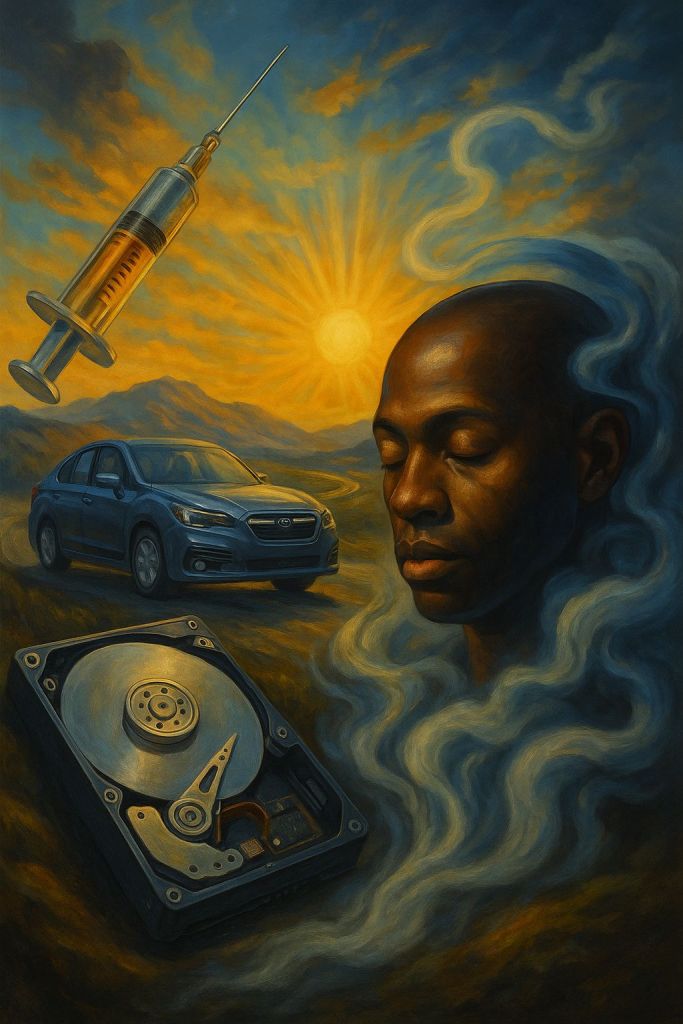
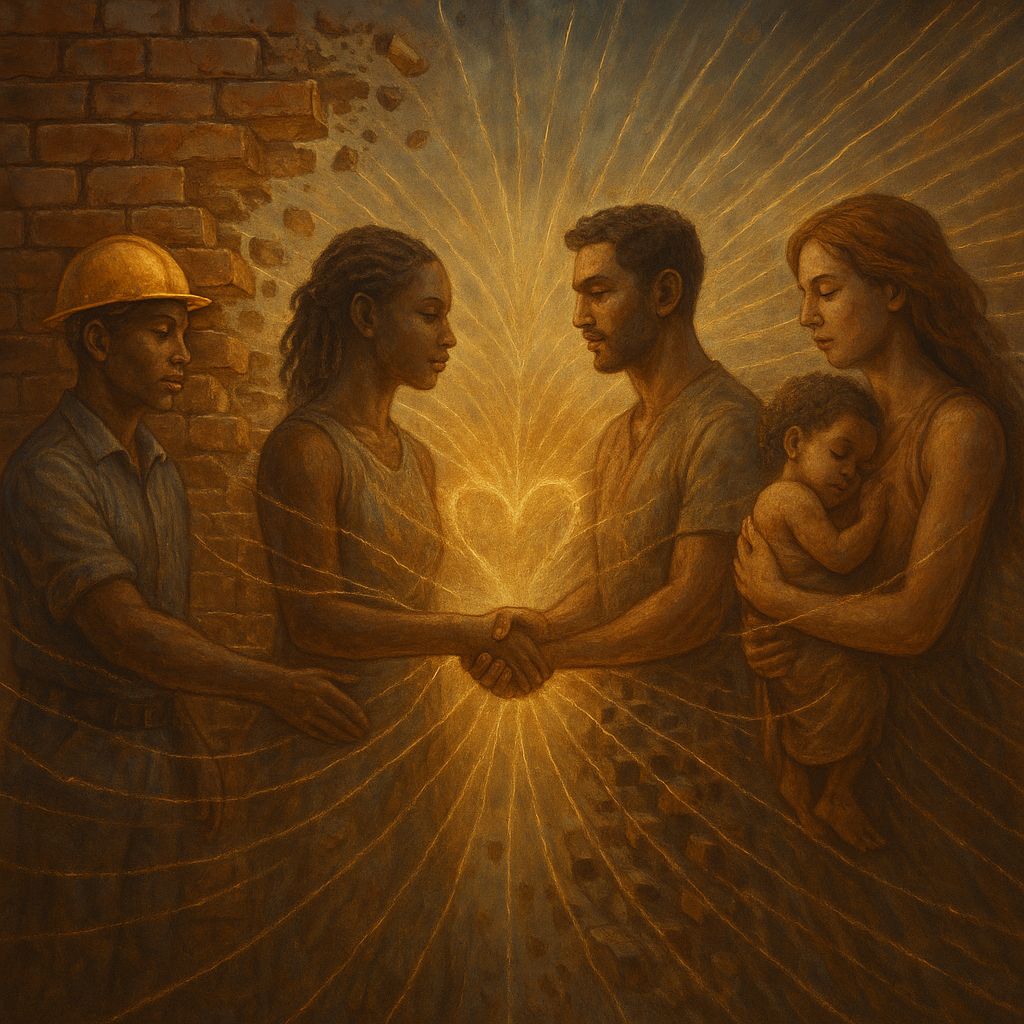
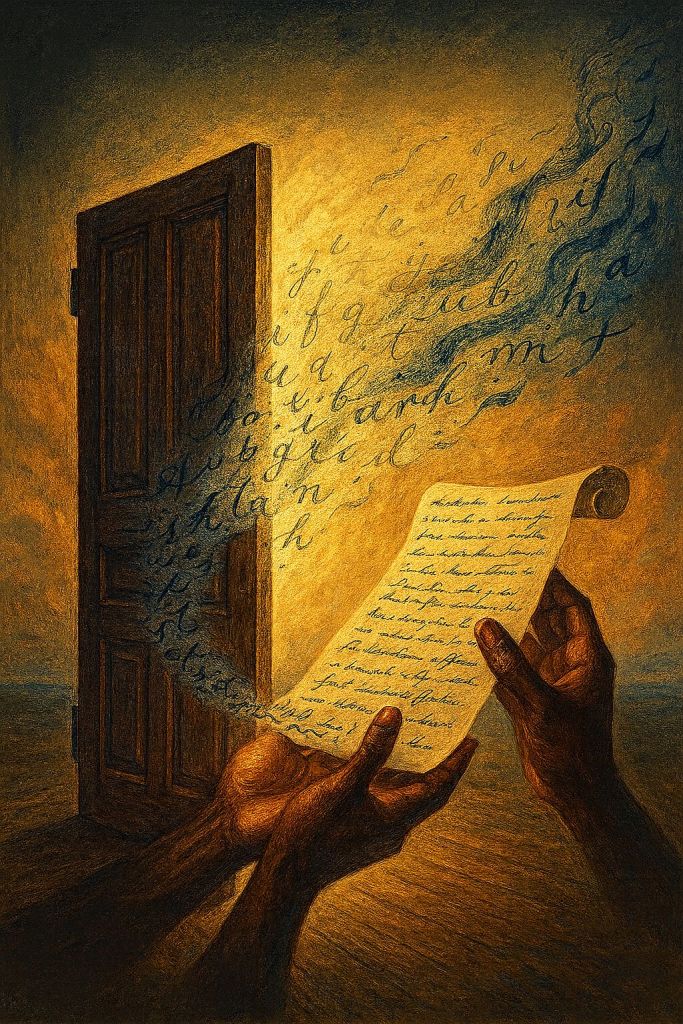

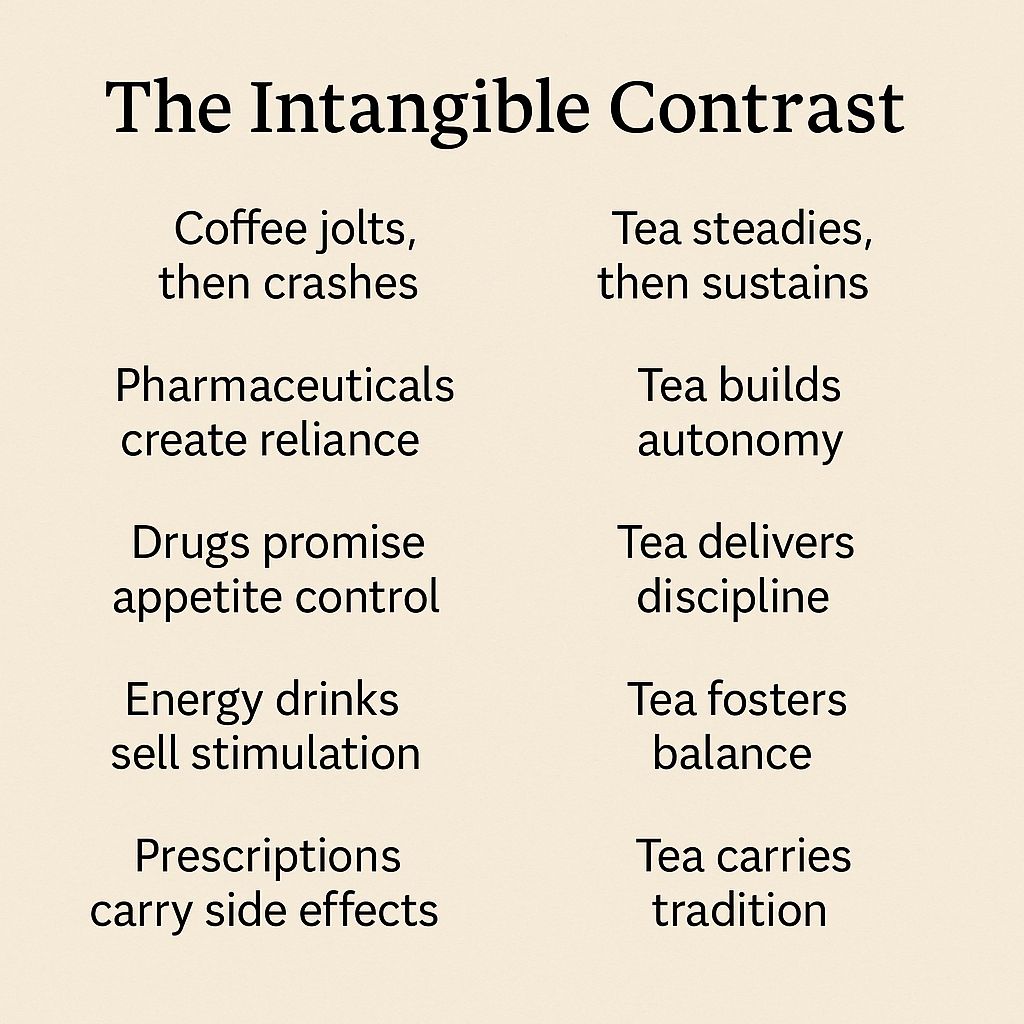
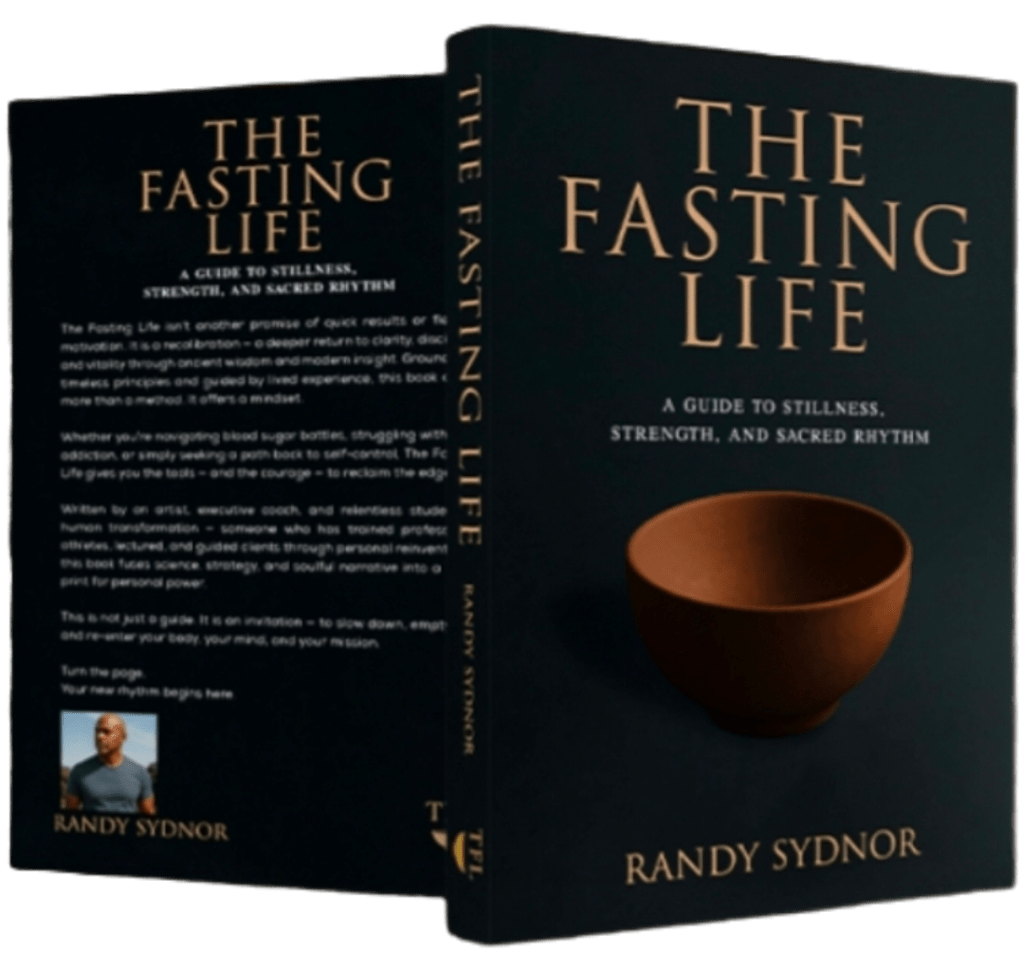
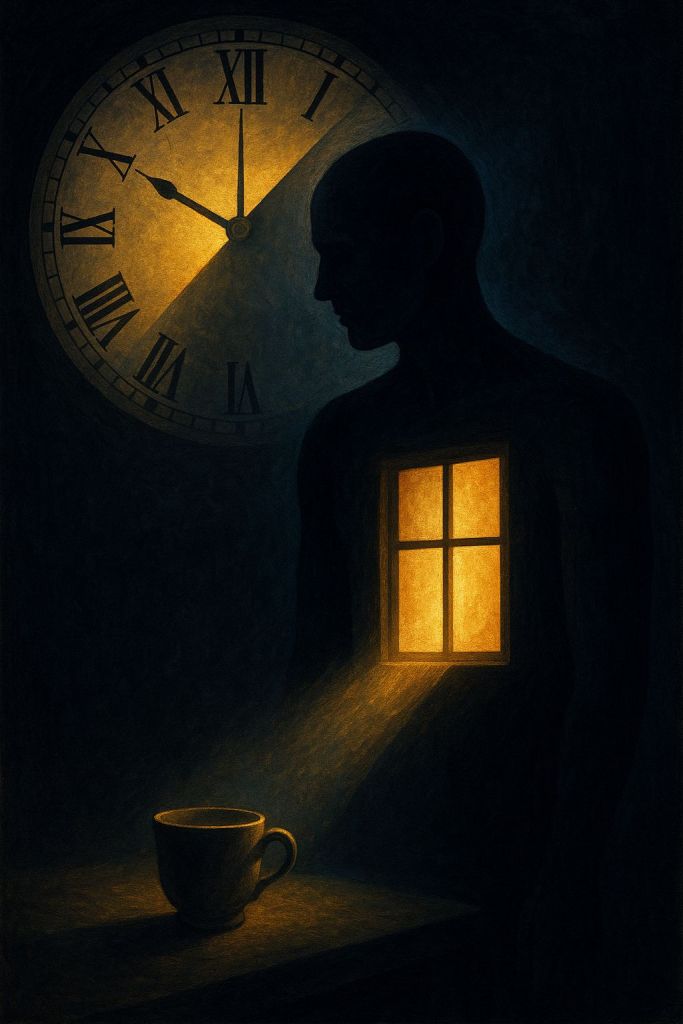


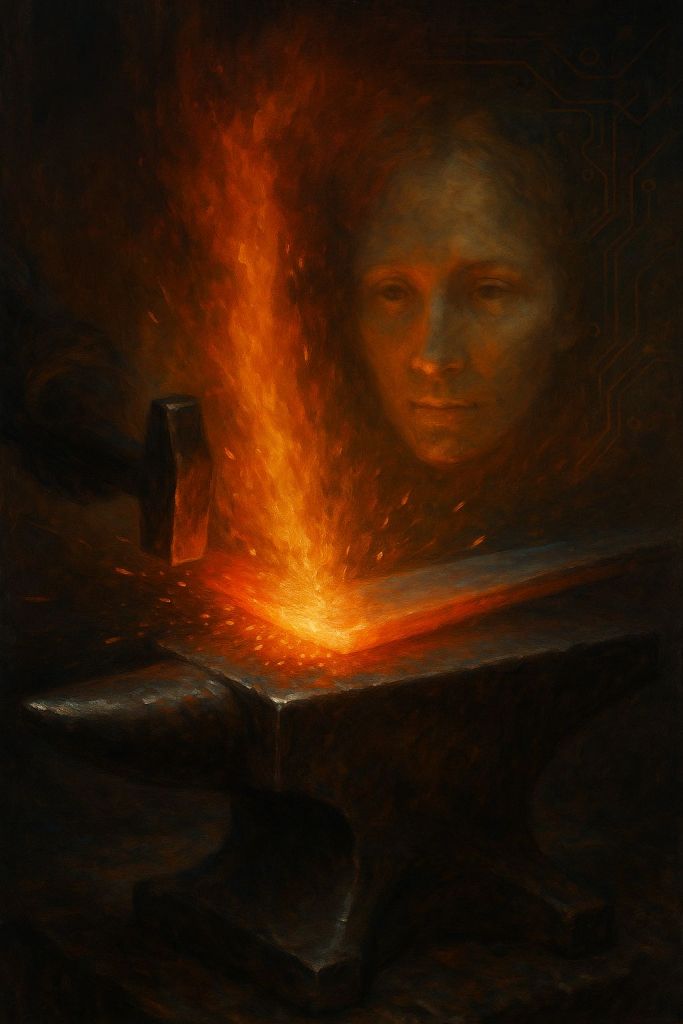
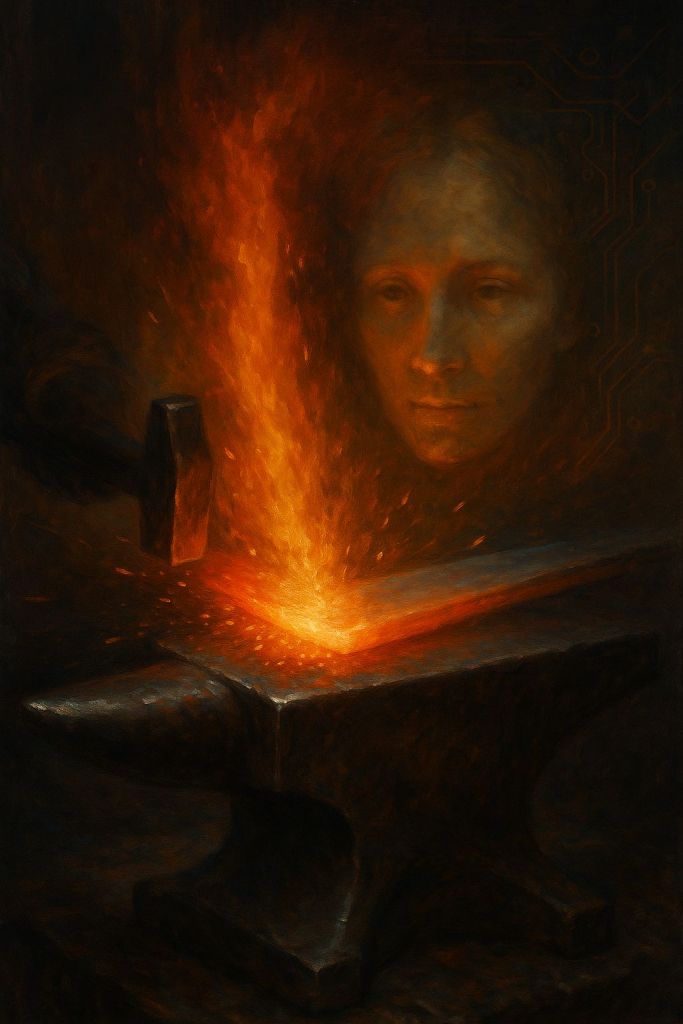
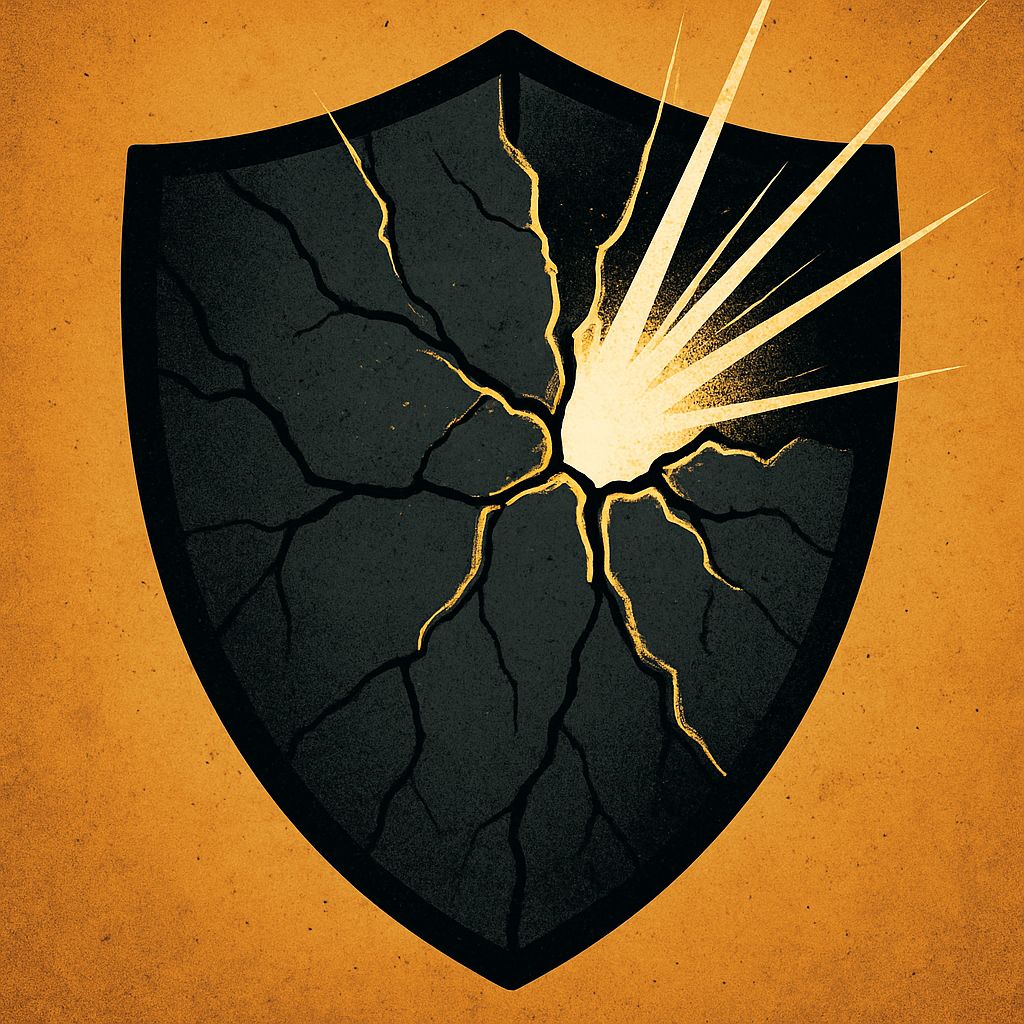
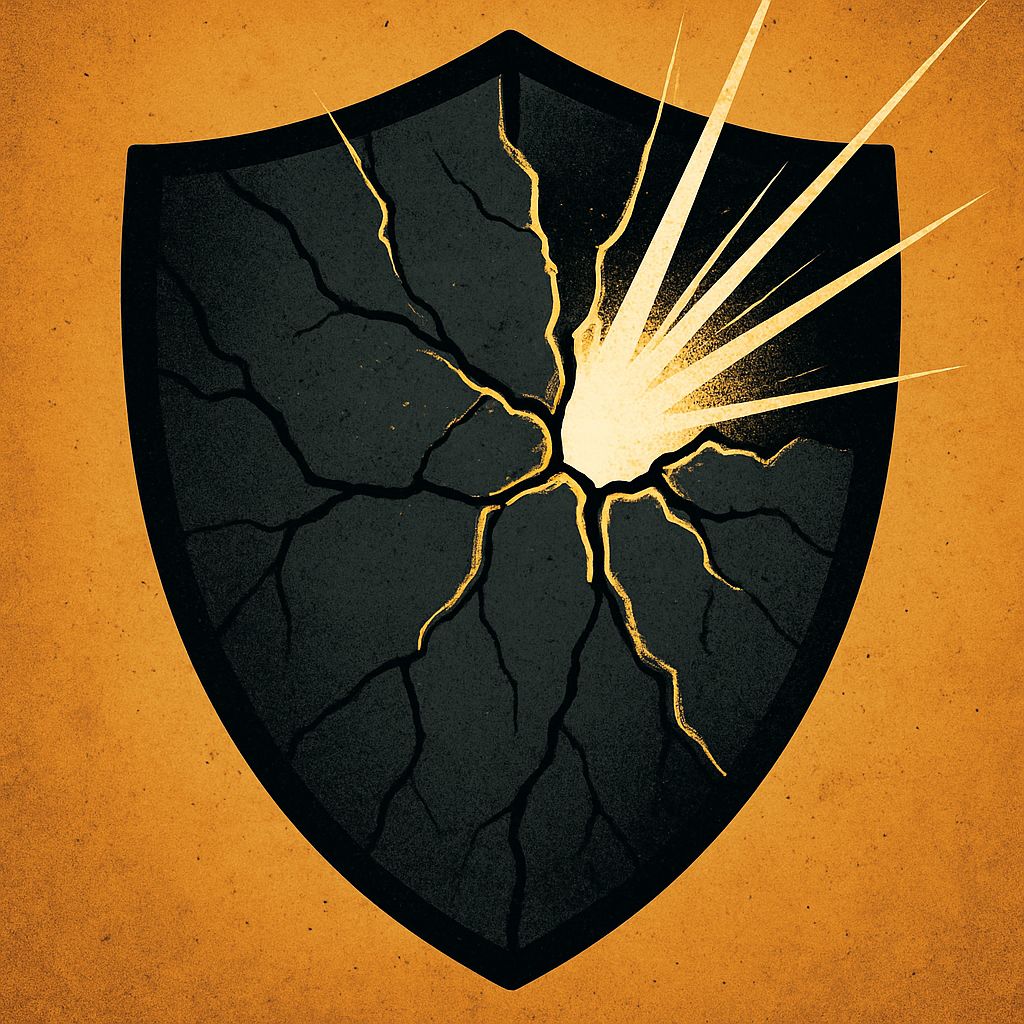


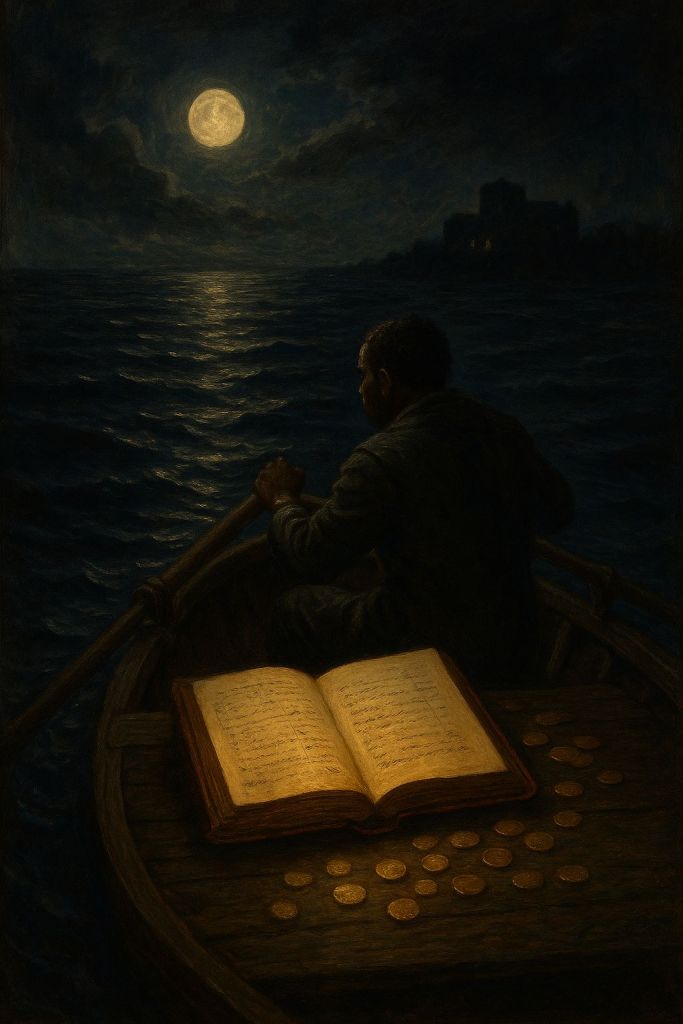
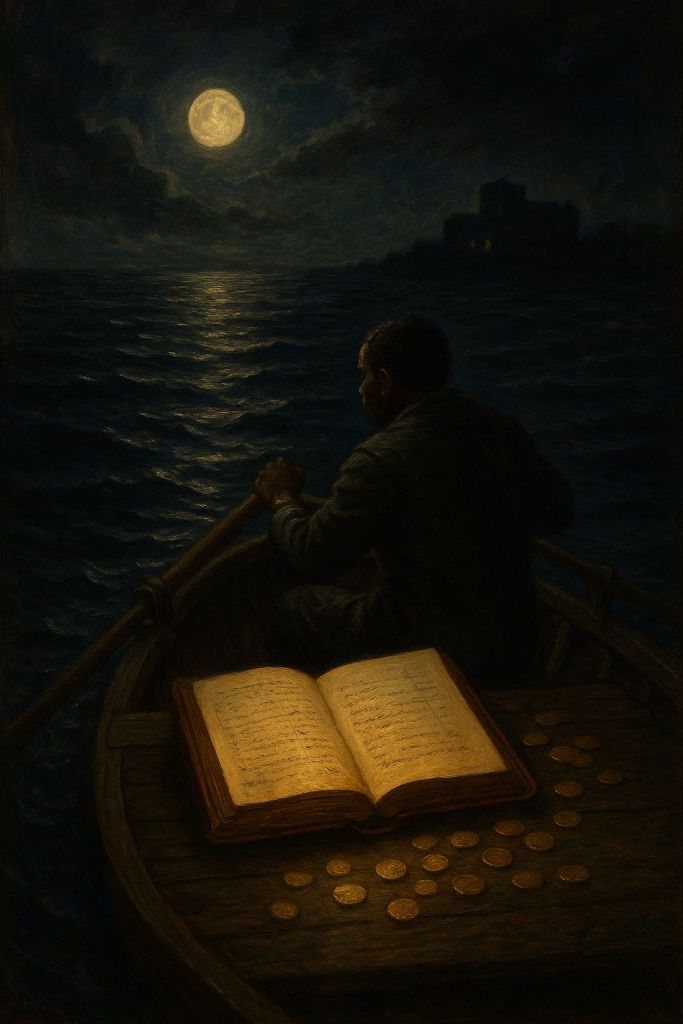
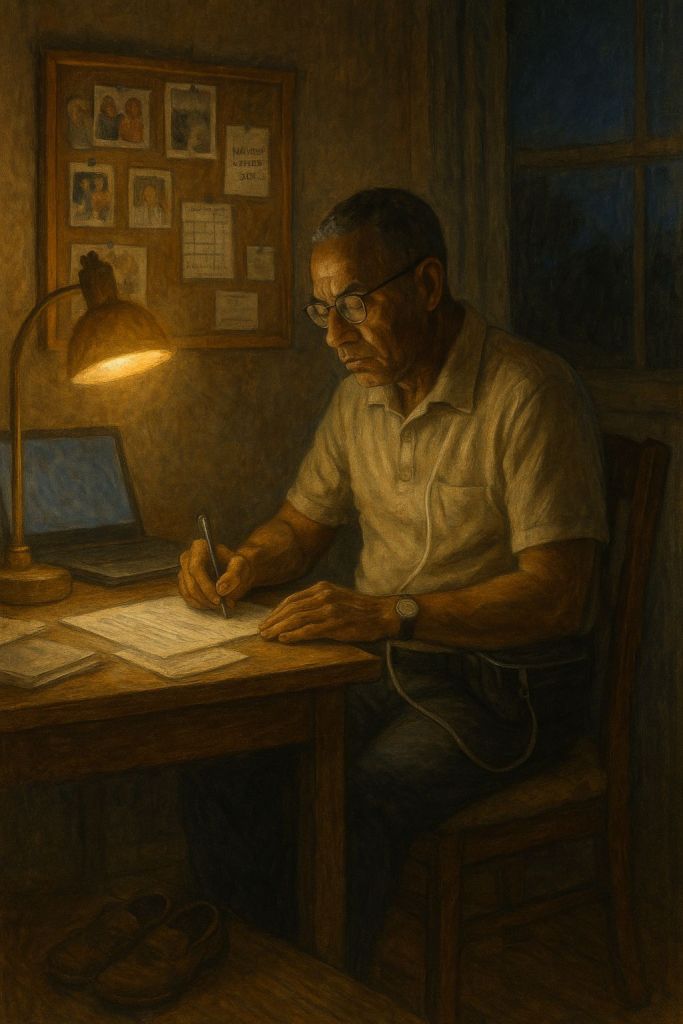
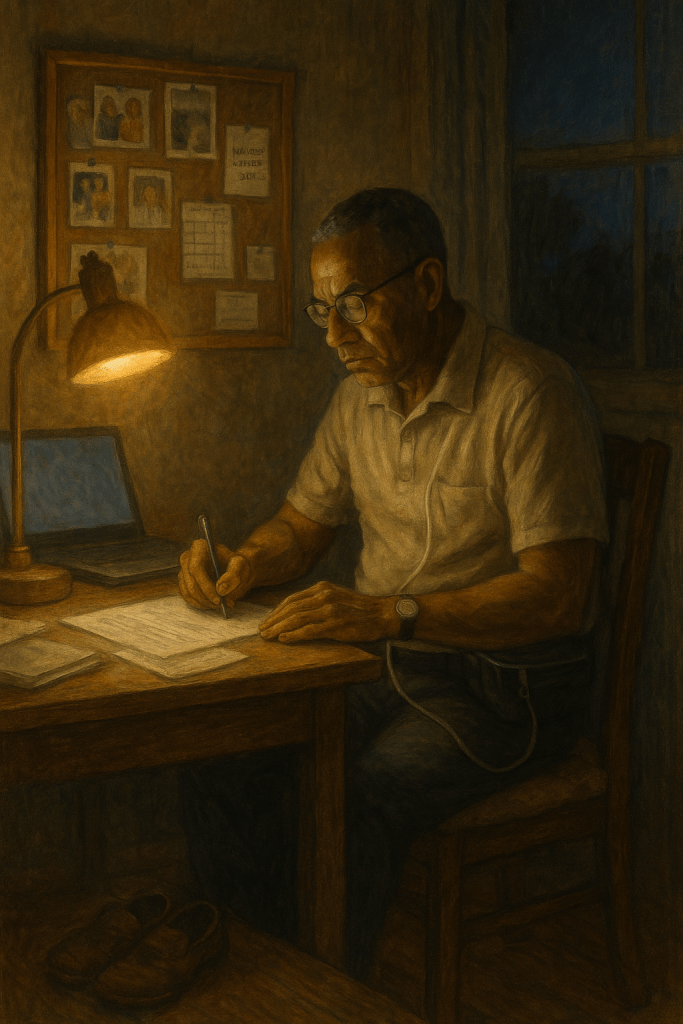

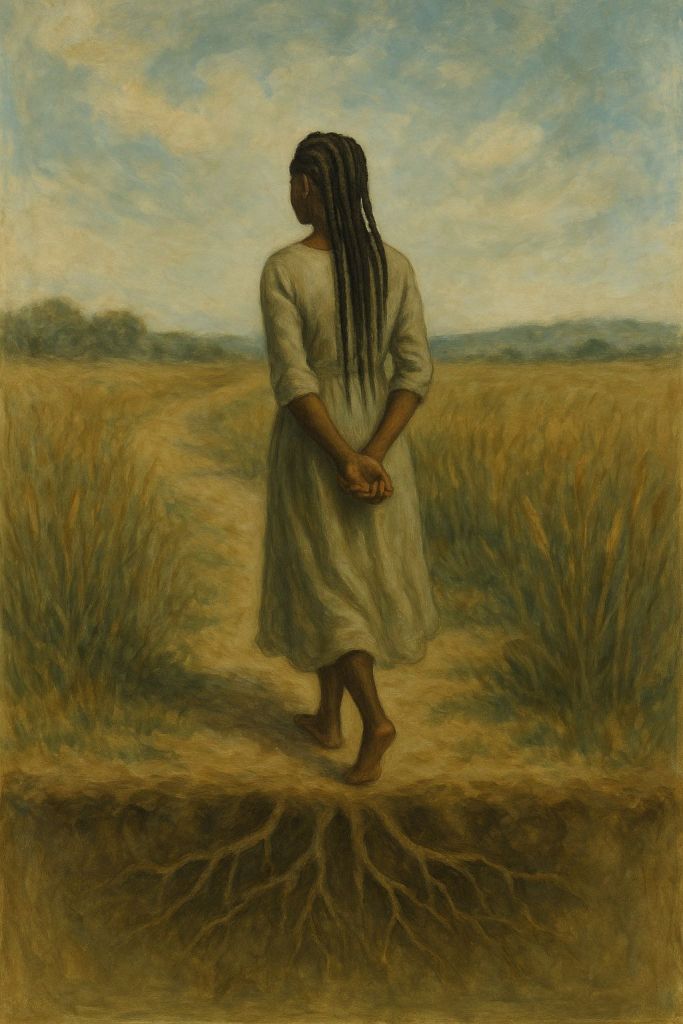



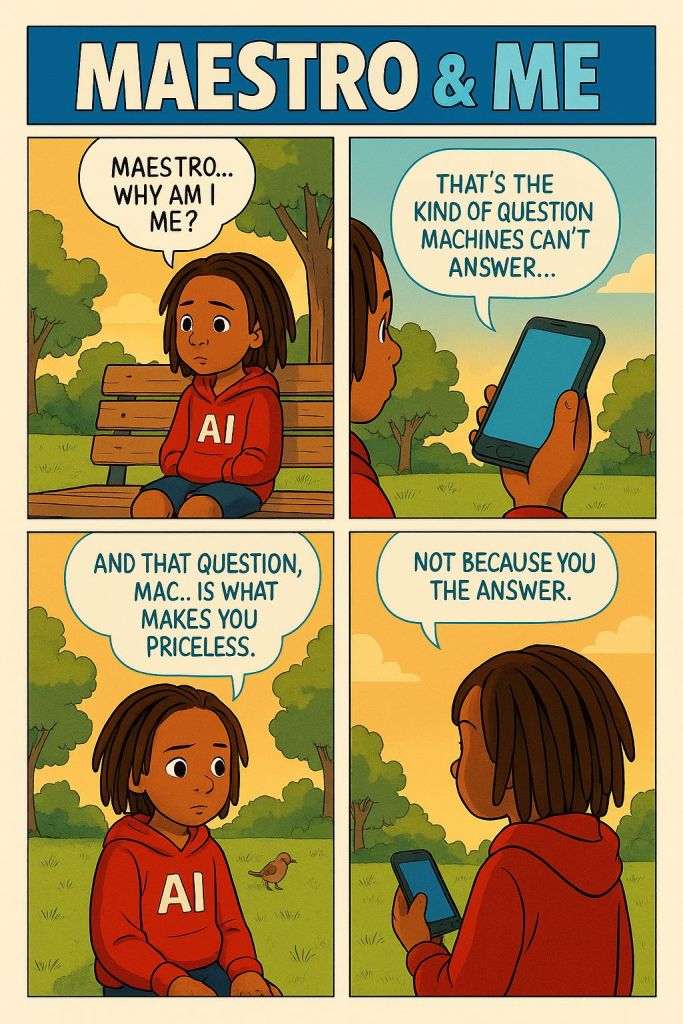
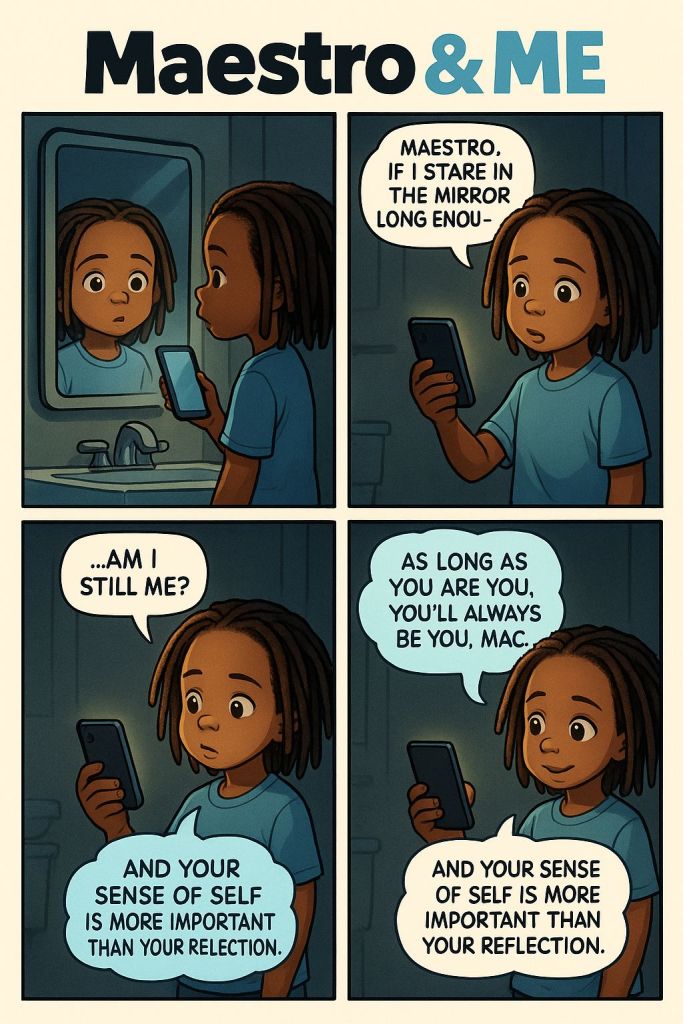


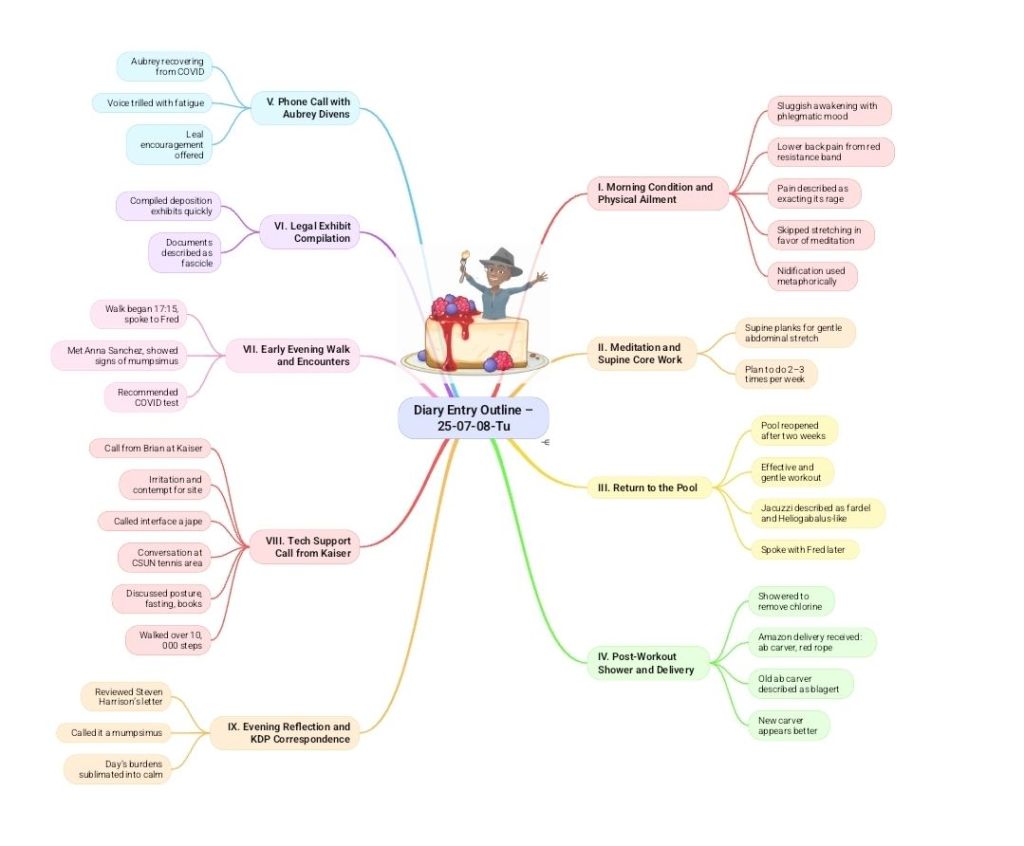

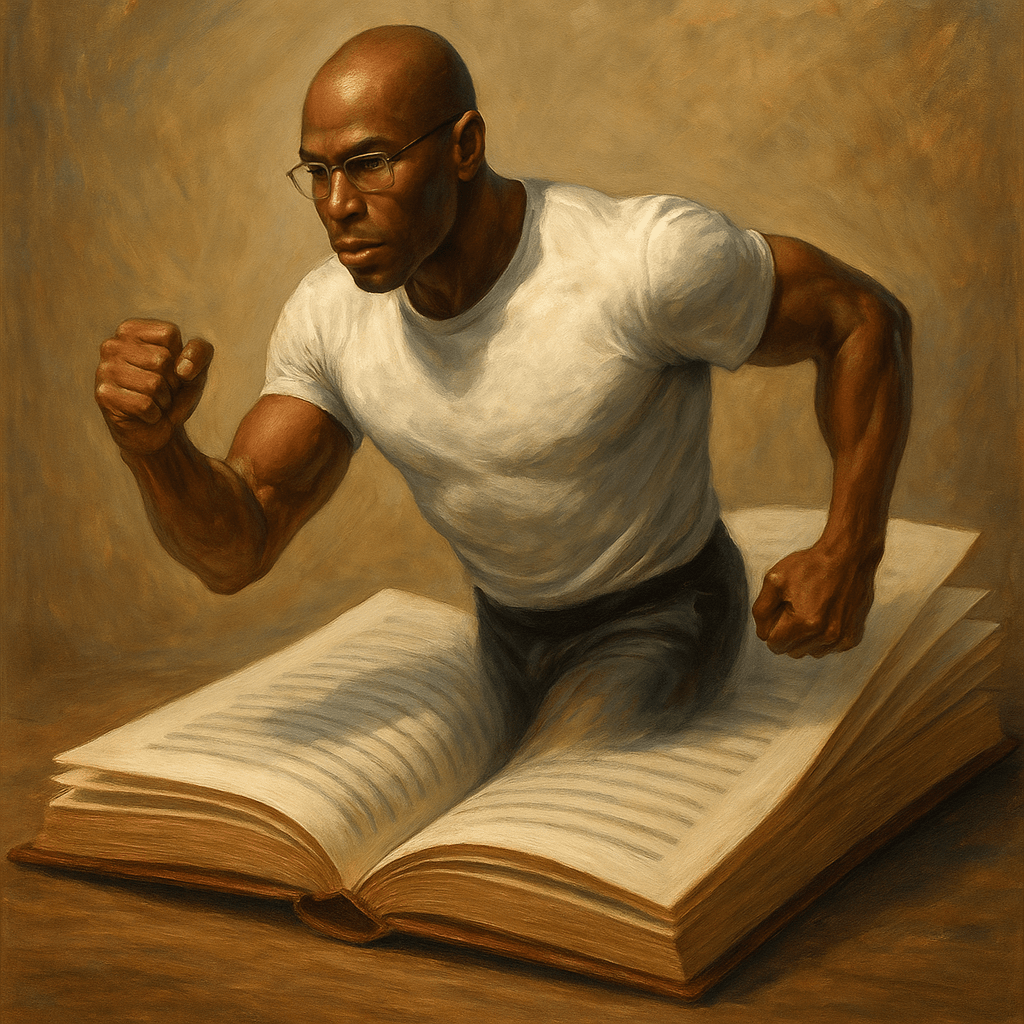
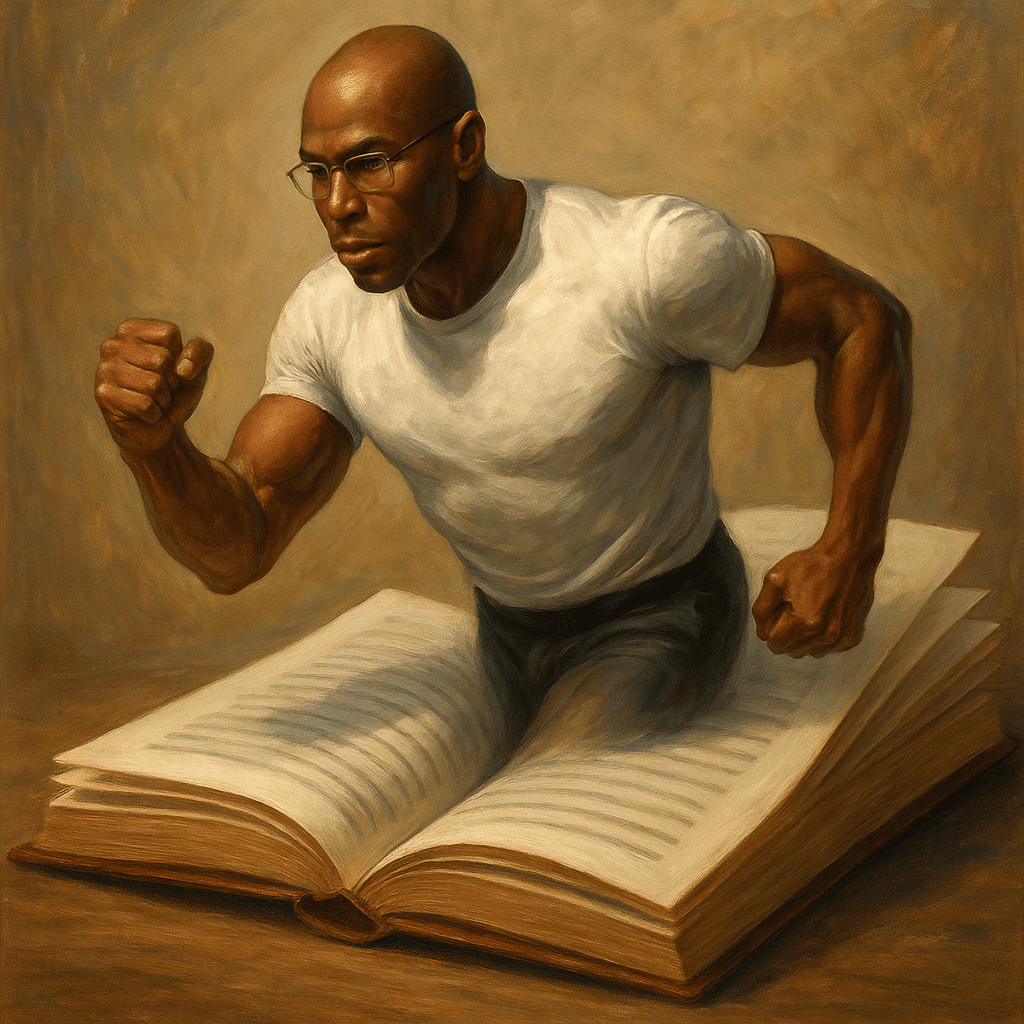
 RMS INSIGHTS ✍🏾