The Grace of Returning

The painting evokes a dreamlike atmosphere, rendered in soft, luminous tones of gold, blue, and earthy pastels. At its center stands a stone archway, glowing with warm, otherworldly light that spills gently into the surrounding space. A solitary human figure, abstract and ethereal, approaches the threshold—neither hurried nor hesitant, but with a sense of quiet purpose.

In the foreground, a single red lily emerges from the earth, vivid against the muted ground—a symbol of life, renewal, and fragile beauty. The composition blends surrealism with impressionistic softness, creating a visual meditation on return, resurrection, and the grace of quiet beginnings. The image feels both sacred and personal—an invitation to step into light, to rise without spectacle, and to remember that even the smallest bloom can mark the start of something extraordinary.

25-4-20-S
110 ⏳ 255 🗓️ W17
RMSDJ  📖 ✍🏽
🌡️79° – 53° 🌤️
🌗 ♑ ♒


🎶 A Song That Prayed Back

This morning began with reverence. I sent forth my Easter message—a small offering stitched with meaning, accompanied by a luminous image that felt like a stained-glass whisper. Sixty-five souls in my circle received it, and the response was warm. Affirming. The kind of kindness that arrives without fanfare but leaves a scent in the room after it’s gone.

Eugenia Dillard replied with a gift of her own—a YouTube link, simple and unassuming, but behind it: a voice, a cry, a prayer. Gladys Knight’s rendition of I Know That My Redeemer Liveth wasn’t merely sung. It rose. It trembled through her silky alto and then settled somewhere unspoken—less a song than a devotion in velvet form. A sanctified hush in musical shape.

I wrote her back: It felt more like prayer than performance. Eugenia responded with one line: Exactly. No need for elaboration. When truth lands properly, it requires no echo.

I knew the days ahead might deny me my sanctuary in the Jacuzzi—maintenance or fate or some unseen inconvenience—so I carved space for it today. Water greeted me as a friend who remembers. My body moved in arcs and bounds—38 minutes of flowing resistance: sprints, bounding strides, lateral glides. The sun flirted with clouds, casting gold one moment, shadow the next.

Then came the soak—25 minutes, limbs submerged, thought suspended. Aristotle joined me via Audible, unfolding his vision of politics, virtue, and the shape of the good life. His voice through another’s voice, resonating in the space between jets and philosophy.

Back at the apartment, I broke my fast late and lavishly. Lasagna and a salmon sandwich laced with blue cheese, followed by an indecent parade of chocolates, all crowned by a black coffee symphony I’ve nearly perfected. A touch of port wine, a lift of creatine, BCAA, glucosamine, cinnamon, vanilla, stevia—and it sings. Not a drink. A ritual. A concoction of sustenance and self-regard.

No feast today of grandeur, no crowds of believers, but in the song and in the soak, I found resurrection of another kind. Something rose in me—not grand, not loud—but quietly enduring.

RMSDJ.

Easter Message: The Grace of Returning

This Easter, I find myself thinking less of hallelujahs—and more of quiet beginnings.

A flower pressing up through cold soil.
A voice calling after long silence.
A door left open—not wide, but enough.

I’ve been reflecting on how some things return not with trumpets, but with tenderness.
Not in victory, but in vulnerability.

Not everything that rises makes a sound.
Some resurrections are quiet.
They begin with a breath, a glance, a decision to try again.

This, too, is Easter.
Not just the triumph over death,
but the patience it takes to live again.

To forgive.
To reach out.
To hope where we once hardened.

True beauty lies not in what comes back unchanged,
but in what returns carrying grace.

May this season meet you gently.
May you recognize your own return in small things.
And may you know: love still rises.
It always has.
It always will.


P.S.

Questions of Value: Volume One – Foundations of Becoming will be released in two weeks. I’ve spent the past two months arduously laboring over its pages—combing scripture, philosophy, and lived questions to shape something both thoughtful and enduring. I hope it meets you where you are—and offers a light worth carrying.
25-3-12-W  ☔ Afternoon

25-3-12-W  ☔ Afternoon
71 ⏳ 294  🗓️ W11
RMSDJ  📖 ✍🏽 
🌡️58° – 48°  ☁️ ☔  🚣🏾‍♀️
🌔  ♌ ♍

🏋️ Strength, Reflection & Resolution

The afternoon began with an unexpected detour—a reminder that even disciplined routines can unravel with surprising ease. After a particularly satisfying visit to the restroom—a triumph best described as a “type three extra-large” event—I realized I’d forgotten to shave. Marsha’s text regarding my blog had interrupted my usual morning rhythm, and by 12:35, I stood before the mirror, Braun electric shaver in hand.

The Braun—ever-reliable, steady as a heartbeat—hummed against my face. There’s a peculiar satisfaction in the precision of a well-designed tool, the kind that feels like an extension of yourself. As I carved away the shadowed stubble, Miles Davis’ Greatest Hits played in the background. His music—moody, defiant, yet undeniably controlled—seemed to sharpen my thoughts. Davis had a way of making tension feel intentional, as if he were taming chaos with each note.

Outside, the rain offered its own improvisation—drumming sporadically against the window, pausing just long enough to tempt me into believing the storm had passed. I seized the lull and headed to the Zone for a workout.


The Workout

The session proved productive—fifty minutes well spent. I targeted my calves, quadriceps, and biceps femoris, feeling the satisfying strain that signals muscles pushed to their limit. The discomfort wasn’t just expected—it was welcome.

Simone Weil once observed that “Every effort adds to our strength when we refuse to abandon the struggle.” Her words rang true with every dumbbell fly and press—five sets of fifteen repetitions each. Each strained motion seemed to affirm Weil’s belief that strength is less about brute force than the quiet refusal to surrender.

I also reintroduced the serratus crunch using the cable machine—an exercise I hadn’t attempted in eight months. Kneeling on a hard floor had previously discouraged me, but the presence of foldable mats eliminated that obstacle. It was a small convenience, yet one that underscored something profound: what deters us isn’t always the effort itself, but the discomfort that surrounds it.

Max Stirner’s assertion came to mind: “The strong man masters himself.” My avoidance of the serratus crunch hadn’t been about effort—it had been about resistance to discomfort. Mastery, as Stirner suggested, isn’t always about power; it’s about overcoming the small excuses that chip away at discipline. Inspired by that thought, I resolved to include the serratus crunch in my routine at least four times a week.

The workout ended with incline bench presses on a Hoist incline machine, followed by dumbbell shrugs. For most of the session, I had the room to myself—a quiet space for focus.

But towards the end, a towering figure entered the room—easily 6’8” or 6’9”—with a ponytail tied in a bun, a Ronaldo jersey, and dirty white ankle socks that practically cried out for a wash. The socks clung limply to his ankles like tired flags, neglected yet somehow stubbornly present. His attire seemed oddly deliberate, as if he’d balanced self-importance with indifference.

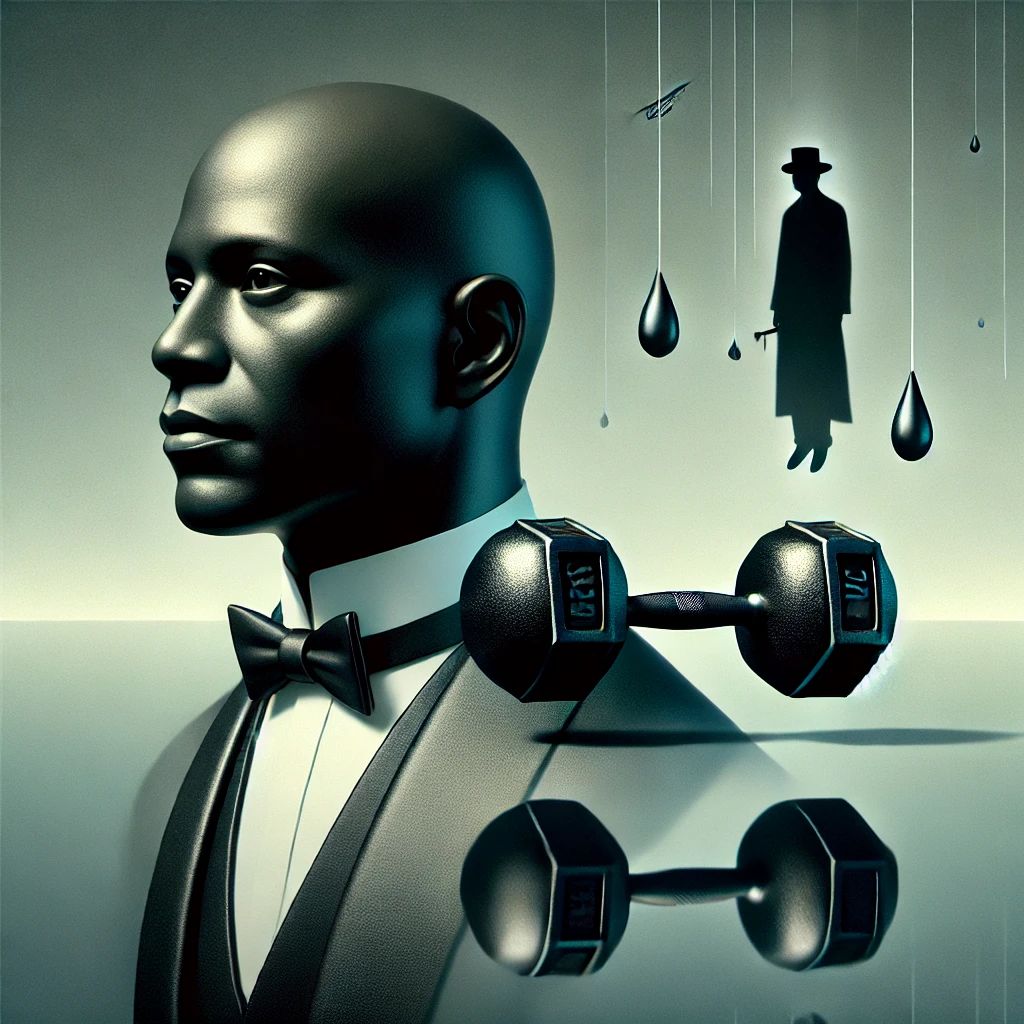
He hovered near the black, 20-pound dumbbells I was using—new dumbbells with a sleek finish, still sharp at the edges. When he realized I had them, he wordlessly shifted to another station. That quiet concession felt significant—less about gym etiquette than about restraint. In a world where ego flares easily, there’s something admirable about choosing silence over confrontation.

I thought of Baltasar Gracián’s words: “Let the wise man conquer by appearing to yield.” There’s power in walking away, in resisting the urge to assert dominance. That man, socks and all, had unwittingly reminded me of it.


Call from Gatsby

Upon returning to my room around 4:00 PM, I noticed a missed call from LA Fitness. The name: Gatsby Paredes. The call stemmed from an altercation on Saturday—an encounter with a man I’ll simply describe as regrettable.

Our 20-minute conversation revealed that the individual’s account mirrored mine. Three times this man had disrupted my workout—three deliberate intrusions that reeked of provocation. On the third occasion, my patience wore thin. Gatsby understood. His voice, steady and assured, carried the quiet conviction of someone who knows how to manage conflict.

“Coach is not to be disturbed,” he said. “I’ll make that clear.”

His words weren’t just protective—they were restorative. There’s a unique comfort in being defended, especially when your actions have been justified yet still weigh on your mind. As the call ended, I felt not just relieved but unexpectedly grateful.

I recalled the words of Hannah Arendt: “Power and violence are opposites; where the one rules absolutely, the other is absent.” Gatsby’s calm, assertive approach had neutralized tension without hostility. His strength lay in clarity, not aggression—a quiet but unmistakable form of power.

Conflict Resolution: The Hidden Strength

As I reflected on the day, it struck me that this wasn’t merely a lesson in strength—it was a lesson in conflict resolution. Both Gatsby and the tall man in the Ronaldo jersey had, in their own way, resolved conflict without hostility.

Gatsby’s handling of the situation demonstrated three key principles of effective conflict resolution:

1. Emotional Control: Gatsby’s calm tone set the tone for resolution. Instead of reacting emotionally, he responded with intention. As Epictetus taught, “It’s not what happens to you, but how you react to it that matters.”


2. Clear Boundaries: By stating firmly that “Coach is not to be disturbed,” Gatsby set a clear, non-negotiable boundary. He didn’t threaten or antagonize—he simply removed uncertainty, which often fuels conflict.


3. Choosing Resolution Over Retaliation:

I had played my part as well by allowing Gatsby to handle the situation. In doing so, I chose resolution over retribution—a choice that requires discipline and patience. As Sun Tzu advised, “The greatest victory is that which requires no battle.”


These moments reminded me that conflict doesn’t always demand force; it demands focus. By mastering our emotions, defining clear boundaries, and knowing when to walk away, we create space for resolution to emerge.


Reflections of Gratitude


Today reminded me that strength wears many faces. It’s found in the quiet resistance of muscles pushed to failure, in the silent wisdom of choosing to walk away, and in the calm assurance of someone willing to stand in your corner.

The towering man in the gym—his jersey declaring confidence, his socks revealing neglect—wasn’t just a curious figure. He was a reminder that composure is rarely tidy. Sometimes it shows up in quiet gestures, in averted conflict, in the decision to let tension dissolve rather than ignite.

And Gatsby’s response underscored something equally important: strength is most meaningful when paired with restraint. The person who shouts may seem powerful, but true power is the ability to stay silent—because silence speaks when words cannot.

Michel de Montaigne’s words lingered in my mind: “Valor is stability, not of legs and arms, but of courage and the soul.”

Montaigne’s insight speaks to something vital—that valor isn’t forged in moments of visible strength, but in those quiet moments where we resist being swept away by impulse. The man in the Ronaldo jersey demonstrated this by walking away from a potential conflict. Gatsby displayed it by turning tension into resolution through calm words rather than force.

And in my own small way, I saw it when I resisted the urge to dwell on irritation or frustration. Choosing patience with the gym encounter, embracing the discomfort of the serratus crunch, and accepting Gatsby’s steady resolve—each moment reflected what Montaigne described.

True strength isn’t the absence of struggle; it’s the ability to meet discomfort with steadiness, to let self-mastery prevail over impulse. Valor isn’t forged in the heat of battle—it’s nurtured in the quiet refusal to let chaos dictate your path.

Today, I chose stability. And in that choice, I found something far greater than strength.

RMSD

RMSD 25-3-12-W

I spent the night battling sleep, my mind ensnared by financial concerns and a laptop’s untimely demise. Thoughts eddied like leaves in a stiff breeze — scattered, chaotic, and unrelenting. Miles Davis played the role of uninvited guest, his haunting tracks It’s Never Entered My Mind and Weirdo floating through the night like vaporous whispers — delicate yet intrusive.

Marsha Henry’s text arrived as a pleasant surprise — thoughtful yet tinged with concern. She praised my blog’s elegance but doubted that modern readers, conditioned by tweets and sound bites, would linger long enough to digest thoughtful prose.

Her concern was fair. In a world obsessed with immediacy, long-form writing often feels like a forgotten language. Yet I believe depth demands patience.

Albert Camus once wrote:

“A man’s work is nothing but this slow trek to rediscover, through the detours of art, those two or three great and simple images in whose presence his heart first opened.”

That quote spoke directly to my blog’s purpose — a deliberate space where reflection and nuance take center stage. I responded with two thoughtful texts explaining my motives — not to court popularity, but to offer a platform where ideas breathe deeply, unhurried by trends.

Marsha’s reply brought relief. She agreed that meaningful content — however unfashionable — still resonates with readers willing to invest their time. Her words reminded me that thoughtful writing isn’t about attracting the masses but rather reaching those seeking substance.

The morning rain sketched streaks across my window, drawing patterns that danced and dissolved on the glass. The sky, a quilt of heavy clouds, brooded over the day. Yet strangely, my mood remained calm — grounded.

Despite my lingering shoulder irritation, I committed to 30 minutes of focused exercise. Each push-up felt like defiance — a conscious decision to assert strength despite discomfort. Perseverance isn’t merely about enduring pain; it’s about transcending it.

Reflections of Gratitude

The day — though cluttered with frustration — revealed quiet moments of grace.

Marsha’s kind words reminded me that meaningful work doesn’t require a crowd to feel worthwhile. AD’s perseverance underscored the quiet fortitude required to press on in difficult times. Even the broken laptop — frustrating as it was — became a lesson in adaptation, a reminder that when one path falters, another often presents itself.

As Søren Kierkegaard once observed:

“Life can only be understood backwards; but it must be lived forwards.”

Today’s burdens — financial concerns, technical failures, and lingering doubts — seemed less formidable in light of that truth. Life’s meaning often reveals itself in hindsight, and patience becomes the quiet companion that leads us there.

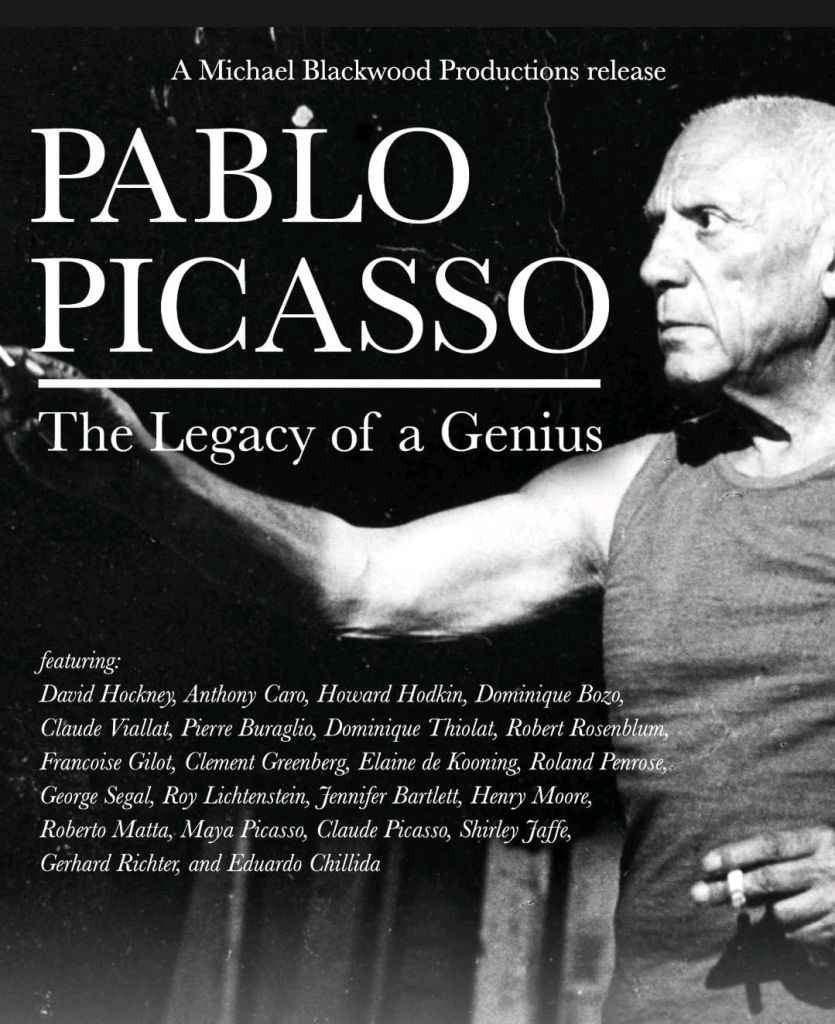
🎥 Legacy of a Genius – Pablo Picasso: A Portrait in Art and Controversy


Michael Blackwood’s Legacy of a Genius offers an expansive and illuminating portrait of Picasso’s life, artistry, and the people who shaped his world. Through a meticulous blend of archival footage and intimate testimonials from family members and acquaintances, the documentary constructs a multifaceted image of the man behind the genius. But does it fully capture the complexity of his legacy, or does it leave gaps in its exploration of his artistic and personal evolution?

Direction – A- (3.7/4.0)

Blackwood’s direction is confident, allowing Picasso’s story to unfold naturally through the voices of those who knew him. The decision to interweave film archives with contemporary reflections creates a layered narrative that respects both history and personal memory. While comprehensive, the documentary occasionally glosses over some of Picasso’s more controversial aspects, opting for admiration over deep critique.


Writing & Narrative Structure – B+ (3.4/4.0)

The film is structured across multiple episodes, each examining different facets of Picasso’s life. The pacing is steady, but some sections meander, particularly when delving into well-trodden territory. A tighter thematic focus could have heightened the impact of certain revelations.


Cinematography & Visual Composition – A (3.8/4.0)

Visually, Legacy of a Genius excels in its use of archival footage, seamlessly blending past and present. The restoration quality is impressive, and the juxtaposition of Picasso’s artworks with his personal life adds depth to the storytelling.


Interview Quality & Subject Depth – A (3.9/4.0)

The documentary’s greatest strength lies in its interviews. The participation of family members and women who shared personal relationships with Picasso brings authenticity and emotional resonance. These firsthand accounts illuminate the artist’s temperament, creative process, and relationships in ways that go beyond mere biography.


Editing & Pacing – B (3.2/4.0)

The film’s multi-part format allows for a thorough exploration of Picasso’s life, but at times, the pacing drags, particularly in sequences that reiterate known aspects of his persona. A more streamlined approach could have kept the momentum stronger.


Research Depth & Accuracy – A (3.9/4.0)

Blackwood’s team has clearly done their homework. The documentary covers Picasso’s artistic innovations and personal struggles with a richness that reflects extensive research. However, a more critical lens on his personal controversies could have balanced the narrative further.


Sound Design & Score – B+ (3.4/4.0)

The soundtrack complements the film well, with musical selections that evoke Picasso’s era and artistic intensity. At times, however, the score feels slightly repetitive, relying on familiar motifs instead of fully embracing Picasso’s own relationship with sound and movement.


Cultural & Social Impact – A- (3.7/4.0)

Legacy of a Genius contributes significantly to Picasso’s enduring cultural relevance. It reinforces his artistic innovations while reminding viewers of the personal and societal forces that shaped his work. While it may not challenge prevailing narratives, it enriches them with personal depth.


Final Score: A- (3.7/4.0) – 92.5%

Verdict:

Michael Blackwood’s Legacy of a Genius is a masterfully constructed documentary that offers an intimate and historically rich portrait of Picasso. While it leans toward admiration rather than deep interrogation, its extensive use of archival footage and personal testimonies makes it an essential watch for art enthusiasts and historians alike.


COACH SYDNOR’S GRADE: A-


Featured Subjects:

• Jennifer Bartlett – Renowned painter known for her conceptual and minimalist works.

• Dominique Bozo – Former director of the Musée Picasso in Paris.

• Pierre Buraglio – French artist associated with the Supports/Surfaces movement.

• Anthony Caro – Influential British sculptor recognized for his abstract metal works.

• Eduardo Chillida – Spanish Basque sculptor famed for his monumental abstract works.

• Elaine de Kooning – American abstract expressionist painter and art critic.

• Françoise Gilot – Accomplished painter and author, and Picasso’s former partner.

• Clement Greenberg – Prominent American art critic closely associated with modern art.

• David Hockney – Celebrated British painter and photographer.

• Howard Hodgkin – British painter known for his abstract works.

• Shirley Jaffe – American abstract painter based in France.

• Roy Lichtenstein – Leading figure in the pop art movement.

• Roberto Matta – Chilean abstract expressionist painter.

• Henry Moore – Eminent British sculptor known for his semi-abstract monumental works.

• Roland Penrose – English artist, historian, and biographer of Picasso.

• Claude Picasso – Photographer, filmmaker, and Picasso’s son.

• Gerhard Richter – German visual artist known for his abstract and photorealistic paintings.

• Robert Rosenblum – American art historian and curator.

• George Segal – American painter and sculptor associated with the pop art movement.

• Dominique Thiolat – French artist and art critic.

• Claude Viallat – French painter and a founding member of the Supports/Surfaces movement.

• Maya Widmaier Picasso – Art historian and Picasso’s daughter.


Filmmaker Context:

Michael Blackwood is a veteran documentarian known for his work chronicling the lives and influences of major artists, architects, and cultural figures. His films often adopt a patient, observant style that allows subjects to narrate their own stories through interviews and archival material. Legacy of a Genius aligns with his broader commitment to documenting the arts, though it leans toward celebration rather than critical dissection.


Documentary Type

🎬 Biographical / Art Documentary

IMDb Page:
http://www.imdb.com/title/tt1832425/