The Geometry of Precision: Thunderbirds and the American Mythos


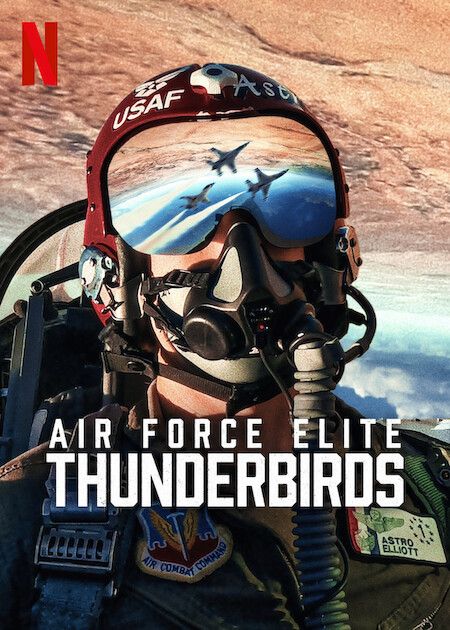
No one trains to be forgotten. And yet, paradoxically, the highest-performing individuals in uniform often exist to vanish. They fly in formation, answer to call signs, and leave no personal imprint upon the clouds. Netflix’s The Thunderbirds documentary disrupts this design—briefly—offering a controlled detonation of the myth, the machine, and the men and women behind the visor.

At first glance, the film feels like a polished salute: gleaming F-16s, desert blue skies, an air show anthem steeped in nostalgia. But beneath that polished canopy lies a subtler provocation: Can elite performance still mean something in a culture where spectacle swallows substance? Where visibility dominates value, but mastery requires invisibility?

The Thunderbirds don’t simply fly—they signify. They embody a choreography of national pride, war-forged discipline, and airborne artistry. Yet The Thunderbirds resists jingoistic reduction. It opens with noise and pageantry, yes, but slows its shutter speed to reveal the relentless human work beneath the titanium.


The Thunderbirds originated in the crucible of the Cold War, when America needed to perform its principles in airspace, not just in policy. Formed in 1953, they carried a silent message: freedom, ordered and symmetrical. Like the Blue Angels or Olympic gymnasts, they turned danger into display, risk into ritual. Their maneuvers weren’t merely impressive—they were declarations.

Director Luke Korem understands restraint. He avoids flourishes that draw attention to himself. Instead, his lens breathes with reverence. Aerial cinematography captures the violence of motion smoothed into grace. Transitions cut not to dazzle but to decelerate. The pacing echoes the precision it documents: nothing wasted, everything earned.

He relies on narrative rhythm over editorial bravado. There are no omniscient narrators, no intrusive voiceovers. The story unfolds through cockpit footage, unguarded interviews, and familial reflection. In this quiet, the geometry becomes audible.


Central to the documentary is the idea of certification—not triumph, not ego, but passage through fire. We witness pilots in training, their muscle memory not yet fully formed, their instincts under surveillance. A flight evaluation feels more surgical than theatrical. There are no second takes.

The camera follows Maj. Lauren “Mad” Schlichting as she studies her flight tapes frame by frame. She doesn’t radiate swagger. She radiates precision. The first female Thunderbird to fly the lead solo position, Schlichting flies not for glory, but for execution. Her call sign, Mad, reflects not temperament, but tribute—to mentors, to perseverance, to control at supersonic speed.

Around her, a constellation of teammates defines the discipline:

Lt. Col. Justin “Hasard” Elliott, commander and flight leader, carries the responsibility of legacy. His calm masks the cognitive overload of leading six jets through impossible geometries.

Maj. Kyle “Gumbo” Oliver, the narrator and slot pilot, bridges the team and the audience. His voice—measured, rhythmic—translates risk into reverence.

Maj. Zane “Strobe” Taylor, right wing pilot, rides inches from the leader. His steadiness becomes its own form of poetry.

Maj. Jeff “Shaka” Downie, left wing, anchors the formation with a stoic presence that reads more like a monk than a maverick.

Maj. Jason “Stork” Markzon, opposing solo, complements Schlichting in midair duels that dazzle crowds and challenge physics.

Each pilot enters not as hero, but as practitioner. They confess to errors, fear, fatigue. One recalls the silence that follows the loss of a fellow flyer. Another recounts the surreal dissonance between standing ovations and personal grief.


And always, the machine hums beneath the myth.

The F-16 Fighting Falcon, the aircraft of choice, is no tame beast. It pulls nine Gs, accelerates vertically, and demands a pilot’s full neural bandwidth. One degree off, one millisecond late, and geometry unravels into disaster.

We see that mastery doesn’t rely on adrenaline. It relies on repetition, on muscle memorization, on calibrating instinct until instinct becomes a system.

And still—beneath the gear and gauges—parents sit in bleachers, squinting into sun. A mother admits she never understood flying until she saw her daughter vanish into a vertical roll. A father says he doesn’t sleep well on show days. These are not sentimental inserts. They remind us: even angels of the air have anchors on the ground.


The film crescendos, inevitably, at the air show.

The crowd rustles beneath sun-scorched skies. Children hold miniature planes; veterans wear jackets stitched with past campaigns. The jets scream overhead—low enough to rattle the sternum, fast enough to blur recognition. Loops, rolls, splits, reconvergence. It’s combat geometry turned into ballet.

But Korem withholds glory shots. He focuses not on applause but on the debrief. The moment after. The checklist. The knowing glances in the hangar. For every second in the air, there are hours of discipline unseen.

In this, the Thunderbirds resemble monks more than warriors. Their flight paths are not flourishes; they are meditations. Their rituals, not ego-fueled exhibitions, but acts of liturgy.


To some, the Thunderbirds may still resemble propaganda—a polished display masking deeper ambiguities. But the documentary does not argue for militarism. It argues for mastery.

In a culture addicted to shortcuts, their message lands with force: skill takes time. Skill takes silence. Skill takes loss.

In contrast to stylized military films (Top Gun: Maverick) or extreme-sport documentaries (Free Solo), The Thunderbirds anchors its thrill in process, not personality. No breathless narration. No Hollywood arcs. Just the repetition of return.

It’s not a film about jets.

It’s a film about those who choose to submit themselves to structure, to submission itself, in pursuit of collective excellence.

About how real power flows not from dominance, but from alignment.

About how symmetry still matters in an asymmetrical world.


What lingers, ultimately, is not the roar—but the reverence.

This film doesn’t merely salute the Thunderbirds. It honors the unseen cadence of those who return, again and again, not to be celebrated, but to be correct. Not to be watched, but to be worthy.

R. M. Sydnor
The Shadow in the Compound: A Reckoning with American Vengeance


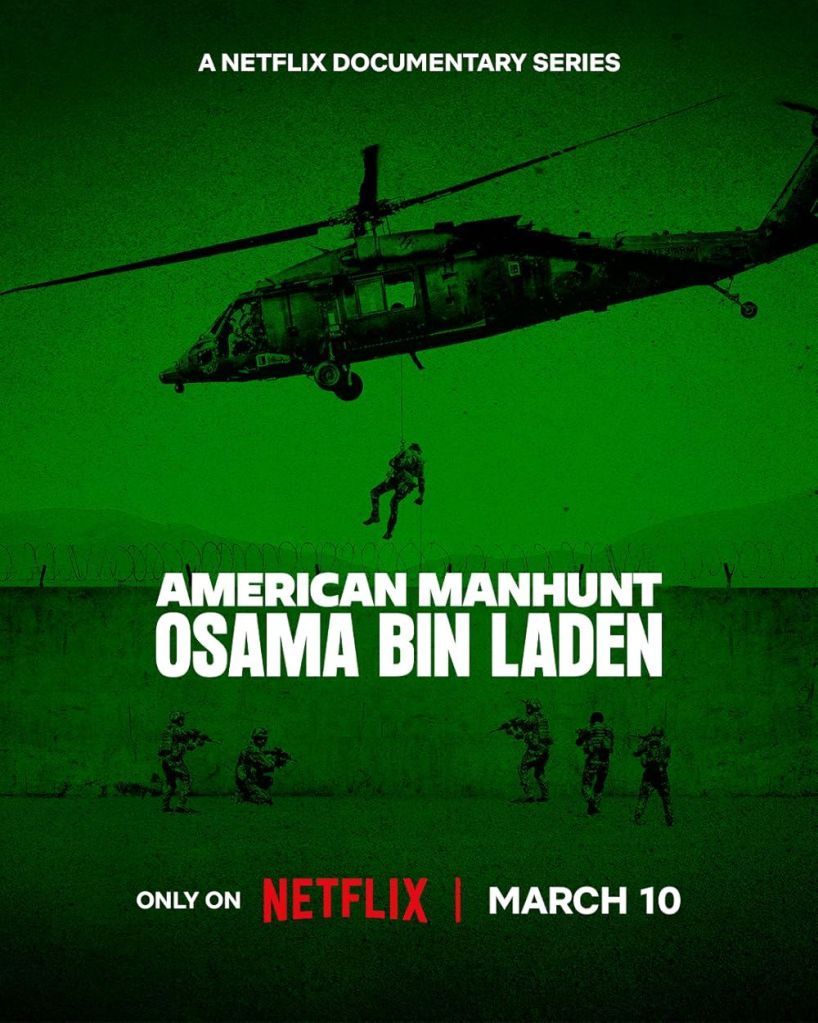
No empire ends quietly, and no enemy dies alone. Osama bin Laden—specter of September 11, avatar of asymmetric warfare, and the most hunted man in modern history—was not merely a fugitive. He was a dark reflection, the lens through which America saw its anguish, its outrage, and its almost theological need for vindication. Netflix’s American Manhunt: The Search for Osama bin Laden does not embellish this pursuit, but it reanimates it with arresting lucidity—resisting bombast while embracing complexity.

Directed by Mor Loushy and Daniel Sivan, the documentary threads together a sprawling narrative with surgical clarity. The story is retold not through narration or omniscient commentary, but through the fractured and sometimes contradictory testimonies of those who were there—CIA operatives, military commanders, national security advisors, and the President who sanctioned the raid with a gambler’s nerve and a philosopher’s burden. There is no choreography here, no flourishes of self-congratulation. Only the tightening thread of obsession, of moral compromise, and of sacrifice.

President Barack Obama, famously cerebral, anchors the film’s moral undertow. His decision to authorize Operation Neptune Spear is not portrayed as muscular or dramatic; it is quiet, deliberate, solitudinous. We see him in the Situation Room—not so much directing as absorbing—flanked by then-CIA Director Leon Panetta, Secretary of State Hillary Clinton, Defense Secretary Robert Gates, Admiral Mike Mullen, National Security Advisor Tom Donilon, Counterterrorism Advisor John Brennan, and Vice President Joe Biden. Each speaks a different dialect of caution. None possess certainty. The President proceeds anyway.

And this is where the film begins to rise: in the friction between confidence and conjecture. The CIA analysts, especially Maya (a pseudonym), part of the so-called “Sisterhood”—Cindy Storer, Nada Bakos, and others—are presented not as heroes but as haunted professionals. Their pursuit of Abu Ahmed al-Kuwaiti, the courier, is an exercise in attrition and intellect, intuition and exhaustion. They are as much cartographers of doubt as they are agents of discovery.

Abbottabad is introduced not with flair but with dread: a drab compound with high walls, opaque habits, and architectural whispers of secrecy. That this suburban fortress existed undisturbed for so long is less a testament to Pakistani duplicity (though that shadow lingers) than to the stubborn ambiguity of intelligence. The compound itself becomes a character—mute, suspicious, and strangely inert. The drama is in its stillness.

When the operation begins—stealth helicopters slicing the darkness—the tempo of the film changes, but not with cinematic bravado. Instead, we are given uncertainty. One of the helicopters crashes. The team adapts. In the control rooms of Langley and the West Wing, nerves strain under silence. These are not men and women reveling in retribution. They are holding their breath. The SEALs—anonymous, meticulous—move through the compound not with swagger, but precision. Bin Laden is shot. His body is photographed. DNA confirms what instinct already knew.

And yet, as the documentary reminds us, closure is elusive.

The strength of American Manhunt lies not in its archival footage or its tight pacing—though both are superb—but in its refusal to pretend that this act of surgical vengeance was tidy. The intelligence community had failed catastrophically on 9/11. For nearly a decade, they labored under the crushing weight of that failure. And this success, though spectacular, was not catharsis—it was a question mark.

What did America gain? What did it lose?

We hear from the families of those who searched for bin Laden for years, including analysts whose marriages dissolved under the pressure of obsession. We glimpse the moral fog surrounding targeted killings, the drone campaigns that metastasized after bin Laden’s death, the way violence institutionalizes itself in a bureaucracy. No one in the film pretends this was a storybook ending. Instead, it was the closing of one chapter in an epic that refuses to finish.

The cinematic tone, then, is elegiac rather than triumphant. Mor Loushy and Daniel Sivan avoid the trap of mythmaking. They lean instead into the ragged truths: that intelligence is imperfect, that leadership is lonely, that war never ends the way it begins. American Manhunt honors the skill of the SEALs, the doggedness of the analysts, and the gravity of Obama’s decision—but it never flinches from the ethical gray. It dares to ask whether vengeance ever truly satisfies a wounded empire.

And perhaps that is the film’s deepest contribution. It re-centers bin Laden not as a cartoon villain or diabolical mastermind, but as a man whose death raised as many moral specters as it laid to rest. It asks whether the hunt changed America more than the attack did. Whether, in vanquishing the enemy, we also distorted ourselves.

In the final moments, we see President Obama address the nation with calm restraint. There is no gloating, only gravity. He speaks to justice—not revenge. But the images that follow—the celebrations in the streets, the chants of USA—tell a different story. We were not ready to reflect. We were hungry to win.

Verdict: American Manhunt is not just a documentary about an operation. It is a meditation on obsession, on memory, on the thin line between justice and revenge. It is a reckoning cloaked in restraint, a chronicle of triumph shadowed by doubt. And in that doubt lies its brilliance.

R.M. Sydnor 

The Incomparable William F Buckley Jr.

PBS’s American Masters doesn’t trade in sainthood. Its finest portraits render their subjects in chiaroscuro—equal parts dignity and defect. The Incomparable Mr. Buckley upholds that tradition in profiling William F. Buckley Jr.—founder of National Review, master of televised debate, literary showman, and the man who gave postwar American conservatism its polished voice and prickly conscience.

He was born in 1925 in New York City, the sixth of ten children in a sprawling, hyper-articulate Catholic family. His father, William Sr., was an oil magnate and ideological absolutist with Southern landholdings and a Calvinist’s faith in capitalism. His mother, Aloise Steiner Buckley, a Southern belle with gentler bearing, provided music, charm, and restraint. Together, they presided over a household where French, Latin, logic, and loyalty to God and property were daily fare. It was not a home so much as a crucible.

The family’s wealth insulated the Buckley children, but it also armed them. William Jr. emerged with the accent of a 19th-century baronet, the posture of a fencing master, and the moral certitude of a bishop. He entered Yale as if into inheritance. And when Yale failed to meet his expectations, he turned on it—with glittering vehemence.

God and Man at Yale, published in 1951, was a bombshell disguised as a senior thesis. Its argument: that the university had betrayed its Christian and individualist roots, surrendering to collectivism and atheism. The prose was provocatively archaic, yet the thrust was unmistakably modern. This was not merely a critique of education—it was a blueprint for counter-revolution. The American conservative movement, until then diffuse and culturally marginal, had found its polemicist.

By 1955, Buckley had founded National Review. It was not just a magazine—it was an ideological citadel. In its pages, Buckley defined a new conservatism: urbane, anti-communist, economically libertarian, and socially hierarchical. His prose was a blend of rococo elegance and dry contempt. He did not argue for approval; he argued to reign. Readers didn’t just agree—they aspired.

He published more than fifty books: political commentaries, spy thrillers, religious meditations, memoirs. The Unmaking of a Mayor was equal parts political comedy and civic dissection. Nearer, My God offered a rare glimpse into his spiritual reflections. Even his novels—clever, if a bit baroque—carried the same crisp posture as his public self. He made ideology feel like a private club with a sommelier.

And yet, the costs of that ascent remain part of the record. Buckley was, by any honest reading, a segregationist. His 1957 essay Why the South Must Prevail asserted the right of white Southerners to govern over Black citizens—not as a matter of prejudice, but, he claimed, of civilizational necessity. That Buckley later retracted this position matters. That he held it at all matters more. The documentary makes no excuses.

One of his starkest reckonings came in 1965 at the Cambridge Union, in debate with James Baldwin. Baldwin’s speech—incandescent, unsparing—laid bare America’s betrayal of its Black citizens. Buckley followed with wit, erudition, and rhetorical flair—but also with a visible tightness, as if aware that history had tilted toward Baldwin before a word had been spoken. The moment was not a defeat, but it was a humbling—a rare crack in Buckley’s polished armor, and the documentary captures it without editorializing. It trusts the camera, the silence, the afterglow of Baldwin’s thunder.

The film wisely returns often to Firing Line, Buckley’s long-running television program, which aired 1,504 episodes over 33 years. Here, Buckley became both emissary and gatekeeper of conservative thought. He hosted everyone from Noam Chomsky to Ronald Reagan, playing both swordfighter and salon host. The set was minimalist. The conversations were maximalist. Viewers didn’t just tune in—they were initiated.

And there was the persona: the arched brow, the patrician drawl, the looping syntax that seemed to tango with itself. Buckley’s charisma was not merely linguistic. It was theatrical. The man performed intelligence—something his detractors dismissed as pretense but which his admirers saw as the very soul of elite engagement. That twinkle in his eye, that knowing pause—it wasn’t smugness. It was seduction.

No portrait of Buckley is complete without his role in grooming the political ascent of Ronald Reagan. The conservative movement, once the province of marginal pamphleteers and country-club grumblers, found in Buckley an architect—and in Reagan, a frontman. Buckley gave conservatism the vocabulary of gravitas; Reagan gave it the smile. The 1960s and ’70s saw Buckley tirelessly promoting Reagan as the movement’s ideal statesman: optimistic, disciplined, ideologically sound.

Buckley consulted with Reagan directly, advised on messaging, and defended him in print long before the political winds changed. It was Buckley who helped airbrush the John Birch Society and its paranoiac fringe out of the picture, insisting conservatism must not slip into lunacy. His expulsion of the Birchers was an act of philosophical self-respect. Reagan’s election in 1980 was, in no small part, the flowering of seeds planted in the editorial gardens of National Review.

But Buckley’s movement, like all movements, mutated. Today’s conservative landscape—rife with populism, grievance, and performative antagonism—bears only passing resemblance to the patrician discourse of Firing Line. Buckley believed ideas should be sharpened like swords, not hurled like bricks. He disdained conspiracy theories, theatrical outrage, and demagoguery. The very populism he once sought to discipline now rages, unkempt and unlettered, across the platforms of American life.

It is not merely that he would have opposed Trumpism. It’s that he would not have known quite where to begin. Where Buckley once sparred with Chomsky in syntax-rich combat, today’s heirs trade memes and innuendo. Figures like Tucker Carlson, Marjorie Taylor Greene, and their ilk owe more to televised resentment than rhetorical discipline. Buckley’s diction would be mocked; his detachment misunderstood as weakness.

The documentary touches on this transformation gently—perhaps too gently. But it raises the question: if Buckley founded the temple, did he fail to guard its altar? Or did he simply not foresee the day the velvet ropes would be trampled by the mob?

The film doesn’t avoid the personal. It gives due place to Patricia Buckley, his wife of more than five decades. She was not merely a society figure. She was a partner in the truest sense—a co-conspirator in charm and civility. Her death in 2007 shattered him. The documentary doesn’t overstate it, but you see it—in the thinning voice, the retreat from public jousts. Buckley without Patricia was a violinist without strings. He would later confess in a rare interview with Charlie Rose that he no longer wished to live. The twinkle, by then, had flickered into memory.

In his final years, Buckley grew more reflective. He questioned the Iraq War. He distanced himself from the Bush administration. And his writing—especially in Miles Gone By—betrayed an awareness that the world he helped shape was moving on without him. He died in 2008 of emphysema, a slow, diminishing ailment for a man once defined by verbal flight. The voice that had launched a movement finally quieted. And yet, the echoes endure.

What The Incomparable Mr. Buckley accomplishes—gently, but thoroughly—is the restoration of contradiction. Buckley the libertarian who praised Franco. Buckley the Catholic who denounced anti-Semitism but flirted with eugenics. Buckley the champion of free speech who occasionally reached for the censor’s glove. Buckley the gentleman who once threatened to punch Gore Vidal in the face. He was a colossus built of paradoxes.

The film omits his son, Christopher Buckley—himself a novelist and satirist—whose political journey diverged from his father’s but never lost affection. One suspects the exclusion was more editorial constraint than avoidance. Still, a nod might have added dimension to the portrait.

He was not easy to love, but impossible to ignore. He wielded ideas like foils, slicing through sentiment with style. He was wrong—sometimes deeply—but never dull. And in an age that increasingly rewards volume over voice, William F. Buckley Jr. remains a paradox worth revisiting: the radical traditionalist, the gracious elitist, the missionary of manners.

Verdict


A masterwork of biography that neither flatters nor flinches. The documentary invites us not to genuflect before Buckley, but to wrestle with him. His legacy, like his syntax, was elaborate, contradictory, and enduring. The modern right may no longer speak in his accent—but it still stirs in the cathedral he built.

R. M. Sydnor

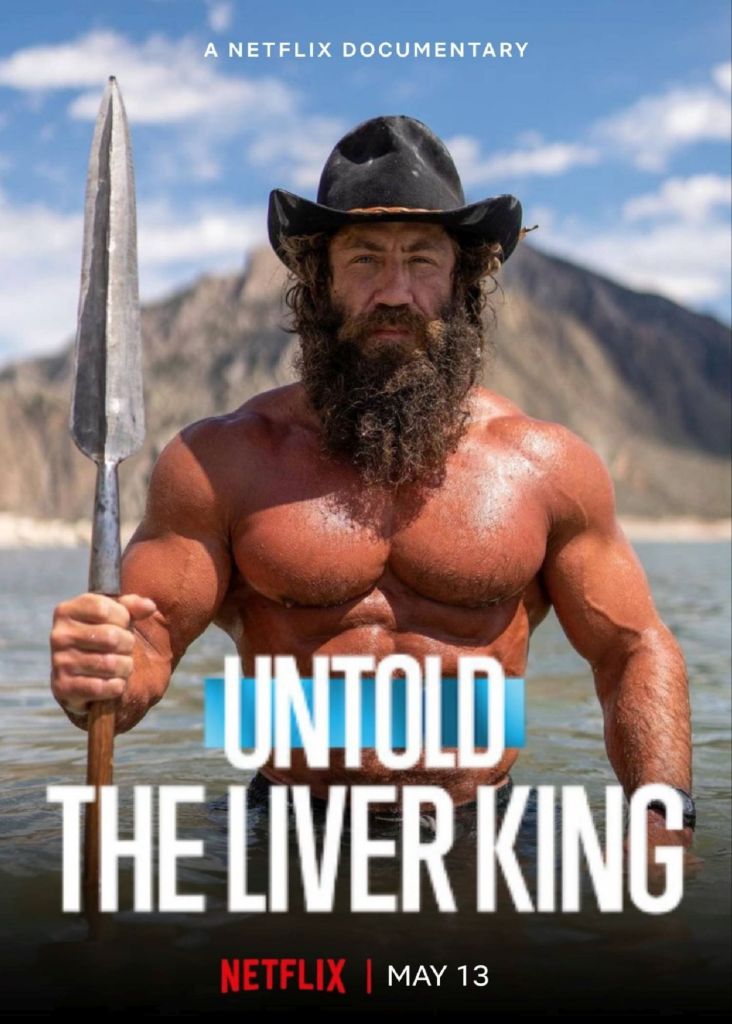
The Liver King: A Raw Deal in the Age of InfluenceUntold: The Liver King – Netflix Documentary Review


The Rise of a Carnivorous King

Brian Johnson didn’t enter the wellness arena—he charged in, half-naked and wholly committed. Known as the Liver King, he became a primal prophet of sorts, preaching a return to what he called “ancestral living.” His diet? Barbaric. His discipline? Unflinching. His presence? Viral.

He devoured bull testicles with the same ferocity he flung kettlebells, and through it all, he maintained one core message: modernity is poison. The antidote? A return to the wild. Yet, like many self-proclaimed messiahs, he was not what he appeared.


Ancestral Tenets: Selling Simplicity in a Complex World

Johnson didn’t just market meat—he marketed meaning. His philosophy, neatly packaged into Nine Ancestral Tenets, became the bedrock of his brand. These weren’t abstract values but a regimented ideology:

1. Sleep – Total blackout, no alarm clocks, and a rejection of artificial light.

2. Eat – Raw organs, bone marrow, raw milk. No vegetables. No compromise.

3. Move – Grueling functional workouts mimicking hunter-gatherer life.

4. Shield – Reject seed oils, endocrine disruptors, and EMFs.

5. Connect – Bare feet on soil. Grounding as gospel.

6. Cold – Ice baths and cryotherapy as modern rites of passage.

7. Sun – Maximize Vitamin D through shirtless, timed exposure.

8. Fight – Life is struggle; seek discomfort intentionally.

9. Bond – The nuclear family as the ultimate tribe.

Each tenet was a totem—elevated by algorithm, sold as salvation. They gave structure to chaos and ritual to recovery. But like many dogmas, they suffered from the same flaw: they excluded nuance.


The Steroid Scandal: Emails, Omnitrope, and the Fall of a King

While publicly denouncing performance-enhancing drugs, privately, Johnson was injecting them with zeal. Leaked emails revealed a pharmaceutical tab north of $11,000 a month—featuring testosterone cypionate, Deca-Durabolin, and notably, Omnitrope, a high-end synthetic HGH.

He had consulted with a hormone clinician. He knew the science. He was meticulous. These were not the desperate acts of a lost man but the calculated decisions of someone engineering a body that fit a story.

The emails were damning. “I need to build the best possible version of myself,” he wrote. But that version, it turns out, was more syringe than spleen.

His video confession, contrite in tone but corporate in structure, walked the line between accountability and damage control. But the deception ran deeper than needles. It cut to the core of what followers believed: that with enough liver and lunges, they too could transform.


The Lawsuit: When Branding Becomes Betrayal

Johnson’s revelation triggered not just backlash, but litigation. A $25 million class-action lawsuit alleged consumer fraud, false advertising, and negligent misrepresentation. Plaintiffs claimed they had spent significant sums on Liver King-branded supplements and regimens, under the belief that Johnson’s physique was the fruit of ancestral discipline—not chemical intervention.

The legal argument centered not just on truth-in-advertising laws but on emotional harm and intentional deception. The plaintiffs were not just seeking compensation; they were demanding accountability for a betrayal of trust. The courtroom became an altar where Johnson’s myth was weighed—and found wanting.


The Documentary: Visual Theater, But Missing Teeth

Netflix’s Untold: The Liver King is atmospheric and slick, but occasionally too reverent. It follows Johnson with a camera’s eye that’s more sympathetic than skeptical. It gives us gravel and kettlebells, moody Texas skies, and shirtless interviews lit like a GQ confession booth. The aesthetics are evocative. But where is the grit?

The visual language leans into Johnson’s charisma—close-ups of liver, sweat, and familial bonding. But what’s missing is a formal counterpoint. There’s little editorial interrogation, few critical voices, and no cross-examination of the public cost of his myth.

What the documentary excels at is capturing the theater of identity: the way Johnson physically transforms not just his body, but the world around him. From cold plunges to liver feasts, each act is shot like sacred ritual. But sacred to whom?


The Turn: Fruit, Vegetables, and the Softening of a Savage

In the final act, Johnson begins to soften—not just physically, but ideologically. He confesses to having malnourished himself in his meat-only crusade. He now eats fruit. Occasionally vegetables. He even admits he was wrong—something the Liver King would have once called weakness.

The transformation is striking. Gone is the growl. In its place, a kind of awkward humility. The man who once snarled at comfort now seeks balance. The rebrand is underway. Whether it’s penance or pivot, we don’t yet know.


Cultural Context: A Post-Truth Prophet

Johnson is a symptom of something deeper. We live in an age of engineered authenticity—where the appearance of grit is more bankable than the substance of virtue. Johnson offered a narrative that was simple, aggressive, and masculine—a recipe for virality in a culture craving clarity.

His story was never really about health. It was about belonging. In a world of soy lattes and cubicles, he promised a tribe, a fight, a furnace to forge yourself anew. But like all cults of personality, it asked for faith over fact.

He is not the first influencer to manufacture myth. But his myth was so total, so fleshy, so primeval—it dared us to look away. And many couldn’t.


Metaphor and Meaning: A Stoic Lens on Self-Delusion

Marcus Aurelius wrote, “The nearer a man comes to a calm mind, the closer he is to strength.” Johnson reversed this. He confused noise for power, ritual for resilience, and spectacle for virtue.

His kingdom was built not on rock but on sinew and spectacle. And like all empires of muscle, it collapsed—not under external attack, but internal rot.

Nietzsche warned: “He who fights with monsters must take care lest he thereby become a monster.” The Liver King fought weakness with such aggression that he became the very thing he feared: a mask, a performance, a synthetic vision of strength.


Verdict: The Muscle, the Myth, the Mirror

Untold: The Liver King is not just a documentary. It is a cultural x-ray. It peers into our modern marrow and finds a hunger—not for liver, but for meaning. Johnson’s fall is not just his own. It’s ours. We crave shortcuts, we sanctify confidence, and we confuse visibility for truth.

This film, though beautifully composed, misses a chance to challenge harder. But in its silences, it allows room for reflection—and that may be its quiet strength.

Rating: 9.4/10

A rich, revealing portrait of the man, the myth, and the marketplace that made him. With a few more sharp edges, it could’ve cut even deeper. Still, it flexes where it counts.

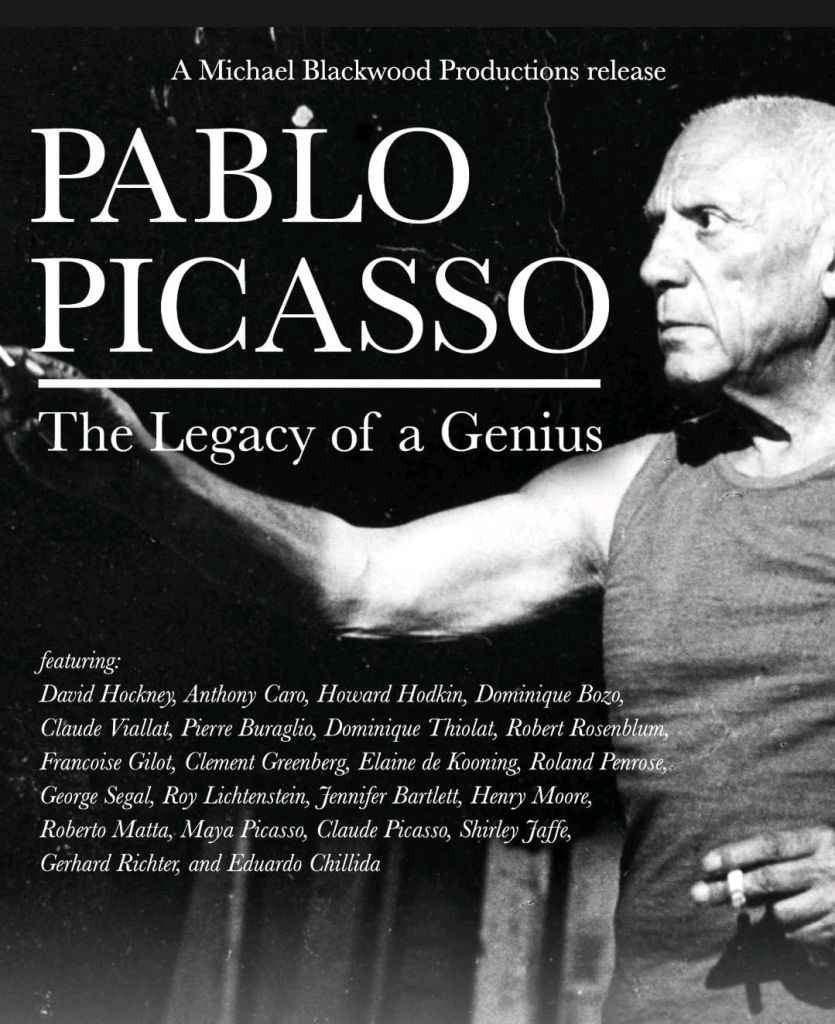
🎥 Legacy of a Genius – Pablo Picasso: A Portrait in Art and Controversy


Michael Blackwood’s Legacy of a Genius offers an expansive and illuminating portrait of Picasso’s life, artistry, and the people who shaped his world. Through a meticulous blend of archival footage and intimate testimonials from family members and acquaintances, the documentary constructs a multifaceted image of the man behind the genius. But does it fully capture the complexity of his legacy, or does it leave gaps in its exploration of his artistic and personal evolution?

Direction – A- (3.7/4.0)

Blackwood’s direction is confident, allowing Picasso’s story to unfold naturally through the voices of those who knew him. The decision to interweave film archives with contemporary reflections creates a layered narrative that respects both history and personal memory. While comprehensive, the documentary occasionally glosses over some of Picasso’s more controversial aspects, opting for admiration over deep critique.


Writing & Narrative Structure – B+ (3.4/4.0)

The film is structured across multiple episodes, each examining different facets of Picasso’s life. The pacing is steady, but some sections meander, particularly when delving into well-trodden territory. A tighter thematic focus could have heightened the impact of certain revelations.


Cinematography & Visual Composition – A (3.8/4.0)

Visually, Legacy of a Genius excels in its use of archival footage, seamlessly blending past and present. The restoration quality is impressive, and the juxtaposition of Picasso’s artworks with his personal life adds depth to the storytelling.


Interview Quality & Subject Depth – A (3.9/4.0)

The documentary’s greatest strength lies in its interviews. The participation of family members and women who shared personal relationships with Picasso brings authenticity and emotional resonance. These firsthand accounts illuminate the artist’s temperament, creative process, and relationships in ways that go beyond mere biography.


Editing & Pacing – B (3.2/4.0)

The film’s multi-part format allows for a thorough exploration of Picasso’s life, but at times, the pacing drags, particularly in sequences that reiterate known aspects of his persona. A more streamlined approach could have kept the momentum stronger.


Research Depth & Accuracy – A (3.9/4.0)

Blackwood’s team has clearly done their homework. The documentary covers Picasso’s artistic innovations and personal struggles with a richness that reflects extensive research. However, a more critical lens on his personal controversies could have balanced the narrative further.


Sound Design & Score – B+ (3.4/4.0)

The soundtrack complements the film well, with musical selections that evoke Picasso’s era and artistic intensity. At times, however, the score feels slightly repetitive, relying on familiar motifs instead of fully embracing Picasso’s own relationship with sound and movement.


Cultural & Social Impact – A- (3.7/4.0)

Legacy of a Genius contributes significantly to Picasso’s enduring cultural relevance. It reinforces his artistic innovations while reminding viewers of the personal and societal forces that shaped his work. While it may not challenge prevailing narratives, it enriches them with personal depth.


Final Score: A- (3.7/4.0) – 92.5%

Verdict:

Michael Blackwood’s Legacy of a Genius is a masterfully constructed documentary that offers an intimate and historically rich portrait of Picasso. While it leans toward admiration rather than deep interrogation, its extensive use of archival footage and personal testimonies makes it an essential watch for art enthusiasts and historians alike.


COACH SYDNOR’S GRADE: A-


Featured Subjects:

• Jennifer Bartlett – Renowned painter known for her conceptual and minimalist works.

• Dominique Bozo – Former director of the Musée Picasso in Paris.

• Pierre Buraglio – French artist associated with the Supports/Surfaces movement.

• Anthony Caro – Influential British sculptor recognized for his abstract metal works.

• Eduardo Chillida – Spanish Basque sculptor famed for his monumental abstract works.

• Elaine de Kooning – American abstract expressionist painter and art critic.

• Françoise Gilot – Accomplished painter and author, and Picasso’s former partner.

• Clement Greenberg – Prominent American art critic closely associated with modern art.

• David Hockney – Celebrated British painter and photographer.

• Howard Hodgkin – British painter known for his abstract works.

• Shirley Jaffe – American abstract painter based in France.

• Roy Lichtenstein – Leading figure in the pop art movement.

• Roberto Matta – Chilean abstract expressionist painter.

• Henry Moore – Eminent British sculptor known for his semi-abstract monumental works.

• Roland Penrose – English artist, historian, and biographer of Picasso.

• Claude Picasso – Photographer, filmmaker, and Picasso’s son.

• Gerhard Richter – German visual artist known for his abstract and photorealistic paintings.

• Robert Rosenblum – American art historian and curator.

• George Segal – American painter and sculptor associated with the pop art movement.

• Dominique Thiolat – French artist and art critic.

• Claude Viallat – French painter and a founding member of the Supports/Surfaces movement.

• Maya Widmaier Picasso – Art historian and Picasso’s daughter.


Filmmaker Context:

Michael Blackwood is a veteran documentarian known for his work chronicling the lives and influences of major artists, architects, and cultural figures. His films often adopt a patient, observant style that allows subjects to narrate their own stories through interviews and archival material. Legacy of a Genius aligns with his broader commitment to documenting the arts, though it leans toward celebration rather than critical dissection.


Documentary Type

🎬 Biographical / Art Documentary

IMDb Page:
http://www.imdb.com/title/tt1832425/