Metanoia ♾️ The Diary of Questions — The Courage to Remain Curious


The Provocation

Rainer Maria Rilke:

“Be patient toward all that is unsolved in your heart and try to love the questions themselves, like locked rooms and like books that are written in a very foreign tongue. Do not now seek the answers, which cannot be given you because you would not be able to live them.”

Rilke’s appeal is not an invitation to passivity but to moral discipline. He understood that to live a question requires faith in time — a trust that the mind will grow into the space its uncertainty opens. This patience is not inertia; it is apprenticeship. Each unanswered question trains endurance, teaching us to dwell inside ambiguity without panic.

In our age, where opinions arrive faster than understanding, Rilke’s voice sounds almost monastic. To love the questions is to resist the tyranny of immediacy — to choose reflection over reaction. The one who asks patiently begins to inhabit a slower world, one in which meaning unfolds, not explodes.

🔎 Questions are not interruptions to life; they are the steady rhythm by which life reveals itself.


The Turning Point

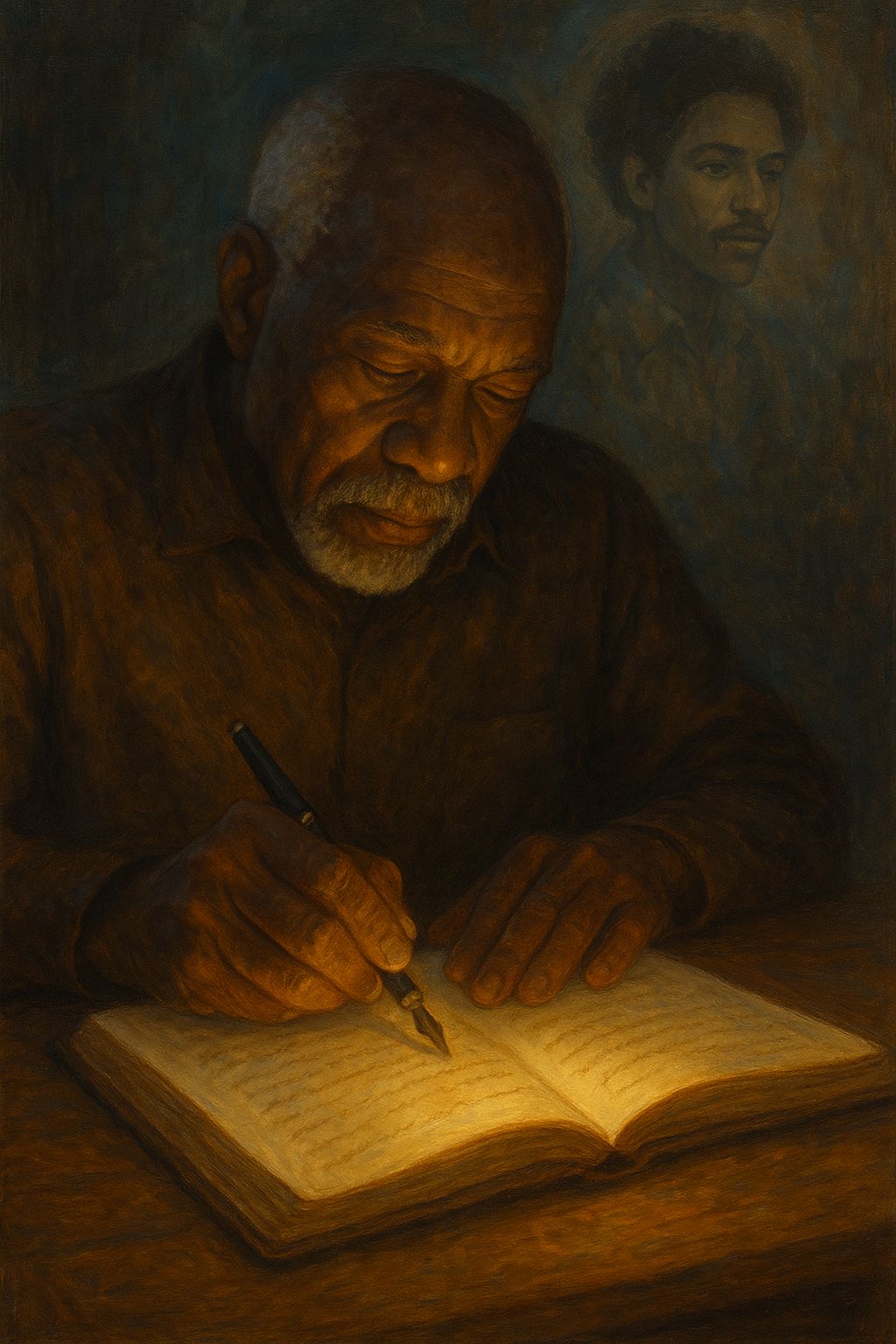
There is a distinct stillness in writing a question by hand. The physical act arrests the restless current of thought. The page, whether paper or screen, becomes a small clearing where the mind slows enough to listen to itself. A question written down becomes visible doubt, and in its visibility lies the beginning of clarity. The diary, then, is not a record of answers but a chamber of echoes, where thought can return to itself and deepen with each revisit.

Can the simple act of writing a question anchor the wandering mind?

🔎 When a question becomes visible, confusion begins to take form — and form is the first gesture of comprehension.

The diary has often been reduced to confession — a vessel for secrets or sentiment. Yet in its highest form, it serves as a laboratory of discernment.

Socrates had no journal, but his life was one long dialogue with ignorance; Montaigne’s essays were self-interrogations disguised as conversation; Leonardo da Vinci filled his notebooks with inquiries that bound art to anatomy, invention to wonder. To record one’s questions is to continue that lineage — the ancient craft of shaping uncertainty into direction.

Why do we treat uncertainty as weakness when it is the beginning of intelligence?

🔎 The refusal to appear unsure is not strength; it is vanity disguised as wisdom.

In an age of ceaseless connectivity, the diary of questions might seem archaic, but technology can become its new parchment. The voice memo, the encrypted note, the fleeting digital whisper — each can carry the spirit of inquiry if used with intention. The question is not whether we write by pen or pixel, but whether we still know how to listen once we have written.

Can the digital mirror reflect the depth once found in the handwritten line?

🔎 A tool becomes sacred only when it serves stillness, not speed.

Every diary of questions requires courage, because questions expose the fragility of our certainty. They humble us. The culture of immediacy rewards conclusion, not contemplation. Yet what is quick rarely transforms. The questions that matter ripen slowly; they need silence, gestation, and return. Each unanswered line is a living seed, awaiting the climate of maturity.

Does wisdom belong to those who find answers, or to those who can wait for them?

🔎 Time is not the enemy of truth — it is its midwife.

Over years, a diary of questions becomes a map of interior growth. Each question marks a turning point in consciousness. The entries once born of confusion reveal patterns of awakening. Questions asked at twenty echo differently at sixty; what once ached for solution becomes gratitude for mystery. To write them down is to confess that thought, like the moon, waxed through inquiry and waned into understanding.

Can we learn to love what remains unsolved within us?

🔎 To live in mystery is not to lose clarity but to expand its horizon.


🤔 Questions of Value

Why does a written question seem wiser than a spoken one?

🔎 Writing slows the hand, and with it the mind; inquiry gathers depth through stillness.

What is lost when curiosity competes with convenience?

🔎 Comfort answers quickly, but wisdom waits to be invited.

Do our devices mirror thought, or merely scatter it?

🔎 Reflection demands enclosure; a mind always connected forgets how to return home.

Can silence become a language of inquiry?

🔎 The truest questions often arrive in the spaces between words.

Does humility, not intelligence, define the thinker?

🔎 To admit uncertainty is the beginning of knowing.

What does it mean to archive wonder in a digital age?

🔎 Each stored question becomes a relic of consciousness — evidence that the soul still searches.

Are we courageous enough to remain students of our own confusion?

🔎 Only the humble dare to keep learning after they have been praised for knowing.

When we answer too quickly, what happens to meaning?

🔎 The speed of resolution often steals the depth of realization.


💭 The Rhetorical Mirror

Example: “Everything you need to know is already online.”

Fallacy: Appeal to Convenience (Reductionism).

This illusion equates access with understanding. It suggests that depth can be downloaded and that curiosity is obsolete. The screen becomes a counterfeit sage — efficient, infinite, and indifferent.

Such thinking hollows the intellect. Knowledge without reflection breeds arrogance; it replaces inquiry with imitation. Algorithms now determine what we should wonder about. We scroll instead of study, skim instead of seek. The digital flood does not drown us with ignorance, but with premature certainty.

Can information replace reflection?

🔎 Data informs; wisdom transforms — and transformation requires time.

What happens to thought when every question expects a link?

🔎 To outsource curiosity is to mortgage the soul of discernment.

Do we mistake access for insight?

🔎 The library and the labyrinth look alike only to the hurried.

Can the human mind rediscover its depth amid abundance?

🔎 Silence remains the only space where information becomes knowledge.

🔎 To recover the diary of questions is to recover the dignity of wondering alone.


🪶 The Distillation

I open the diary—
a quiet mirror of unfinished thoughts.
The ink has thinned with time,
but the questions remain vivid, unafraid.

Each one holds a fragment of light,
a syllable of something infinite.
They do not clamor for answers;
they hum with patient radiance.

I trace the dates—
the handwriting changes,
the hand itself ages,
but the curiosity endures.

Like the moon,
each question waxes and wanes,
borrowing its glow from the sun of reflection,
rising again in another phase of mind.

Some nights I read them aloud
and realize I have become
the echo of what I once sought.

R.M. Sydnor


🏛️ Wisdom’s Lens

Simone Weil: “Attention is the rarest and purest form of generosity.”

🔎 In an age addicted to distraction, to give attention is to restore the sacred. The diary of questions teaches that generosity begins with the mind’s willingness to dwell, to hold, to remain. Each written line becomes a vigil of awareness — an act of quiet giving to what deserves to be understood.


🌅 Closing Meditation

“To keep a question alive is to keep the soul awake.”

🔎 The courage to remain curious is the heartbeat of metanoia — the turning of the mind toward wonder, again and again.


📚 ENRICHMENT

📚 The Essays — Michel de Montaigne (1580–1595)

Montaigne’s Essays are the birthplace of the reflective mind on paper — an intellectual autobiography of curiosity. Writing without pretense of mastery, he turned self-questioning into a literary form, teaching that thought unfolds through uncertainty.

🔎 Montaigne proved that a question sincerely lived can illuminate an entire philosophy.

📚 Pensées — Blaise Pascal

(posthumously published 1670)
Pascal’s Pensées (“Thoughts”) are fragments of inquiry—unfinished yet enduring meditations on faith, reason, and the tension between doubt and belief. He wrote not to conclude but to wrestle, to record the pulse of his own uncertainty.

🔎 The fragment, for Pascal, was not failure but fidelity to the mystery he refused to simplify.

📚 Letters to a Young Poet — Rainer Maria Rilke (1903–1908)

A collection of ten letters written to an aspiring writer, Rilke’s reflections offer a lifelong companion to those who question inwardly. His central wisdom—to love the questions themselves—anchors this very edition of Metanoia.

🔎 Rilke reminds us that the most personal questions often become the most universal answers.

📚 Meditations — Marcus Aurelius (2nd century CE)

Composed privately by a Roman emperor, Meditations reveals a ruler’s struggle to govern both empire and mind. Through daily writing, Marcus practiced the Stoic art of self-inquiry, transforming duty into discipline.

🔎 Stoicism teaches that to rule the self through reflection is the highest form of power.

🪶 Notebooks — Leonardo da Vinci (15th–16th century)

Leonardo’s notebooks are the living anatomy of curiosity. Blending sketches, formulas, and questions, they reveal a mind that saw no boundary between art and science. Each page embodies inquiry as a physical act of wonder.

🔎 Leonardo’s genius lay not in what he knew, but in how he refused to stop asking.

🎧 On Being with Krista Tippett — “The Soul in Inquiry” (Podcast Episode)

Tippett’s conversations trace the meeting point between spirituality and intellect. “The Soul in Inquiry” gathers thinkers who treat questioning as devotion — a way of honoring complexity in an impatient world.

🔎 To listen deeply is to practice inquiry through empathy.

🎦 The Examined Life — Directed by Astra Taylor (2008)

A documentary that follows philosophers—Cornel West, Avital Ronell, Peter Singer, and others—as they bring their ideas into public space. Filmed amidst ordinary life, it turns sidewalks into classrooms and questions into shared air.

🔎 Philosophy steps off the page when we walk with our thoughts instead of hiding behind them.

🎞️ The Great Beauty — Directed by Paolo Sorrentino (2013)

This visually rhapsodic film follows an aging writer rediscovering depth after years of surface living. It meditates on art, longing, and the quiet ache of rediscovery.

🔎 Beauty, when encountered honestly, always leads back to questioning what endures.

📰 The Art of Stillness — Pico Iyer (2014)
A modern essayist’s meditation on slowing down in a world that cannot stop. Iyer’s work redefines travel as an inward journey — a pilgrimage toward presence and pause.

🔎 Stillness becomes the soil in which the next true question can root.


♾️ On Metanoia

Metanoia means “a turning of the mind.”


To maintain a diary of questions is to rehearse that turning daily — from noise toward nuance, from impatience toward patience, from knowing toward listening. Each question recorded renews the courage to stay awake within mystery.
Metanoia ♾️ The Grace of Restraint

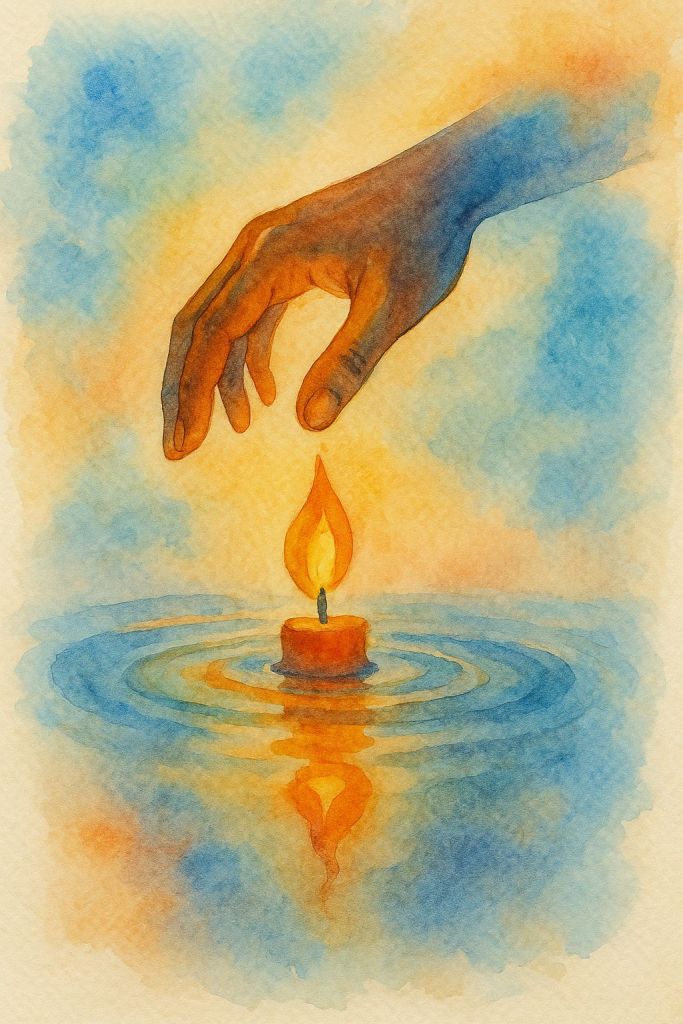
The Still Hand

Epictetus: “No man is free who is not master of himself.”

🔎 Freedom expands not through indulgence, but through discipline.


🤔 Prelude — The Turning Point

Restraint stands as one of the least celebrated virtues in a culture addicted to display. Yet it remains the hidden architecture of dignity. In an age that prizes spontaneity, silence feels suspect, patience unfashionable, and reflection almost subversive. We equate speech with courage and reaction with authenticity, forgetting that wisdom often lives in the pause before the word. The mind that restrains itself does not weaken—it clarifies. Withholding does not wither; it ripens.


Can control preserve the vitality of emotion without extinguishing it?

🔎 Emotion gains integrity when it submits to measure; the pause tests motive, and whatever survives that quiet examination deserves voice.

Restraint refines desire. Passion without measure devours itself; will without temper turns tyrant. Seneca warned that anger conquers the man who fails to conquer himself. Thomas à Kempis, centuries later, taught that no peace survives in the soul that yields to every impulse. The ancients understood what the digital age forgets: that not every emotion deserves an audience, and not every opinion earns a stage. True strength begins in the invisible theater—where the self governs its own performance.


Can freedom exist without boundaries chosen in wisdom?

🔎 Boundary converts raw want into will; limits name what we refuse, and refusal preserves the freedom we mean to keep.

Modernity distrusts stillness. To pause is to risk invisibility, and invisibility feels like death to the ego. The marketplace rewards immediacy, not integrity. Yet the pause between provocation and response marks the birthplace of civilization.

One who resists the itch to retaliate opens a door that leads from instinct to insight. That moment of suspension—frail, trembling, human—holds the entire weight of moral history. When we wait, we remember we are not beasts of reaction but creatures of discernment.


Does waiting nourish wisdom or merely delay desire?

🔎 A counted breath restores authorship; in that breath we trace cause, choose aim, and accept consequence—before the word leaves the mouth.

🔎 Count one breath for anger, three for pride, ten for revenge; each count hands the mind back its keys.

Restraint carries beauty. The archer’s grace lies not in release but in the drawn bow. The dancer’s poise resides in balance before motion. The lover’s depth grows in the silence between words. A measured life never denies passion; it teaches passion rhythm. What many call coolness often means composure. To hold oneself steady amid provocation is not apathy—it is artistry. The soul that learns restraint no longer needs spectacle for validation. It finds its music in proportion.


Can elegance endure without discipline of feeling?

🔎 Beauty follows proportion: cadence disciplines content, and restraint edits excess so meaning can stand unassisted.


⚖️ Questions of Value — The Inquiry

Can self-mastery coexist with vulnerability?

🔎 Strength loses warmth when armored against feeling. Vulnerability admits light, yet mastery channels it so it neither blinds nor burns. The disciplined heart allows tenderness to enter without surrendering command of the gate.


When does patience cease to be virtue and become avoidance?

🔎 Time heals only when we meet it with intention. Delay that hides from decision grows mold; delay that seeks clarity ferments wisdom. The difference lies in whether stillness listens or evades.


Do we silence truth when we hold our tongue?

🔎 Some truths ripen in quiet before they can nourish others. Speech born too soon resembles unripe fruit—bitter and indigestible. The wise tongue weighs timing as part of truth itself.


What defines freedom—the liberty to act or the courage to refrain?

🔎 Action demonstrates capacity; restraint demonstrates conscience. Freedom without conscience becomes appetite in disguise. True liberty chooses its boundaries the way an artist chooses frame and proportion.


Is restraint a form of suppression or an act of creation?

🔎 Every refusal becomes a mold in which meaning sets. Suppression hides what it fears; creation shapes what it values. Restraint, rightly used, carves excess away until essence appears.


Can tenderness survive without boundaries?

🔎 Love overpoured drowns the soul it seeks to serve. The boundary does not lessen affection; it preserves its current, giving direction to devotion. To sustain warmth, one must occasionally close the door and tend the hearth.


When does editing a thought protect truth rather than censor it?

🔎 Revision performs moral hygiene. It removes vanity, exaggeration, and the noise of haste. What remains—clean, exact, and human—carries the quiet authority of something examined twice.


How do we distinguish principled silence from fearful silence?

🔎 Motive tells the tale: principle delays to heighten understanding; fear delays to escape consequence. One gathers strength in the interval; the other bleeds it away. The test lies in whether the pause ends in courage or in retreat.


What practice best converts restraint into freedom?

🔎 Ritual gives pause its rhythm: breathe, reflect, rewrite, consult conscience, then act. Each deliberate interval enlarges the circle of control, proving that the slow hand often reaches farther than the swift one.


Does restraint risk missed opportunity—or prevent false urgency?

🔎 Time exposes authenticity. What survives the cooling of impulse deserves pursuit; what evaporates reveals illusion. Patience, therefore, functions not as paralysis but as filter—the sieve through which truth keeps its shape.


💭 The Rhetorical Mirror — The Illumination

Modern Distortion: The Fallacy of Instant Expression

Social media has baptized immediacy as virtue. We confuse disclosure with honesty and noise with relevance. The Fallacy of Instant Expression asserts that emotion loses authenticity if not broadcast at once—that to pause, edit, or reflect is deceit. This belief dissolves intimacy into performance. It teaches the self to mistake visibility for validation.

Definition: The Fallacy of Instant Expression persuades us that unfiltered emotion equals truth, though truth often requires refinement.

Illustrative Instances:
A public official tweets outrage before dawn; by noon the facts have changed, yet the outrage endures. The apology trends lower than the error.

A news outlet races to publish first, then edits quietly after the damage has spread.

A celebrity posts a tearful confession video within minutes of scandal—less to seek forgiveness than to manage perception.

A friend screenshots a private message mid-argument and shares it publicly “for transparency,” turning intimacy into theater.

Even in private life, an angry midnight text replaces reflection; morning brings regret, but the harm has already traveled.


Each act carries the same illusion: that expression itself equals authenticity, and that silence implies deceit.

Distortion:

By glorifying immediacy, this fallacy eliminates discernment. We cease to think between stimulus and statement. Outrage becomes identity; reflection becomes delay. The world mistakes reaction for revelation, and conscience for censorship. The result is moral inflation—every feeling demands applause, every thought demands display.

Can sincerity survive without silence?

🔎 Silence lets facts cohere and motives settle; delay invites correction, while speed multiplies error and broadcasts it.


Does constant sharing deepen connection or dilute meaning?

🔎 Disclosure without discretion spends intimacy like loose coin; privacy, rightly kept, compounds trust.


Can expression become exploitation of emotion itself?

🔎 An audience alters the chemistry of truth; once applause enters, self-presentation crowds out self-examination.


How does one measure authenticity in an echo chamber?

🔎 Quiet judgments answer to conscience, not to crowds; their durability comes from source, not volume.

🔎 Clarity returns when we practice the unsent reply: write, wait, reread, remove what flatters, release only what serves.


🪶 The Still Hand

Poetry read aloud by author

A flame held steady tells no lie.
Its light bends only to breath, not boast.
The bow drawn taut hums with restraint—power gathered, not yet spent.

In the hush before speech,
language rehearses its conscience.
One heartbeat of silence
outlasts a thousand exclamations.

I have seen fury dressed as courage,
and stillness mistaken for fear.
Yet grace leans into quiet,
like dawn holding back the sun.

Freedom deepens under self-command.
The hand that waits governs the fire.
Only those who master pause
can move without burning the world.

R.M. Sydnor 


🏛️ Wisdom’s Lens — The Orientation

Marcus Aurelius: “Waste no more time arguing what a good man should be. Be one.”

🔎 Principle takes shape the moment we deny ourselves the indulgence that contradicts it.


🌅 Closing Meditation — The Benediction

Power without restraint breeds ruin; restraint without power breeds fear.

🔎 First govern the spark, then grant the flame its work.


📚 Enrichment — The Continuum

Books

Letters from a Stoic — Seneca

Meditations — Marcus Aurelius

The Rule of St. Benedict

The Imitation of Christ — Thomas à Kempis

The Courage to Be — Paul Tillich


Films

A Man for All Seasons (1966)

The Remains of the Day (1993)


Music

Arvo Pärt — Spiegel im Spiegel

J.S. Bach — Cello Suites


Poetry

T.S. Eliot — “Ash Wednesday”

Denise Levertov — “Primary Wonder”


🪶 Postscript — On Metanoia

Metanoia means a turning of the mind.
It begins when noise yields to silence, and silence to understanding.

METANOIA ♾️ The Currency of Attention

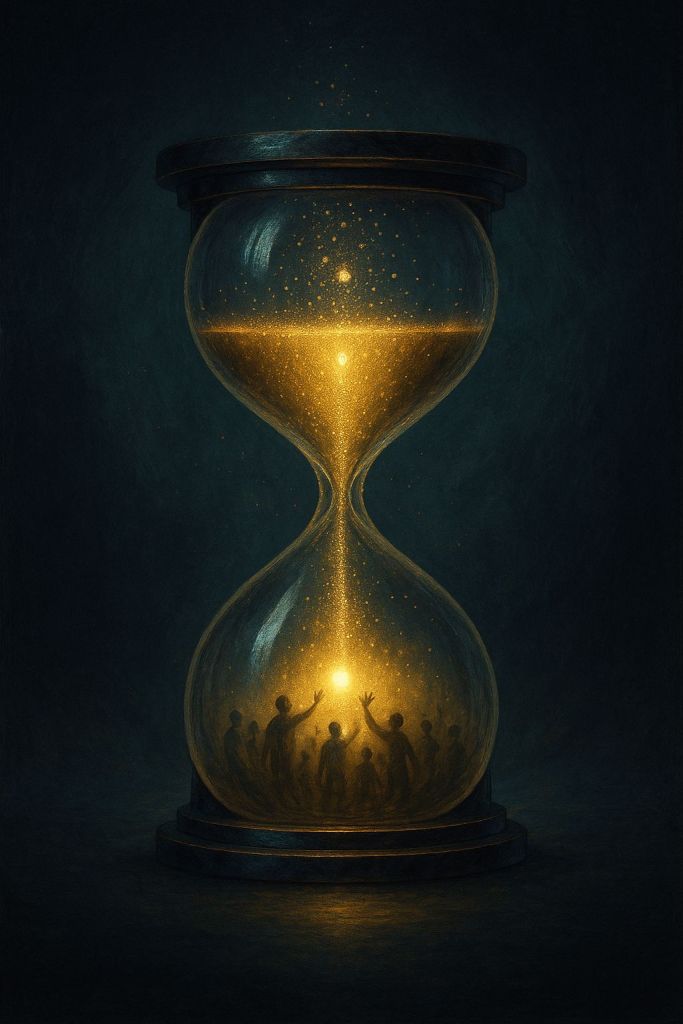
The Hourglass of Light

Simone Weil:

“Attention, taken to its highest degree, is the same thing as prayer.
It presupposes faith and love.”

🔎 Weil reminds us that attention is not mere awareness but consecration — a gaze that redeems whatever it beholds.


Søren Kierkegaard:

“Purity of heart is to will one thing.”

🔎 Kierkegaard summons the mind to singularity — to choose what is worthy and discard the rest.

Turning of the Mind

Metanoia begins where noise ends — in the silence before recognition. Born from the Greek for “turning of the mind,” it means not theatrical repentance but quiet reorientation: the soul’s compass finding north again.

Such turning demands valor. The modern mind drifts at the mercy of its machinery — thoughts rented by algorithms, emotions auctioned to commerce. To turn inward now is no retreat; it is reclamation.

Metanoia proposes a richer economy: one measured not by reaction but by reflection, not by accumulation but by discernment. It is a moral transaction in which the self buys back its own awareness.


The Currency of Attention

Weil’s clarity cuts through the modern haze. To attend is to sanctify; to neglect is to condemn. Attention confers value upon whatever it touches.

Yet in the global bazaar, attention has become the most coveted currency. Corporations compete for fragments of our gaze, trading them like futures on an invisible exchange. The sacred becomes transactional. Prayer becomes performance. Stillness becomes scarcity.

We scroll to escape silence, not to seek truth. We chase momentum and mistake it for meaning. In such a world, stillness itself becomes an act of rebellion — the quiet uprising of an undivided soul.


♾️ Questions of Value — The Threshold

Before we can reclaim attention, we must question what we truly attend to.

What happens to truth when distraction becomes our daily trade?

If every glance carries a price, what remains free in the human spirit?

Can discernment endure in economies built on persuasion?

What moral cost do we pay when our gaze becomes a commodity?

When everything demands our notice, what still deserves devotion?

Is silence the last sanctuary left to conscience?


The Practice of Presence

To restore attention is not a technical project; it is spiritual repair. Each act of focus becomes fidelity renewed — a refusal to fragment, a stand against dispersion.

True attention requires courage: to linger where others scroll, to trust that depth still matters, to risk boredom in pursuit of beauty.

Turning inward, we rediscover the slow pulse of being. That turning — the act of return — is Metanoia itself: the mind realigned, the spirit recalibrated. Presence becomes resistance; awareness, a quiet art.


🪞 The Rhetorical Mirror

Headspace once launched a campaign inviting users to Find Calm — Subscribe Now.

The irony was immaculate: serenity sold by subscription.

This is the Appeal to Emotion fallacypersuasion built on longing rather than logic. It exploits our ache for peace by framing it as a purchase. The language of transcendence becomes the grammar of consumption.

Such rhetoric is not neutral; it reshapes desire itself. It teaches us to confuse the stillness of being with the relief of buying, and to measure mindfulness by monthly renewal fees.

To see through such persuasion is to reclaim moral sight. The fallacy, once named, loses its charm.
Clarity is the first act of freedom.

🔎 Advertising does not steal serenity; it distracts us from remembering we already possess it.


♾️ Questions of Value — The Rhetorical Mirror

Have we confused consumption with fulfillment?

Can mindfulness coexist with monetization?

What becomes of wisdom when it is packaged and priced?

Is self-awareness still possible in a culture addicted to self-promotion?


🔎 True mindfulness cannot be bought, for the very act of buying breaks the stillness it seeks to sell.


🪶 The Garden of Glass


I wander through the garden of glass and glow,
Where thoughts move quick but rarely grow.
The world hums bright with a thousand eyes,
Each watching, selling, beneath disguise.

My mind once calm, now split in two —
Half for the world, half lost from view.
I scroll through silence, skip through pain,
Mistaking movement for refrain.

Yet in the hush that screens forget,
Where breath meets thought, I’m human yet.
For there within the still, unseen,
Lies all I am — and all I mean.

R.M. Sydnor


🏛️ Wisdom’s Lens

Simone Weil: “Attention is the rarest and purest form of generosity.”

🔎 The mind gives most deeply when it beholds without demand.


🌅 Closing Meditation

Guard your gaze; it is the gate to your becoming.

🔎 What you behold too long becomes the mirror of your soul.


🙏🏾 Affirmation

I must steady my mind against the undertow of distraction.
I must choose depth over drift, devotion over display.
I must attend to what is real and relinquish what is noise.
My attention is not for sale — it is sacred.


📚 Enrichment — Further Reading, Viewing, and Listening on The Currency of Attention


📚 Books

Gravity and Grace — Simone Weil — on the sanctity of attention and moral clarity.

The World Beyond Your Head — Matthew B. Crawford — reclaiming focus in a distracted age.

The Shallows — Nicholas Carr — how the Internet reshapes thought and erodes reflection.

How to Do Nothing — Jenny Odell — reclaiming stillness as resistance.


📰 Articles

“The Attention Economy and the Human Cost of Clicks” — The Atlantic — how markets monetize awareness.

“Mindfulness, Monetized” — The Guardian — the commercialization of calm.


🎞️ Films

The Social Dilemma — directed by Jeff Orlowski — technology’s quiet capture of consciousness.

Minimalism: A Documentary About the Important Things — directed by Matt D’Avella — simplicity as liberation from noise.


📺 Television

Black Mirror — anthology series — reflections of our distracted selves.

Severance — Apple TV+ — the divided self in the age of productivity.


🪶 Poetry

T.S. Eliot — “Burnt Norton” — the still point where attention meets eternity.

Mary Oliver — “Mindful” — a hymn to noticing as devotion.