The Altar and the Ledger

Opening Invocation

In an age enthralled by the spectacle of cinema yet tethered to the glow of streaming screens, The Offer emerges as an allegory. It is not merely the tale of producing The Godfather, but a meditation on creation itself—on the alchemy by which chaos is transmuted into myth. At the heart of the series pulses a metaphysical question: how does one fashion enduring art amid the centrifugal forces of commerce, ego, and carved-in-stone legacy?

This is, at its core, a narrative of discord and transcendence. Our protagonist, Albert S. Ruddy—played with redemptive gravity by Miles Teller—stands at the center of a vortex. He contends not only with predators of profit and posture, but with the shadows of cinema’s own immensity. From a corporate cog on Hogan’s Heroes, Ruddy awakens to ambition. He hears the echo of collective gasp in a darkened theater and resolves to shepherd a film that will echo for generations. Yet the altar he constructs is riven by compromise: the demands of studio patriarchs, the anxiety of iconic actors past their prime, and the threatening hum of organized crime.

Within this crucible, The Offer posits a contradiction: cinema is both divine invocation and ledger book. We witness Ruddy negotiating with mob boss Joe Colombo, cajoling studio heads, and defying fickle casting edicts. Underneath these negotiations lies a Sisyphean paradox: the more Ruddy chases authenticity, the more he is pulled into the gravity of mythmaking itself—inevitably shaping not just The Godfather, but the legend of its own production.

Thus enters our tension: the collision between lived truth and the mythic resonance it births. The series employs metaphor and contradiction as its dialectic—evoking in its ten hours the promise of tragedy but risking that it becomes mere operatic detritus. And so we begin: not with exposition of plot or cast, but with the moral and metaphysical question that haunts every frame—can art born of compromise still transcend compromise?


Cast of Characters & Performative Dynamics

In The Offer, performance is not a matter of mimicry—it is a negotiation with memory, a dialogue with archetype. The casting choices serve not merely as placeholders for history but as interpretive gestures, echoing through the corridors of cinema’s own mythology. Every actor, whether inhabiting a titan of industry or a footnote in film lore, performs not only for the viewer but against the shadow of their real-life counterpart. This meta-layered dynamic both enriches and occasionally undermines the series’ authenticity.

Miles Teller’s Albert S. Ruddy is the gravitational center around which this constellation orbits. Teller, typically cast as the brooding prodigy (Whiplash, Bleed for This), here reinvents himself with restraint. His Ruddy is not charismatic in the traditional sense; he is clenched, often silent, a man whose ambition is audible in pauses rather than pronouncements. Teller does not charm—he maneuvers. One suspects the casting was a gamble on gravitas, and while the performance occasionally flirts with opacity, it succeeds in portraying a producer as a haunted tactician: never fully trusted, yet somehow indispensable.

In contrast, Matthew Goode’s portrayal of Robert Evans is flamboyant, theatrical, and undeniably precise. Where Teller compresses, Goode expands—drawing vowels into silk, threading gestures with debauched elegance. His Evans is part Gatsby, part Mephistopheles: a man who wears Hollywood like a cape, both dashing and damning. There are moments—particularly in the scenes of studio negotiation—where Goode’s magnetism threatens to eclipse the narrative itself. And perhaps it should. His performance becomes an embodiment of what The Offer both celebrates and critiques: the power of persona over product.

Juno Temple’s Bettye McCartt is the unexpected fulcrum of emotional clarity. In a show brimming with testosterone, her performance is a study in composure and insurgent intelligence. Temple resists the trap of writing Bettye as mere secretary or moral ballast. Instead, she manifests her as a kind of oracle—the only one who seems to understand that cinema is both dream and debt. Her scenes with Teller, understated and tensile, become the moral marrow of the show.

Giovanni Ribisi’s Joe Colombo, however, teeters between uncanny and caricature. Encased in prosthetics and a gravel-pressed voice, Ribisi seems trapped in a performance built more for effect than embodiment. The menace is manufactured. One is reminded of De Niro’s dictum: menace, to be believed, must never know it’s menacing. Here, Colombo knows too well.

Other portrayals—Dan Fogler’s Francis Ford Coppola, Patrick Gallo’s Mario Puzo, and Burn Gorman’s Charlie Bluhdorn—offer a mixed palette. Fogler’s Coppola lands with warmth but little thunder; Gallo’s Puzo, though sincere, is sometimes reduced to comic relief; while Gorman’s Bluhdorn, though riveting, risks veering into vaudeville.

What unites these performances is their relationship to The Godfather itself—not the film, but the myth. Each actor is caught between homage and invention, reverence and revision. Some rise above the myth to reinterpret it; others are caught in its undertow. In this way, the cast becomes a commentary on the show’s deeper paradox: that to recreate the making of a masterpiece, one must first acknowledge its impossibility.


Narrative Arc: The Full Journey

The story The Offer tells is not a straight line—it is a Möbius strip, circling back on itself with deliberate convolution. It begins, ostensibly, as a story about making a film, but soon reveals itself as something denser: a meditation on ambition, mediation, loyalty, and the choreography of chaos required to bring beauty to life. The events it recounts are historically rooted, yet structurally operatic. We are not merely watching a series of negotiations; we are watching a man wrestle with the soul of an industry.

We begin with Albert S. Ruddy, plucked improbably from television mediocrity to steward a film whose literary source is as controversial as it is beloved. Ruddy is not a cinephile—he is a problem solver. The early episodes of the series make this plain: his talent is not vision, but conviction. He persuades a studio reluctant to touch mob material. He walks the fine line between placating gangsters and respecting storytellers. He becomes, in effect, the sacrificial go-between—an emissary navigating two worlds, each one volatile and overinflated.

The central drama builds around The Godfather’s many obstacles—casting disputes, budget shortfalls, and threats both literal and symbolic. Paramount executives doubt the material. The mafia watches suspiciously. Marlon Brando, long deemed uninsurable, looms like a ghost over the casting process. Al Pacino, nearly invisible at the time, is dismissed as too meek. The film feels perpetually one inch from collapse, and Ruddy, like a mythic hero, holds the structure aloft not by brute force, but by cleverness and sheer stamina. Each episode is another skirmish in the war for control—control of vision, of funding, of perception.

As the narrative progresses, the series fractures—somewhat intentionally—into multiple tonalities: corporate satire, period drama, family tragedy, and, at times, slapstick farce. There are moments of real poignancy: Bettye McCartt standing up for her boss when the world doubts him; Coppola and Puzo debating art versus commerce while devouring Italian food; Robert Evans descending into a self-made hell of narcotic haze and personal vanity. These moments shimmer. They give the series its weight.

Yet this emotional gravity is undercut by a recurring issue: the show’s inability to fully trust its audience. There is an overabundance of explanatory dialogue. Events are often telegraphed rather than unveiled. In its most melodramatic turns, The Offer forgets that mythology gains power not from being explained, but from being earned through mystery. A pivotal scene with Joe Colombo’s shooting is rushed, more plot device than dramatic reckoning. The fallout of his absence ripples but never quite reaches emotional depth.

Moreover, the narrative’s climax—the filming of The Godfather itself—feels less like an apotheosis and more like a checklist. We see Brando with the cat. We see the orange. We see the light breaking through the blinds. It’s nostalgic, yes, but not always necessary. These recreations begin to feel like souvenirs rather than revelations. And herein lies the show’s central irony: it spends ten episodes chronicling the making of a transcendent film, only to falter in capturing what made the film transcendent in the first place—its silence, its menace, its sacramental pacing.

But to fault the series entirely would be unkind. The Offer does achieve something rare: it manages, even through its clutter, to convey the impossible logistics of art. It shows how masterworks are forged not by genius alone, but by diplomacy, defiance, and sheer will. Ruddy’s story may be romanticized—but the impossibility of what he accomplished is not.

The narrative arc, therefore, is not just Ruddy’s journey—it is the story of every creation threatened by compromise, yet somehow emerging immortal.


Cultural, Historical, and Thematic Embedding

To examine The Offer is to gaze through a cinematic palimpsest—beneath its glossy veneer lie strata of American mythmaking, cultural reckoning, and institutional performance. The series does not merely depict the making of a film; it dramatizes a historical moment when the tectonic plates of Hollywood were shifting, and the old studio system was convulsing under the strain of auteurism, organized labor, and emerging countercultures.

Set against the crumbling grandeur of late 1960s and early 1970s America, the series captures a nation not simply watching The Godfather—but needing it. Vietnam had gutted the myth of American righteousness. Watergate loomed like a thundercloud. Faith in institutions—cinema among them—was eroding. In this cultural malaise, The Godfather emerged not just as a film but as a mirror: a work that showed the rot beneath the ceremony, the power masked by ritual, the family as both sanctuary and syndicate.

The Offer situates itself within this liminal space—just after the Kennedy glamour had faded and just before the Reagan myth would rise. Ruddy’s negotiations with mafia figures like Joe Colombo serve not simply as plot mechanics, but as commentary on America’s symbiotic relationship with power, perception, and legitimacy. As Hannah Arendt warned in The Origins of Totalitarianism, when private interests and public authority coalesce, the line between legitimacy and corruption dissolves—and this series, in its best moments, flirts with that dissolution.

Thematically, the show engages in a form of cultural echo. The fictional world of The Godfather bleeds into the real politics of its making. As Mario Puzo and Francis Ford Coppola attempt to humanize gangsters, Ruddy courts real ones. This recursive loop—fiction influencing fact, fact bending back into fiction—places the viewer in a hall of mirrors. Truth, as Susan Sontag once wrote, becomes a casualty in the spectacle of its representation.

Moreover, there’s an implicit tension in the way The Offer frames gender and labor. Bettye McCartt, the lone significant female presence in a sea of male ambition, operates within a world that barely recognizes her as more than a secretary. Yet she emerges as a figure of quiet power. Her competence and composure illuminate the show’s unspoken theme: that so much of cinematic history was built on the invisible labor of women whose names were rarely on the marquee. It is a subtle indictment—one that the series gestures toward without fully confronting.

What the show reveals—intentionally or not—is that the making of The Godfather was not just an artistic struggle. It was a ritual of American reinvention. A nation obsessed with self-mythologizing found in the Corleones a parable of order and betrayal, of family and the price of loyalty. The Offer attempts to tell the story behind that story—and in doing so, becomes yet another layer in the ongoing American opera of ambition and memory.


Moral & Emotional Core

At its nucleus, The Offer is less a story about filmmaking and more a meditation on sacrifice—on what must be surrendered, obscured, or betrayed in the pursuit of lasting art. The series does not flinch from compromise; rather, it sanctifies it. And this is both its virtue and its peril. It asks: what moral wreckage is justified in the service of cultural immortality?

Albert S. Ruddy becomes the axis of this moral geometry. He is not portrayed as heroic in the traditional sense—he is too opaque, too transactional. But therein lies the intrigue. Ruddy navigates each ethical impasse with a producer’s pragmatism: he lies, conceals, flatters, and threatens when necessary. And yet we, as viewers, are never invited to condemn him outright. Instead, The Offer suggests that his choices, however morally elastic, are redeemed by the grandeur of what he helps midwife into being. It is the old American creed—ends over means—disguised in cinematic tailoring.

But what is mourned? The series, for all its bravado and nostalgic flair, mourns the erosion of authenticity. It mourns the vanishing of the principled, difficult artist—Coppola’s anguish, Puzo’s desperation, Brando’s alienation. It mourns the time when film sets were warzones of vision rather than algorithmic sandboxes. Most poignantly, it mourns integrity—not as virtue but as casualty.

And yet catharsis is withheld. Joe Colombo’s fate is rendered, but his arc is collapsed. The studio politics, though dramatised, are never truly punished. The figures of true artistic conviction—Coppola, Puzo—are sidelined in the narrative climax, their battles reduced to subplots. Ruddy wins, but at what cost? The question is left to linger, unresolved.

This refusal of catharsis is perhaps the most honest element in the series. It mirrors life, where glory and grief often arrive in the same hour. Where victories are incomplete and no one is ever truly spared. The Offer does not resolve its tensions because it cannot. The making of The Godfather is sacred to American cinematic lore—and The Offer dares to dirty the altar, only to clean it again with reverent hands.

In doing so, the series subtly indicts its own moral universe. It presents a world where art emerges not from purity, but from negotiation, manipulation, and brute resilience. It mourns the loss of innocence while celebrating the art that such loss made possible. This is its contradiction—and its truth.


Visual & Sonic Aesthetics

If the script is the skeleton and the cast the musculature, then The Offer’s visual and sonic world forms its skin—the surface through which all its contradictions must breathe. The series, at its best, understands that period dramas are not draped in costume but steeped in atmosphere. And yet, like much of The Offer, its aesthetic success is uneven: evocative in strokes, perfunctory in patches.

Visually, the series is at its most persuasive in moments of stillness. Dimly lit offices soaked in the ochre palette of 1970s stock film; sun-drunk studio backlots where dreams are pitched and devoured; cluttered Hollywood mansions echoing with the narcissism of fallen gods. The production design offers a convincing trompe-l’œil of the era, textured not with nostalgia but with a kind of faded ambition. Here, light is used sparingly and symbolically—often falling diagonally across faces like judgment itself. When Robert Evans is on screen, the lighting flirts with vanity; when Coppola enters a scene, it shifts toward austerity. Light, then, becomes both atmosphere and editorial.

The costuming is likewise articulate without being ostentatious. Evans’ wide-lapeled peacock suits contrast with Ruddy’s tight-lipped monotones. Bettye’s wardrobe evolves in tandem with her agency—moving from subdued neutrals to bold, declarative prints. The mise-en-scène, when attended to with care, acts not merely as background but as silent argument. Every cluttered desk, every misplaced ashtray whispers something about power—who possesses it, who pretends to.

But it is in sound that The Offer most reveals its aspirations and its inconsistencies. The score, composed by the estimable Blake Neely, strives to evoke both tension and triumph, but often lands in a register more television than cinema—more episodic urgency than operatic sweep. Moments of orchestral flourish are inserted with little restraint, guiding the viewer with an insistence that undercuts the potential for ambiguity. The music does not trust us to feel; it instructs us to respond.

More successful are the show’s quieter acoustic moments: the click of a reel, the hush before a pitch meeting, the slap of footsteps echoing down studio hallways. These are sonic breadcrumbs leading to authenticity. Silence, when it occurs, is often more arresting than score—a reflection of what Susan Sontag once called “the eloquence of absence.”

The series gestures toward the cinematic—but doesn’t always inhabit it. Unlike The Godfather, whose every frame was sculpture, The Offer is often content with television competence. This is not a fatal flaw, but it is a missed opportunity. The subject demands a visual poetry that the form only intermittently delivers.

Still, when all the elements align—a well-timed dissolve, a chiaroscuro-lit confrontation, a swell of tension held without release—The Offer briefly becomes the thing it seeks to honor: not just a reflection of film history, but a participant in its ongoing myth.


Production Details

The Offer emerges from a lineage of prestige television that aspires not merely to dramatize history, but to stage it anew. Created by Michael Tolkin—best known for The Player, a biting satire of Hollywood’s duplicity—and developed alongside writer-producer Nikki Toscano, the series arrives with pedigree. Yet where Tolkin’s earlier work cut with irony, The Offer leans more into homage, striving to recreate a myth rather than interrogate it.

The directorial helm shifts across episodes, with Dexter Fletcher—he of Rocketman and Bohemian Rhapsody fame—establishing the tone in early installments. Fletcher’s approach is brisk and kinetic, almost theatrical in its pacing, more interested in propulsion than introspection. He knows how to shoot glamor, but not always how to sit with tension.

Salvatore Totino, the series’ cinematographer, brings a commercial elegance to the frame: golden hues, polished compositions, deliberate chiaroscuro. He renders 1970s Hollywood in tones both romantic and slightly decayed. There’s no grime in The Offer, but there is a kind of aesthetic fatigue—sunlight through Venetian blinds, ambition etched in amber. It looks expensive, and it is. Yet one is left wondering whether a more daring visual vocabulary might have brought us closer to the chaos the show purports to dramatize.

The score, as noted earlier, is by Blake Neely—a veteran of serialized storytelling. His compositions serve the plot more than the mood. They provide continuity, yes, but rarely friction. What lingers is not the music, but the intervals between sound—the moments of tension when words fail and reputations loom.

Produced by Paramount Television Studios and distributed via Paramount+, The Offer is, in every sense, a corporate artifact about a rebellious film. The irony is not lost. This is a show made within the very machinery its characters once defied. At times, it feels like an institutional self-portrait—history retold not with skepticism, but with reverence. Paramount tells its own creation myth, and the viewer is invited not to question, but to marvel.

That is not criticism—it is diagnosis. For a series about The Godfather, The Offer is itself a product of modern studio logic: sleek, marketable, reve

R. M. Sydnor
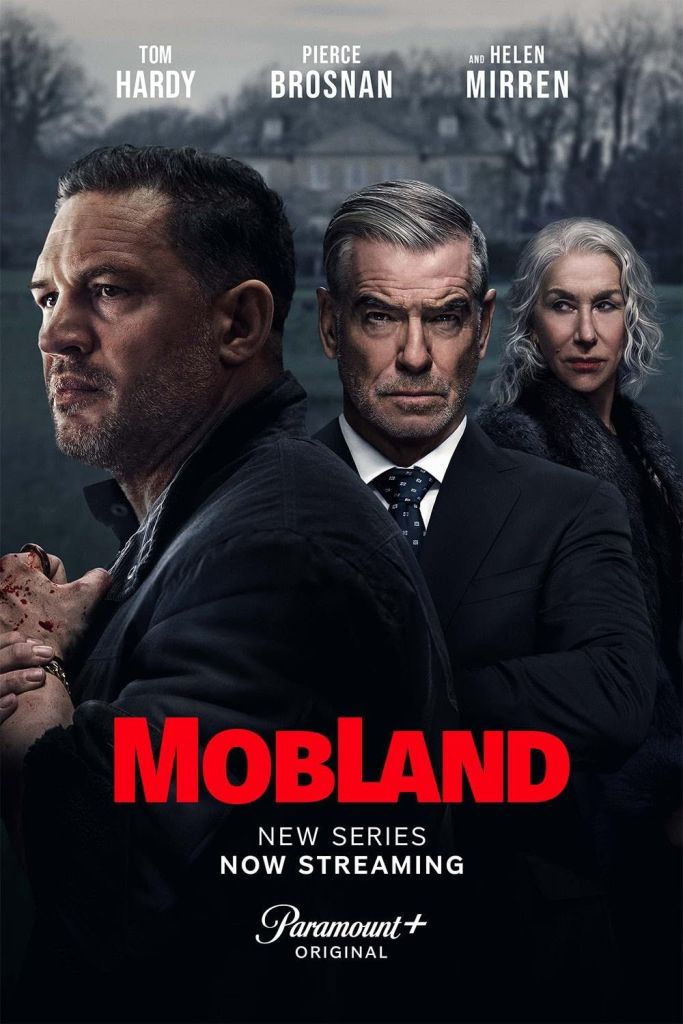
The House That Bled: MobLand (2025)


TV SERIES: MobLand
Created by: Ronan Bennett & Jez Butterworth
Directed by: Anthony Byrne, Daniel Syrkin, Lawrence Gough
Starring: Tom Hardy, Pierce Brosnan, Helen Mirren, Paddy Considine, Joanne Froggatt, Lara Pulver


Part I: Opening Invocation – The Crime Family as Greek Chorus

In the world of organized crime, silence is currency, and legacy is a wound that festers beneath tailored suits and soft leather car interiors. MobLand is less a chronicle of power than an anatomy of performance—the performance of loyalty, masculinity, succession, and, most crucially, pain. Here, family is not the cornerstone of stability, but its primary saboteur. And as in all good tragedies, the stage is set not for redemption, but for recursion.

Created by Ronan Bennett and co-written by Jez Butterworth, MobLand attempts to inhabit the decaying skeleton of Britain’s underworld aristocracy. The show offers a familiar feast: dynastic conflict, generational resentment, and the bruised poetry of backroom deals. Yet what elevates it—if it can be said to rise—is not the script, but the faces: worn, watchful, and utterly transfixing.

The plot, such as it is, wanders. The moral terrain is murky, and the motivations are sometimes confused. But the cast performs with such intensity that narrative coherence becomes almost irrelevant. MobLand is, above all, an actor’s dominion—a series built not on its story, but on the slow-burn charisma of those allowed to wear its scars.

This is not a tale of crime, but a requiem for a family that has confused survival with inheritance.


Part II: The Story

MobLand opens with a quiet funeral and ends with one. In between, we are submerged into the crumbling empire of the Harrigan crime family. Conrad Harrigan (Pierce Brosnan) rules not with spectacle but with stillness, his eyes colder than the empire he governs. His wife Maeve (Helen Mirren) exerts influence from the dining table, running her domain like a gothic empress.

Their eldest son is dead—lost to some unspoken war, possibly at the hands of enemies or perhaps his own. The second son, Kevin (Paddy Considine), is alive but unraveling. Desperate for approval, terrified of inadequacy, he moves through the series like a man under psychic siege. His wife Bella (Lara Pulver) sees through it all. She has love left, but not hope.

Enter Harry Da Souza (Tom Hardy), the family’s longtime fixer—half adopted son, half mercenary. He handles the bodies, the books, and the betrayals. Haunted by a violent past, Harry now wants out. But like all good tragedies, MobLand reminds us: no one leaves cleanly. His wife Jan (Joanne Froggatt) urges escape, but Harry’s exits are blocked—by duty, by debt, and by the absence of a life outside the family’s shadow.

The plot meanders through power struggles: a betrayal inside the family, a brewing war with rival factions, and an ill-fated attempt to legitimize the business. But the real war is internal. Kevin spirals. Maeve manipulates. Harry hesitates. Conrad watches. The house groans with secrets.

By episode eight, bodies have dropped, alliances have shifted, and nothing has truly changed. The Harrigans survive—but barely. Harry buries another friend. Kevin disappears into silence. Bella leaves. Maeve sharpens her knives. Conrad stands at the window, watching a city he no longer controls.

It ends, as it began, with mourning. And with legacy refusing to loosen its grip.


Part III: Cast of Characters & Performative Dynamics (Expanded)

Harry Da Souza (Tom Hardy)

Harry isn’t just the fixer. He’s the ghost of the Harrigan family’s past decisions. Tom Hardy plays him like a soldier caught in the wrong war. His presence is gravitational—he draws pain toward him, absorbs it, converts it into slow-burning silence. A tattooed body with a theologian’s gaze, Harry is caught between his wife’s pleas for a new life and Conrad’s constant call for one more job. He’s always about to leave—but never quite leaves. Hardy conveys this internal collapse with almost balletic restraint. Every time Harry picks up a phone or a glass or a gun, it’s with the weight of a man picking up his own obituary.

Conrad Harrigan (Pierce Brosnan)

This is the role of Brosnan’s life. He doesn’t perform power—he withholds it. His Conrad is not a tyrant. He is something far colder: a legacy embodied. A dying monarch presiding over an empire of ash. There’s no yelling, no flourish—just a quiet disapproval that turns every room glacial. His scenes with Kevin carry a tension that borders on theological: the disappointment of a father who cannot name his love, only measure its failures. Brosnan’s stillness is weaponized. He speaks like a man who’s memorized the script to everyone else’s downfall.

Maeve Harrigan (Helen Mirren)

Maeve is no mob wife. She is the house’s true architect—the general behind the throne, the ghostwriter of every scheme. Mirren plays her with chilling elegance: a woman who smiles as she severs. Her presence suggests that behind every act of family loyalty is a ledger she keeps in her head. She knows where the bodies are buried—and whose fault they were. She’s the only one who speaks to Conrad as an equal. If she were born a man, there’d be a statue of her in the Harrigan foyer.

Kevin Harrigan (Paddy Considine)

Kevin is a raw nerve disguised as a second son. He isn’t the heir; he’s the afterthought—except he’s not content to be. His anger stems not from ambition but from confusion: what does it mean to be a man in a family that only rewards obedience or violence? Considine plays him like a candle constantly flickering in the wind. He’s terrifying not because he’s cruel, but because he’s unstable. His breakdown across the series feels inevitable. By the final episodes, he’s no longer trying to prove himself to Conrad. He’s trying to survive his own reflection.

Bella Harrigan (Lara Pulver)

Bella is the cool intellect trapped inside a boiling house. She’s not just Kevin’s wife—she’s a strategist in her own right. Her upbringing is clearly different: private schools, international exposure, the kind of woman who once had options. She married for love, but stayed out of calculation. Pulver plays her with quiet precision—every sigh is measured, every glance loaded. She represents a kind of moral exit sign no one in the family is willing to walk toward. Her silences are louder than Kevin’s tantrums.

Jan Da Souza (Joanne Froggatt)

Jan is not part of the Harrigan family, but she suffers under its gravitational pull. Her tragedy is not that she doesn’t understand Harry—it’s that she does. She knows he’s both victim and accomplice, protector and prisoner. Froggatt delivers a performance of aching restraint. Jan doesn’t have many lines, but when she does speak, it lands like scripture: short, sharp, and devastating. Her scenes with Harry aren’t romantic—they’re eulogies for a future neither of them can quite kill off.

Noel Harrigan (Jack Lowden)

Noel, the cousin and occasional enforcer, is the lurking future of the Harrigan dynasty—a next-generation predator with no illusions of nobility. Jack Lowden’s performance is sleek and venomous. He represents everything Harry fears: efficiency without empathy, tradition without hesitation. He smiles through violence, jokes through executions, and flirts with Bella just to watch Kevin unravel. If Conrad is the decaying lion, Noel is the panther stalking the carcass. He’s the one who will inherit it all—not because he’s the smartest, but because he’s the most emotionally bankrupt.

Detective Cora Venn (Indira Varma)

Cora Venn is the only character outside the Harrigan orbit who seems to understand its gravitational force. A senior detective haunted by her own compromises, she’s not chasing justice—she’s chasing order. Varma plays her like a fallen philosopher: she doesn’t believe in good guys, only less damaging outcomes. Her scenes with Harry crackle with mutual recognition. She sees herself in him—a person who once tried to fix the world and now just tries to keep it from bleeding too loudly. Cora doesn’t get a win, but she gets the last word.


Part IV: Symbolism and Legacy – Bloodlines as Blueprints

At its core, MobLand is not a crime series. It is a meditation on inherited sin. The Harrigan home itself is the show’s central metaphor: a grand estate where corridors echo with past decisions. Its walls hold grudges. Its mirrors reflect old wounds. It’s not a house—it’s a mausoleum with fresh sheets.

Blood is a theme, but not the kind spilled easily. It’s the blood in your name. The kind you can’t wash off. The kind you mistake for duty.


Part V: Compare & Contrast – Peaky Blinders and Top Boy

Peaky Blinders was operatic. Top Boy is immediate. MobLand is neither. It’s glacial, deliberate, like a legal document written in Latin. Where Peaky seduces with danger, MobLand repels with dread. Where Top Boy confronts modernity, MobLand lingers in the corpse of empire.

Think of it this way: Peaky Blinders builds a myth. Top Boy confronts a system. MobLand whispers a eulogy.


Part VII: Expanded Character Arcs and Backstory Hints

The brilliance of MobLand lies not in what it says, but in what it refuses to say. Backstories aren’t given; they’re leaked. They drip from the corners of scenes, flicker in the flinches between dialogue, and settle in the silences like dust that’s never wiped away. Each character walks through the show like a walking scar with an unfinished origin story. The series trusts its audience to notice the weight without always naming it.


Harry Da Souza: The Ghost of Another War

We’re never told where Harry learned to kill cleanly or grieve privately—but the signs are unmistakable. The posture, the precision, the scars on his back and in his voice. There’s a moment in episode three where he flinches at the sound of a gate slamming—not a man startled by threat, but a soldier remembering impact. He likely served—military or mercenary—and what he brought back wasn’t honor. It was residue. His rituals—boiling coffee at 4:00 a.m., fixing his shirt cuffs even when alone—hint at discipline born of trauma. We aren’t told Harry’s past because Harry doesn’t speak about it. And yet, in every hesitation, it speaks.


Conrad Harrigan: The Inheritor of Ash

Conrad speaks of legacy often, but never of labor. He wears power like a tailored suit—custom-fitted, but inherited. What he built wasn’t empire—it was order from memory. His father likely ran the streets in the post-war boom, and Conrad repackaged it as dynasty. He doesn’t create so much as curate—keeping the machinery of violence humming by maintaining the illusion of control. His fear isn’t death. It’s irrelevance. The empire he claims to rule is one he never made. He inherited dust and lacquered it in old-world charm.


Kevin Harrigan: The Artist in a Family of Butchers

In episode five, Kevin sketches a spiral staircase while muttering to himself. It’s never explained. But it haunts. Earlier, Bella finds a tattered portfolio under their bed. Architectural drawings. Abstract watercolors. Kevin isn’t broken because he failed the family—he’s broken because the family never made room for who he really is. His violence is learned; his sensitivity, native. He once had a dream, perhaps of becoming an architect, or maybe just a man with clean hands. Now he draws rooms no one will ever walk through. Kevin’s tragedy is not just that he can’t live up to the family name—it’s that he was never meant to carry it.


Bella Harrigan: The Intelligent Captive

Bella doesn’t speak like the others. Her vowels stretch differently. Her diction is sharp, clipped, almost continental. She was educated abroad—Paris, possibly Florence. Somewhere with light, space, and art. She married Kevin for love, perhaps out of rebellion against her upbringing. But she stayed for survival. She’s fluent in silence, in small facial resignations. Her mind runs faster than every man in the room, and it galls her. Her beauty is not ornamental—it’s weaponized. She reads people faster than they realize they’re being studied. What we see on screen is not the full Bella—it’s her survival version.


Maeve Harrigan: The Architect Behind the Curtain

There are glances from Conrad to Maeve that feel less like love and more like acknowledgment—of debt. Maeve is not the matriarch; she’s the original strategist. In one flashback-laced monologue, she recalls running books out of a flower shop, laundering money before Conrad could even spell “clean.” The power she ceded was not out of weakness but calculation. She allowed Conrad the throne, knowing that in return, she would govern the shadows. Her bitterness in later episodes isn’t because she lost power—it’s because she knows no one will ever credit her for building the castle they’re all dying in.


None of these stories are spelled out. But they’re embedded in the performances, in the pauses, in the props that show up once and never again. MobLand asks the audience to listen between the lines, to see what isn’t illuminated, and to recognize that every character is a biography in partial light. These are people who live not in exposition, but in emotional residue.

They are not telling you who they are. But they’re bleeding it anyway.


Part VIII: Thematic Deep Dive – Guilt, Silence, and the Cost of Legacy

If Peaky Blinders is about ambition, and Top Boy about survival, then MobLand is about atonement deferred until it rots. At its aching core, MobLand presents a world where guilt is not personal—it is infrastructural. It doesn’t arrive in dramatic confessions or tear-streaked repentance. It seeps. It festers. It becomes ambient. The Harrigans do not carry guilt like a burden—they walk through it like atmosphere. It is in the wallpaper. It is in the hallway light that flickers but no one replaces.

Guilt as Inheritance

Each generation inherits more than wealth or trauma. They inherit unacknowledged damage—the sins the last generation refused to bury properly. Harry’s reluctance to act is not cowardice—it is fatigue born of watching men repeat mistakes under new slogans. Kevin’s instability is not simply emotional fragility—it is the psychic weight of wearing a legacy like a lead vest. Even Conrad, so stoic and composed, trembles not with regret, but with the dread that his entire life has been one long delay of consequence.

The show doesn’t moralize. It anatomizes. It shows us what happens when unresolved grief becomes culture, when unspoken wrongs become tradition. MobLand understands that crime doesn’t just create victims—it creates descendants of pain.


Silence as Strategy

In MobLand, language is dangerous. Words are avoided, redirected, buried beneath polite gestures or ritualized sarcasm. What passes for communication in the Harrigan family is actually mutual containment. Characters use silence not as peace, but as protection.

The silence between Conrad and Maeve during dinner scenes is not born of comfort. It is a stalemate. The pause between Kevin’s outbursts is not calm—it is implosion postponed. Even Bella’s long glances carry the weight of things that must not be said, because saying them would detonate the illusion everyone clings to. The family doesn’t just hide secrets from outsiders—they hide truths from themselves.


The Cost of Legacy

Legacy, in MobLand, is a poison disguised as purpose. Every character is either serving it, fleeing from it, or being crushed by it. The Harrigans are a family who no longer believe in their empire—but have no idea who they are without it. They are too haunted to innovate, too guilty to escape, and too proud to confess that the kingdom they’re protecting has already fallen.

The house itself mirrors this. Its grandeur has curdled into gloom. Its staircases creak like tired bones. Its chandeliers don’t shine—they loom. The Harrigan estate is not a home; it is a memorial to delusion. A place where past crimes echo louder than present decisions. The legacy is not wealth—it is repetition. And the cost is not just death—it is the absence of renewal.


The Tragedy of Unnamed Truth

The deepest irony in MobLand is that no one is truly innocent, and yet everyone longs for absolution. But the tragedy is structural: there can be no forgiveness in a system where truth is considered betrayal, and silence is seen as loyalty.

The series suggests that healing would require rupture—that to speak honestly would mean destroying the architecture of survival that everyone depends on. So the Harrigans persist, stoically, suicidally, repeating the very cycles that broke them. This is not dysfunction. This is devotion to the wound.

MobLand is not about crime. It’s about emotional recursion. About how systems of guilt, silence, and legacy repeat themselves until everyone is buried beneath their weight—some literally, others spiritually.

The show is less a story than a dirge for unburied truth. It does not resolve. It reverberates.

No one confesses. No one forgives.
They simply inherit the silence.


Part IX: Director’s Intent & Writing Philosophy – Elegy Over Exposition

Ronan Bennett and Jez Butterworth weren’t aiming to entertain—they were aiming to haunt.

MobLand doesn’t concern itself with ratings-friendly pacing, nor does it pursue the dopamine-high of plot twists. It rejects conventional crime storytelling in favor of a dramaturgy of decay. This is storytelling as slow erosion—moral, structural, and emotional.

Butterworth, known for the mythic ruggedness of Jerusalem, infuses the dialogue with elliptical loops, unresolved phrases, and subtext that buckles under its own weight. Words are never quite statements—they’re invitations to interpret. His characters don’t finish sentences. They trail off. They imply. They weaponize absence.

Bennett, coming off the raw verité tone of Top Boy, brings a sociological edge to the architecture of crime. He treats the Harrigan family as both a criminal enterprise and a dying institution, somewhere between a decaying monarchy and a rotting church. His framing echoes his belief: that crime is not just an act, but an inheritance system—a theology.

Together, they don’t write with clarity—they write with residue. Every scene lingers longer than it should. Every line has a second meaning trailing behind it like a ghost. Their credo is not to entertain but to excavate. They don’t build narratives. They unearth ruins.

Part X: Visual Style Breakdown – Chiaroscuro Crime

Visually, MobLand is composed like a painting abandoned mid-brushstroke. The aesthetic is architectural grief: walls that lean in, hallways that feel like they’re closing off behind you. The camera doesn’t chase movement—it interrogates stillness. In this show, momentum is dangerous. The frame lingers because no one’s truly going anywhere.

The color palette is funeralistic: slate gray, tarnished brass, antique green, oxidized gold. Colors don’t pop—they recede. Even blood looks tired here. Light is rationed like truth. Most faces are seen half-lit, as if only half the self dares show up. This is chiaroscuro not as homage but as worldview—every moment split between what is visible and what is endured.

Interiors dominate. Bedrooms feel like vaults. Living rooms resemble mausoleums. Every space in the Harrigan estate is shot like it remembers something it shouldn’t. Even London feels distant, as though the city has turned its back on the Harrigans and left them to wither inside their own mythology.

Cinematographers Anthony Byrne and Daniel Syrkin use shadow not just to sculpt the frame but to emphasize emotional occlusion. A face in darkness is a soul unconfessed. A character backlit isn’t hiding—they’re vanishing.

There are no wide vistas here, no cityscape establishing shots. There is only enclosure. Claustrophobia becomes aesthetic. Every scene feels like it’s being watched from the corner of a locked room.

The visuals don’t decorate the story.
They mourn it.

Verdict – A Genre Eulogy

MobLand does not reinvent the crime genre. It lays it to rest.

Where other shows glorify the ascent, MobLand focuses on what remains when the climb ends and the body count lingers. There is no grandeur in power here, no glory in the family name. Only rot in the baseboards and dust on the throne.

It is not just a story about criminals. It is a story about what crime leaves behind—in houses, in names, in children, in time.

There are no shootouts. No declarations of war. Just the long, low sound of legacies collapsing under their own weight.

The house bled.
No one cleaned the wound.
They passed it on instead.

R M Sydnor

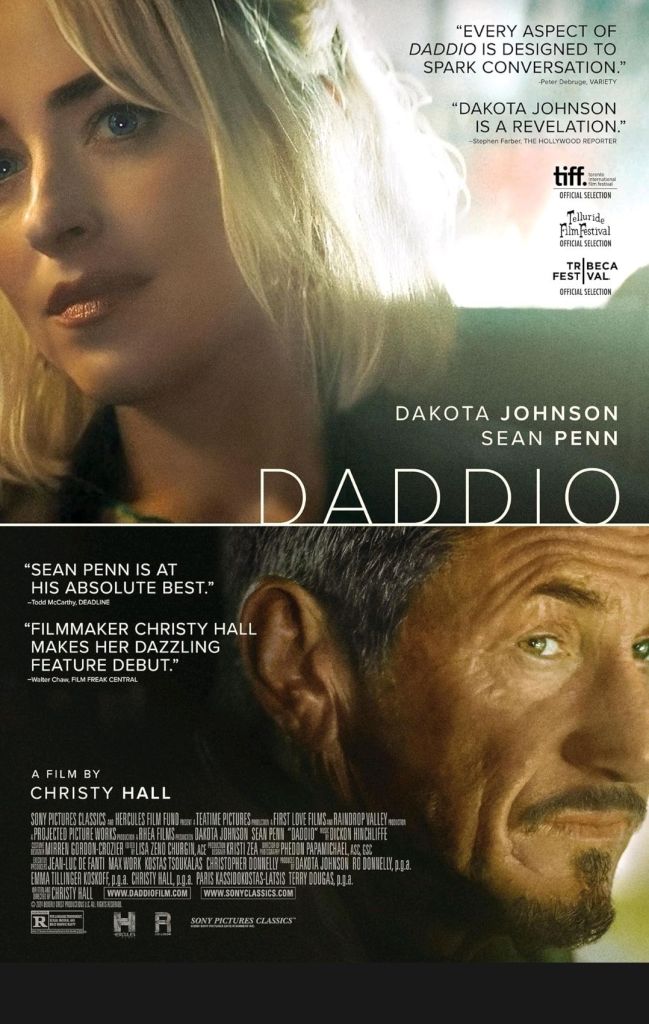
Confessions in Transit: Daddio and the Cartography of Connection

Daddio (2023)

Confessions in Transit: Daddio and the Cartography of Connection


📌 Opening Commentary

In an era where cinematic spectacle often overshadows subtlety, Christy Hall’s Daddio emerges as a cinematic haiku—brief, bounded, but resonant. Hall, adapting her own play and stepping confidently into the director’s seat, strips storytelling to its bones. No chase scenes, no cutaways—just two people in a cab, and a conversation that peels back layers faster than any thriller could. It’s a bold debut, one that invokes Before Sunrise, My Dinner with Andre, and even Hitchcock’s taste for confined spaces. Yet Daddio does something altogether its own: it uses dialogue as a scalpel, not a sponge.


Overview

After landing at JFK, a woman—known only as “Girlie” (Dakota Johnson)—slides into the back seat of a yellow cab driven by Clark (Sean Penn). The city pulses outside; inside, something quieter begins to stir.

What begins with small talk about traffic and smartphones soon spirals into the intimate. She’s involved with a married man; he’s a veteran of love and divorce. Beneath the surface chatter, emotional fissures begin to show. Questions turn philosophical, flirtation turns introspective.

Clark challenges Girlie’s assumptions. Girlie needles Clark’s self-mythology. Their exchange becomes less a dialogue and more a kind of psychological jazz—improvised, searching, occasionally discordant, but brimming with truth.

In a moment of vulnerability, Girlie breaks—confessing that what masquerades as power in her affair is, in truth, loneliness. Clark responds not with pity but perspective, offering a challenge: maybe what she fears most isn’t abandonment but authenticity.

As the cab glides to a stop, they part. No grand gestures. No promises. Just two strangers altered by the collision. We never learn their full stories, but we understand them—deeply, briefly, fully.


Symbolism & Subtext

The taxi becomes both vessel and crucible—a symbol of transition. Trapped in metal and motion, the characters are both nowhere and on the verge of somewhere. The window between them and the world reinforces the theme: proximity does not always mean connection, and distance does not preclude intimacy.

Clark’s cigarettes, the glow of dashboard lights, even the endless hum of the city—all serve as ambient reminders that sometimes, in the most mundane places, the sacred can happen. Their talk of love, ethics, and desire functions less as confession than excavation—digging down to the bedrock of who they are beneath the masks.


Memorable Moments & Key Details

Girlie’s quiet deletion of a message she almost sends speaks volumes about her longing and restraint.

The entire film unfolds in the claustrophobic cocoon of the cab, yet the cinematography creates visual space—intimate, but never static.

Clark’s line—“We all lie. The trick is knowing why.”—echoes long after the meter stops running.


Strengths & Weaknesses

Directorial Vision

Hall’s restraint is her genius. She allows silences to breathe and lets discomfort fester—trusting her audience to lean in, not lean back.

Cinematography

Jordan Parrott’s lens never lets the cab feel like a trap. Instead, it becomes a stage for human drama, lit in chiaroscuro, framing thought as much as face.

Screenwriting

Hall’s script reads like a long-form poem, its rhythm rooted in emotional truths rather than plot mechanics.

Pacing & Structure

Some may find the single-setting format limiting. But if you’re tuned to its frequency, the film offers profound rewards.


🎭 Performances

Sean Penn, a two-time Oscar winner, reminds us why he remains one of cinema’s most formidable actors. As Clark, he sheds the bravado of past roles for something more weathered, more humane. Every shrug, every half-smile, every tightening of the eyes reveals a man who’s seen too much—and forgotten too little. This is not a “role” so much as a slow inhabitation. Penn doesn’t act next to the dialogue—he mines it, finding new seams of meaning in every pause.

Dakota Johnson, often underestimated, emerges here as a revelation. Her “Girlie” begins composed but not cold—her defenses carefully curated. Yet as the ride stretches on, we see them falter. Her voice catches at just the right moment; her gaze hardens when necessary, softens when safe. This is a performance of restraint, made electric by what she chooses not to say.

Together, Penn and Johnson achieve what few film duos manage: two fully inhabited characters who evolve in real time—without a single change of scene.


🎭 Production Design & Costumes

The set design—minimal as it is—reflects the authenticity of the city. Worn vinyl, flickering neon, streaked windows—everything feels lived in. Girlie’s wardrobe shifts subtly from armor to skin as the evening unfolds, while Clark’s workmanlike layers hint at a man who carries emotional weight like a weathered coat.


🖋️ Writing Style & Literary Devices

Metaphor: The cab ride becomes an emotional pilgrimage.

Paradox: Intimacy between strangers feels more genuine than decades of partnership.

Allusion: Hall’s writing borrows the soul of modern theater—Mamet, Shepard, LaBute—but tempers their cruelty with grace.

Irony: The cab, designed for transit, becomes a moment of stillness in both their lives.


🔄 Comparative Analysis

Daddio belongs to a rarefied lineage of confined-location films—Locke, Buried, Phone Booth—but it trades tension for introspection. It also echoes Before Sunrise’s conversational dance but infuses it with more psychological heft and moral ambiguity. Whether it will be canonized remains to be seen, but it certainly refuses to be ignored.


🏆 Verdict

A two-character character study that transcends its premise, Daddio reminds us that a well-timed conversation can do what car chases never will—change someone.

Final Score: 3.7 / 4.0 — A-


Legacy Factor

Though modest in scope, Daddio may prove timeless—an intimate whisper of a film in a world that too often shouts.

AUDIO REVIEW

https://www.dropbox.com/scl/fi/1lgob2nulf4r4p52ymtjk/Daddio-Review.mp3?rlkey=9cimea188hw50sg65i9bb04tt&st=ppd06rhg&dl=0

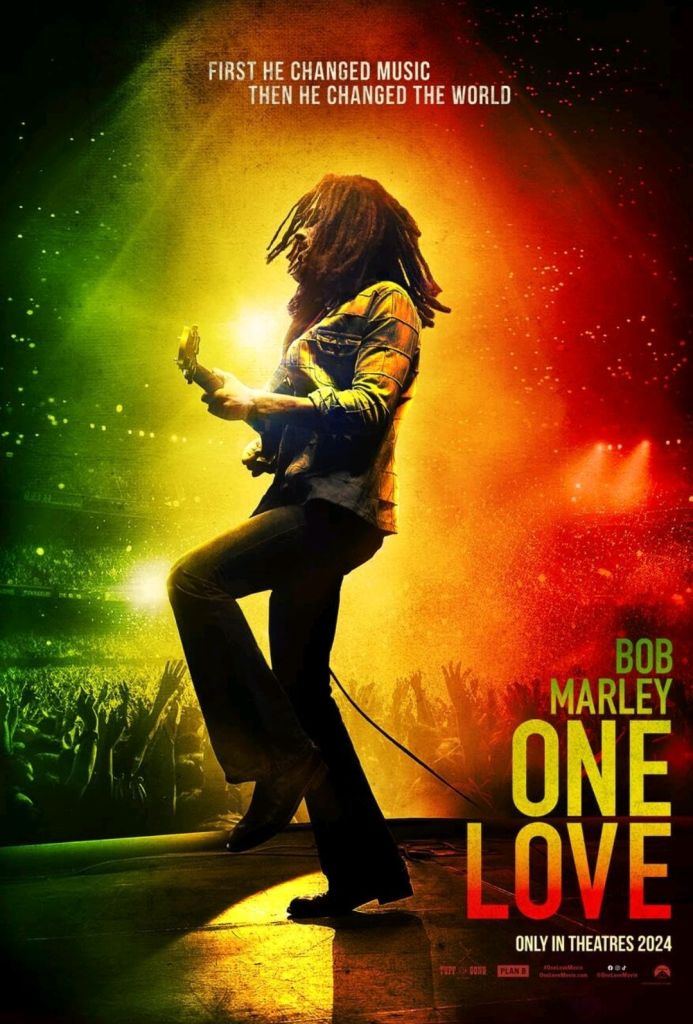
Riding the Rhythm, Missing the Message: Bob Marley: One Love


Bob Marley: One Love aspires to encapsulate the essence of the reggae legend, yet its execution leaves much to be desired. While visually immersive and bolstered by a charismatic lead performance, the film struggles with narrative cohesion, often presenting a series of vignettes rather than a fully realized biopic. Despite its reverence for its subject, it ultimately lacks the depth and complexity necessary to honor Marley’s multifaceted legacy.

A significant factor influencing the film’s outcome is the extensive involvement of the Marley family—Ziggy, Rita, and Cedella Marley—alongside Hollywood figures such as Brad Pitt, Dede Gardner, Jeremy Kleiner, and Robert Teitel. Their collective vision aimed to balance authenticity with mainstream appeal, but the result is a film that occasionally feels over-curated. The multitude of voices in the creative process may have led to a diluted singular vision, causing One Love to oscillate between a reverential tribute and a compelling cinematic narrative. This is evident in its structure, which at times lacks fluidity, as if each contributor had a slightly different perspective on portraying Marley’s story.


🎬 Direction – B- (3.0/4.0)
.
Director: Reinaldo Marcus Green (King Richard) approaches Marley’s life with affection but inconsistency. While he adeptly recreates the era’s atmosphere, his storytelling lacks the depth and focus required to fully engage with the complexities of Marley’s journey. The film often resembles a highlight reel rather than a cohesive narrative, prioritizing reverence over revelation. Green’s direction excels in musical sequences, particularly in recreations of Marley’s live performances, but falters when delving into his internal conflicts and ideological struggles.

The numerous producers, many with personal stakes in Marley’s legacy, may have contributed to the film’s cautious approach, resulting in a reluctance to explore more challenging aspects of his life.


🎭 Acting – B+ (3.5/4.0)

Kingsley Ben-Adir delivers a dedicated portrayal of Bob Marley, capturing his mannerisms and stage presence with impressive fidelity. However, the screenplay does not afford him the opportunity to fully explore the musician’s inner conflicts. While his physicality and vocal inflections are convincing, the material lacks the depth needed to convey the emotional complexities behind Marley’s public persona.

Lashana Lynch shines as Rita Marley, infusing the role with quiet resilience and emotional gravity. She provides some of the film’s most poignant moments, depicting Rita’s strength as both a partner and an artist in her own right. The chemistry between Ben-Adir and Lynch is palpable, offering some of the film’s most engaging scenes.

Supporting performances include James Norton as Chris Blackwell, Tosin Cole as Tyrone Downie, and Umi Myers as Cindy Breakspeare. While these actors contribute competently, their characters are not sufficiently developed to leave a lasting impact.


✍🏾 Writing – C+ (2.7/4.0)

The screenplay offers glimpses into Marley’s artistic and political influences but fails to construct a compelling narrative arc. It presents key events in Marley’s life without weaving them into a larger, emotionally resonant story. The dialogue occasionally feels forced, relying too heavily on exposition rather than organic interactions. While the film highlights his role as a unifier during Jamaica’s political unrest, it does not fully explore the ideological weight behind Marley’s activism. The lack of deeper insights into his spirituality and struggles results in a film that acknowledges his significance but does not allow the audience to experience it profoundly.

One of the film’s most significant oversights is its superficial exploration of Rastafarianism—a faith central to Marley’s music, philosophy, and life. The narrative touches on Haile Selassie’s influence but fails to provide sufficient context on how Rastafari connects to biblical prophecy, the African diaspora, and Marley’s spiritual mission. His music was not merely about peace and love; it was a call for justice and divine revolution. The absence of a deeper discussion on this aspect weakens the film’s ability to convey the full weight of his message.


📽️ Cinematography – B (3.3/4.0)

Cinematographer: Robert Elswit (There Will Be Blood) delivers a rich visual palette, effectively capturing the vibrancy of 1970s Jamaica and London. The concert sequences pulsate with energy, immersing the viewer in the experience of a live Marley performance. The lighting and framing successfully capture the intimate and electric nature of these events. However, the film does not take many creative risks, often defaulting to conventional biopic compositions. A more daring visual approach—perhaps embracing the surrealism of Marley’s spiritual visions—could have provided the film with a distinctive visual identity.


✂️ Editing & Pacing – C+ (2.8/4.0)

Editor: Pamela Martin (The Fighter) struggles to maintain a consistent rhythm. Some sequences flow naturally, while others feel abrupt or meandering. The film’s fragmented structure hampers its emotional impact, making it difficult to fully invest in Marley’s personal and political struggles. Transitions between his personal life, music, and activism lack fluidity, leaving key moments feeling disjointed rather than interconnected. A more cohesive editing strategy could have enhanced the film’s momentum and emotional depth.


🎨 Production Design & Costumes – A- (3.7/4.0)

Production Designer: Chris Lowe (Bohemian Rhapsody) meticulously recreates Marley’s world, from recording studios to concert stages. The detailed set designs transport the audience to pivotal moments in his life, grounding the film in historical authenticity.

Costume Designer: Caroline Duncan (Respect) ensures period accuracy, dressing characters in era-appropriate attire that enhances the film’s immersive quality. The wardrobe choices not only reflect the 1970s aesthetic but also subtly highlight Marley’s evolving identity—from a burgeoning artist to an international icon. This attention to detail bolsters the film’s credibility, even when the storytelling falters.


🎼 Sound & Score – B (3.2/4.0)

The soundtrack, featuring Marley’s timeless hits, stands as the film’s most robust element. However, the sound mixing and score could have been leveraged more effectively to enhance emotional beats, often serving as a passive backdrop rather than an active storytelling component.


🤔 COACH SYDNOR’S GRADE: B- (76%)

Essential Film Information

🏢 Production Company: Plan B


🎞️ Distributor: Paramount Pictures


🎬 Director: Reinaldo Marcus Green


📝 Screenwriters: Terence Winter, Frank E. Flowers, Zach Baylin, Reinaldo Marcus Green


🎥 Cinematographer: Robert Elswit


✂️ Editor: Pamela Martin


🎭 Main Cast: Kingsley Ben-Adir, Lashana Lynch, James Norton, Tosin Cole, Umi Myers


🎨 Production Designer: Chris Lowe


đź‘— Costume Designer: Caroline Duncan


🎼 Music Composer: Kris Bowers


📇 Producers: Ziggy Marley, Rita Marley, Cedella Marley, Robert Teitel, Dede Gardner, Jeremy Kleiner, Brad Pitt


đź”— IMDb Link: https://www.imdb.com/title/tt11199302/


đź”— Wikipedia Link: https://en.wikipedia.org/wiki/Bob_Marley:_One_Love