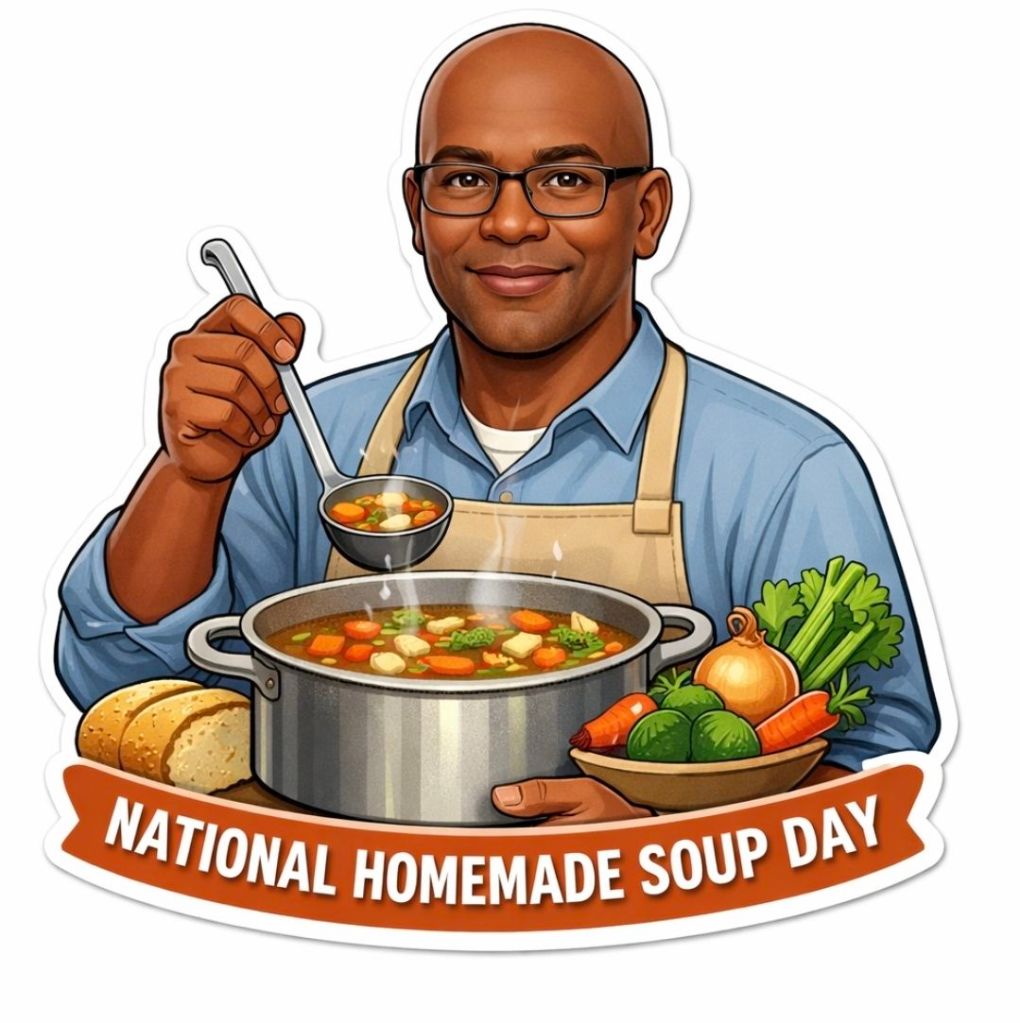
Steam rises before words do, a small weather made indoors. Carrots loosen their color. Celery softens its stance. Onion gives up its sharp opinions and becomes generous.
Nothing here hurries. The pot asks for patience and receives it. Time leans in, stirs once, then steps back.
Bread waits on the side, sliced thick enough to matter. Hands remember motions older than instruction— how to ladle, how to offer, how to pause before tasting.
Soup never boasts. It gathers what remains and makes it sufficient. It teaches without lecturing: heat transforms, care accumulates, simple things endure when held long enough.
A bowl is filled. The room grows quieter. What was scattered finds a center.
Later, when the pot is empty and the day has cooled, something stays— not the flavor, not the warmth, but the knowledge that nourishment often arrives looking ordinary, asking only to be received.
Marketing crowned breakfast “the most important meal of the day.” The word itself whispers another story. Breakfast means breaking a fast. In Old English, they called it morgenmete—morning meat. Nobles often skipped it as vulgar, monks delayed it as discipline, laborers grabbed scraps. Custom—not biology—built the ritual.
But does breakfast require seven a.m.? Eight? No clock dictates when we lift the fork. We can wait until noon or one. By delaying, we extend digestion’s rest, allow the gut to finish its night patrol, and step into the day lighter, not sluggish. Breakfast belongs to choice, not tyranny of the clock.
Sleep gives us a built-in fast. Digestion slows, the gut rests, the liver rations glycogen, and hormones take their shifts. This nightly abstinence repairs tissues and clears cellular clutter. Ancient rhythm. Modern advantage.
Stretch the fast into the morning and the story deepens. Without food flooding the bloodstream, the body leans on fat stores, nudges ketone production, steadies insulin, and sharpens focus. Hunger arrives later, softer—especially with my tea: green tea, glutamine, lion’s mane, cinnamon, lemon. Appetite trims, clarity rises, energy steadies. Hunger retreats; focus takes the stage.
Now let’s walk into the real morning America lives: Starbucks and Dunkin’ Donuts. A grande Starbucks latte with flavored syrup often carries 200–350 calories and 25–45 grams of sugar. Dunkin’s “light and sweet” coffee piles on cream and sugar, easily 100–150 calories before the donut even lands. Add that glazed ring of joy—another 250–300 calories—and you’ve turned “morning fuel” into dessert in disguise. Pancakes with syrup? They coast past 500–800 calories before you can say “stack.” For children, this is worse—sugar highs whip focus, crashes sink energy, and the habit grooves long-term insulin resistance. Adults endure the same carnival: thicker waists, thinner energy, cravings that nag like car alarms.
What happens inside? Blood sugar shoots up—often beyond 180 mg/dL. Insulin bolts out to mop up. Fat burning halts. The liver tucks excess energy into belly fat—the dangerous visceral kind that hugs organs and feeds diabetes. Spike. Crash. Crave. Repeat. Call it breakfast if you want; in truth, it looks like a sugar carnival in corporate packaging.
The fix doesn’t require banning foods. Eggs, bacon, pancakes—even syrup—can stay. Shift the timing. Eat them at noon or one. By then, insulin sensitivity sharpens, movement through the day channels energy into muscle, not waistlines. Same calories, different destiny. Window matters.
Digestion loves the pause. With space, bloating calms, motility steadies, stools shift toward type 3–4 on the Bristol Chart—formed, smooth, comfortable. Contrast that with morning sugar habits, which often yield loose, rushed, type 5–7 results. Quiet gut, better output, more dignity.
The microbiome—our invisible metropolis—thrives during silence. Without nonstop snacking, beneficial bacteria expand, short-chain fatty acids rise, inflammation cools. Give the orchestra quiet, and it retunes; bombard it with muffins and frappuccinos, and it screeches by noon.
Hormones thank us too. Cortisol wakes us gently. Delay food, and insulin stays calm. Energy doesn’t collapse in mid-morning slumps. Many who stretch the fast describe liberation, not deprivation: fewer cravings, more focus, a steady current of energy. Less chase, more charge.
History, biology, humor—they converge here. Breakfast never came etched in stone; advertising carved it into habit. We break our fast every day, but we choose when. Some end it with eggs and toast; others extend it and harvest sharper energy, calmer digestion, and yes—even better stools. Call that a victory.
Think of the gut as a night guard. All evening it patrols, files reports, keeps order. To dump a heavy tray of syrup-drenched pancakes or a latte-donut combo onto its desk at dawn counts as workplace cruelty. Give the guard time. Let it stretch. Wait until noon. Productivity follows.
So what remains? Choice. Control. A smarter window. Eat what you love later, and the same calories serve you instead of sabotage you. Live lighter, clearer, freer—one well-timed morning at a time.
🏛️ Wisdom’s Lens
Hippocrates: “Let food be thy medicine and medicine be thy food.”
🔎 Hippocrates anchors the truth that what we consume heals or harms, not only by its content but by its timing. Food functions as either cure or curse depending on when we invite it in.
James Baldwin: “People are trapped in history and history is trapped in them.”
🔎 Baldwin reminds us that our breakfast rituals are not biology but inheritance—habits passed down, marketed, and repeated until they feel inevitable. To change the morning plate is to step outside history’s trap.
George Orwell: “To see what is in front of one’s nose needs a constant struggle.”
🔎 Orwell points to the blindness of routine. A latte, a donut, a stack of pancakes—comforts so familiar that their costs vanish from sight. Struggle wakes us. Struggle clears the nose, the eyes, the mind.
Together these voices whisper one lesson: food shapes destiny, history shapes habit, and habit blinds us—unless we struggle for clarity. The fast broken wisely frees us; the fast broken poorly enslaves us.
🙏🏾 Affirmation
I step beyond the trap of history. I see what rests before my eyes— not comfort but consequence. I claim the freedom of timing, turning food into medicine, habit into wisdom, and each morning into a field of choice.
Morning greets with steam and sweetness, foam-topped lattes, donuts glazed with ease, pancakes shimmering in syrup’s amber. We call them nourishment, yet they kneel as sugar’s soldiers, marching straight to the belly’s storehouse.
History whispers in these rituals. Nobles once scoffed, monks once delayed, but marketing carved breakfast into creed. We inherited slogans, not science. And we bow to clocks instead of listening to bodies.
Hippocrates counsels medicine in food. Baldwin warns of traps we inherit. Orwell urges us to notice what waits right in front of our noses. The wisdom converges: open your eyes, lift the spell, choose the hour, choose the life.
The gut keeps vigil through the night, sorting, filing, repairing. At dawn we drop syrup-laden burdens on its weary desk. Cruelty disguised as custom. Grant it pause. Grant it grace. Let noon carry the tray.
So the fast becomes gift, the body steadies, the mind clears, the spirit brightens. We break not by command, but by wisdom— and in that choice we live lighter, freer, truer— one morning at a time.
25-09-14-S | 12:52 PST | 🌥️ ☀️ | 🌡️90° – 63° | Northridge, CA 🌗 Last quarter moon is in ♊➝♋ 🌿 Season (Late Summer) 📍 Week 38 | Day 257/365 | 108 Days Remaining 🌇 Sunset: 19:01 National Day 🙅🏽♀️ Parents Day Off!
Today unfolded less in motion and more in quiet reckoning. After submitting to the flu shot and yesterday’s blood draw at Kaiser, I felt unmistakably enervated—not shattered, but subtly drained, as if the body had paid its dues to medicine and now demanded a day of recompense. A caffeine pill at 10:35 lifted the curtain briefly, enough to power through my abdominal routine with the ab-carver, but the energy never settled into permanence. My left knee, healing but not yet trustworthy, urged me to listen. Rest was no indulgence; it was instruction.
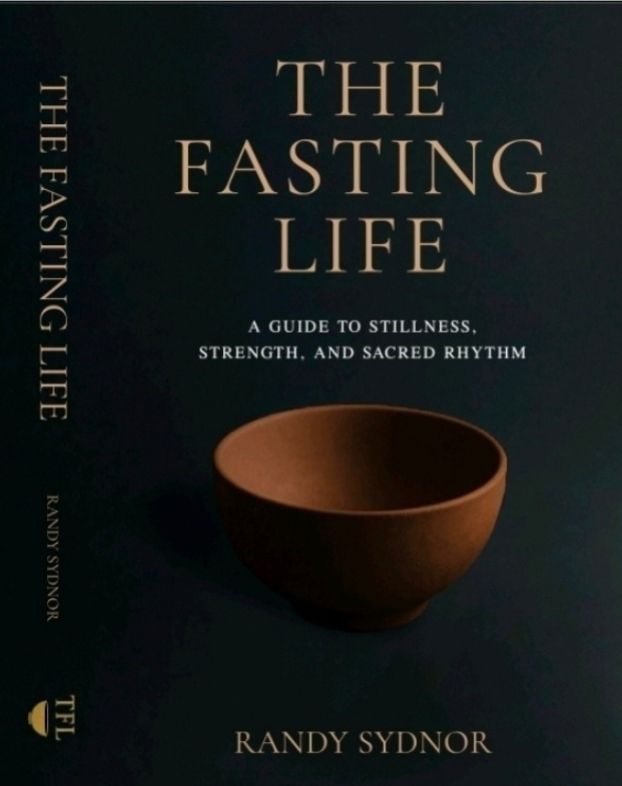
The morning found me in conversation. A call to Bank of America became a conversation of depth when DeMarcus, a young man on the other end, turned a routine transaction into a forty-two–minute exploration of The Fasting Life. He pulled up my web pages, lingered on the vision behind the book, and pledged to buy it. I felt the familiar satisfaction of seeing words take root in unexpected soil.
Later came my exchange with Mark, which stretched to two hours and thirty-eight minutes, a length that revealed both kinship and concern. We spoke of many things, but his Subaru became the central emblem of the dialogue. He had finally let go of his father’s Lincoln Continental, unwilling to risk questionable smog tests, and traded it for a Subaru Outback Touring XT—an investment of $42,000 that he now calls one of his wisest decisions. For his niece Azra, preparing for the California Bar in November, he purchased a separate Subaru, a new model valued at $32,000. To him, Subaru represents not only reliability but loyalty: a company that stands by its product with a generous five-year warranty, covering service and mileage with assurance he finds rare.
Mark now uses his own Subaru as a work vehicle, fitting for the new chapter he is entering. Together with his siblings Marsha and Mike, he manages the Henry properties, and the car has become his companion for electrical jobs and maintenance tasks. He praises its power, its comfort, and the sense that it will serve him faithfully for years. In a way, the Subaru is both a workhorse and a symbol: a bridge from the relics of his father’s past to the practical needs of his present.
Our conversation, of course, roamed wider. ScreenPappy, the service I helped name, continues to demand his energy. He spoke of a Filipino woman whose intended marriage has unraveled, of clients unsure whether to return devices, of the daily uncertainty in work and human dealings. I, in turn, spoke of my own purchase: a Seagate four-terabyte hard drive for $130 with tax. Mark steered me away from the glamour of SSDs, better left to gamers, toward the practical solidity of HDDs—more space for less cost, a machine made for capacity rather than speed. Memory, whether human or mechanical, benefits from breadth as much as brilliance.
By evening, I was aware that the flu shot had left its subtle but undeniable mark. Though caffeine masked the weakness for a time, the truth was inescapable: energy had ebbed, and the only wisdom was stillness. Fasting, too, had carried me far: 24 hours, then 25, then 19 today, before breaking the fast with pasta and meatballs, corn, cake, cookie, pie. Not indulgence, but balance. Not waste, but reward.
The day closed as it began—with a quiet reminder that life’s machinery must be serviced, its strength rebuilt. Energy wanes, but it is in the ebb that renewal begins.
🏛️ Wisdom’s Lens
Hippocrates: “If you are not your own doctor, you are a fool.”
🔎 Hippocrates reminds us that wisdom lies in heeding the body’s counsel before illness forces its command.
🏛️ Wisdom’s Lens
Heraclitus: “Even sleepers are workers and collaborators in what goes on in the universe.”
🔎 Heraclitus shows us that rest is not idleness; even in stillness, we remain part of the world’s unfolding.
🌅 Closing Meditation
Rest is not retreat; it is the art of replenishment, the pause between notes that makes the music whole.
🔎 By giving the body its interval of quiet, strength is tuned again to harmony.
🎨 Painterly Caption
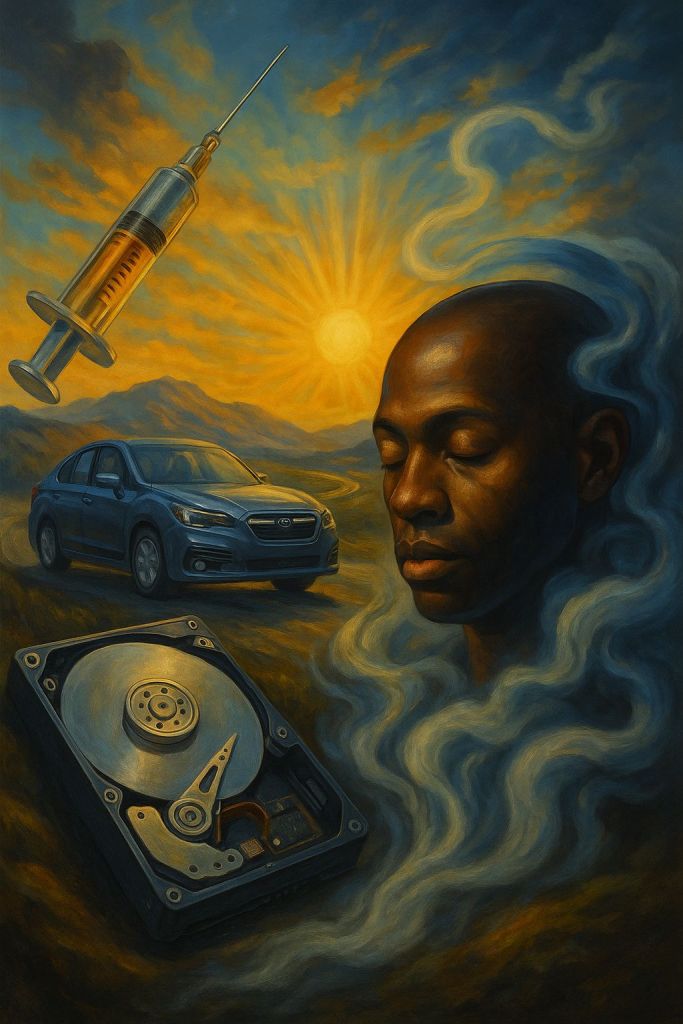
In late sunlight: a Subaru gleams at the curb, its hood lifted like a beast ready for labor. Beside it, a hard drive hums on a desk, while a half-finished plate of food hints at the discipline of fasting interrupted by necessary reward.
Reflections of Gratitude
I am grateful for DeMarcus, whose curiosity affirmed the power of words to spark connection. For Mark, whose loyalty to Subaru mirrors his own sense of duty. For Azra, whose preparation for the Bar reminds me that every generation must prove itself. For the flu shot, subtle though its toll, that nudged me toward rest. For fasting, which continues to refine both discipline and body. These, woven together, remind me that life is not simply endured but cultivated—one day, one decision, one conversation at a time.
🌹 Message to Rose Apartments Staff — September 2025
The Invisible Thread
There are ties you cannot see, and yet they hold everything together.
At Rose Apartments, that thread runs through your work. It shows in the voice that greets a tenant with kindness. In the hand that tightens a bolt so a railing does not give way. In the quiet check-in with a neighbor whose light stayed off too long.
You may not always notice the thread you weave, but without it, the fabric frays. Without it, the building weakens. Without it, the community loses shape.
This is no small thing. It is the difference between walls that merely stand and walls that shelter; between a property and a place.
You do not just maintain apartments — you maintain trust. You do not simply fix things — you hold them together. And in doing so, you remind us all that the strongest forces are often unseen.
So let this month carry an often forgotten truth: the thread you weave runs deeper than you know, and it keeps our community whole.
It hums without sound, a current beneath stone. Hands unseen bind walls, hearts unseen bind home.
Not steel, not wood, but kindness instead — the strongest frame is an invisible thread.
—R.M. Sydnor
🪶 Affirmation
I carry connection in my work. I weave strength even when unseen. I turn labor into loyalty and care into community. Today, I will be the thread that holds.
🌅 Closing Meditation
What is invisible often proves indestructible.
🔎 Strength that hides itself lasts longer than strength that demands to be seen.


 RMS INSIGHTS ✍🏾