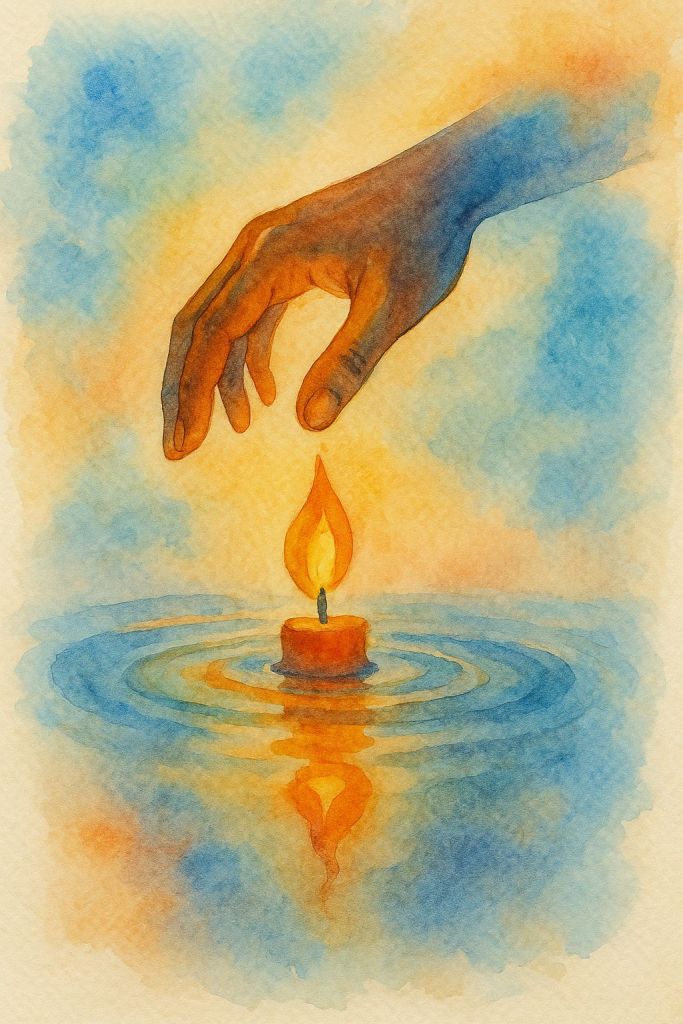
Epictetus: “No man is free who is not master of himself.”
🔎 Freedom expands not through indulgence, but through discipline.
🤔 Prelude — The Turning Point
Restraint stands as one of the least celebrated virtues in a culture addicted to display. Yet it remains the hidden architecture of dignity. In an age that prizes spontaneity, silence feels suspect, patience unfashionable, and reflection almost subversive. We equate speech with courage and reaction with authenticity, forgetting that wisdom often lives in the pause before the word. The mind that restrains itself does not weaken—it clarifies. Withholding does not wither; it ripens.
Can control preserve the vitality of emotion without extinguishing it?
🔎 Emotion gains integrity when it submits to measure; the pause tests motive, and whatever survives that quiet examination deserves voice.
Restraint refines desire. Passion without measure devours itself; will without temper turns tyrant. Seneca warned that anger conquers the man who fails to conquer himself. Thomas à Kempis, centuries later, taught that no peace survives in the soul that yields to every impulse. The ancients understood what the digital age forgets: that not every emotion deserves an audience, and not every opinion earns a stage. True strength begins in the invisible theater—where the self governs its own performance.
Can freedom exist without boundaries chosen in wisdom?
🔎 Boundary converts raw want into will; limits name what we refuse, and refusal preserves the freedom we mean to keep.
Modernity distrusts stillness. To pause is to risk invisibility, and invisibility feels like death to the ego. The marketplace rewards immediacy, not integrity. Yet the pause between provocation and response marks the birthplace of civilization.
One who resists the itch to retaliate opens a door that leads from instinct to insight. That moment of suspension—frail, trembling, human—holds the entire weight of moral history. When we wait, we remember we are not beasts of reaction but creatures of discernment.
Does waiting nourish wisdom or merely delay desire?
🔎 A counted breath restores authorship; in that breath we trace cause, choose aim, and accept consequence—before the word leaves the mouth.
🔎 Count one breath for anger, three for pride, ten for revenge; each count hands the mind back its keys.
Restraint carries beauty. The archer’s grace lies not in release but in the drawn bow. The dancer’s poise resides in balance before motion. The lover’s depth grows in the silence between words. A measured life never denies passion; it teaches passion rhythm. What many call coolness often means composure. To hold oneself steady amid provocation is not apathy—it is artistry. The soul that learns restraint no longer needs spectacle for validation. It finds its music in proportion.
Can elegance endure without discipline of feeling?
🔎 Beauty follows proportion: cadence disciplines content, and restraint edits excess so meaning can stand unassisted.
⚖️ Questions of Value — The Inquiry
Can self-mastery coexist with vulnerability?
🔎 Strength loses warmth when armored against feeling. Vulnerability admits light, yet mastery channels it so it neither blinds nor burns. The disciplined heart allows tenderness to enter without surrendering command of the gate.
When does patience cease to be virtue and become avoidance?
🔎 Time heals only when we meet it with intention. Delay that hides from decision grows mold; delay that seeks clarity ferments wisdom. The difference lies in whether stillness listens or evades.
Do we silence truth when we hold our tongue?
🔎 Some truths ripen in quiet before they can nourish others. Speech born too soon resembles unripe fruit—bitter and indigestible. The wise tongue weighs timing as part of truth itself.
What defines freedom—the liberty to act or the courage to refrain?
🔎 Action demonstrates capacity; restraint demonstrates conscience. Freedom without conscience becomes appetite in disguise. True liberty chooses its boundaries the way an artist chooses frame and proportion.
Is restraint a form of suppression or an act of creation?
🔎 Every refusal becomes a mold in which meaning sets. Suppression hides what it fears; creation shapes what it values. Restraint, rightly used, carves excess away until essence appears.
Can tenderness survive without boundaries?
🔎 Love overpoured drowns the soul it seeks to serve. The boundary does not lessen affection; it preserves its current, giving direction to devotion. To sustain warmth, one must occasionally close the door and tend the hearth.
When does editing a thought protect truth rather than censor it?
🔎 Revision performs moral hygiene. It removes vanity, exaggeration, and the noise of haste. What remains—clean, exact, and human—carries the quiet authority of something examined twice.
How do we distinguish principled silence from fearful silence?
🔎 Motive tells the tale: principle delays to heighten understanding; fear delays to escape consequence. One gathers strength in the interval; the other bleeds it away. The test lies in whether the pause ends in courage or in retreat.
What practice best converts restraint into freedom?
🔎 Ritual gives pause its rhythm: breathe, reflect, rewrite, consult conscience, then act. Each deliberate interval enlarges the circle of control, proving that the slow hand often reaches farther than the swift one.
Does restraint risk missed opportunity—or prevent false urgency?
🔎 Time exposes authenticity. What survives the cooling of impulse deserves pursuit; what evaporates reveals illusion. Patience, therefore, functions not as paralysis but as filter—the sieve through which truth keeps its shape.
💭 The Rhetorical Mirror — The Illumination
Modern Distortion: The Fallacy of Instant Expression
Social media has baptized immediacy as virtue. We confuse disclosure with honesty and noise with relevance. The Fallacy of Instant Expression asserts that emotion loses authenticity if not broadcast at once—that to pause, edit, or reflect is deceit. This belief dissolves intimacy into performance. It teaches the self to mistake visibility for validation.
Definition: The Fallacy of Instant Expression persuades us that unfiltered emotion equals truth, though truth often requires refinement.
Illustrative Instances:
A public official tweets outrage before dawn; by noon the facts have changed, yet the outrage endures. The apology trends lower than the error.
A news outlet races to publish first, then edits quietly after the damage has spread.
A celebrity posts a tearful confession video within minutes of scandal—less to seek forgiveness than to manage perception.
A friend screenshots a private message mid-argument and shares it publicly “for transparency,” turning intimacy into theater.
Even in private life, an angry midnight text replaces reflection; morning brings regret, but the harm has already traveled.
Each act carries the same illusion: that expression itself equals authenticity, and that silence implies deceit.
Distortion:
By glorifying immediacy, this fallacy eliminates discernment. We cease to think between stimulus and statement. Outrage becomes identity; reflection becomes delay. The world mistakes reaction for revelation, and conscience for censorship. The result is moral inflation—every feeling demands applause, every thought demands display.
Can sincerity survive without silence?
🔎 Silence lets facts cohere and motives settle; delay invites correction, while speed multiplies error and broadcasts it.
Does constant sharing deepen connection or dilute meaning?
🔎 Disclosure without discretion spends intimacy like loose coin; privacy, rightly kept, compounds trust.
Can expression become exploitation of emotion itself?
🔎 An audience alters the chemistry of truth; once applause enters, self-presentation crowds out self-examination.
How does one measure authenticity in an echo chamber?
🔎 Quiet judgments answer to conscience, not to crowds; their durability comes from source, not volume.
🔎 Clarity returns when we practice the unsent reply: write, wait, reread, remove what flatters, release only what serves.
🪶 The Still Hand
Poetry read aloud by author
A flame held steady tells no lie.
Its light bends only to breath, not boast.
The bow drawn taut hums with restraint—power gathered, not yet spent.
In the hush before speech,
language rehearses its conscience.
One heartbeat of silence
outlasts a thousand exclamations.
I have seen fury dressed as courage,
and stillness mistaken for fear.
Yet grace leans into quiet,
like dawn holding back the sun.
Freedom deepens under self-command.
The hand that waits governs the fire.
Only those who master pause
can move without burning the world.
–R.M. Sydnor
🏛️ Wisdom’s Lens — The Orientation
Marcus Aurelius: “Waste no more time arguing what a good man should be. Be one.”
🔎 Principle takes shape the moment we deny ourselves the indulgence that contradicts it.
🌅 Closing Meditation — The Benediction
Power without restraint breeds ruin; restraint without power breeds fear.
🔎 First govern the spark, then grant the flame its work.
📚 Enrichment — The Continuum
Books
Letters from a Stoic — Seneca
Meditations — Marcus Aurelius
The Rule of St. Benedict
The Imitation of Christ — Thomas à Kempis
The Courage to Be — Paul Tillich
Films
A Man for All Seasons (1966)
The Remains of the Day (1993)
Music
Arvo Pärt — Spiegel im Spiegel
J.S. Bach — Cello Suites
Poetry
T.S. Eliot — “Ash Wednesday”
Denise Levertov — “Primary Wonder”
🪶 Postscript — On Metanoia
Metanoia means a turning of the mind.
It begins when noise yields to silence, and silence to understanding.


 RMS INSIGHTS ✍🏾