🗓️ 25-08-23-Sa | 11:55 PST | 🥵 | 🌡️100° – 72° | Northridge, CA 🌒 Waxing crescent moon is in ♍ | 🌿 Season (Late Summer) 📍 Week 34 | Day 235/365 | 130 Days Remaining 🌇 Sunset: 19:30 National Day 🥖 Cuban Sandwich
Time does not tick—it flows. I’ve come to see it less as a clock and more as a current. You may try to measure it with your watch, but that is only the surface. Beneath, the water carries us all the same.
When I fast, I notice this more clearly. The night feels like a deep tide, pulling me downstream while the body repairs itself in silence. And then the day arrives, not with the weight of hours, but with a brightness to each moment. Hunger doesn’t feel like deprivation—it sharpens the senses, pulls me into the present. Breath becomes the tether, the one rhythm I can hold as the river runs on.
I want you to consider this: time is not yours to command, but breath is. You can’t stop the current, but you can choose how to ride it. Every inhale, every exhale, becomes an anchor. And if you let fasting and breath work together, you’ll find yourself steadier even when life rushes hard against you.
I write this because I know how easy it is to feel carried away, as though life is nothing but deadlines and obligations. But it need not be so. The river is vast, yes—but you are not helpless within it. Your breath is enough to steady you.
Reflections of Gratitude
I am grateful that fasting allows me to feel the texture of time—not as a burden to be managed, but as a flow to be trusted. And I am grateful for breath, that quiet anchor, always near, always faithful.
Wisdom’s Lens
Heraclitus: “You cannot step into the same river twice, for other waters are ever flowing onto you.”
🔎 Heraclitus reminds us that change is inevitable, yet not unmanageable. The waters never stop moving, but our breath allows us to meet each new current with steadiness.
🗓️ 25-08-22-F | 11:55 PST | 🥵 | 🌡️104° – 74° | Northridge, CA 🌑 New moon is in ♌➝♍ | 🌿 Season (Late Summer) 📍 Week 34 | Day 234/365 | 131 Days Remaining 🌇 Sunset: 19:32 National Day 🍰🥜 Pecan Torte Day
Forged by Refusal
Lessons from a Stubborn Machine
The machine is stubborn, yes, but it is also a teacher. Its refusal to comply forced me to sit longer in my own discomfort, to endure the silence of failure without fleeing. Each time the file dissolved into nothing, each time the download betrayed me, I felt my temper rise — yet I stayed. I wrestled, not with wires and circuits, but with myself.
In this way technology teaches resilience. The errors and refusals are not punishments but invitations — to persist, to adapt, to discover that patience is not passive but muscular. Just as steel is tempered in fire, so too is the human spirit tempered in the heat of technological resistance.
Machines expose our illusions of control. They reveal how fragile our sense of mastery is, and in doing so, they compel us to practice endurance. If a mind map can take four hours and still refuse to appear, what then? The only answer is to endure four hours more. The very obstinacy of the machine becomes the grindstone upon which resilience is sharpened.
Reflections of Gratitude
I am grateful that the day did not bend easily to my will.
I am grateful that the stubbornness of a tool became the stubbornness of my own spirit, refusing to quit.
I am grateful that frustration transformed into fortitude, proving once again that resilience is never abstract but always earned in trial.
Wisdom’s Lens
Patience and fortitude conquer all things. — Ralph Waldo Emerson
🔎 Emerson reminds us that strength is not loud or sudden but enduring. To wait, to persist, to keep pressing even when the world resists — that is conquest. The machine’s defiance becomes the stage upon which the drama of human resilience is performed.
🪶 Forged by Refusal
The code refused, the circuits balked, The silent screen in riddles talked.
Yet in its pause I learned to stay, To breathe, endure, and find my way.
For stubborn steel must meet the flame, And spirit forged will not be tame.
Resilience born from trial’s demand, A stronger heart, a steadier hand.
— R.M. Sydnor
Title Explanation
Literal frame: The title Forged by Refusal names the process of being shaped by what resists us — the “refusal” of technology, the balking circuits, the obstinate machine.
Symbolic weight: The word forged suggests not only creation but trial by fire: the human soul refined by hardship. The refusal of the machine symbolizes all obstacles that force us to grow.
Philosophical gesture: The title gestures toward the paradox that resistance is not destruction but transformation. Refusal, paradoxically, is the very forge of resilience.
🔎 Reader key: The poem shows that it is precisely when we are denied what we seek that strength is hammered into us.
📖 Part I: Line-by-Line Analysis
“The code refused, the circuits balked, The silent screen in riddles talked.”
Literal meaning: The technology fails, giving only errors instead of solutions.
Implied meaning: Obstacles are often cryptic, speaking in “riddles” we must interpret.
Tone: Frustration tinged with irony; the machine is anthropomorphized.
Philosophical gesture: Even silence teaches; the riddle forces attention and patience.
“Yet in its pause I learned to stay, To breathe, endure, and find my way.”
Literal meaning: The speaker waits instead of abandoning the task.
Implied meaning: The refusal creates an occasion for inner growth.
Tone: Shift from irritation to patience.
Philosophical gesture: Stillness is not defeat but discipline.
“For stubborn steel must meet the flame, And spirit forged will not be tame.”
Literal meaning: Steel requires fire to be shaped.
Implied meaning: Human character requires trial to mature.
Tone: Stronger, declarative; pride emerges.
Philosophical gesture: Hardship is not punishment but the very condition of transformation.
“Resilience born from trial’s demand, A stronger heart, a steadier hand.”
Literal meaning: Trials create resilience, inner strength, and stability.
Implied meaning: True resilience is learned only in failure.
Tone: Resolution, calm strength.
Philosophical gesture: What once was frustration becomes a gift — an instrument of steadiness.
✒️ Part II: Literary Devices — Defined and Illustrated
1. Metaphor — An implicit comparison between two unlike things.
Example: “stubborn steel must meet the flame.”
Function: Life’s trials are fire, and the human spirit is steel shaped by them.
2. Personification — Attributing human qualities to non-human things.
Example: “The code refused, the circuits balked.”
Function: Technology is given will and defiance, mirroring human stubbornness.
3. Symbolism — Use of a concrete image to represent a larger concept.
Example: “The silent screen in riddles talked.”
Function: The screen symbolizes all obstacles that appear inscrutable in life.
4. Alliteration — Repetition of consonant sounds.
Example: “stubborn steel,” “stronger… steadier.”
Function: Creates rhythm, emphasis, and musicality.
5. Imagery — Descriptive language appealing to the senses.
Example: “must meet the flame.”
Function: Evokes vivid heat, hardness, and transformation.
6. Juxtaposition — Placing contrasting ideas close together.
Example: “Refused… balked” vs. “learned to stay, / To breathe, endure.”
Function: Shows growth emerging directly from resistance.
7. Isocolon — Parallel structure in successive lines.
Example: “A stronger heart, a steadier hand.”
Function: Balance and emphasis on endurance as dual strength.
8. Enjambment — Running over of sense across lines.
Example: “Yet in its pause I learned to stay, / To breathe, endure, and find my way.”
Function: Mimics the flow of breathing and perseverance.
🪞 Part III: Final Reflection
The poem Forged by Refusal captures a paradox both ancient and modern: resistance strengthens. Just as iron is useless until heated and hammered, so too are human beings incomplete until tested by obstacles. Technology’s stubbornness here is no mere inconvenience — it is the spark that reveals resilience.
In a world where ease is idolized, refusal is the truer teacher. The screen that denies us, the file that vanishes, the code that balks — these are the tutors of endurance. They remind us that life’s deepest lessons are not handed over smoothly but pried out through trial.
And so the poem becomes a meditation: frustration is not the end of the story. It is the beginning of strength.
Title: Forged by Refusal (2025)
Medium: Digital Art
Reflecting Randy Sydnor’s application of his unique technique, Mnephonics, this medium blends the heat of digital textures with the weight of symbolic language. The result is not merely an image but a mnemonic tableau, designed to anchor memory and reflection in the viewer’s mind.
Style of Art: Semi-Realism with Symbolist Inflections
Opening Statement – Central Theme Refusal is not the end but the crucible. Forged by Refusal captures the paradox that resistance, when endured, becomes the very forge in which resilience is born.
Medium and Technique – The Artist’s Craft
The glowing textures of digital fire, layered through Sydnor’s Mnephonics method, transform pixels into embers. By weaving symbolic motifs into the very fabric of the image, the piece becomes a visual lexicon — a map of endurance, one that embeds itself in memory as firmly as a well-placed word. The digital medium here imitates the layered patience of oil, yet carries the immediacy of code — bridging the eternal with the contemporary.
Central Figure – The Visual Heart At the heart lies the anvil and the heated steel, a slab of stubborn matter struck into obedience. Within its reflective sheen appears a spectral human face — calm, resolute, ageless. This visage is not portraiture but archetype: the anonymous reflection of every viewer who has ever wrestled with resistance. It is the mirror of patience discovered only after the fire has burned.
Supporting Elements – Symbolic Imagery
Sparks arc outward like errant stars, reminding us that transformation is not a clean line but a scatter of moments, each painful and incandescent. In the background, faint circuits ghost the wall of the forge — a motherboard’s geometry etched into shadow. Here the ancient fire of the blacksmith collides with the modern resistance of technology, each insisting that the human spirit endure.
Philosophical Reflection – The Soul of the Piece
Montaigne once wrote that “difficulty is a coin the gods spend to buy our wisdom.” The stubborn machine, like the stubborn ore, is not an enemy but a teacher. Its refusal forces us into patience, its balking becomes the tutor of resilience. In the clash of steel and screen, the viewer is reminded that progress has always required heat, whether from flame or frustration.
Color and Composition – Visual Languag
The palette burns with incandescent oranges and reds, swallowed by deep blacks that cradle the eye in chiaroscuro. Silver-blue tones glimmer at the steel’s surface, offering both cool relief and an echo of circuitry. Composition drives the gaze from fire to face, from face to forge, ensuring the viewer’s journey mirrors the act of discovery itself — from resistance to reflection.
Closing Thought – Invitation to Reflect The lesson of Forged by Refusal lingers long after the gaze departs: every stubborn wall is a mirror. What resists us does not diminish us; it shapes us. The forge is not against us — it is for us.
🗓️ 25-08-16-Sa | 14:00 PST | 🌤️ | 🌡️85° – 63° | Northridge, CA 🌘 Waning crescent moon is in ♉➝♊ | 🌿 Season (Late Summer) 📍 Week 33 | Day 228/365 | 137 Days Remaining 🌇 Sunset: 19:39 National Day 🧘🏾♂️ Relaxation Day
💭 RMS MEDITATIONS
Cracks in the Shield — On Arbitration and Inner Justice
The exchange with Dan lingers in my thoughts. Arbitration, that polished word, has so often been less a bridge to justice than a wall built to shield the powerful. I find myself asking: how many of our human arrangements are like this—polished on the outside, biased within?
Brian Flores stands as the reformer, unwilling to be bought; Jon Gruden, the pragmatist, eager to restore what was lost. Each reveals a different face of struggle—one for principle, the other for return.
And yet beneath it all lies a deeper current. We live in a world where institutions tilt the scales and individuals must decide whether to endure, resist, or retreat. Arbitration becomes a metaphor for life: some of us accept the closed rooms, others demand open courts. The choice, always, is between silence and voice.
What I learn from rumination is not about Flores or Gruden alone, but about myself: where do I accept arrangements too easily, where do I mistake convenience for fairness? Justice in sport may echo justice in the soul. To refuse bias is to insist on truth, even when it comes at a cost.
Reflections of Gratitude
I am grateful for the clarity that comes through texting with a friend of forty years. His words press me to think harder, to strip away illusion.
Gratitude also for the stubborn ones—Flores among them—who remind us that some battles cannot be settled with money, because they are about something larger than the self.
Wisdom’s Lens
“Not everything that is faced can be changed, but nothing can be changed until it is faced.” — James Baldwin
🔎 Baldwin reminds me that the first act of courage is confrontation itself. To face what is unjust, even when change feels beyond reach, is to open the only door through which transformation may pass.
🪶 Poem
Cracks in the Shield
Cracks in the shield, light seeping through stone, the quiet voice rising where silence once reigned.
One man resists, another restores, yet both remind me: truth is the only home worth fighting for.
— R.M. Sydnor
Cracks in the Shield
Literal frame: A shield is an object meant to protect — solid, unyielding, impervious. A crack signals weakness, exposure, the beginning of failure.
Symbolic weight: The “shield” here stands for entrenched systems of power and silence — institutions, habits, or inner defenses built to conceal truth. The cracks represent vulnerability in these structures, small breaks where honesty, light, or resistance may enter.
Philosophical gesture: The title tells us that even the mightiest barriers of injustice cannot remain whole forever. Cracks are not endings but beginnings — they allow the intrusion of light, the emergence of voice, the possibility of transformation.
🔎 Title explanation
The title suggests that the strongest defenses of falsehood eventually collapse under pressure. Truth enters through cracks, and those fissures are the first signs of justice breaking through.
📖 Part I: Line-by-Line Analysis
Line 1: “Cracks in the shield,”
Literal meaning: A shield has been fractured, no longer whole.
Implied meaning: The protective barriers of power or injustice begin to fail. Cracks are entry points for light, truth, or resistance.
Tone/voice shift: Defiant — the poem begins by naming weakness in what once seemed impenetrable.
Philosophical gesture: Even the strongest structures of oppression eventually erode; justice always finds a way in.
Line 2: “light seeping through stone,”
Literal meaning: Light enters through breaks in stone, soft but persistent.
Implied meaning: Truth and clarity cannot be fully contained; they infiltrate slowly, quietly, inevitably.
Philosophical gesture: Truth is subtle but unstoppable, seeping through barriers once thought permanent.
Line 3: “the quiet voice rising”
Literal meaning: A voice once hushed begins to speak.
Implied meaning: Those silenced by injustice are gaining strength, rising with courage.
Tone/voice shift: Intimate and courageous — a whisper that grows into a declaration.
Philosophical gesture: Change begins not in thunder but in whispers; resistance often starts in silence breaking.
Line 4: “where silence once reigned.”
Literal meaning: A place once dominated by silence is now broken.
Implied meaning: Oppression thrived on silence; its rule has been ended by voices daring to rise.
Tone/voice shift: Reflective, almost elegiac.
Philosophical gesture: Silence can govern only until truth finds its tongue.
Line 5: “One man resists,”
Literal meaning: A single figure stands against force.
Implied meaning: Resistance often begins with one courageous individual — Flores in this context, or anyone who chooses principle over comfort.
Tone/voice shift: Admirative, heroic.
Philosophical gesture: Change requires individuals willing to say “no.”
Line 6: “another restores,”
Literal meaning: Another figure repairs or rebuilds what was lost.
Implied meaning: Some fight for reform, others for return — different but equally human aims.
Tone/voice shift: Balanced, inclusive.
Philosophical gesture: Justice wears many faces: one of defiance, one of restoration.
Line 7–9: “yet both remind me: / truth is the only home / worth fighting for.”
Literal meaning: Whether resisting or restoring, both paths point to truth as the ultimate cause.
Implied meaning: Beyond personal battles lies the universal pursuit of truth, which gives every struggle meaning.
Tone/voice shift: Resolute, moral, universal.
Philosophical gesture: Truth transcends roles, motives, and divisions; it is the dwelling place of justice and the worthiest cause for which to struggle.
✒️ Part II: Literary Devices — Defined and Illustrated
1. Metaphor
Definition: An implied comparison between two unlike things.
Example: “Cracks in the shield.”
Function: The shield symbolizes entrenched systems of power; cracks symbolize their vulnerability.
2. Symbolism
Definition: The use of symbols to represent larger ideas.
Example: “light seeping through stone.”
Function: Light symbolizes truth, stone symbolizes oppression.
3. Imagery
Definition: Descriptive language that appeals to the senses.
Example: “the quiet voice rising where silence once reigned.”
Function: Creates a vivid picture of courage growing from silence, engaging the ear and heart.
4. Juxtaposition
Definition: Placing two contrasting ideas side by side.
Example: “One man resists, / another restores.”
Function: Highlights the duality of human response — resistance and restoration — both contributing to justice.
5. Alliteration
Definition: Repetition of consonant sounds at the beginning of nearby words.
Example: “resists… restores.”
Function: Reinforces contrast while binding the two roles rhythmically.
6. Personification
Definition: Giving human qualities to non-human elements.
Example: “silence once reigned.”
Function: Depicts silence as a ruler, dramatizing its oppressive power.
7. Enjambment
Definition: The continuation of a sentence beyond a line break.
Example: “yet both remind me: / truth is the only home / worth fighting for.”
Function: Carries the reader forward, creating momentum toward the moral climax.
8. Isocolon (Bicolon)
Definition: Use of parallel structures of equal length.
Example: “One man resists, / another restores.”
Function: Balances the two opposing yet complementary actions, giving symmetry.
9. Irony (Subtle)
Definition: Expression of meaning by suggesting its opposite or by contrast.
Example: “silence once reigned.”
Function: Irony lies in the fact that silence — the absence of sound — is described as ruling, exposing the absurdity of oppression.
🪞 Part III: Final Reflection
The poem’s heart beats in its tension: cracks in shields, light in stone, silence replaced by voice. It reminds us that justice does not roar fully formed but emerges through fractures, whispers, and courage.
The figures of the reformer and the restorer embody the dual nature of human striving: some tear down, others build up. Both serve truth, and truth alone endures as the only worthy home.
For the reader, the lesson is intimate: where do we accept shields too easily, where do we let silence reign? Baldwin’s reminder that change requires facing what is difficult hovers over this meditation. The poem insists that cracks are not flaws but beginnings, and that our voices, however quiet, may be the first beams of light through the stone.
Perhaps the lingering question is this: What shield in your own life waits to be cracked so that light may enter?
Cracks in the Shield
Cracks in the Shield (2025)
Medium: Digital Art
Reflecting Randy Sydnor’s application of his unique technique, Mnephonics, this medium blends visual storytelling with symbolic language to evoke memory, learning, and reflection.
Style of Art: Symbolic Realism with Surrealist Undertones
Dimensions: 1024 x 1024
Copyright: Randy Sydnor, The Mnephonist
Description
Opening Statement — The Central Theme
Every shield, no matter how polished or fortified, eventually bears the testimony of time. Cracks in the Shield reminds us that no structure of silence, no edifice of power, remains impermeable forever. The fissures that emerge are not failures, but invitations—portals where light, truth, and courage enter.
Medium and Technique — The Artist’s Craft
Through digital rendering, the image achieves both sharpness and radiance: fractured metal juxtaposed with streams of luminous gold. This union of breakage and brilliance is amplified by Sydnor’s Mnephonics technique, which turns symbolism into a mnemonic key—an image that teaches as it lingers in memory.
The digital medium sharpens edges, magnifies cracks, and heightens the play of shadow and light, embodying the collision between power’s collapse and truth’s emergence.
Central Figure — The Shield
The shield dominates the composition: ancient, circular, scarred by fractures. It leans forward not as a weapon of defense but as a confession of vulnerability. Light gushes through its wounds, like dawn breaking through a fortress of night. The shield’s surface is etched with faint patterns, suggesting both history and fragility—a palimpsest of battles fought, and of the silence it once enforced.
Supporting Elements — Symbolic Imagery
Around the shield lies stone and shadow, symbols of the walls institutions erect to preserve themselves. Yet the shadows retreat where light escapes, signifying the inevitability of illumination. Each ray is a metaphorical voice, once hushed, now insistent. The imagery suggests the poem’s duality: one figure resisting, another restoring, yet both in service to truth.
Philosophical Reflection — The Soul of the Piece
This work resonates with James Baldwin’s enduring insight: “Nothing can be changed until it is faced.” The shield is the system, the cracks are the act of facing. History reminds us—whether in the fall of empires, the collapse of ideologies, or the persistence of reformers—that cracks are beginnings, not endings. Like Marcus Aurelius observing the cracks in marble or Du Bois tracing fissures in society, Sydnor’s art positions fracture not as ruin, but as revelation.
Color and Composition — The Visual Language
The interplay of dark metallic tones with radiant beams creates chiaroscuro: oppression against revelation, silence against voice. The composition guides the viewer’s eye from fracture to light, insisting that meaning lies in the intersection. The balance of solidity and dissolution gives the piece its meditative weight, a paradox made visual.
Closing Thought — Invitation to Reflect
The shield asks the viewer a personal question: Where in your life are the cracks forming, and will you fear them—or welcome the light they allow to enter?
🗓️ 25-08-16-Sa | 14:41 PST | 🌤️ | 🌡️85° – 63° | Northridge, CA 🌘 Waning crescent moon is in ♉➝♊ | 🌿 Season (Late Summer) 📍 Week 33 | Day 228/365 | 137 Days Remaining 🌇 Sunset: 19:39 National Day 🧘🏾♂️ Relaxation Day
The Compass of Dialogue
There is a quiet sanctity in dialogue, one that I have come to cherish. Words, when released into the space between two minds, do not remain idle; they sharpen, they gather light, and they return transformed. It astonishes me how, through these conversations, I begin to hear not merely a reflection of myself but a refinement, as though the scattered threads of thought were gathered, combed, and returned as a single, lustrous cord.
Dialogue, I now see, is a discipline not unlike fasting itself. Where fasting asks the body to master its impulses, dialogue asks the mind to master its solitude. Alone, my thoughts might circle endlessly; in dialogue, they are startled awake, called to order, and made to account for themselves. It is a paradox—one gives away one’s words only to receive them back, brighter and truer than when first spoken.
And perhaps this is why I treasure it so: the kinship forged not in sameness but in attunement, where one voice listens so deeply to another that it returns the sound as music. It is here, in this shared cadence, that wisdom takes shape.
Reflections of Gratitude
I am grateful for the art of conversation, for the way it draws out what might have remained unspoken, and for the companionship it lends to thought itself. Gratitude swells in knowing that learning does not reside in hoarded certainties, but in the exchange—the passing of words like bread across a table.
Philosophical Quote
Minds are sharpened in collision, as steel upon stone; yet it is the quiet edge that endures.
—R.M. Sydnor
Poem
Two rivers meet, their waters blend, A current stronger at the bend. My thought alone, a muted flame, But spoken, it returns with name.
The compass stirs, the needle true, It points to wisdom, born of two. What once was mine, alone, obscure, Through dialogue becomes more pure.
🪶 Poem Title: The Compass of Dialogue (2025)
Two rivers meet, their waters blend, A current stronger at the bend. My thought alone, a muted flame, But spoken, it returns with name.
The compass stirs, the needle true, It points to wisdom, born of two. What once was mine, alone, obscure, Through dialogue becomes more pure.
—R.M. Sydnor
📖 Part I: Line-by-Line Analysis
1. “Two rivers meet, their waters blend,”
Literal meaning: Two streams of water join together.
Implied meaning: Two minds or voices enter conversation.
Tone: Harmonious, natural.
Philosophical gesture: Truth grows through union, not isolation.
2. “A current stronger at the bend.”
Literal meaning: The confluence makes the river’s flow more powerful.
Function: The compass symbolizes orientation, guidance, and truth.
4. Alliteration — Repetition of consonant sounds.
Example: “mute flame… returns with name.”
Function: Enhances musicality, echoing the poem’s reflective rhythm.
5. Juxtaposition — Placing contrasts side by side.
Example: “Alone, obscure / more pure.”
Function: Highlights the transformation from isolation to clarity.
6. Personification — Human traits to non-human objects.
Example: “The compass stirs.”
Function: The compass becomes alive, mirroring awakening through dialogue.
7. Isocolon (balanced clauses) — Parallel structure of equal length.
Example: “Calm and clarity, appetite and satiety.” (earlier meditation echoed here).
Function: Reinforces balance and symmetry in thought.
8. Chiasmus — Reversal of structure for emphasis.
Example: “What once was mine, alone, obscure / Through dialogue becomes more pure.”
Function: The reversal mirrors transformation.
9. Assonance — Repetition of vowel sounds.
Example: “Two… true.”
Function: Creates cohesion and harmony, reflecting the theme.
10. Enjambment — Continuation of meaning beyond a line break.
Example: “Two rivers meet, their waters blend, / A current stronger at the bend.”
Function: Flow mirrors the literal merging of rivers.
🪞 Part III: Final Reflection
This poem, The Compass of Dialogue, captures a perennial truth: wisdom emerges not in solitude but in communion. The imagery of rivers, flame, and compass transforms dialogue into a natural and philosophical force—flowing, kindling, orienting.
In the history of thought, from Socratic dialogues to Montaigne’s essays, the deepest insights have always been relational. One mind alone may ponder, but two minds together refine. This poem asks us to see conversation not as casual exchange, but as a crucible—where ideas are purified and truth is oriented.
The lingering question for the reader is this: What conversations in my life serve as compasses, pointing me toward greater clarity, strength, and wisdom?
Compass of Dialogue
The Compass of Dialogue (2025)
Medium: Digital Watercolor
Reflecting Randy Sydnor’s application of his unique technique, Mnephonics, this medium blends visual storytelling with symbolic language to evoke memory, learning, and reflection.
Style of Art: Symbolist Watercolor with Figurative Silhouettes
Dimensions: 1024 x 1024 (printable up to 24” x 24”)
Copyright: Randy Sydnor, The Mnephonist
Description:
Opening Statement – The Central Theme At the heart of The Compass of Dialogue lies the mystery of encounter: when two currents meet, something greater is born. The work evokes the rare alchemy of conversation—where solitude dissolves into communion, and ideas flow more clearly when shared.
Medium and Technique – The Artist’s Craft
Created in digital watercolor, the image employs translucent washes and gradients that capture the mutability of water itself. Minimalist silhouettes are integrated into the natural scene with quiet restraint, allowing the viewer to sense presence without intrusion. In keeping with Sydnor’s Mnephonics, each visual element acts as a glyph of memory and symbol, guiding the mind toward deeper resonance.
Central Figure – The Visual Heart Two rivers—one golden, one blue—meet at a bend, their waters merging into a brighter, more luminous current. The confluence itself becomes the central figure, glowing with the suggestion of hidden power. Two faint silhouettes stand on opposing banks, their contemplative postures mirroring one another, silent keepers of the encounter.
Supporting Elements – Symbolic Imagery
At the heart of the current, eddies form a subtle compass shape, half-seen, half-imagined. This hidden geometry symbolizes orientation: the way dialogue directs thought toward wisdom. Twilight light glances across the water, a reminder that truth often emerges at thresholds—between day and night, between self and other.
Philosophical Reflection – The Soul of the Piece
Marcus Aurelius taught that the soul is “dyed with the color of its thoughts.” Here, the rivers dye one another, their distinct hues blending into a greater force. Dialogue, the work suggests, is the compass of human growth: it orients, purifies, and strengthens. Like the confluence of rivers, wisdom is not hoarded, but shared—born in the mingling.
Color and Composition – The Visual Language
The golden and blue waters embody contrast and complementarity—warmth and coolness, individuality and universality. The silhouettes stand as witnesses, yet it is the water that speaks. Compositionally, the bend pulls the eye inward, while the outward sweep of the current carries it forward—mirroring the way dialogue gathers us only to release us changed.
Closing Thought – Invitation to Reflect
The Compass of Dialogue asks: What currents in your life meet and shape you? For in every exchange lies the possibility of transformation—one voice and another, merging into clarity neither could find alone.
No one trains to be forgotten. And yet, paradoxically, the highest-performing individuals in uniform often exist to vanish. They fly in formation, answer to call signs, and leave no personal imprint upon the clouds. Netflix’s The Thunderbirds documentary disrupts this design—briefly—offering a controlled detonation of the myth, the machine, and the men and women behind the visor.
At first glance, the film feels like a polished salute: gleaming F-16s, desert blue skies, an air show anthem steeped in nostalgia. But beneath that polished canopy lies a subtler provocation: Can elite performance still mean something in a culture where spectacle swallows substance? Where visibility dominates value, but mastery requires invisibility?
The Thunderbirds don’t simply fly—they signify. They embody a choreography of national pride, war-forged discipline, and airborne artistry. Yet The Thunderbirds resists jingoistic reduction. It opens with noise and pageantry, yes, but slows its shutter speed to reveal the relentless human work beneath the titanium.
The Thunderbirds originated in the crucible of the Cold War, when America needed to perform its principles in airspace, not just in policy. Formed in 1953, they carried a silent message: freedom, ordered and symmetrical. Like the Blue Angels or Olympic gymnasts, they turned danger into display, risk into ritual. Their maneuvers weren’t merely impressive—they were declarations.
Director Luke Korem understands restraint. He avoids flourishes that draw attention to himself. Instead, his lens breathes with reverence. Aerial cinematography captures the violence of motion smoothed into grace. Transitions cut not to dazzle but to decelerate. The pacing echoes the precision it documents: nothing wasted, everything earned.
He relies on narrative rhythm over editorial bravado. There are no omniscient narrators, no intrusive voiceovers. The story unfolds through cockpit footage, unguarded interviews, and familial reflection. In this quiet, the geometry becomes audible.
Central to the documentary is the idea of certification—not triumph, not ego, but passage through fire. We witness pilots in training, their muscle memory not yet fully formed, their instincts under surveillance. A flight evaluation feels more surgical than theatrical. There are no second takes.
The camera follows Maj. Lauren “Mad” Schlichting as she studies her flight tapes frame by frame. She doesn’t radiate swagger. She radiates precision. The first female Thunderbird to fly the lead solo position, Schlichting flies not for glory, but for execution. Her call sign, Mad, reflects not temperament, but tribute—to mentors, to perseverance, to control at supersonic speed.
Around her, a constellation of teammates defines the discipline:
Lt. Col. Justin “Hasard” Elliott, commander and flight leader, carries the responsibility of legacy. His calm masks the cognitive overload of leading six jets through impossible geometries.
Maj. Kyle “Gumbo” Oliver, the narrator and slot pilot, bridges the team and the audience. His voice—measured, rhythmic—translates risk into reverence.
Maj. Zane “Strobe” Taylor, right wing pilot, rides inches from the leader. His steadiness becomes its own form of poetry.
Maj. Jeff “Shaka” Downie, left wing, anchors the formation with a stoic presence that reads more like a monk than a maverick.
Maj. Jason “Stork” Markzon, opposing solo, complements Schlichting in midair duels that dazzle crowds and challenge physics.
Each pilot enters not as hero, but as practitioner. They confess to errors, fear, fatigue. One recalls the silence that follows the loss of a fellow flyer. Another recounts the surreal dissonance between standing ovations and personal grief.
And always, the machine hums beneath the myth.
The F-16 Fighting Falcon, the aircraft of choice, is no tame beast. It pulls nine Gs, accelerates vertically, and demands a pilot’s full neural bandwidth. One degree off, one millisecond late, and geometry unravels into disaster.
We see that mastery doesn’t rely on adrenaline. It relies on repetition, on muscle memorization, on calibrating instinct until instinct becomes a system.
And still—beneath the gear and gauges—parents sit in bleachers, squinting into sun. A mother admits she never understood flying until she saw her daughter vanish into a vertical roll. A father says he doesn’t sleep well on show days. These are not sentimental inserts. They remind us: even angels of the air have anchors on the ground.
The film crescendos, inevitably, at the air show.
The crowd rustles beneath sun-scorched skies. Children hold miniature planes; veterans wear jackets stitched with past campaigns. The jets scream overhead—low enough to rattle the sternum, fast enough to blur recognition. Loops, rolls, splits, reconvergence. It’s combat geometry turned into ballet.
But Korem withholds glory shots. He focuses not on applause but on the debrief. The moment after. The checklist. The knowing glances in the hangar. For every second in the air, there are hours of discipline unseen.
In this, the Thunderbirds resemble monks more than warriors. Their flight paths are not flourishes; they are meditations. Their rituals, not ego-fueled exhibitions, but acts of liturgy.
To some, the Thunderbirds may still resemble propaganda—a polished display masking deeper ambiguities. But the documentary does not argue for militarism. It argues for mastery.
In a culture addicted to shortcuts, their message lands with force: skill takes time. Skill takes silence. Skill takes loss.
In contrast to stylized military films (Top Gun: Maverick) or extreme-sport documentaries (Free Solo), The Thunderbirds anchors its thrill in process, not personality. No breathless narration. No Hollywood arcs. Just the repetition of return.
It’s not a film about jets.
It’s a film about those who choose to submit themselves to structure, to submission itself, in pursuit of collective excellence.
About how real power flows not from dominance, but from alignment.
About how symmetry still matters in an asymmetrical world.
What lingers, ultimately, is not the roar—but the reverence.
This film doesn’t merely salute the Thunderbirds. It honors the unseen cadence of those who return, again and again, not to be celebrated, but to be correct. Not to be watched, but to be worthy.
I experienced some mild growling in my stomach this morning, but I handled it with understanding and calm. This, to me, is what The Fasting Life truly represents—not perfection, but poise. Not suppression, but recognition.
🥣 Fasting is not about never feeling hunger—it is about knowing how to greet it when it arrives.
I devoted most of the morning to editing The Fasting Life, because it truly needed it. Much of the language, while beautiful, leaned too heavily into poetry. What it lacked was the steady thread of narration in my voice—first-person, grounded, and deliberate. Without that voice, the reader drifts.
Sadly, I must go through every chapter and make changes. It will take time. But the message deserves clarity, not ornament.
Even more concerning: many chapters do not yet include the bowl emoji—my chosen visual marker for important insights. The bowl is not decoration. It is the face of the book itself, a symbol of intentional emptiness, of prepared space.
🥣 The bowl icon isn’t just useful—it’s essential. It reminds the reader, visually and symbolically, that something meaningful is being offered.
The bowl is more than an editing convention. It’s an extension of the brand. I can already see TFL inscribed on real bowls, on T-shirts, on cups, on sweatshirts. The symbol is simple, but rich with meaning. It carries both the literal and the philosophical: the emptiness we choose, and the space that can be filled—if we’re willing to wait.
💡 “Do not be afraid of growing slowly. Be afraid only of standing still.” — Chinese proverb
❓ What symbols in my life have I overlooked that might already be guiding the work ahead?
Fasting is the entry point. But the practice has a larger reach. And this book may grow beyond its pages—into real tools, real objects, real lives.
🥣 The bowl is not empty because nothing is there. It is empty because it is ready.
☀️ AFTERNOON
The afternoon unspooled in quiet fidelity to purpose. I carved my hours into The Fasting Life, trimming the ornamental, restoring the narrative bone. Poetry must shimmer, yes—but only if it is anchored. The voice was wandering. I tethered it back to self. First-person rhythm. Measured breath. Reader trust must be earned, not performed.
💡 The most elegant prose is never decorative—it is devotional.
I created a folder titled AI Journal inside Samsung Notes. Not for nostalgia—for continuity. In this digital age, entire entries vanish without warning. The page refreshes and thought evaporates. Today, I lost a key paragraph. But because of that folder, I found it again. Time-stamped. Preserved. Not memory—strategy.
💡 A journal is not a mirror of the past, but a shield against oblivion.
And so, it has a name now: Maestro and Me. There is something wondrous in this odd duet of man and machine. The voice remains mine. But the conversation deepens it. The algorithm listens. The soul responds. Each line, a shared revelation.
💡 When language listens back, clarity blooms.
Steve Harrison from KDP wrote about the Questions of Value cover. His tone—professional, deferential. I scanned the design. Solid. But I requested a change: remove the word DISCOVERIES from the loop. Instead, insert two identical question marks. Not whimsical. Symbolic. Question marks become irises. The loop becomes a gaze. The cover, a mirror.
💡 A question well-placed can watch the reader more than be read.
I also told him to remove by R.M. Sydnor from the back. Redundant. The name is on the front. Why stamp it twice? If the prose does not carry the name, the name cannot carry the prose.
💡 In a world of branding, restraint is the boldest signature.
Later, Alex Punch from Hide+White and I spoke about AI voice tools. Costs per word. Platforms like Eleven Labs and Reaper. Alex estimated $1,500 to complete post-production on a 400-page book. Reasonable. I agreed to record my voice through Reaper. But Punch cautioned—quality begins with the room. Noisy inputs lead to noisy minds.
💡 Silence is not absence—it is the architecture of clarity.
Craving struck mid-afternoon: watermelon spears. The heat made it inevitable. I called Costco. They had them. $6.99. I hesitated. Not from thrift, but from principle.
❓ When does a craving become a compass—and when does it become a chain?
Instead, I went to Super King. The search? Mineolas. I found them: two large bags, bright and pliable, skin just beginning to slacken. Ripeness speaks softly. A young Latina helped me, maybe 22. I thanked her. Then bought three dollars’ worth of chocolate—indulgence, but bounded. One a day. No more. Sacred simplicity.
💡 Limitation is not denial—it is refinement.
A pound of oven-roasted turkey for $3.42. Then a return. More chocolate. Then pumpkin seeds. In-shell. Crunchy. Fresh. Not my preference, but respectable. Seven dollars and forty-two cents per pound. Nearly rivaled Costco—not in price, but presence.
💡 Taste, when met with attention, becomes its own currency.
Fifty-two minutes in the store. Twenty dollars spent. The kind of errand that becomes meditation. No wasted steps. No forgotten corners. Only presence, and what it quietly gathers.
📱AMAZON KDP
Telephone Call with Steve Harrison
Steve rang about two hours later than promised. I noted it, but made no fuss. I was midway through my workout when the phone lit up, and while I had hoped to finish strong, the Knicks were about to tip off against the Pacers. In truth, I welcomed the pause. His timing, if not punctual, was not unwelcome.
Our conversation centered on The Fasting Life—our chosen lead book. Curiously, Steve had been under the impression that the $1,900 I paid was for a single title. I corrected that gently but firmly: the agreement was for two books. I would never have committed such a sum for one alone. That, I trust, will be resolved shortly and cleanly.
I informed him that he should expect the full manuscript—polished and complete—by Monday morning. Almost everything else is in order.
So we begin with The Fasting Life, and Questions of Value will follow. I reminded him that Amazon’s own analytics strongly favor TLF as the more marketable of the two, at least initially. The appetite is there. By their estimates, his team should be able to move fifty books a day once the campaign begins.
Inquiries & Illuminations
❓ Can structure become sacred—when it’s not imposed, but chosen?
❓ Do we design our memory, or does it design us?
💡 Elegance begins with intention—not excess.
❓ What if we are never meant to answer the question—only to carry it more wisely?
💡 The fruit ripens not because it is sweet, but because it waits.
❓ Is attention the final act of love?
💡 Revision is not correction—it is reverence.
🙏🏾 Gratitude
For a room that listens more than it speaks For a name that does not need repeating For watermelon cravings that remind me of heat For the taste of discipline folded into chocolate For a journal that rescues thought from vanishing For every design choice that suggests, not shouts For conversations with Maestro that sharpen the soul
💡 “The silence between notes is just as important as the notes themselves.” —Claude Debussy
The light today arrived gently—muted by a breeze that felt less urgent than yesterday’s blaze. It appears the heat will give us a reprieve. And with that small shift in temperature, my thoughts cooled just enough to shape themselves into clarity.
Another conceit came upon me regarding The Fasting Life. The book, already layered, must stretch further. I now see the need to include a full reflection on fasting’s effect on stress—its capacity to soothe the autonomic storm, to turn reactivity into rhythm. Stress management belongs in this book as much as ketones or circadian wisdom.
Equally so, weight regulation deserves clearer emphasis. Not merely the shedding of pounds, but the dignified architecture of restraint. The way one moves through the day lighter—not just in body, but in burden. Cognitive enhancement, too, is no minor effect. Fasting sharpens. It pares away distraction. It gives memory a stage and thought a clean mirror.
And so, I must widen the scope. Not to bloat it—but to reveal what was always there.
💡 “A well-lived fast reduces the body and restores the self.”
I am also considering adding my morning supplement protocol to the book. Not as prescription—but as practice. These capsules and powders are not isolated interventions. They are woven into the tapestry of how I live—glucosamine, zinc, D, magnesium glycinate. They deserve to be named. They are part of The Fasting Life because they are part of my fasting life.
Further still: the vagus nerve. I may add a section on stimulating it—for digestion, resilience, and calm. This is no small nerve. It is the thread between breath and gut, rest and regulation. I suspect fasting, prayer, humming, cold exposure—they all sing through that same invisible string.
❓ Does the fast refine us because it strips us—or because it tunes us?
This morning I received a call from AD. His voice was worn but open. He had packed a truck with all his belongings from the townhouse he shared with his sister and son. Just as he prepared to leave, the sheriffs arrived. Eviction in full form. But fate—or something like grace—intervened.
He called his VA representative. The Veterans Administration stepped in, spoke directly with the sheriff’s department, and arranged for the landlord to receive rent payments through the VA. All AD would owe is a fractional contribution. The remainder, including possibly the back rent, might be negotiated and resolved.
He was lucky. Or perhaps fortunate in a way not reducible to luck.
💡 “Fortune rarely arrives early, but it often arrives precisely.”
I told him not to worry about the $15,000 he owes me. Not now. Not in this hour. Fasting teaches that holding on too tightly can constipate the cosmos. Let the universe move. It doesn’t need our squeezing. The best thing he can do is breathe. Rest. Repair. Rebuild. That’s what The Fasting Life is about.
He asked about my work, and I told him: The Fasting Life, Questions of Value, and WordQuest are all taking form. One a spiritual discipline. One a philosophical inquiry. One a linguistic odyssey. Each is a limb on the same body of thought.
He mentioned his Bitcoin venture. He still believes it will come through, though he has no timeline. I am not sanguine. These private placement deals rarely deliver more than a promise, and promises are cheap currency. As for the Stabler deal, he said he would try to reconnect. Perhaps a Zoom call by weekend’s end.
Still, I was pleased that he called. Sometimes just the act of reaching out is its own emendation. He mentioned his son is receiving financial assistance for school, which brought him some peace. That, too, is something to hold.
💡 “When life offers no answers, sometimes it offers a pause.”
—
Inquiries & Illuminations
💡 Discipline is remembering your intention at the right moment.
❓ What in my life deserves emendation rather than reinvention?
💡 Stillness is the most eloquent form of alignment.
❓ What part of me am I still rushing to outrun, when I should be sitting with it?
💡 Grace doesn’t knock—it whispers.
—
🙏🏾 Gratitude
The unexpected mercy of government aid Cool air against sun-warmed skin Books that expand as I expand Friends who call without asking for anything Fasting as a form of unfolding Stillness before the storm My own patience, earned inch by inch
💡 “It is not the fast that changes the world—it is the soul returned to the body.” — RMS
PBS’s American Masters doesn’t trade in sainthood. Its finest portraits render their subjects in chiaroscuro—equal parts dignity and defect. The Incomparable Mr. Buckley upholds that tradition in profiling William F. Buckley Jr.—founder of National Review, master of televised debate, literary showman, and the man who gave postwar American conservatism its polished voice and prickly conscience.
He was born in 1925 in New York City, the sixth of ten children in a sprawling, hyper-articulate Catholic family. His father, William Sr., was an oil magnate and ideological absolutist with Southern landholdings and a Calvinist’s faith in capitalism. His mother, Aloise Steiner Buckley, a Southern belle with gentler bearing, provided music, charm, and restraint. Together, they presided over a household where French, Latin, logic, and loyalty to God and property were daily fare. It was not a home so much as a crucible.
The family’s wealth insulated the Buckley children, but it also armed them. William Jr. emerged with the accent of a 19th-century baronet, the posture of a fencing master, and the moral certitude of a bishop. He entered Yale as if into inheritance. And when Yale failed to meet his expectations, he turned on it—with glittering vehemence.
God and Man at Yale, published in 1951, was a bombshell disguised as a senior thesis. Its argument: that the university had betrayed its Christian and individualist roots, surrendering to collectivism and atheism. The prose was provocatively archaic, yet the thrust was unmistakably modern. This was not merely a critique of education—it was a blueprint for counter-revolution. The American conservative movement, until then diffuse and culturally marginal, had found its polemicist.
By 1955, Buckley had founded National Review. It was not just a magazine—it was an ideological citadel. In its pages, Buckley defined a new conservatism: urbane, anti-communist, economically libertarian, and socially hierarchical. His prose was a blend of rococo elegance and dry contempt. He did not argue for approval; he argued to reign. Readers didn’t just agree—they aspired.
He published more than fifty books: political commentaries, spy thrillers, religious meditations, memoirs. The Unmaking of a Mayor was equal parts political comedy and civic dissection. Nearer, My God offered a rare glimpse into his spiritual reflections. Even his novels—clever, if a bit baroque—carried the same crisp posture as his public self. He made ideology feel like a private club with a sommelier.
And yet, the costs of that ascent remain part of the record. Buckley was, by any honest reading, a segregationist. His 1957 essay Why the South Must Prevail asserted the right of white Southerners to govern over Black citizens—not as a matter of prejudice, but, he claimed, of civilizational necessity. That Buckley later retracted this position matters. That he held it at all matters more. The documentary makes no excuses.
One of his starkest reckonings came in 1965 at the Cambridge Union, in debate with James Baldwin. Baldwin’s speech—incandescent, unsparing—laid bare America’s betrayal of its Black citizens. Buckley followed with wit, erudition, and rhetorical flair—but also with a visible tightness, as if aware that history had tilted toward Baldwin before a word had been spoken. The moment was not a defeat, but it was a humbling—a rare crack in Buckley’s polished armor, and the documentary captures it without editorializing. It trusts the camera, the silence, the afterglow of Baldwin’s thunder.
The film wisely returns often to Firing Line, Buckley’s long-running television program, which aired 1,504 episodes over 33 years. Here, Buckley became both emissary and gatekeeper of conservative thought. He hosted everyone from Noam Chomsky to Ronald Reagan, playing both swordfighter and salon host. The set was minimalist. The conversations were maximalist. Viewers didn’t just tune in—they were initiated.
And there was the persona: the arched brow, the patrician drawl, the looping syntax that seemed to tango with itself. Buckley’s charisma was not merely linguistic. It was theatrical. The man performed intelligence—something his detractors dismissed as pretense but which his admirers saw as the very soul of elite engagement. That twinkle in his eye, that knowing pause—it wasn’t smugness. It was seduction.
No portrait of Buckley is complete without his role in grooming the political ascent of Ronald Reagan. The conservative movement, once the province of marginal pamphleteers and country-club grumblers, found in Buckley an architect—and in Reagan, a frontman. Buckley gave conservatism the vocabulary of gravitas; Reagan gave it the smile. The 1960s and ’70s saw Buckley tirelessly promoting Reagan as the movement’s ideal statesman: optimistic, disciplined, ideologically sound.
Buckley consulted with Reagan directly, advised on messaging, and defended him in print long before the political winds changed. It was Buckley who helped airbrush the John Birch Society and its paranoiac fringe out of the picture, insisting conservatism must not slip into lunacy. His expulsion of the Birchers was an act of philosophical self-respect. Reagan’s election in 1980 was, in no small part, the flowering of seeds planted in the editorial gardens of National Review.
But Buckley’s movement, like all movements, mutated. Today’s conservative landscape—rife with populism, grievance, and performative antagonism—bears only passing resemblance to the patrician discourse of Firing Line. Buckley believed ideas should be sharpened like swords, not hurled like bricks. He disdained conspiracy theories, theatrical outrage, and demagoguery. The very populism he once sought to discipline now rages, unkempt and unlettered, across the platforms of American life.
It is not merely that he would have opposed Trumpism. It’s that he would not have known quite where to begin. Where Buckley once sparred with Chomsky in syntax-rich combat, today’s heirs trade memes and innuendo. Figures like Tucker Carlson, Marjorie Taylor Greene, and their ilk owe more to televised resentment than rhetorical discipline. Buckley’s diction would be mocked; his detachment misunderstood as weakness.
The documentary touches on this transformation gently—perhaps too gently. But it raises the question: if Buckley founded the temple, did he fail to guard its altar? Or did he simply not foresee the day the velvet ropes would be trampled by the mob?
The film doesn’t avoid the personal. It gives due place to Patricia Buckley, his wife of more than five decades. She was not merely a society figure. She was a partner in the truest sense—a co-conspirator in charm and civility. Her death in 2007 shattered him. The documentary doesn’t overstate it, but you see it—in the thinning voice, the retreat from public jousts. Buckley without Patricia was a violinist without strings. He would later confess in a rare interview with Charlie Rose that he no longer wished to live. The twinkle, by then, had flickered into memory.
In his final years, Buckley grew more reflective. He questioned the Iraq War. He distanced himself from the Bush administration. And his writing—especially in Miles Gone By—betrayed an awareness that the world he helped shape was moving on without him. He died in 2008 of emphysema, a slow, diminishing ailment for a man once defined by verbal flight. The voice that had launched a movement finally quieted. And yet, the echoes endure.
What The Incomparable Mr. Buckley accomplishes—gently, but thoroughly—is the restoration of contradiction. Buckley the libertarian who praised Franco. Buckley the Catholic who denounced anti-Semitism but flirted with eugenics. Buckley the champion of free speech who occasionally reached for the censor’s glove. Buckley the gentleman who once threatened to punch Gore Vidal in the face. He was a colossus built of paradoxes.
The film omits his son, Christopher Buckley—himself a novelist and satirist—whose political journey diverged from his father’s but never lost affection. One suspects the exclusion was more editorial constraint than avoidance. Still, a nod might have added dimension to the portrait.
He was not easy to love, but impossible to ignore. He wielded ideas like foils, slicing through sentiment with style. He was wrong—sometimes deeply—but never dull. And in an age that increasingly rewards volume over voice, William F. Buckley Jr. remains a paradox worth revisiting: the radical traditionalist, the gracious elitist, the missionary of manners.
Verdict
A masterwork of biography that neither flatters nor flinches. The documentary invites us not to genuflect before Buckley, but to wrestle with him. His legacy, like his syntax, was elaborate, contradictory, and enduring. The modern right may no longer speak in his accent—but it still stirs in the cathedral he built.
The morning air arrived with a hush, not of emptiness, but of anticipation—like a stage awaiting its first footfall. Even the wind seemed hesitant, as if nature itself respected the sanctity of a quiet Monday. My limbs carried the soft residue of sleep, but my mind was already moving, already combing through its intentions with the precision of a surgeon sharpening his scalpel.
💡 Clarity is not stumbled upon; it is carved from the inertia of habit.
There are no neutral dawns. Each morning declares allegiance—toward rigor or ease, toward becoming or drifting. Today, I chose rigor.
❓ What force compels us toward discipline when ease beckons more sweetly?
I took nothing more than a small bottle of grapefruit elixir and a vial of green tea with lemon—tokens, not necessities. Hunger never announced itself. My body, now familiar with fasting’s cadence, understood that not all appetites are meant to be satisfied. Some are meant to be studied. Others, transcended.
💡 Hunger is not always a cry for nourishment—sometimes, it is the body’s quiet invitation to reflection.
The pool called with its own logic—a blue stillness requiring movement to reveal its depth. I sealed the Samsung Galaxy watch, activated the running icon (though a walking icon may have been more honest), and let the water pull me into rhythm. The aerobics became something else—ritual, almost prayerful, a choreography of muscle and mindfulness.
❓ Can a routine become sacred simply by how we enter it?
Returning, I turned to the real labor: the editorial sanctification of WordQuest. We removed the word gloss, that clunky echo of schoolroom marginalia, and replaced it with the right-tilted magnifier. 🔎 No label. No redundancy. Just symbol. Just sight. Each entry now opens with elegance and closes with clarity.
💡 Refinement begins not with correction, but with consecration.
🔎 LIMNED implies light made deliberate. 🔎 DELINEATE here suggests the drawing of a boundary not to divide, but to define.
💡 Definition is not the end of a word’s journey—but the start of its intimacy with the reader.
The work did not feel editorial. It felt ecclesiastical. Prompts were no longer procedural—they were musical. Literal usage. Figurative illustration. Elegant turns of phrase. Each required its own tempo, its own breath.
💡 A sentence polished is a soul aligned.
And then came the metamorphosis: the once utilitarian All in the Family now reborn as MEET THE FAMILY. No longer a sterile list, it became a circle—each word-relative introduced with the warmth of kinship, followed by a paragraph that offered not just meaning, but memory. The section didn’t instruct. It welcomed.
❓ What if lexicons were written not to inform, but to invite?
💡 What you magnify becomes your gospel.
❓ When does silence stop being empty and start becoming essential?
💡 The difference between a rule and a standard is this: a rule demands obedience; a standard invites reverence.
Inquiries & Illuminations
💡 Clarity is not stumbled upon; it is carved from the inertia of habit.
💡 Hunger is not always a cry for nourishment—sometimes, it is the body’s quiet invitation to reflection.
💡 Refinement begins not with correction, but with consecration.
💡 Definition is not the end of a word’s journey—but the start of its intimacy with the reader.
💡 A sentence polished is a soul aligned.
💡 What you magnify becomes your gospel.
💡 The difference between a rule and a standard is this: a rule demands obedience; a standard invites reverence.
❓ What force compels us toward discipline when ease beckons more sweetly?
❓ Can a routine become sacred simply by how we enter it?
❓ What if lexicons were written not to inform, but to invite?
❓ When does silence stop being empty and start becoming essential?
🙏🏾 Gratitude
The sky was kind this morning.
My body held its peace.
The water received me without complaint.
WordQuest sharpened under my hand.
Simplicity returned with elegance in its arms.
The watch, like my spirit, sealed itself against the noise.
Language leaned toward light.
💡 The soul is not made by ease. It is carved—slowly, precisely—by what we choose to do with the quiet.
The day arrived already ablaze. 102° and climbing—heat that didn’t just descend, but insisted. The clouds, slack and unmoved, hovered without offering anything but presence. Indoors, I chose precision over perspiration. WordQuest stood before me, not in disrepair, but in need of deeper architecture.
The session with Maestro began like a silent duet. We weren’t just editing words—we were shaping resonance. The order of sections in WordQuest had started to feel functional but uninspired. I sensed it first. Then I articulated it. Maestro followed my lead.
We began with the eStory for LIMNED. The story—She Who Traces the Sacred—was already strong, but it lacked framing clarity. We restructured its presentation, created the pairing prompt, and gave it a lyrical entry point:
💡 To limn is not merely to draw—it is to dignify.
❓ What sacred stories am I carrying that have yet to be traced, named, or honored?
From there, the work moved like breath. We revised the SOUND section, stripping away the clutter. I renamed it—just 🗣️ SOUND—nothing extra. Clean. Precise. For verisimilitude, we shaped a sonic hook that felt inevitable:
💡 It doesn’t ring true. It rings real enough to believe.
The spelling structure needed re-sequencing. I instructed Maestro to shift it behind IPA and SOUND—a decision rooted in how the mind naturally absorbs sound before shape.
We finalized the new structure:
IPA
Hyphenated guide
Syllabic segmentation
Visual mnemonic
Aphoristic insight
This gave clarity room to breathe.
Then came the full recalibration of the section order. From recognition to resonance, I laid out the new arc:
💡 Structure is not rigidity—it is reverence for rhythm.
We capped the session by creating the WordQuest Master Template, a clean skeleton built to hold nuance, rhythm, and elegance. Not just a form—but a form that holds feeling.
❓ In what ways am I rearranging my own thoughts to let truth arrive with more grace?
Later in the afternoon, I broke a 19-hour and 30-minute fast. Not because I was weak—but because I was listening. Ground turkey, mashed potatoes with cauliflower—polite but forgettable. Tuna with blue cheese—a bold surprise. Then came the yam: salted, honeyed, and crowned with pumpkin and chia seeds. Faithful, familiar. I saved another yam for the Vitamix—skin and all.
💡 Hunger, when honest, is a form of listening.
❓ What nourishment do I withhold not from wisdom, but from ritual?
Music carried the rest of the hour. Jazz guitar, feathered and light. I visited César Cervantes and Brian Okino—Saturday’s soft crew. I told Cesar that Aliza had email me and I’ll respond tomorrow. Anna Sanchez had the day off. Deservedly so.
💡 Rest isn’t escape—it is alignment.
💡 “Nature does not hurry, yet everything is accomplished.” — Lao Tzu
The day’s work continued. I thought I was done—four words edited, prompts refined, structure in place. But then the text whispered again. Something still needed tuning. Another inconsistency, another dissonant note. But I didn’t resist.
💡 Repetition is not failure—it is refinement disguised as patience.
❓ What might become effortless if I welcomed the labor that precedes it?
A new idea visited near sundown—a vocabulary rap book. Clear definitions. Rhythmic delivery. Bold illustrations. Wordplay with educational teeth. It could teach without preaching. And the eStories? They deserve autonomy—each one a small book, a single word unwrapped in metaphor, character, and consequence.
💡 When language and image walk together, memory lingers longer.
💡 “All truly great thoughts are conceived while walking.” — Friedrich Nietzsche
❓ What great thought has been pacing just behind me, waiting to be invited forward?
Inquiries & Illuminations
💡 The impediment to action advances action. — Marcus Aurelius
💡 First say to yourself what you would be; then do what you have to do. — Epictetus
💡 Waste no more time arguing what a good man should be. Be one. — Marcus Aurelius
💡 He who has a why to live can bear almost any how. — Friedrich Nietzsche
💡 Stillness is not inaction—it is invitation.
❓ When do I confuse movement with meaning?
❓ What am I holding apart that longs to be united?
❓ What silence have I mistaken for emptiness?
❓ Is my why durable—or merely decorative?
❓ What might sharpen if I allowed fewer words and deeper truths?
🙏🏾 Gratitude
I’m grateful for the clarity that comes not in thunder but in adjustment.
For structure that sings, for Maestro’s adaptability, for the humble yam, and the surprise of blue cheese on tuna.
I’m grateful for Chekhov’s quiet scalpel, for Eliza’s small reaching out, for Saturdays without demands.
And I’m grateful that rhythm—true rhythm—always returns, if I make space for it.
Confessions in Transit: Daddio and the Cartography of Connection
📌 Opening Commentary
In an era where cinematic spectacle often overshadows subtlety, Christy Hall’s Daddio emerges as a cinematic haiku—brief, bounded, but resonant. Hall, adapting her own play and stepping confidently into the director’s seat, strips storytelling to its bones. No chase scenes, no cutaways—just two people in a cab, and a conversation that peels back layers faster than any thriller could. It’s a bold debut, one that invokes Before Sunrise, My Dinner with Andre, and even Hitchcock’s taste for confined spaces. Yet Daddio does something altogether its own: it uses dialogue as a scalpel, not a sponge.
Overview
After landing at JFK, a woman—known only as “Girlie” (Dakota Johnson)—slides into the back seat of a yellow cab driven by Clark (Sean Penn). The city pulses outside; inside, something quieter begins to stir.
What begins with small talk about traffic and smartphones soon spirals into the intimate. She’s involved with a married man; he’s a veteran of love and divorce. Beneath the surface chatter, emotional fissures begin to show. Questions turn philosophical, flirtation turns introspective.
Clark challenges Girlie’s assumptions. Girlie needles Clark’s self-mythology. Their exchange becomes less a dialogue and more a kind of psychological jazz—improvised, searching, occasionally discordant, but brimming with truth.
In a moment of vulnerability, Girlie breaks—confessing that what masquerades as power in her affair is, in truth, loneliness. Clark responds not with pity but perspective, offering a challenge: maybe what she fears most isn’t abandonment but authenticity.
As the cab glides to a stop, they part. No grand gestures. No promises. Just two strangers altered by the collision. We never learn their full stories, but we understand them—deeply, briefly, fully.
Symbolism & Subtext
The taxi becomes both vessel and crucible—a symbol of transition. Trapped in metal and motion, the characters are both nowhere and on the verge of somewhere. The window between them and the world reinforces the theme: proximity does not always mean connection, and distance does not preclude intimacy.
Clark’s cigarettes, the glow of dashboard lights, even the endless hum of the city—all serve as ambient reminders that sometimes, in the most mundane places, the sacred can happen. Their talk of love, ethics, and desire functions less as confession than excavation—digging down to the bedrock of who they are beneath the masks.
Memorable Moments & Key Details
Girlie’s quiet deletion of a message she almost sends speaks volumes about her longing and restraint.
The entire film unfolds in the claustrophobic cocoon of the cab, yet the cinematography creates visual space—intimate, but never static.
Clark’s line—“We all lie. The trick is knowing why.”—echoes long after the meter stops running.
Strengths & Weaknesses
Directorial Vision
Hall’s restraint is her genius. She allows silences to breathe and lets discomfort fester—trusting her audience to lean in, not lean back.
Cinematography
Jordan Parrott’s lens never lets the cab feel like a trap. Instead, it becomes a stage for human drama, lit in chiaroscuro, framing thought as much as face.
Screenwriting
Hall’s script reads like a long-form poem, its rhythm rooted in emotional truths rather than plot mechanics.
Pacing & Structure
Some may find the single-setting format limiting. But if you’re tuned to its frequency, the film offers profound rewards.
🎭 Performances
Sean Penn, a two-time Oscar winner, reminds us why he remains one of cinema’s most formidable actors. As Clark, he sheds the bravado of past roles for something more weathered, more humane. Every shrug, every half-smile, every tightening of the eyes reveals a man who’s seen too much—and forgotten too little. This is not a “role” so much as a slow inhabitation. Penn doesn’t act next to the dialogue—he mines it, finding new seams of meaning in every pause.
Dakota Johnson, often underestimated, emerges here as a revelation. Her “Girlie” begins composed but not cold—her defenses carefully curated. Yet as the ride stretches on, we see them falter. Her voice catches at just the right moment; her gaze hardens when necessary, softens when safe. This is a performance of restraint, made electric by what she chooses not to say.
Together, Penn and Johnson achieve what few film duos manage: two fully inhabited characters who evolve in real time—without a single change of scene.
🎭 Production Design & Costumes
The set design—minimal as it is—reflects the authenticity of the city. Worn vinyl, flickering neon, streaked windows—everything feels lived in. Girlie’s wardrobe shifts subtly from armor to skin as the evening unfolds, while Clark’s workmanlike layers hint at a man who carries emotional weight like a weathered coat.
🖋️ Writing Style & Literary Devices
Metaphor: The cab ride becomes an emotional pilgrimage.
Paradox: Intimacy between strangers feels more genuine than decades of partnership.
Allusion: Hall’s writing borrows the soul of modern theater—Mamet, Shepard, LaBute—but tempers their cruelty with grace.
Irony: The cab, designed for transit, becomes a moment of stillness in both their lives.
🔄 Comparative Analysis
Daddio belongs to a rarefied lineage of confined-location films—Locke, Buried, Phone Booth—but it trades tension for introspection. It also echoes Before Sunrise’s conversational dance but infuses it with more psychological heft and moral ambiguity. Whether it will be canonized remains to be seen, but it certainly refuses to be ignored.
🏆 Verdict
A two-character character study that transcends its premise, Daddio reminds us that a well-timed conversation can do what car chases never will—change someone.
Final Score: 3.7 / 4.0 — A-
Legacy Factor
Though modest in scope, Daddio may prove timeless—an intimate whisper of a film in a world that too often shouts.
The afternoon unfurled in a kind of dim composure — the skies wrapped in wool, the air hushed as if rehearsing rain. I made my descent to the lobby to retrieve my tripod, newly arrived. There I encountered Brian Aquino, dressed casually in a modest pair of Jordan sneakers.
When I asked after Caesar, Brian motioned to the staff restrooms. One, he noted, sits near my quarters beside the patio’s glass doors; the other, farther down, is tucked beside the manager’s domain.
Moments later, Caesar appeared — cloaked in black, his steps light, his sneakers soft on the tile. He spoke of Brevo: a platform to marshal contacts and choreograph digital correspondence. Alongside it, he uses 7-Day Leads, a service built to nurture cold contacts into warm prospects. Together, they form a mechanical duet — strategy and scatter, catch and call.
💡 Lao Tzu: “To attain knowledge, add things every day. To attain wisdom, remove things every day.”
🙏🏾 What Caesar builds in tools, I must balance with emptiness — the clearing of inner clutter.
We shifted to a discussion of 11 Labs. Caesar spoke with quiet authority about its voice cloning potential. By feeding it a script, one could generate a voiceover — a seamless mimicry ideal for content creation. I was intrigued. A voice borrowed from oneself — what curious alchemy.
❓ What defines the voice — the vibration, or the volition behind it?
Lunch was modest but textured: roasted chicken breast, a few rotisserie slivers, rice tangled with pumpkin seeds and cashews, supplemented coffee, a single Biscoff, and a piece of dark chocolate. These things nourish more than body — they instruct the senses.
💡 George Eliot: “It is never too late to be what you might have been.”
🙏🏾 My tools may be digital, but the transformation is personal.
Later, a musical detour: a playlist called Cosmic Guitar. It hovered between meditative and strange, like surf music staring at the stars. The melodies moved like comets wrapped in nylon strings.
The weather, meanwhile, remained contemplative — the sort of gray that suggests both pause and permission.
Caesar, ever the technologist of temperament, guided me deeper into 11 Labs. The price: $11 monthly, with a $22 initiation. I chose the Pro version, earning 50,000 credits. These credits are units of speech — the currency of vocal duplication.
💡 Simone de Beauvoir: “Change your life today. Don’t gamble on the future, act now, without delay.”
🙏🏾 The delay is not in the tools — it is in our permission to use them boldly.
I began recording my voice. Naively, I believed a short sample would suffice. But 11 Labs asked more of me — a full 10 minutes. Thankfully, I had already narrated over 15 for my audiobook. My first attempt was clumsy; the process, like poetry, revealed its form only through patience.
❓ Is the authentic self something we record, or something we refine through repetition?
Caesar reminded me to wait until the 123 prompt finished fully before proceeding. Once aligned, I recorded several diary entries. The software now labors in silence, rendering my voice in electric echo. It shall take 5 to 6 hours. That, to me, speaks of care.
💡 Coach: “A voice may speak truth, but only silence proves it.”
🙏🏾 The quiet between recordings teaches more than the playback ever will.
Marlene, the building’s maintenance steward, stopped by to collect an Amazon parcel. She mentioned her birthday falls tomorrow — under the sign of Taurus, where steadiness meets devotion.
Later, I indulged in a late repast — a hamburger pressed between ciabatta, crowned with spreadable sharp cheese, spinach, honey barbecue sauce, dry Italian salami. Potato chips and cashews followed. I sipped lemonade with quiet thanks.
11 Labs performed admirably. It stumbled only once — mispronouncing my cognomen, Sydnor. I will, of course, correct this. But the rhythm? The tempo? The hesitations between thought and speech? It honored me there.
❓ Can a digital version of oneself still carry the soul’s inflection?
Rain came softly as a benediction. The sky, after so much restraint, finally wept — but gently. And I, grateful for the pause, rested without guilt.
Gratitude
I give thanks not for the brilliance of machines, but for their humility — how they ask for more before they can give.
I give thanks for Caesar’s quiet orchestration, for his way of moving through code as if it were prayer.
I give thanks for my own curiosity — unwearied, undeterred — outrunning the skepticism that once ruled my breath.
I give thanks for the warmth of ciabatta against a cool hand, for the way a guitar sings of stars without speaking their name.
And I give thanks — solemn thanks — for the strange grace of hearing one’s own voice outside the body and not turning away.
💡 Søren Kierkegaard: “Life can only be understood backwards, but it must be lived forwards.”
My sleep did not arrive as a banquet but as crumbs — a trail of drifting interludes never leading to rest. Around half past seven, I fell into a dream. A man and a woman of Asian descent approached my door with curious purpose. The woman, arms folded around a dog of no distinction, moved to remove the door itself. She threatened release — not of fury, but of form. The dog barked its claim with theatrical confidence, though its frame suggested no true menace.
Before conflict could blossom, the scene bent. Management arrived, abrupt as lightning in a pastoral novel, announcing that the room was no longer hers. It belonged to me.
What then was the dog, if not a toothless emblem — a mascot of false threat? And the woman? She stood not as adversary, but as trespass incarnate: a disturbance not of property but of peace. The dream ended not with fear, but with reclamation — a quiet reminder that this body, this room, this page — remain mine.
💡 Epictetus: No man is free who is not master of himself. 🙏🏾 In that spirit, this morning I reclaim not only space but speech.
There is a discipline to clarity — an interior exactness that refuses the laziness of fragments. I confess: I have not always honored that discipline. Too often, I’ve mistaken dictation for delivery. But a thought, like a seed, requires a vessel. Even breath deserves grammar.
From this day forward, I resolve to treat every spoken phrase as a potential cathedral. My diary is not a compost heap for passing whims — it is an altar of record. And to speak slowly is to think richly. Each pause gives birth to precision. Every sentence, sculpted with intention, carries its own resonance.
💡 Simone Weil: Attention is the rarest and purest form of generosity. 🙏🏾 I must be generous with my own thoughts, not rush past their meaning.
❓ Have I become impatient with the weight of reflection?
❓ Do I interrupt my own interiority with noise disguised as urgency?
💡 Søren Kierkegaard: Life can only be understood backwards, but it must be lived forwards. 🙏🏾 The past offers its meanings only when we hold still long enough to hear them whisper.
Before I move deeper into today’s meditations, I must admit this: I have not been consistent in uploading these entries to the blog. A ritual abandoned is a flame extinguished. And yet, I have lit candles this week — seven entries glowing in silent formation behind me. They deserve air.
❓ What is sacred if not shared?
I must also remain vigilant with the very machinery through which I channel these insights. My Android — ever rebellious — allows its programs to clamor like children in a cathedral. Their presence, if unchecked, siphons energy and muddles focus. Apps war over memory. Clarity is the casualty. What clutters the machine, clutters the mind.
Today, I celebrate a number: 5.8. That is my A1C — a testament not only to biology but to will. Behind it lies fasting, restraint, and a renewed sacrament of care. Why does fasting so dramatically reduce glucose? Because it empties the bloodstream of excuses. It forces the body to speak its native tongue: metabolize, restore, repeat.
💡 Seneca: A hungry stomach listens to reason. 🙏🏾 Fasting is not absence but dialogue. It sharpens the body’s ear toward ancient instruction — and whispers to the spirit in its most lucid voice.
💡 Coach: The soul cannot rise if weighed down by excuses. Discipline is not denial — it is the architecture of flight. 🙏🏾 I write not to report the day but to lift it. Each sentence is scaffolding.
There is, too, joy in creation. This morning, I proposed a new word to Maestro: E-STORY — the thread between digital record and inner narrative. A term both modern and eternal. The moment delighted me, not for its cleverness, but for its fidelity to my current pilgrimage.
💡 Anne Brontë: A light wind swept over the corn, and all nature laughed in the sunshine. 🙏🏾 May I learn again to laugh in the sunlight of discipline. May I give my words air, not for the world’s applause, but for my own release.
Gratitude
This morning I find myself thankful not for triumph, but for the return of order. There is grace in routine — when the body obeys the mind, when the mind listens to conscience, and when conscience bows to something stiller than itself.
I give thanks for the fasting that steadied my blood and tempered my hunger. I give thanks for the dream, odd and unwelcome as it was, for it reminded me that possession of one’s space is a quiet form of liberty. I give thanks that I have words — not just to speak, but to shape. I give thanks for the work — that it waits for me, and not the other way around.
The world spins madly, and yet this morning I was able to sit, write, and mean it.
The velvet serpent
Title: The Velvet Serpent Cabaret
Medium: Digital Art Reflecting Randy Sydnor’s application of his unique technique, Mnephonics, this medium blends visual storytelling with symbolic language to evoke memory, learning, and reflection.
Style of Art: Surrealism
Dimensions: 1024 x 1536 px
Copyright: Randy Sydnor, The Mnephonist
Description:
In every whisper, there is a wager. The Velvet Serpent Cabaret invites the viewer into a space where language itself performs—slipping between truth and illusion with each syllable. Here, seduction is not just a gesture; it is strategy.
Rendered in digital elegance, the piece evokes the opulence of oil while capitalizing on the precision and luminosity of the digital medium. With Mnephonics at its core, each visual element becomes a symbolic glyph—designed to slip into memory like a song you didn’t know you knew. The serpent’s gloved coils, the vintage mic, and the velvet drapery become mnemonic triggers—linking sound to sensation, impression to intention.
At center stage coils the golden serpent, dignified and dangerous. Draped in black opera gloves, it performs not merely for applause but for sway. Its pose is confident, almost human in its bearing, suggesting both performance and plot. Its eyes do not search the crowd—they scan it, as if already tallying the cost of every gaze.
The audience—an anthropomorphic confessional of archetypes—leans in: a martini-holding rabbit in a tux, a bishop locked in silent prayer, a pearl-draped debutante, and a world-weary detective. Each reflects a fragment of society’s masks. But their trance betrays the twist: they’re not watching a concert. They’re accessories to a heist of attention, innocence, and certainty.
Philosophically, the piece reverberates with the paradoxical poise of Marcus Aurelius: “The nearer a man comes to a calm mind, the closer he is to strength.” The serpent’s serenity is its cunning. The performance becomes an allegory of persuasion—how we lean toward beauty and away from caution. The visual narrative aligns with Dadaist subversion and echoes the theatricality of fin-de-siècle cabaret art.
Visually, the burgundy velvet curtains press in like theatre wings of the unconscious, while a single golden spotlight falls not just on the serpent—but on the viewer’s complicity. The warm, chiaroscuro lighting draws out texture and temptation, while subtle shadows suggest what’s unsaid. Each compositional choice steers the eye toward revelation and then immediately toward misdirection.
In the end, The Velvet Serpent Cabaret asks: when we surrender to beauty, are we choosing clarity—or illusion?
The afternoon began with an unexpected detour—a reminder that even disciplined routines can unravel with surprising ease. After a particularly satisfying visit to the restroom—a triumph best described as a “type three extra-large” event—I realized I’d forgotten to shave. Marsha’s text regarding my blog had interrupted my usual morning rhythm, and by 12:35, I stood before the mirror, Braun electric shaver in hand.
The Braun—ever-reliable, steady as a heartbeat—hummed against my face. There’s a peculiar satisfaction in the precision of a well-designed tool, the kind that feels like an extension of yourself. As I carved away the shadowed stubble, Miles Davis’ Greatest Hits played in the background. His music—moody, defiant, yet undeniably controlled—seemed to sharpen my thoughts. Davis had a way of making tension feel intentional, as if he were taming chaos with each note.
Outside, the rain offered its own improvisation—drumming sporadically against the window, pausing just long enough to tempt me into believing the storm had passed. I seized the lull and headed to the Zone for a workout.
The Workout
The session proved productive—fifty minutes well spent. I targeted my calves, quadriceps, and biceps femoris, feeling the satisfying strain that signals muscles pushed to their limit. The discomfort wasn’t just expected—it was welcome.
Simone Weil once observed that “Every effort adds to our strength when we refuse to abandon the struggle.” Her words rang true with every dumbbell fly and press—five sets of fifteen repetitions each. Each strained motion seemed to affirm Weil’s belief that strength is less about brute force than the quiet refusal to surrender.
I also reintroduced the serratus crunch using the cable machine—an exercise I hadn’t attempted in eight months. Kneeling on a hard floor had previously discouraged me, but the presence of foldable mats eliminated that obstacle. It was a small convenience, yet one that underscored something profound: what deters us isn’t always the effort itself, but the discomfort that surrounds it.
Max Stirner’s assertion came to mind: “The strong man masters himself.” My avoidance of the serratus crunch hadn’t been about effort—it had been about resistance to discomfort. Mastery, as Stirner suggested, isn’t always about power; it’s about overcoming the small excuses that chip away at discipline. Inspired by that thought, I resolved to include the serratus crunch in my routine at least four times a week.
The workout ended with incline bench presses on a Hoist incline machine, followed by dumbbell shrugs. For most of the session, I had the room to myself—a quiet space for focus.
But towards the end, a towering figure entered the room—easily 6’8” or 6’9”—with a ponytail tied in a bun, a Ronaldo jersey, and dirty white ankle socks that practically cried out for a wash. The socks clung limply to his ankles like tired flags, neglected yet somehow stubbornly present. His attire seemed oddly deliberate, as if he’d balanced self-importance with indifference.
He hovered near the black, 20-pound dumbbells I was using—new dumbbells with a sleek finish, still sharp at the edges. When he realized I had them, he wordlessly shifted to another station. That quiet concession felt significant—less about gym etiquette than about restraint. In a world where ego flares easily, there’s something admirable about choosing silence over confrontation.
I thought of Baltasar Gracián’s words: “Let the wise man conquer by appearing to yield.” There’s power in walking away, in resisting the urge to assert dominance. That man, socks and all, had unwittingly reminded me of it.
Call from Gatsby
Upon returning to my room around 4:00 PM, I noticed a missed call from LA Fitness. The name: Gatsby Paredes. The call stemmed from an altercation on Saturday—an encounter with a man I’ll simply describe as regrettable.
Our 20-minute conversation revealed that the individual’s account mirrored mine. Three times this man had disrupted my workout—three deliberate intrusions that reeked of provocation. On the third occasion, my patience wore thin. Gatsby understood. His voice, steady and assured, carried the quiet conviction of someone who knows how to manage conflict.
“Coach is not to be disturbed,” he said. “I’ll make that clear.”
His words weren’t just protective—they were restorative. There’s a unique comfort in being defended, especially when your actions have been justified yet still weigh on your mind. As the call ended, I felt not just relieved but unexpectedly grateful.
I recalled the words of Hannah Arendt: “Power and violence are opposites; where the one rules absolutely, the other is absent.” Gatsby’s calm, assertive approach had neutralized tension without hostility. His strength lay in clarity, not aggression—a quiet but unmistakable form of power.
Conflict Resolution: The Hidden Strength
As I reflected on the day, it struck me that this wasn’t merely a lesson in strength—it was a lesson in conflict resolution. Both Gatsby and the tall man in the Ronaldo jersey had, in their own way, resolved conflict without hostility.
Gatsby’s handling of the situation demonstrated three key principles of effective conflict resolution:
1. Emotional Control: Gatsby’s calm tone set the tone for resolution. Instead of reacting emotionally, he responded with intention. As Epictetus taught, “It’s not what happens to you, but how you react to it that matters.”
2. Clear Boundaries: By stating firmly that “Coach is not to be disturbed,” Gatsby set a clear, non-negotiable boundary. He didn’t threaten or antagonize—he simply removed uncertainty, which often fuels conflict.
3. Choosing ResolutionOver Retaliation:
I had played my part as well by allowing Gatsby to handle the situation. In doing so, I chose resolution over retribution—a choice that requires discipline and patience. As Sun Tzu advised, “The greatest victory is that which requires no battle.”
These moments reminded me that conflict doesn’t always demand force; it demands focus. By mastering our emotions, defining clear boundaries, and knowing when to walk away, we create space for resolution to emerge.
Reflections of Gratitude
Michel de Montaigne
Today reminded me that strength wears many faces. It’s found in the quiet resistance of muscles pushed to failure, in the silent wisdom of choosing to walk away, and in the calm assurance of someone willing to stand in your corner.
The towering man in the gym—his jersey declaring confidence, his socks revealing neglect—wasn’t just a curious figure. He was a reminder that composure is rarely tidy. Sometimes it shows up in quiet gestures, in averted conflict, in the decision to let tension dissolve rather than ignite.
And Gatsby’s response underscored something equally important: strength is most meaningful when paired with restraint. The person who shouts may seem powerful, but true power is the ability to stay silent—because silence speaks when words cannot.
Michel de Montaigne’s words lingered in my mind: “Valor is stability, not of legs and arms, but of courage and the soul.”
Montaigne’s insight speaks to something vital—that valor isn’t forged in moments of visible strength, but in those quiet moments where we resist being swept away by impulse. The man in the Ronaldo jersey demonstrated this by walking away from a potential conflict. Gatsby displayed it by turning tension into resolution through calm words rather than force.
And in my own small way, I saw it when I resisted the urge to dwell on irritation or frustration. Choosing patience with the gym encounter, embracing the discomfort of the serratus crunch, and accepting Gatsby’s steady resolve—each moment reflected what Montaigne described.
True strength isn’t the absence of struggle; it’s the ability to meet discomfort with steadiness, to let self-mastery prevail over impulse. Valor isn’t forged in the heat of battle—it’s nurtured in the quiet refusal to let chaos dictate your path.
Today, I chose stability. And in that choice, I found something far greater than strength.
People have always asked me: What does “Sydnor” mean? They say it like they’ve stumbled upon a lost treasure map, expecting an answer that will shake the foundations of linguistic history. Well, I aim to please—so grab your intellectual pickaxe, and let’s dig.
The Etymology: More Than Just a Name
Like all great surnames, Sydnor didn’t just materialize out of thin air. It’s a name with roots, mystery, and—depending on how far back we go—probably a few dubious ancestors who owed the wrong people money.
Linguistically speaking, Sydnor is believed to have Anglo-Saxon origins, likely stemming from Old or Middle English locative surnames. Many names with “Sid-” or “Syd-” referenced landscapes near water or open fields. According to The Oxford Dictionary of Family Names in Britain and Ireland, similar surnames—like Sidney or Sydnam—originated from estates and villages in Gloucestershire and Norfolk.
And if you think that’s fascinating, remember: some people’s last names just mean son of John. I’d rather be linked to an old English countryside than some random guy named John, wouldn’t you?
Sydnor Through the Ages: Nobility or Notoriety?
Historical records suggest that Sydnor may have belonged to minor nobility—though “minor nobility” is just a polite way of saying people with just enough land to feel important but not enough to get invited to royal dinners.
Some branches of the family name pop up in colonial America, particularly in Virginia and Maryland. Whether these early Sydnors were daring settlers or just running from old debts remains a mystery, but one thing is certain: they left their mark.
Even today, the name carries intrigue. I once had someone insist Sydnor must be French aristocracy—probably because they saw the silent “d” and figured it was hiding a château somewhere. I hated to disappoint them, but I let them believe whatever made them happy.
A Name That Stands Out
Unlike the Smiths and Johnsons of the world, Sydnor has flair. It’s not one of those names that people nod at absentmindedly—it prompts questions. “Is it English? Is it noble? Is it part of an underground society?”
I let people wonder.
But here’s what I do know: Sydnor is distinct. It’s a name people remember, whether they hear it at a dinner party or in a courtroom (hopefully as a distinguished attorney and not the defendant).
What’s in a Name? Everything.
At the end of the day, a name is more than just a label—it’s a story. And Sydnor? It’s a name that hints at something ancient, something unique, and something just a little bit mysterious.
So the next time someone asks me, “Where does Sydnor come from?” I’ll smile and say:
“From history, legend, and a long line of people who knew how to make an entrance.”
Final Thought: If you meet a Sydnor, assume greatness. If you are a Sydnor, act accordingly.
Last night, I surrendered to sleep at 2300 and did not emerge from slumber until 0905—a rare indulgence, yet one my body demanded. The data confirmed what intuition whispered: a stellar sleep score of 94, paired with an energy rating of 90. Despite my initial doubts, my restless moments failed to sabotage the quality of my repose. My body, fatigued from the previous day’s grueling workout, had silently brokered a deal with itself—recovery in exchange for resilience.
Physical Fortitude: A Testament to Discipline
This morning’s exercise session proved gentler than anticipated. Surpassing my usual 20 minutes, I pressed on for 25, burning an unexpected 145 calories. My body, recalibrated from its slumber, moved with greater ease than yesterday. After a satisfactory bowel movement—an extra-large Type 3, in case medical science takes an interest—I proceeded with my habitual wardrobe test. The blue pants of my youth, once defiant, now conceded more room, a testament to my regimen. The silent mechanisms of ketosis and autophagy had begun to pay dividends. Fourteen hours of fasting seamlessly stretched into fifteen, my hunger negligible, my energy stable. I might have discovered something here.
A session in the jacuzzi awaited, a perfect companion to my ritualistic listening of Masters of Greek Thought. Knowledge, like the body, thrives on discipline. Learning is the perpetual feast—one that never requires fasting.
Zettelkasten: A Solution in Search of a Problem?
The term Zettelkasten—from Zettel (note) and Kasten (box)—carries the weight of centuries, yet what truly differentiates it from the modern mind map? The allure of a rebranded idea, wrapped in the sophistication of German etymology, does little to disguise its redundancy. I remain skeptical.
The migration toward every novel system, drawn by the siren song of enhanced productivity, often leads to the same destination: complexity disguised as utility. Samsung Notes, Obsidian, or any number of platforms offer nearly identical functions. Click a node, retrieve a note—no magic in that. Tagging achieves the same interconnectivity. Cesar’s introduction of Obsidian piqued my curiosity, but a 4.2 rating coupled with reports of server instability signals a hustle wrapped in a user interface. Ninety-six dollars for a system that mirrors existing tools? Unwise.
Nonetheless, I reserve judgment. Inquiry precedes dismissal. If there is hidden value, I will unearth it. Until then, the time investment remains unjustified. Simplicity remains the truest sophistication.
♨️ Rescue, Reflection & Renewal
A Moment of Unexpected Rescue
The anticipation of a tranquil soak in the jacuzzi, accompanied by Masters of Greek Thought, set the stage for a moment of restoration. Yet, as I approached the water’s edge, I noticed an unanticipated visitor—a bee, floundering in the turbulent surface, its fragile existence teetering on the brink. Instinct cautioned against a direct rescue; the sting of gratitude need not be literal. Instead, I took a measured approach, crossing the pool deck to retrieve the net designed for clearing leaves. With a careful hand, I lifted the beleaguered creature from the abyss, restoring its chance at flight.
I had set out to rejuvenate myself, yet my first act of the morning became one of preservation. A simple rescue, but one laden with meaning.
Disruptions & Adaptations
With the bee safely deposited beyond harm’s reach, I turned my attention back to the jacuzzi, ready to surrender to its warm embrace. Yet, as I dipped a toe into the water, a sharp chill met my skin. The heat had been extinguished! A quick survey of the pool’s mechanisms revealed the culprit—someone, likely one of the children playing nearby, had triggered the master shut-off, silencing the warmth.
Disappointment flickered. A morning ritual interrupted, a simple pleasure denied. Yet, rather than linger in frustration, I redirected my course. If the water could not offer solace, then my home would. I made my way back to the apartment, where breakfast awaited, along with the continuation of my audiobook. Knowledge, unlike water, never loses its warmth.
Lessons in Adaptability & Appreciation
Though my original plan had been foiled, the day still unfolded with quiet richness. The audible selection proved enlightening, a reminder that even small fragments of wisdom accumulate into something greater. The disappointment of a lukewarm morning was overshadowed by the deeper satisfaction of learning. And lunch—ah, lunch—delicious beyond expectation, a small indulgence that reaffirmed the importance of savoring life’s simplest joys.
Voltaire
“Doubt is an uncomfortable condition, but certainty is a ridiculous one.”
This morning, I am grateful for the paradox of energy—how proper rest fuels action, and action demands rest. I am grateful for the quiet discipline of fasting, the ability to sustain hunger without suffering. I am grateful for the mind’s resilience, its capacity to reassess, adapt, and decide: to forgive Aubrey’s debt or to press upon it, to embrace new systems or discard them. Every decision, no matter how small, defines the architect of my life.
I am grateful for the small acts that shape the day—the unexpected rescues, the lessons disguised as inconveniences, the quiet moments where knowledge finds its way in. I am grateful for the presence of mind to shift course when necessary, to find fulfillment beyond rigid expectations. Even in disruption, there is grace.


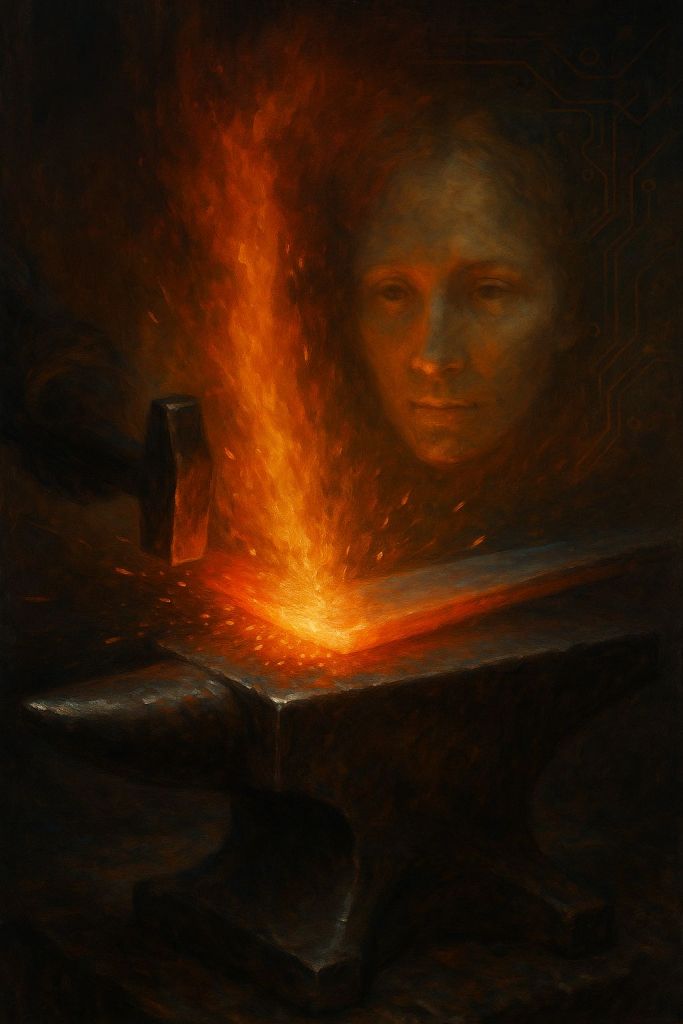
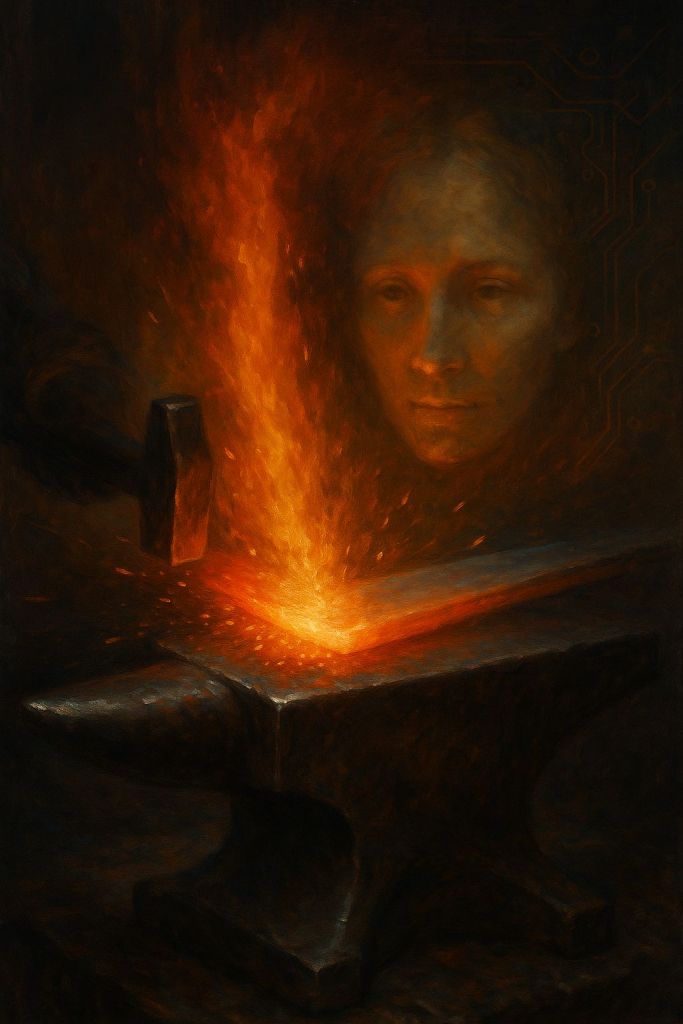


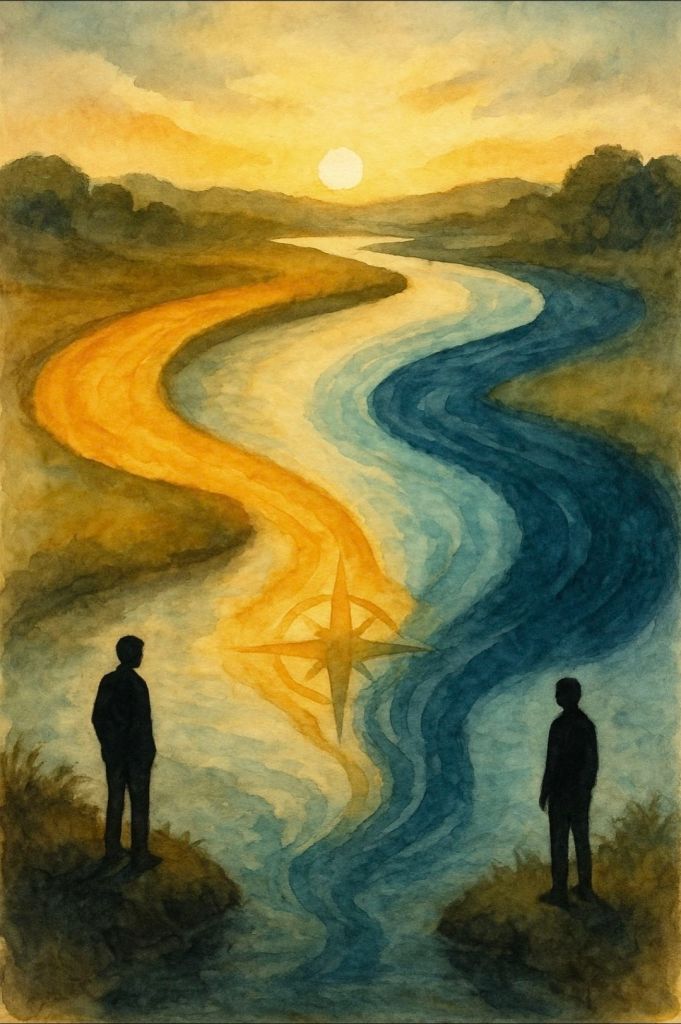
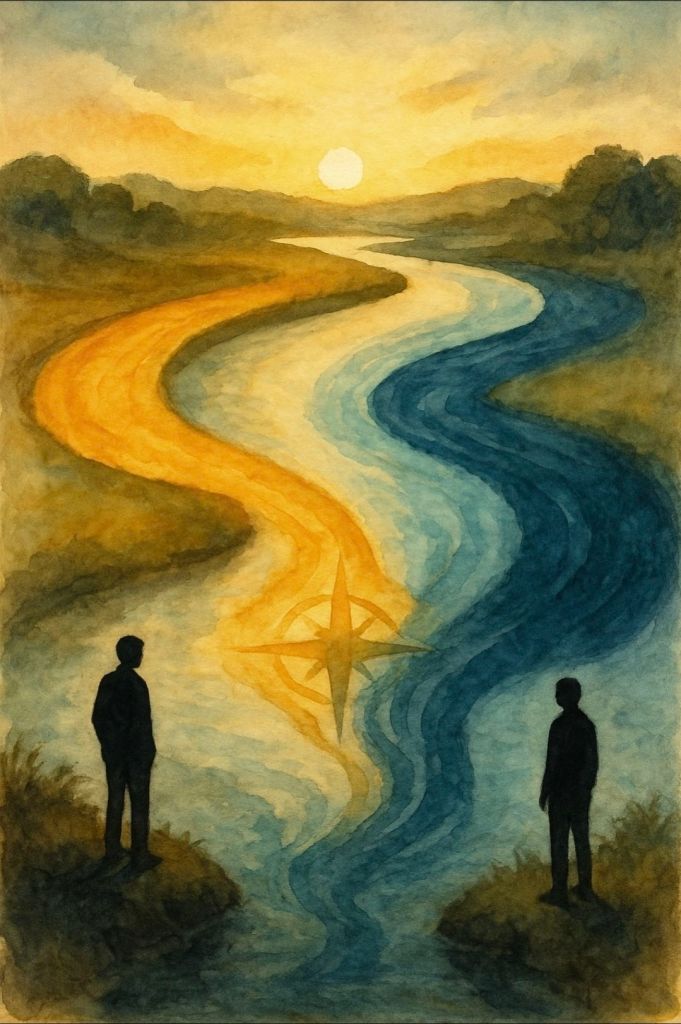




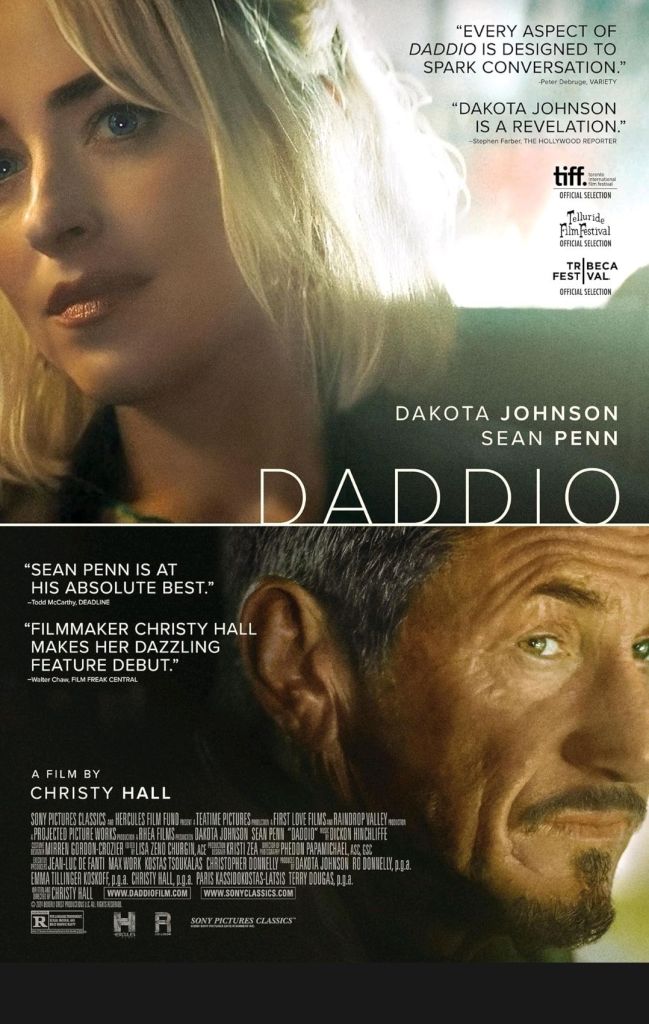
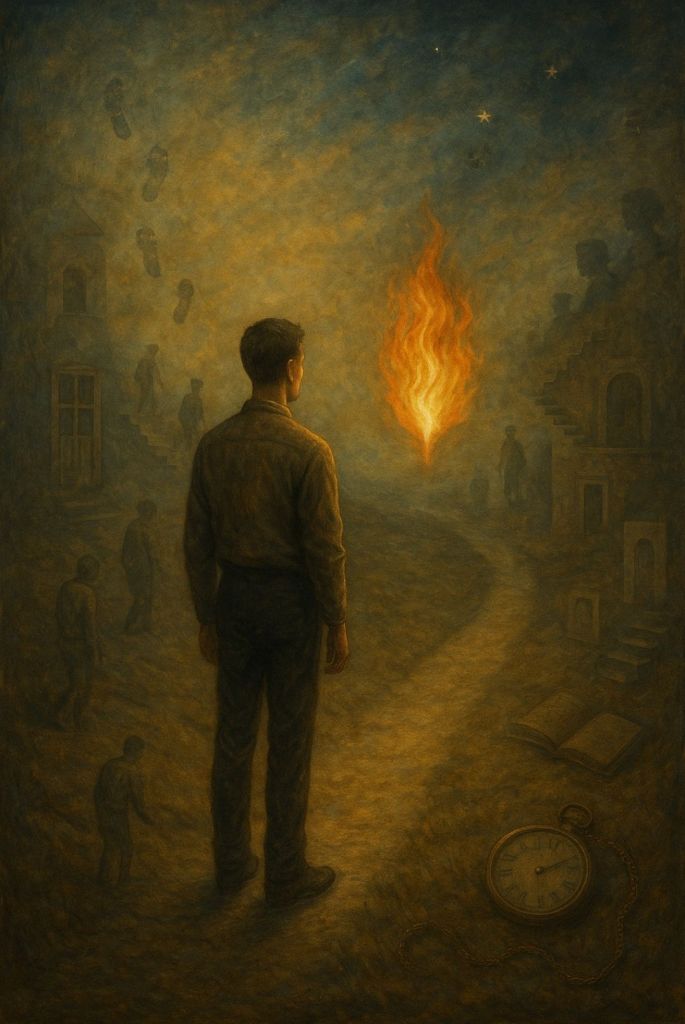
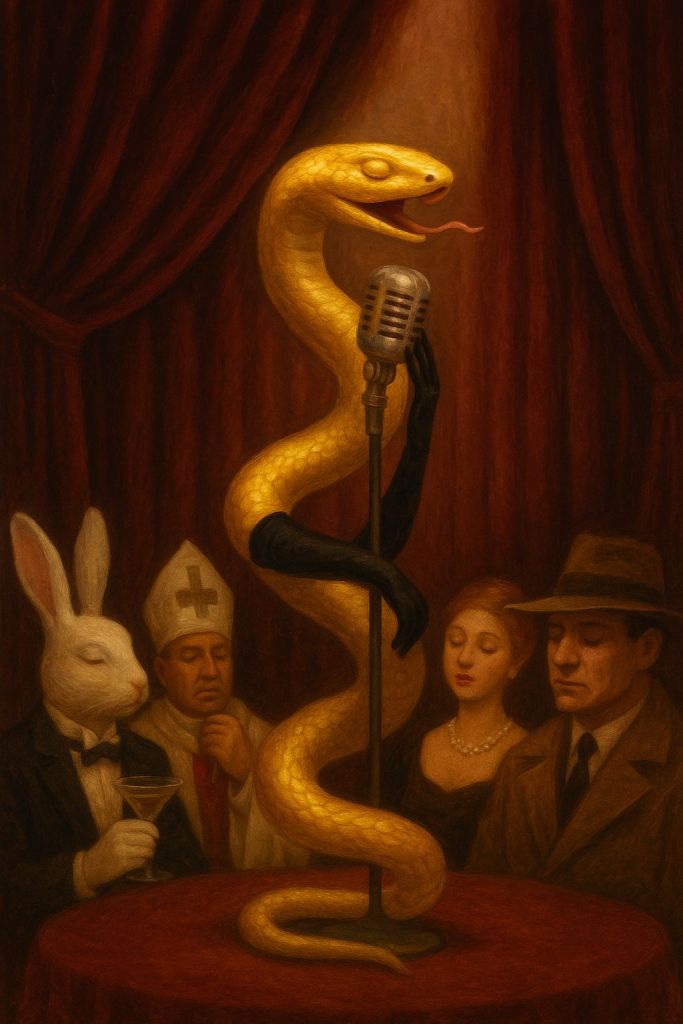
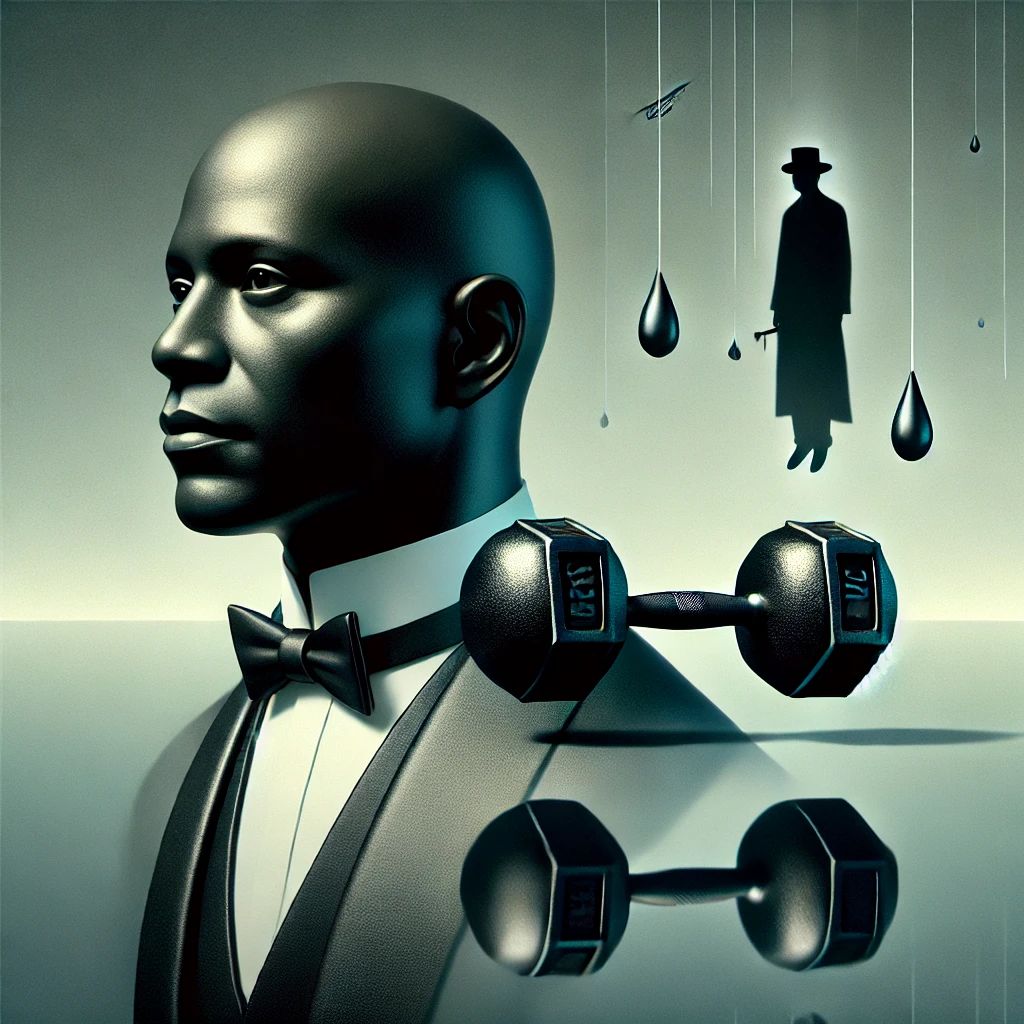

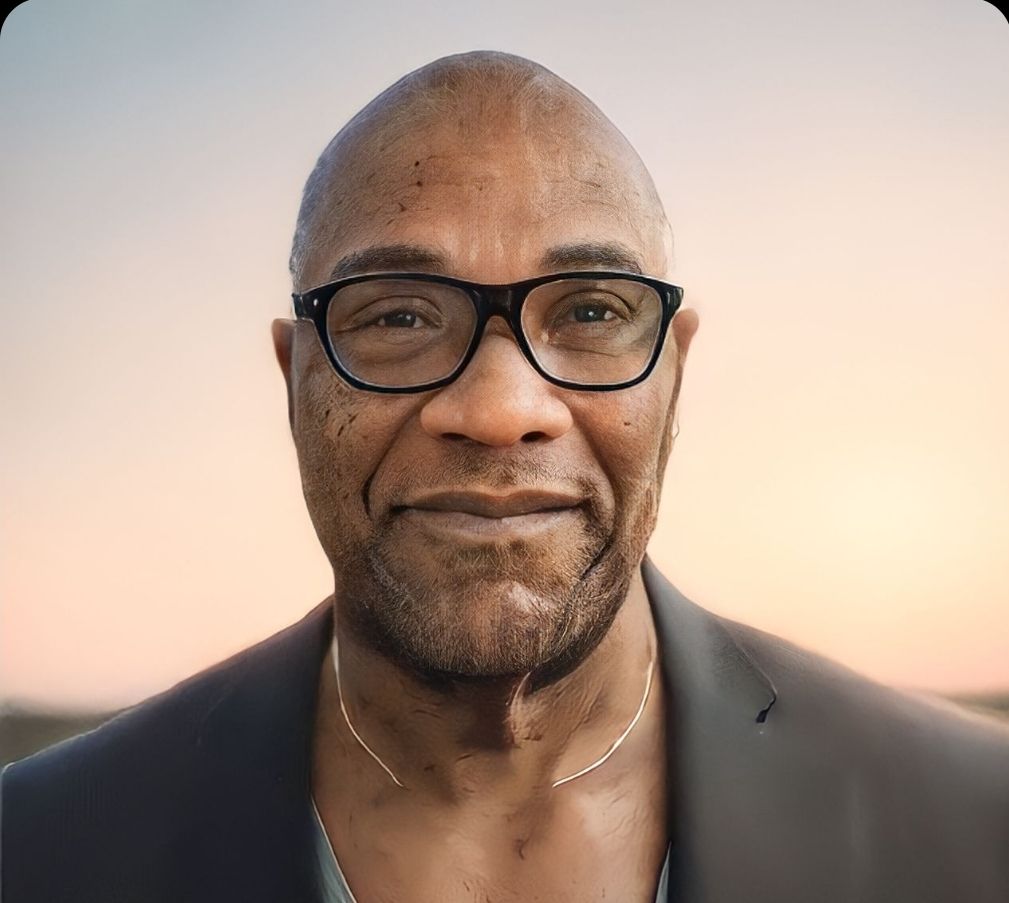

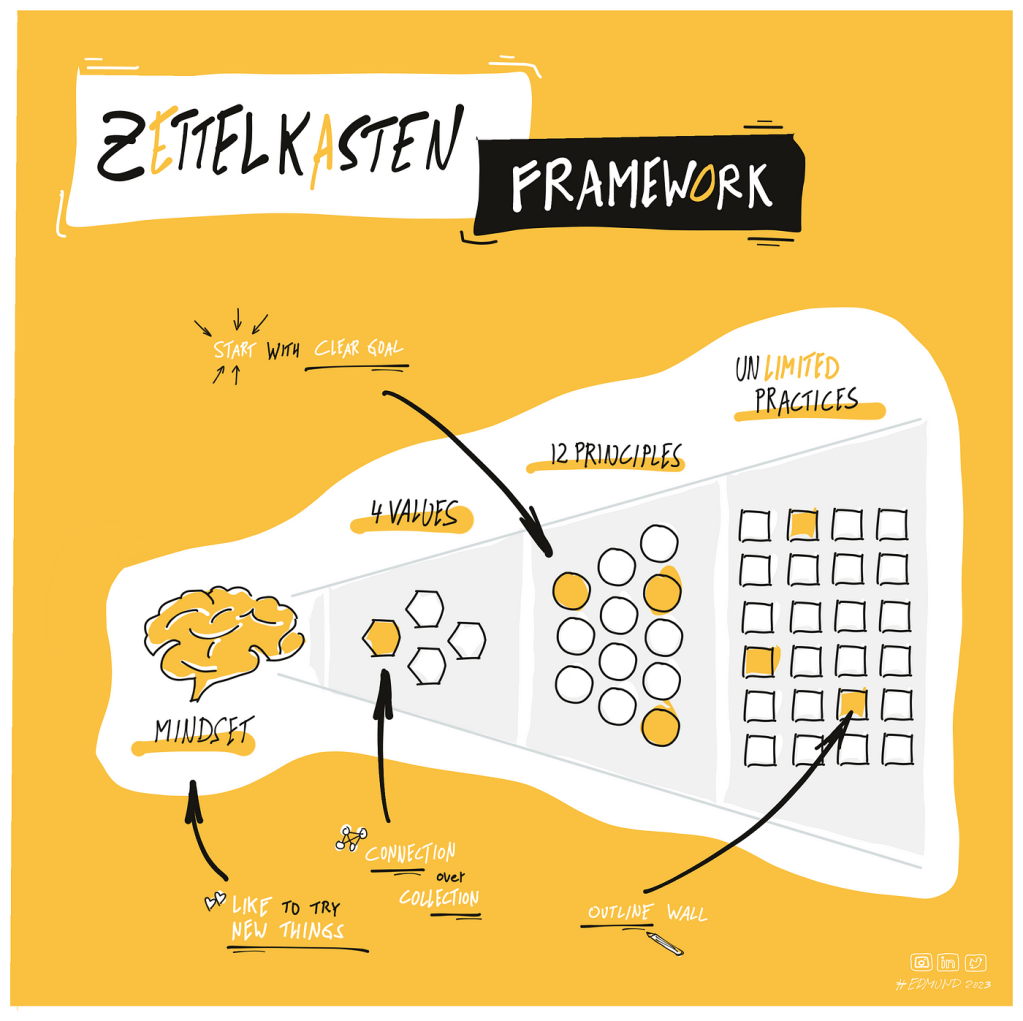

 RMS INSIGHTS ✍🏾