There are moments when the world grows still enough to hear the whisper of the wild — that ancient murmur older than language itself, older even than our need to understand it. In Famous Last Words: Dr. Jane Goodall, that whisper takes human form. The voice that once echoed through jungles now speaks from a quiet room. Her tone is unhurried, her humor intact, her conviction undimmed. The Netflix documentary, recorded in her final days yet released after her passing, is not a farewell; it is a continuation — the voice of conscience carried forward on the wind.
The Chamber of Reverence
The camera opens to stillness: a room stripped of ornament, two chairs, a distant hum of equipment. The cinematography feels monastic, as though we have entered a sanctuary built of silence. No audience intrudes. No camera movement distracts. Only Dr. Jane Goodall, alone, unembellished, and deeply alive.
She asks for a small pour of whiskey. The gesture disarms. One sip, a glint of mischief in her eyes, and the myth recedes. The saint becomes a woman again — frail, witty, human. The act feels like communion, a sacrament of self-acceptance. She toasts the interviewer lightly, then the world itself. It is as though the forest within her raises a final glass to the vanishing light.
From that moment, the interview becomes less conversation and more invocation. Words rise and fall with the cadence of the wild — gentle, patient, and unafraid of silence.
The Paradox of Candor
In this series, adapted from the Danish format Det Sidste Ord, luminaries speak their last words on film — messages withheld until death, then released into the living world. In Goodall’s hands, the premise transcends morbidity. She does not anticipate death; she attends to life.
Her humor slices through solemnity. With serene audacity, she lists those she would send to space — Donald Trump, Vladimir Putin, Xi Jinping, Benjamin Netanyahu — all aboard one of Elon Musk’s rockets. The audience laughs because she allows it. Her tone carries no hatred, only fatigue. It is not vengeance; it is release. “Let them see the Earth from afar,” she says, “perhaps they’ll understand it then.”
That line crystallizes her philosophy: distance reveals connection. Perspective breeds humility. What the telescope sees, the soul must feel.
Yet the humor conceals ache. Her remark is part jest, part lament — the lament of one who spent her life whispering to the wild while men with power shouted over it.
The Communion of Solitude
The film’s austerity suits her spirit. Remote cameras record every breath without intrusion. Director Brad Falchuk, known more for cultural theater than moral inquiry, wisely withdraws into invisibility. His restraint allows her presence to fill the frame.
She speaks of her childhood — the small English girl who carried worms to her bedroom, the mother who told her to keep them alive. From that simple kindness grew a universe of empathy. Every anecdote carries the rhythm of gratitude. Her memories are not self-congratulations; they are prayers of remembrance.
The whisper of the wild runs beneath her every word. When she describes the forest of Gombe, one senses that the forest listens back. For Goodall, speech was never domination. It was dialogue — between human and nature, between knowledge and reverence. She insists that every life holds meaning, that every action ripples outward. “Each and every one of you has a role to play,” she says. “Every single day, you make a difference.”
No line could better summarize her gospel: moral grandeur through ordinary grace.
The Moral Undertow
As a Netflix documentary, Famous Last Words: Dr. Jane Goodall refuses spectacle. It asks for listening. Its rhythm mirrors breath — slow, cyclical, mortal. In a time addicted to noise, that restraint becomes radical.
What emerges is not hagiography. The film neither polishes her into sainthood nor drags her from her pedestal. It lets her contradictions stand: her quiet faith, her anger, her tenderness, her fatigue. She confesses regrets — hours lost to travel, causes left unfinished, the impossible weight of hope. Yet even in confession, she remains composed. Her moral authority flows not from certainty but from care.
This is her legacy: moral rebellion without bitterness.
Her whisper grows clearer as the film progresses. It begins as an echo of the forest, then becomes something else — a reminder that the line between wilderness and humanity was never meant to be a wall.
Stylistic Grace and Technical Precision
The production is minimalist to the edge of reverence. Shadows cradle her features. Light falls across her face as if filtered through canopy leaves. The sound design preserves her pauses; even her silences hum. There is no score manipulating emotion — only the soft rhythm of her breathing, the faint ring of glass, the occasional laugh.
Falchuk’s editing respects time. Long takes allow words to find their gravity. There is no rush to closure. The sequence in which she continues speaking after the interviewer exits the room is among the most powerful. She does not know the camera still lingers — or perhaps she does. Either way, she whispers to someone unseen. To the forest. To the future. To us.
The Moral Reckoning
The film invites a difficult question: can a scientist become a spiritual authority without losing precision? Goodall managed both. She redefined not only how we study animals, but how we perceive ourselves within creation.
Her voice bridges two worlds — reason and reverence. In that space between, she teaches that humility is not weakness; it is wisdom remembering its source.
At a time when humanity mistakes volume for conviction, she shows the strength of quiet. Her words carry the serenity of someone who has seen cruelty yet refuses cynicism. Her life, in essence, argues that moral clarity requires emotional gentleness.
If the film falters, it does so by omission. It offers no deep dive into conservation politics or the scientific controversies that once shadowed her work. Yet perhaps that omission is mercy. This is not the hour for argument; it is the hour for listening.
The Whisper of the Wild
Throughout the film, one feels that nature itself has drawn nearer. The whisper of the wild — that soft language she spent her life translating — becomes the film’s central voice. It murmurs through pauses, glides through her laughter, flickers behind her eyes.
The metaphor completes itself when she finishes her final monologue alone. Her voice, almost breaking, rises to say that even if humanity forgets, the forest remembers. That line belongs not only to Goodall but to the earth itself.
The camera lingers. Light fades. Silence returns. Yet the silence feels changed — inhabited, aware, alive.
Legacy and Cultural Echo
Will this Netflix documentary endure? Undoubtedly. But not as cinema — as scripture. It reminds us that moral authority need not shout. It can whisper and still move mountains.
Goodall’s farewell extends beyond biography. It becomes a meditation on stewardship, mortality, and the divine intimacy of listening. In an age where influence often outlasts integrity, her parting words restore proportion.
Future generations may replay this film not merely to mourn her but to measure themselves. Each viewing renews a compact between conscience and curiosity.
Closing Reflection
When the credits fade, one feels both sorrow and serenity. Her voice lingers like wind in tall grass — faint, persistent, impossible to forget. The whisper of the wild continues, teaching us that the truest last words are not endings but invitations.
Not an elegy, but a beginning. Not silence, but echo.
In an age enthralled by the spectacle of cinema yet tethered to the glow of streaming screens, The Offer emerges as an allegory. It is not merely the tale of producing The Godfather, but a meditation on creation itself—on the alchemy by which chaos is transmuted into myth. At the heart of the series pulses a metaphysical question: how does one fashion enduring art amid the centrifugal forces of commerce, ego, and carved-in-stone legacy?
This is, at its core, a narrative of discord and transcendence. Our protagonist, Albert S. Ruddy—played with redemptive gravity by Miles Teller—stands at the center of a vortex. He contends not only with predators of profit and posture, but with the shadows of cinema’s own immensity. From a corporate cog on Hogan’s Heroes, Ruddy awakens to ambition. He hears the echo of collective gasp in a darkened theater and resolves to shepherd a film that will echo for generations. Yet the altar he constructs is riven by compromise: the demands of studio patriarchs, the anxiety of iconic actors past their prime, and the threatening hum of organized crime.
Within this crucible, The Offer posits a contradiction: cinema is both divine invocation and ledger book. We witness Ruddy negotiating with mob boss Joe Colombo, cajoling studio heads, and defying fickle casting edicts. Underneath these negotiations lies a Sisyphean paradox: the more Ruddy chases authenticity, the more he is pulled into the gravity of mythmaking itself—inevitably shaping not just The Godfather, but the legend of its own production.
Thus enters our tension: the collision between lived truth and the mythic resonance it births. The series employs metaphor and contradiction as its dialectic—evoking in its ten hours the promise of tragedy but risking that it becomes mere operatic detritus. And so we begin: not with exposition of plot or cast, but with the moral and metaphysical question that haunts every frame—can art born of compromise still transcend compromise?
Cast of Characters & Performative Dynamics
In The Offer, performance is not a matter of mimicry—it is a negotiation with memory, a dialogue with archetype. The casting choices serve not merely as placeholders for history but as interpretive gestures, echoing through the corridors of cinema’s own mythology. Every actor, whether inhabiting a titan of industry or a footnote in film lore, performs not only for the viewer but against the shadow of their real-life counterpart. This meta-layered dynamic both enriches and occasionally undermines the series’ authenticity.
Miles Teller’s Albert S. Ruddy is the gravitational center around which this constellation orbits. Teller, typically cast as the brooding prodigy (Whiplash, Bleed for This), here reinvents himself with restraint. His Ruddy is not charismatic in the traditional sense; he is clenched, often silent, a man whose ambition is audible in pauses rather than pronouncements. Teller does not charm—he maneuvers. One suspects the casting was a gamble on gravitas, and while the performance occasionally flirts with opacity, it succeeds in portraying a producer as a haunted tactician: never fully trusted, yet somehow indispensable.
In contrast, Matthew Goode’s portrayal of Robert Evans is flamboyant, theatrical, and undeniably precise. Where Teller compresses, Goode expands—drawing vowels into silk, threading gestures with debauched elegance. His Evans is part Gatsby, part Mephistopheles: a man who wears Hollywood like a cape, both dashing and damning. There are moments—particularly in the scenes of studio negotiation—where Goode’s magnetism threatens to eclipse the narrative itself. And perhaps it should. His performance becomes an embodiment of what The Offer both celebrates and critiques: the power of persona over product.
Juno Temple’s Bettye McCartt is the unexpected fulcrum of emotional clarity. In a show brimming with testosterone, her performance is a study in composure and insurgent intelligence. Temple resists the trap of writing Bettye as mere secretary or moral ballast. Instead, she manifests her as a kind of oracle—the only one who seems to understand that cinema is both dream and debt. Her scenes with Teller, understated and tensile, become the moral marrow of the show.
Giovanni Ribisi’s Joe Colombo, however, teeters between uncanny and caricature. Encased in prosthetics and a gravel-pressed voice, Ribisi seems trapped in a performance built more for effect than embodiment. The menace is manufactured. One is reminded of De Niro’s dictum: menace, to be believed, must never know it’s menacing. Here, Colombo knows too well.
Other portrayals—Dan Fogler’s Francis Ford Coppola, Patrick Gallo’s Mario Puzo, and Burn Gorman’s Charlie Bluhdorn—offer a mixed palette. Fogler’s Coppola lands with warmth but little thunder; Gallo’s Puzo, though sincere, is sometimes reduced to comic relief; while Gorman’s Bluhdorn, though riveting, risks veering into vaudeville.
What unites these performances is their relationship to The Godfather itself—not the film, but the myth. Each actor is caught between homage and invention, reverence and revision. Some rise above the myth to reinterpret it; others are caught in its undertow. In this way, the cast becomes a commentary on the show’s deeper paradox: that to recreate the making of a masterpiece, one must first acknowledge its impossibility.
Narrative Arc: The Full Journey
The story The Offer tells is not a straight line—it is a Möbius strip, circling back on itself with deliberate convolution. It begins, ostensibly, as a story about making a film, but soon reveals itself as something denser: a meditation on ambition, mediation, loyalty, and the choreography of chaos required to bring beauty to life. The events it recounts are historically rooted, yet structurally operatic. We are not merely watching a series of negotiations; we are watching a man wrestle with the soul of an industry.
We begin with Albert S. Ruddy, plucked improbably from television mediocrity to steward a film whose literary source is as controversial as it is beloved. Ruddy is not a cinephile—he is a problem solver. The early episodes of the series make this plain: his talent is not vision, but conviction. He persuades a studio reluctant to touch mob material. He walks the fine line between placating gangsters and respecting storytellers. He becomes, in effect, the sacrificial go-between—an emissary navigating two worlds, each one volatile and overinflated.
The central drama builds around The Godfather’s many obstacles—casting disputes, budget shortfalls, and threats both literal and symbolic. Paramount executives doubt the material. The mafia watches suspiciously. Marlon Brando, long deemed uninsurable, looms like a ghost over the casting process. Al Pacino, nearly invisible at the time, is dismissed as too meek. The film feels perpetually one inch from collapse, and Ruddy, like a mythic hero, holds the structure aloft not by brute force, but by cleverness and sheer stamina. Each episode is another skirmish in the war for control—control of vision, of funding, of perception.
As the narrative progresses, the series fractures—somewhat intentionally—into multiple tonalities: corporate satire, period drama, family tragedy, and, at times, slapstick farce. There are moments of real poignancy: Bettye McCartt standing up for her boss when the world doubts him; Coppola and Puzo debating art versus commerce while devouring Italian food; Robert Evans descending into a self-made hell of narcotic haze and personal vanity. These moments shimmer. They give the series its weight.
Yet this emotional gravity is undercut by a recurring issue: the show’s inability to fully trust its audience. There is an overabundance of explanatory dialogue. Events are often telegraphed rather than unveiled. In its most melodramatic turns, The Offer forgets that mythology gains power not from being explained, but from being earned through mystery. A pivotal scene with Joe Colombo’s shooting is rushed, more plot device than dramatic reckoning. The fallout of his absence ripples but never quite reaches emotional depth.
Moreover, the narrative’s climax—the filming of The Godfather itself—feels less like an apotheosis and more like a checklist. We see Brando with the cat. We see the orange. We see the light breaking through the blinds. It’s nostalgic, yes, but not always necessary. These recreations begin to feel like souvenirs rather than revelations. And herein lies the show’s central irony: it spends ten episodes chronicling the making of a transcendent film, only to falter in capturing what made the film transcendent in the first place—its silence, its menace, its sacramental pacing.
But to fault the series entirely would be unkind. The Offer does achieve something rare: it manages, even through its clutter, to convey the impossible logistics of art. It shows how masterworks are forged not by genius alone, but by diplomacy, defiance, and sheer will. Ruddy’s story may be romanticized—but the impossibility of what he accomplished is not.
The narrative arc, therefore, is not just Ruddy’s journey—it is the story of every creation threatened by compromise, yet somehow emerging immortal.
Cultural, Historical, and Thematic Embedding
To examine The Offer is to gaze through a cinematic palimpsest—beneath its glossy veneer lie strata of American mythmaking, cultural reckoning, and institutional performance. The series does not merely depict the making of a film; it dramatizes a historical moment when the tectonic plates of Hollywood were shifting, and the old studio system was convulsing under the strain of auteurism, organized labor, and emerging countercultures.
Set against the crumbling grandeur of late 1960s and early 1970s America, the series captures a nation not simply watching The Godfather—but needing it. Vietnam had gutted the myth of American righteousness. Watergate loomed like a thundercloud. Faith in institutions—cinema among them—was eroding. In this cultural malaise, The Godfather emerged not just as a film but as a mirror: a work that showed the rot beneath the ceremony, the power masked by ritual, the family as both sanctuary and syndicate.
The Offer situates itself within this liminal space—just after the Kennedy glamour had faded and just before the Reagan myth would rise. Ruddy’s negotiations with mafia figures like Joe Colombo serve not simply as plot mechanics, but as commentary on America’s symbiotic relationship with power, perception, and legitimacy. As Hannah Arendt warned in The Originsof Totalitarianism, when private interests and public authority coalesce, the line between legitimacy and corruption dissolves—and this series, in its best moments, flirts with that dissolution.
Thematically, the show engages in a form of cultural echo. The fictional world of The Godfather bleeds into the real politics of its making. As Mario Puzo and Francis Ford Coppola attempt to humanize gangsters, Ruddy courts real ones. This recursive loop—fiction influencing fact, fact bending back into fiction—places the viewer in a hall of mirrors. Truth, as Susan Sontag once wrote, becomes a casualty in the spectacle of its representation.
Moreover, there’s an implicit tension in the way The Offer frames gender and labor. Bettye McCartt, the lone significant female presence in a sea of male ambition, operates within a world that barely recognizes her as more than a secretary. Yet she emerges as a figure of quiet power. Her competence and composure illuminate the show’s unspoken theme: that so much of cinematic history was built on the invisible labor of women whose names were rarely on the marquee. It is a subtle indictment—one that the series gestures toward without fully confronting.
What the show reveals—intentionally or not—is that the making of The Godfather was not just an artistic struggle. It was a ritual of American reinvention. A nation obsessed with self-mythologizing found in the Corleones a parable of order and betrayal, of family and the price of loyalty. The Offer attempts to tell the story behind that story—and in doing so, becomes yet another layer in the ongoing American opera of ambition and memory.
Moral & Emotional Core
At its nucleus, The Offer is less a story about filmmaking and more a meditation on sacrifice—on what must be surrendered, obscured, or betrayed in the pursuit of lasting art. The series does not flinch from compromise; rather, it sanctifies it. And this is both its virtue and its peril. It asks: what moral wreckage is justified in the service of cultural immortality?
Albert S. Ruddy becomes the axis of this moral geometry. He is not portrayed as heroic in the traditional sense—he is too opaque, too transactional. But therein lies the intrigue. Ruddy navigates each ethical impasse with a producer’s pragmatism: he lies, conceals, flatters, and threatens when necessary. And yet we, as viewers, are never invited to condemn him outright. Instead, The Offer suggests that his choices, however morally elastic, are redeemed by the grandeur of what he helps midwife into being. It is the old American creed—ends over means—disguised in cinematic tailoring.
But what is mourned? The series, for all its bravado and nostalgic flair, mourns the erosion of authenticity. It mourns the vanishing of the principled, difficult artist—Coppola’s anguish, Puzo’s desperation, Brando’s alienation. It mourns the time when film sets were warzones of vision rather than algorithmic sandboxes. Most poignantly, it mourns integrity—not as virtue but as casualty.
And yet catharsis is withheld. Joe Colombo’s fate is rendered, but his arc is collapsed. The studio politics, though dramatised, are never truly punished. The figures of true artistic conviction—Coppola, Puzo—are sidelined in the narrative climax, their battles reduced to subplots. Ruddy wins, but at what cost? The question is left to linger, unresolved.
This refusal of catharsis is perhaps the most honest element in the series. It mirrors life, where glory and grief often arrive in the same hour. Where victories are incomplete and no one is ever truly spared. The Offer does not resolve its tensions because it cannot. The making of The Godfather is sacred to American cinematic lore—and The Offer dares to dirty the altar, only to clean it again with reverent hands.
In doing so, the series subtly indicts its own moral universe. It presents a world where art emerges not from purity, but from negotiation, manipulation, and brute resilience. It mourns the loss of innocence while celebrating the art that such loss made possible. This is its contradiction—and its truth.
Visual & Sonic Aesthetics
If the script is the skeleton and the cast the musculature, then The Offer’s visual and sonic world forms its skin—the surface through which all its contradictions must breathe. The series, at its best, understands that period dramas are not draped in costume but steeped in atmosphere. And yet, like much of The Offer, its aesthetic success is uneven: evocative in strokes, perfunctory in patches.
Visually, the series is at its most persuasive in moments of stillness. Dimly lit offices soaked in the ochre palette of 1970s stock film; sun-drunk studio backlots where dreams are pitched and devoured; cluttered Hollywood mansions echoing with the narcissism of fallen gods. The production design offers a convincing trompe-l’œil of the era, textured not with nostalgia but with a kind of faded ambition. Here, light is used sparingly and symbolically—often falling diagonally across faces like judgment itself. When Robert Evans is on screen, the lighting flirts with vanity; when Coppola enters a scene, it shifts toward austerity. Light, then, becomes both atmosphere and editorial.
The costuming is likewise articulate without being ostentatious. Evans’ wide-lapeled peacock suits contrast with Ruddy’s tight-lipped monotones. Bettye’s wardrobe evolves in tandem with her agency—moving from subdued neutrals to bold, declarative prints. The mise-en-scène, when attended to with care, acts not merely as background but as silent argument. Every cluttered desk, every misplaced ashtray whispers something about power—who possesses it, who pretends to.
But it is in sound that The Offer most reveals its aspirations and its inconsistencies. The score, composed by the estimable Blake Neely, strives to evoke both tension and triumph, but often lands in a register more television than cinema—more episodic urgency than operatic sweep. Moments of orchestral flourish are inserted with little restraint, guiding the viewer with an insistence that undercuts the potential for ambiguity. The music does not trust us to feel; it instructs us to respond.
More successful are the show’s quieter acoustic moments: the click of a reel, the hush before a pitch meeting, the slap of footsteps echoing down studio hallways. These are sonic breadcrumbs leading to authenticity. Silence, when it occurs, is often more arresting than score—a reflection of what Susan Sontag once called “the eloquence of absence.”
The series gestures toward the cinematic—but doesn’t always inhabit it. Unlike The Godfather, whose every frame was sculpture, The Offer is often content with television competence. This is not a fatal flaw, but it is a missed opportunity. The subject demands a visual poetry that the form only intermittently delivers.
Still, when all the elements align—a well-timed dissolve, a chiaroscuro-lit confrontation, a swell of tension held without release—The Offer briefly becomes the thing it seeks to honor: not just a reflection of film history, but a participant in its ongoing myth.
Production Details
The Offer emerges from a lineage of prestige television that aspires not merely to dramatize history, but to stage it anew. Created by Michael Tolkin—best known for The Player, a biting satire of Hollywood’s duplicity—and developed alongside writer-producer Nikki Toscano, the series arrives with pedigree. Yet where Tolkin’s earlier work cut with irony, The Offer leans more into homage, striving to recreate a myth rather than interrogate it.
The directorial helm shifts across episodes, with Dexter Fletcher—he of Rocketman and Bohemian Rhapsody fame—establishing the tone in early installments. Fletcher’s approach is brisk and kinetic, almost theatrical in its pacing, more interested in propulsion than introspection. He knows how to shoot glamor, but not always how to sit with tension.
Salvatore Totino, the series’ cinematographer, brings a commercial elegance to the frame: golden hues, polished compositions, deliberate chiaroscuro. He renders 1970s Hollywood in tones both romantic and slightly decayed. There’s no grime in The Offer, but there is a kind of aesthetic fatigue—sunlight through Venetian blinds, ambition etched in amber. It looks expensive, and it is. Yet one is left wondering whether a more daring visual vocabulary might have brought us closer to the chaos the show purports to dramatize.
The score, as noted earlier, is by Blake Neely—a veteran of serialized storytelling. His compositions serve the plot more than the mood. They provide continuity, yes, but rarely friction. What lingers is not the music, but the intervals between sound—the moments of tension when words fail and reputations loom.
Produced by Paramount Television Studios and distributed via Paramount+, The Offer is, in every sense, a corporate artifact about a rebellious film. The irony is not lost. This is a show made within the very machinery its characters once defied. At times, it feels like an institutional self-portrait—history retold not with skepticism, but with reverence. Paramount tells its own creation myth, and the viewer is invited not to question, but to marvel.
That is not criticism—it is diagnosis. For a series about The Godfather, The Offer is itself a product of modern studio logic: sleek, marketable, reve
The American frontier is often romanticized as a place of beginnings. But beginnings, like birth itself, are traumatic. The land does not yield; it is wrestled into submission. And in Taylor Sheridan’s 1923, we are not offered the birth of anything new—we are forced to witness the pains of a legacy buckling under the weight of time, violence, and empire. If the West was once promised as a blank slate, 1923 insists that it is a ledger already written in blood.
Sheridan’s series does not ride in with a gallop—it drags in with a dirge. The landscape is not a canvas but a scar. Here, justice is arbitrary, and memory is a liability. It is less a show about settlement than it is about entropy—the slow unraveling of families, nations, and identities. Through the eyes of multiple lineages, each fractured and marked, 1923 offers a lamentation more than a celebration. And yet, in that mourning, it achieves something rare in television: a myth made mortal.
Cast of Characters & Performative Dynamics
Jacob Dutton (Harrison Ford) is a man of land and labor, but Ford does not play him as resolute. He plays him as eroded. The iconic action hero of Indiana Jones and the ethical fugitive of The Fugitive now mumbles with the exhaustion of legacy. His very casting is an elegy to American masculinity—once capable, now calcified.
Cara Dutton (Helen Mirren), a matriarch forged in exile, offers a performance of iron veiled in silk. Mirren’s command of composure—so regal in The Queen—is re-purposed here into the resilience of the frontier wife who must now govern not a court but a crumbling clan.
Spencer Dutton (Brandon Sklenar), the exiled nephew and veteran, is less a cowboy than a ghost. Haunted by war, he moves through Africa and Europe like a man allergic to peace. His storyline, while disconnected in geography, is thematically central—he is what the West exports: violence, displacement, and myth. Yet Spencer’s journey is not a solitary one—it is deeply intertwined with Alexandra.
Alexandra (Julia Schlaepfer), a British aristocrat who abandons societal duty for love and danger, is arguably the most unpredictable character in the series. Schlaepfer plays her with equal parts effervescence and steel. She is not a damsel; she is a spark—igniting not only Spencer’s heart but also his will to return. Their love story—wholly improbable, thrillingly operatic—is the soul’s counterpoint to the land’s brutality.
Their odyssey spans train cars, lion attacks, safari trails, and transatlantic ships. Onboard the doomed ship bound for London, the series reaches a visual and emotional crescendo: chaos at sea becomes a metaphor for love’s fragility. When they are separated at customs after surviving so much together, the wound of interruption feels deeper than bullets. It is narrative momentum through emotional velocity.
Teonna Rainwater (Aminah Nieves), whose performance scorches every frame, offers the counter-narrative. Her story, unfolding within the brutal confines of a Catholic boarding school, is not a subplot—it is the indictment. Sheridan casts her as the moral fulcrum, and Nieves responds with fury, grace, and an almost unbearable vulnerability.
Banner Creighton (Jerome Flynn) plays the Scottish rancher as a colonial analog: all entitlement, no honor. His feud with Jacob Dutton ignites the central conflict over land, law, and legacy. His alliance with Donald Whitfield turns cattle rustling into economic warfare—primitive theft married to modern speculation.
Donald Whitfield (Timothy Dalton) enters late but leaves a deep moral bruise. As a mining magnate oozing aristocratic rot, he doesn’t threaten the Duttons with violence—he threatens them with paperwork and debt. His character embodies the creeping spread of financial colonialism, replacing bullets with balance sheets.
Father Renaud (Sebastian Roché), the head of Teonna’s school, personifies institutionalized cruelty. His presence is as frightening as any outlaw, and far more systemic. He enacts theology as torture.
Narrative Arc: The Full Journey
1923 unfolds as a braided epic. The Dutton family faces existential threats: from cattle thieves, corrupt bureaucrats, and nature itself. Jacob is wounded early on, leaving Cara to command with letters as weapons and silence as shield. Their land is no longer secure; power, once inherited, must now be fought for.
Spencer’s odyssey becomes a globe-spanning crucible. Beginning in Africa, where he hunts predators as a proxy for his own traumas, he meets Alexandra—a force of nature who joins him in abandoning safety for love. Their courtship is impulsive, their marriage immediate, their commitment tested by a series of escalating perils: wildlife, treacherous employers, imperial entanglements, and ultimately a sinking ship that nearly ends their story. It is in these moments that the show trades realism for epic, crafting sequences that blend Hemingway and Homer.
Their separation at customs in London—the bureaucratic violence of love denied—leads to further turmoil. The audience is left in suspense, not just about whether Spencer will return to Montana, but whether love can survive the long shadow of war and geography.
Meanwhile, Teonna’s journey from victim to fugitive is written with searing moral clarity. Escaping the sadistic nuns, she becomes a symbol not of freedom, but of resistance—the cost of survival measured in scars. She does not simply survive her captors; she haunts them. Her storyline, unlike Spencer’s, does not circle back into the Dutton orbit, but that disjunction is intentional. It reminds us that some histories run parallel, never intersecting—until reckoning demands they do.
The subplot involving Irish sheep herders introduces further fracture into the land’s fragile ecosystem. What begins as a border skirmish over grazing rights becomes a moral referendum on class, ethnicity, and the weaponization of legal loopholes. These secondary players are less developed than others, but they function as thematic ballast—reminders that the frontier was never empty, only forcibly emptied.
Sheridan weaves these threads with varying degrees of finesse. The cinematography, lush and painterly, sometimes elevates the tale beyond its script. But the storytelling itself can sprawl, indulging digressions and occasionally losing narrative momentum. And yet, taken as a whole, the series is less about closure than it is about the costs of continuity.
Historical Resonance & Thematic Core
Set against the real backdrop of American upheaval—the rise of industrial agriculture, the forced assimilation of Native children, the tremors of global war—1923 is drenched in historical tension. It does not pretend to be a history lesson, but it traffics in historical aftershocks. Every character is a revenant, haunted not by ghosts but by policies, empires, and economic systems.
Sheridan’s genius, if it can be called that, is in rendering the past tactile without making it didactic. 1923 is not a series of events—it is a series of injuries. Emotional, cultural, institutional. And through this lens, we see that the West was not won. It was wounded. And it never quite healed.
Teonna’s story draws from the brutal legacy of the Indian Boarding Schools, whose mandate was not just assimilation but annihilation of identity. Her escape becomes a kind of historical justice—a re-writing of the silence that haunts so many real-world counterparts.
Spencer’s arc, by contrast, evokes the haunted masculinity of the post-war generation. He is not returning home; he is reassembling the idea of home. His journey reflects not frontier myth, but the aftermath of war, empire, and trauma.
Genre, Form & the Sheridan Universe
Sheridan is building an empire of elegies. 1883 was a psalm of migration, Yellowstone is a meditation on power, and 1923 is a requiem. Where most television Westerns lean into spectacle or nostalgia, 1923 leans into contradiction.
The Western genre has rarely made room for women of agency or Indigenous stories told without condescension. Sheridan attempts both, imperfectly but earnestly. By intercutting the colonial with the domestic, the distant with the intimate, he breaks the structural conventions of genre storytelling.
And yet, Sheridan also courts risk. His canvas is vast, but occasionally unfocused. The promise of character convergence may never satisfy the gravity of their isolated trajectories. Still, what he attempts is uncommon: not just storytelling, but historiography.
Cinematic Merits & Aesthetic Brilliance
The triumph of 1923 is its visual poetry. Cinematographer Ben Richardson paints with light: dust motes become constellations, plains become battlefields, and silence becomes a scream. The use of wide frames to capture isolation, and close-ups to document suffering, renders each episode a meditation on the cost of endurance. The show’s aesthetic does not merely support the narrative—it indicts it.
The score, mournful and minimal, whispers where dialogue yells. It functions like a phantom—present, felt, but rarely seen. Editing choices occasionally falter, particularly in cross-cutting between distant plotlines, but Sheridan’s overall rhythm honors the spirit of elegy rather than entertainment.
Production design is impeccable—from rusted implements to ceremonial beadwork. The props do not illustrate history—they evoke its textures. You can smell the dust, feel the leather, sense the rot beneath the grandeur.
Moral Ledger: Whose America?
Perhaps the deepest question 1923 asks is: Whose story is America’s? The Duttons are offered as both founders and fossils. Their sense of entitlement to land, justice, and permanence is framed not as virtue, but as pathology. Teonna’s storyline complicates any nostalgia the viewer may bring. She refuses to be a footnote.
Even Spencer’s return, framed as salvation, feels like a ghost stepping into a haunted house. No one is saved here. And no one leaves whole. Sheridan offers no heroes—only survivors. And in that moral ambiguity, 1923 finds its rough grace.
Final Verdict
1923 is not a perfect series. Its narrative bifurcations occasionally disrupt its momentum. Some threads fray, others tangle. But its ambition—to hold the mirror of myth up to the cracked face of history—is unmistakable. What it lacks in cohesion, it compensates for in courage.
Sheridan’s work here feels like a cinematic funeral for America’s unfinished business. It does not sing the West into glory—it reads the ledger aloud at the gravesite.
1923 is the West, not as nostalgia, but as consequence. It is television that does not entertain so much as exhume. A drama not of gunfights, but of ghosts.
No one trains to be forgotten. And yet, paradoxically, the highest-performing individuals in uniform often exist to vanish. They fly in formation, answer to call signs, and leave no personal imprint upon the clouds. Netflix’s The Thunderbirds documentary disrupts this design—briefly—offering a controlled detonation of the myth, the machine, and the men and women behind the visor.
At first glance, the film feels like a polished salute: gleaming F-16s, desert blue skies, an air show anthem steeped in nostalgia. But beneath that polished canopy lies a subtler provocation: Can elite performance still mean something in a culture where spectacle swallows substance? Where visibility dominates value, but mastery requires invisibility?
The Thunderbirds don’t simply fly—they signify. They embody a choreography of national pride, war-forged discipline, and airborne artistry. Yet The Thunderbirds resists jingoistic reduction. It opens with noise and pageantry, yes, but slows its shutter speed to reveal the relentless human work beneath the titanium.
The Thunderbirds originated in the crucible of the Cold War, when America needed to perform its principles in airspace, not just in policy. Formed in 1953, they carried a silent message: freedom, ordered and symmetrical. Like the Blue Angels or Olympic gymnasts, they turned danger into display, risk into ritual. Their maneuvers weren’t merely impressive—they were declarations.
Director Luke Korem understands restraint. He avoids flourishes that draw attention to himself. Instead, his lens breathes with reverence. Aerial cinematography captures the violence of motion smoothed into grace. Transitions cut not to dazzle but to decelerate. The pacing echoes the precision it documents: nothing wasted, everything earned.
He relies on narrative rhythm over editorial bravado. There are no omniscient narrators, no intrusive voiceovers. The story unfolds through cockpit footage, unguarded interviews, and familial reflection. In this quiet, the geometry becomes audible.
Central to the documentary is the idea of certification—not triumph, not ego, but passage through fire. We witness pilots in training, their muscle memory not yet fully formed, their instincts under surveillance. A flight evaluation feels more surgical than theatrical. There are no second takes.
The camera follows Maj. Lauren “Mad” Schlichting as she studies her flight tapes frame by frame. She doesn’t radiate swagger. She radiates precision. The first female Thunderbird to fly the lead solo position, Schlichting flies not for glory, but for execution. Her call sign, Mad, reflects not temperament, but tribute—to mentors, to perseverance, to control at supersonic speed.
Around her, a constellation of teammates defines the discipline:
Lt. Col. Justin “Hasard” Elliott, commander and flight leader, carries the responsibility of legacy. His calm masks the cognitive overload of leading six jets through impossible geometries.
Maj. Kyle “Gumbo” Oliver, the narrator and slot pilot, bridges the team and the audience. His voice—measured, rhythmic—translates risk into reverence.
Maj. Zane “Strobe” Taylor, right wing pilot, rides inches from the leader. His steadiness becomes its own form of poetry.
Maj. Jeff “Shaka” Downie, left wing, anchors the formation with a stoic presence that reads more like a monk than a maverick.
Maj. Jason “Stork” Markzon, opposing solo, complements Schlichting in midair duels that dazzle crowds and challenge physics.
Each pilot enters not as hero, but as practitioner. They confess to errors, fear, fatigue. One recalls the silence that follows the loss of a fellow flyer. Another recounts the surreal dissonance between standing ovations and personal grief.
And always, the machine hums beneath the myth.
The F-16 Fighting Falcon, the aircraft of choice, is no tame beast. It pulls nine Gs, accelerates vertically, and demands a pilot’s full neural bandwidth. One degree off, one millisecond late, and geometry unravels into disaster.
We see that mastery doesn’t rely on adrenaline. It relies on repetition, on muscle memorization, on calibrating instinct until instinct becomes a system.
And still—beneath the gear and gauges—parents sit in bleachers, squinting into sun. A mother admits she never understood flying until she saw her daughter vanish into a vertical roll. A father says he doesn’t sleep well on show days. These are not sentimental inserts. They remind us: even angels of the air have anchors on the ground.
The film crescendos, inevitably, at the air show.
The crowd rustles beneath sun-scorched skies. Children hold miniature planes; veterans wear jackets stitched with past campaigns. The jets scream overhead—low enough to rattle the sternum, fast enough to blur recognition. Loops, rolls, splits, reconvergence. It’s combat geometry turned into ballet.
But Korem withholds glory shots. He focuses not on applause but on the debrief. The moment after. The checklist. The knowing glances in the hangar. For every second in the air, there are hours of discipline unseen.
In this, the Thunderbirds resemble monks more than warriors. Their flight paths are not flourishes; they are meditations. Their rituals, not ego-fueled exhibitions, but acts of liturgy.
To some, the Thunderbirds may still resemble propaganda—a polished display masking deeper ambiguities. But the documentary does not argue for militarism. It argues for mastery.
In a culture addicted to shortcuts, their message lands with force: skill takes time. Skill takes silence. Skill takes loss.
In contrast to stylized military films (Top Gun: Maverick) or extreme-sport documentaries (Free Solo), The Thunderbirds anchors its thrill in process, not personality. No breathless narration. No Hollywood arcs. Just the repetition of return.
It’s not a film about jets.
It’s a film about those who choose to submit themselves to structure, to submission itself, in pursuit of collective excellence.
About how real power flows not from dominance, but from alignment.
About how symmetry still matters in an asymmetrical world.
What lingers, ultimately, is not the roar—but the reverence.
This film doesn’t merely salute the Thunderbirds. It honors the unseen cadence of those who return, again and again, not to be celebrated, but to be correct. Not to be watched, but to be worthy.
No empire ends quietly, and no enemy dies alone. Osama bin Laden—specter of September 11, avatar of asymmetric warfare, and the most hunted man in modern history—was not merely a fugitive. He was a dark reflection, the lens through which America saw its anguish, its outrage, and its almost theological need for vindication. Netflix’s American Manhunt: The Search for Osama bin Laden does not embellish this pursuit, but it reanimates it with arresting lucidity—resisting bombast while embracing complexity.
Directed by Mor Loushy and Daniel Sivan, the documentary threads together a sprawling narrative with surgical clarity. The story is retold not through narration or omniscient commentary, but through the fractured and sometimes contradictory testimonies of those who were there—CIA operatives, military commanders, national security advisors, and the President who sanctioned the raid with a gambler’s nerve and a philosopher’s burden. There is no choreography here, no flourishes of self-congratulation. Only the tightening thread of obsession, of moral compromise, and of sacrifice.
President Barack Obama, famously cerebral, anchors the film’s moral undertow. His decision to authorize Operation Neptune Spear is not portrayed as muscular or dramatic; it is quiet, deliberate, solitudinous. We see him in the Situation Room—not so much directing as absorbing—flanked by then-CIA Director Leon Panetta, Secretary of State Hillary Clinton, Defense Secretary Robert Gates, Admiral Mike Mullen, National Security Advisor Tom Donilon, Counterterrorism Advisor John Brennan, and Vice President Joe Biden. Each speaks a different dialect of caution. None possess certainty. The President proceeds anyway.
And this is where the film begins to rise: in the friction between confidence and conjecture. The CIA analysts, especially Maya (a pseudonym), part of the so-called “Sisterhood”—Cindy Storer, Nada Bakos, and others—are presented not as heroes but as haunted professionals. Their pursuit of Abu Ahmed al-Kuwaiti, the courier, is an exercise in attrition and intellect, intuition and exhaustion. They are as much cartographers of doubt as they are agents of discovery.
Abbottabad is introduced not with flair but with dread: a drab compound with high walls, opaque habits, and architectural whispers of secrecy. That this suburban fortress existed undisturbed for so long is less a testament to Pakistani duplicity (though that shadow lingers) than to the stubborn ambiguity of intelligence. The compound itself becomes a character—mute, suspicious, and strangely inert. The drama is in its stillness.
When the operation begins—stealth helicopters slicing the darkness—the tempo of the film changes, but not with cinematic bravado. Instead, we are given uncertainty. One of the helicopters crashes. The team adapts. In the control rooms of Langley and the West Wing, nerves strain under silence. These are not men and women reveling in retribution. They are holding their breath. The SEALs—anonymous, meticulous—move through the compound not with swagger, but precision. Bin Laden is shot. His body is photographed. DNA confirms what instinct already knew.
And yet, as the documentary reminds us, closure is elusive.
The strength of American Manhunt lies not in its archival footage or its tight pacing—though both are superb—but in its refusal to pretend that this act of surgical vengeance was tidy. The intelligence community had failed catastrophically on 9/11. For nearly a decade, they labored under the crushing weight of that failure. And this success, though spectacular, was not catharsis—it was a question mark.
What did America gain? What did it lose?
We hear from the families of those who searched for bin Laden for years, including analysts whose marriages dissolved under the pressure of obsession. We glimpse the moral fog surrounding targeted killings, the drone campaigns that metastasized after bin Laden’s death, the way violence institutionalizes itself in a bureaucracy. No one in the film pretends this was a storybook ending. Instead, it was the closing of one chapter in an epic that refuses to finish.
The cinematic tone, then, is elegiac rather than triumphant. Mor Loushy and Daniel Sivan avoid the trap of mythmaking. They lean instead into the ragged truths: that intelligence is imperfect, that leadership is lonely, that war never ends the way it begins. American Manhunt honors the skill of the SEALs, the doggedness of the analysts, and the gravity of Obama’s decision—but it never flinches from the ethical gray. It dares to ask whether vengeance ever truly satisfies a wounded empire.
And perhaps that is the film’s deepest contribution. It re-centers bin Laden not as a cartoon villain or diabolical mastermind, but as a man whose death raised as many moral specters as it laid to rest. It asks whether the hunt changed America more than the attack did. Whether, in vanquishing the enemy, we also distorted ourselves.
In the final moments, we see President Obama address the nation with calm restraint. There is no gloating, only gravity. He speaks to justice—not revenge. But the images that follow—the celebrations in the streets, the chants of USA—tell a different story. We were not ready to reflect. We were hungry to win.
Verdict: American Manhunt is not just a documentary about an operation. It is a meditation on obsession, on memory, on the thin line between justice and revenge. It is a reckoning cloaked in restraint, a chronicle of triumph shadowed by doubt. And in that doubt lies its brilliance.
PBS’s American Masters doesn’t trade in sainthood. Its finest portraits render their subjects in chiaroscuro—equal parts dignity and defect. The Incomparable Mr. Buckley upholds that tradition in profiling William F. Buckley Jr.—founder of National Review, master of televised debate, literary showman, and the man who gave postwar American conservatism its polished voice and prickly conscience.
He was born in 1925 in New York City, the sixth of ten children in a sprawling, hyper-articulate Catholic family. His father, William Sr., was an oil magnate and ideological absolutist with Southern landholdings and a Calvinist’s faith in capitalism. His mother, Aloise Steiner Buckley, a Southern belle with gentler bearing, provided music, charm, and restraint. Together, they presided over a household where French, Latin, logic, and loyalty to God and property were daily fare. It was not a home so much as a crucible.
The family’s wealth insulated the Buckley children, but it also armed them. William Jr. emerged with the accent of a 19th-century baronet, the posture of a fencing master, and the moral certitude of a bishop. He entered Yale as if into inheritance. And when Yale failed to meet his expectations, he turned on it—with glittering vehemence.
God and Man at Yale, published in 1951, was a bombshell disguised as a senior thesis. Its argument: that the university had betrayed its Christian and individualist roots, surrendering to collectivism and atheism. The prose was provocatively archaic, yet the thrust was unmistakably modern. This was not merely a critique of education—it was a blueprint for counter-revolution. The American conservative movement, until then diffuse and culturally marginal, had found its polemicist.
By 1955, Buckley had founded National Review. It was not just a magazine—it was an ideological citadel. In its pages, Buckley defined a new conservatism: urbane, anti-communist, economically libertarian, and socially hierarchical. His prose was a blend of rococo elegance and dry contempt. He did not argue for approval; he argued to reign. Readers didn’t just agree—they aspired.
He published more than fifty books: political commentaries, spy thrillers, religious meditations, memoirs. The Unmaking of a Mayor was equal parts political comedy and civic dissection. Nearer, My God offered a rare glimpse into his spiritual reflections. Even his novels—clever, if a bit baroque—carried the same crisp posture as his public self. He made ideology feel like a private club with a sommelier.
And yet, the costs of that ascent remain part of the record. Buckley was, by any honest reading, a segregationist. His 1957 essay Why the South Must Prevail asserted the right of white Southerners to govern over Black citizens—not as a matter of prejudice, but, he claimed, of civilizational necessity. That Buckley later retracted this position matters. That he held it at all matters more. The documentary makes no excuses.
One of his starkest reckonings came in 1965 at the Cambridge Union, in debate with James Baldwin. Baldwin’s speech—incandescent, unsparing—laid bare America’s betrayal of its Black citizens. Buckley followed with wit, erudition, and rhetorical flair—but also with a visible tightness, as if aware that history had tilted toward Baldwin before a word had been spoken. The moment was not a defeat, but it was a humbling—a rare crack in Buckley’s polished armor, and the documentary captures it without editorializing. It trusts the camera, the silence, the afterglow of Baldwin’s thunder.
The film wisely returns often to Firing Line, Buckley’s long-running television program, which aired 1,504 episodes over 33 years. Here, Buckley became both emissary and gatekeeper of conservative thought. He hosted everyone from Noam Chomsky to Ronald Reagan, playing both swordfighter and salon host. The set was minimalist. The conversations were maximalist. Viewers didn’t just tune in—they were initiated.
And there was the persona: the arched brow, the patrician drawl, the looping syntax that seemed to tango with itself. Buckley’s charisma was not merely linguistic. It was theatrical. The man performed intelligence—something his detractors dismissed as pretense but which his admirers saw as the very soul of elite engagement. That twinkle in his eye, that knowing pause—it wasn’t smugness. It was seduction.
No portrait of Buckley is complete without his role in grooming the political ascent of Ronald Reagan. The conservative movement, once the province of marginal pamphleteers and country-club grumblers, found in Buckley an architect—and in Reagan, a frontman. Buckley gave conservatism the vocabulary of gravitas; Reagan gave it the smile. The 1960s and ’70s saw Buckley tirelessly promoting Reagan as the movement’s ideal statesman: optimistic, disciplined, ideologically sound.
Buckley consulted with Reagan directly, advised on messaging, and defended him in print long before the political winds changed. It was Buckley who helped airbrush the John Birch Society and its paranoiac fringe out of the picture, insisting conservatism must not slip into lunacy. His expulsion of the Birchers was an act of philosophical self-respect. Reagan’s election in 1980 was, in no small part, the flowering of seeds planted in the editorial gardens of National Review.
But Buckley’s movement, like all movements, mutated. Today’s conservative landscape—rife with populism, grievance, and performative antagonism—bears only passing resemblance to the patrician discourse of Firing Line. Buckley believed ideas should be sharpened like swords, not hurled like bricks. He disdained conspiracy theories, theatrical outrage, and demagoguery. The very populism he once sought to discipline now rages, unkempt and unlettered, across the platforms of American life.
It is not merely that he would have opposed Trumpism. It’s that he would not have known quite where to begin. Where Buckley once sparred with Chomsky in syntax-rich combat, today’s heirs trade memes and innuendo. Figures like Tucker Carlson, Marjorie Taylor Greene, and their ilk owe more to televised resentment than rhetorical discipline. Buckley’s diction would be mocked; his detachment misunderstood as weakness.
The documentary touches on this transformation gently—perhaps too gently. But it raises the question: if Buckley founded the temple, did he fail to guard its altar? Or did he simply not foresee the day the velvet ropes would be trampled by the mob?
The film doesn’t avoid the personal. It gives due place to Patricia Buckley, his wife of more than five decades. She was not merely a society figure. She was a partner in the truest sense—a co-conspirator in charm and civility. Her death in 2007 shattered him. The documentary doesn’t overstate it, but you see it—in the thinning voice, the retreat from public jousts. Buckley without Patricia was a violinist without strings. He would later confess in a rare interview with Charlie Rose that he no longer wished to live. The twinkle, by then, had flickered into memory.
In his final years, Buckley grew more reflective. He questioned the Iraq War. He distanced himself from the Bush administration. And his writing—especially in Miles Gone By—betrayed an awareness that the world he helped shape was moving on without him. He died in 2008 of emphysema, a slow, diminishing ailment for a man once defined by verbal flight. The voice that had launched a movement finally quieted. And yet, the echoes endure.
What The Incomparable Mr. Buckley accomplishes—gently, but thoroughly—is the restoration of contradiction. Buckley the libertarian who praised Franco. Buckley the Catholic who denounced anti-Semitism but flirted with eugenics. Buckley the champion of free speech who occasionally reached for the censor’s glove. Buckley the gentleman who once threatened to punch Gore Vidal in the face. He was a colossus built of paradoxes.
The film omits his son, Christopher Buckley—himself a novelist and satirist—whose political journey diverged from his father’s but never lost affection. One suspects the exclusion was more editorial constraint than avoidance. Still, a nod might have added dimension to the portrait.
He was not easy to love, but impossible to ignore. He wielded ideas like foils, slicing through sentiment with style. He was wrong—sometimes deeply—but never dull. And in an age that increasingly rewards volume over voice, William F. Buckley Jr. remains a paradox worth revisiting: the radical traditionalist, the gracious elitist, the missionary of manners.
Verdict
A masterwork of biography that neither flatters nor flinches. The documentary invites us not to genuflect before Buckley, but to wrestle with him. His legacy, like his syntax, was elaborate, contradictory, and enduring. The modern right may no longer speak in his accent—but it still stirs in the cathedral he built.
Brian Johnson didn’t enter the wellness arena—he charged in, half-naked and wholly committed. Known as the Liver King, he became a primal prophet of sorts, preaching a return to what he called “ancestral living.” His diet? Barbaric. His discipline? Unflinching. His presence? Viral.
He devoured bull testicles with the same ferocity he flung kettlebells, and through it all, he maintained one core message: modernity is poison. The antidote? A return to the wild. Yet, like many self-proclaimed messiahs, he was not what he appeared.
Ancestral Tenets: Selling Simplicity in a Complex World
Johnson didn’t just market meat—he marketed meaning. His philosophy, neatly packaged into Nine Ancestral Tenets, became the bedrock of his brand. These weren’t abstract values but a regimented ideology:
1. Sleep – Total blackout, no alarm clocks, and a rejection of artificial light.
2. Eat – Raw organs, bone marrow, raw milk. No vegetables. No compromise.
3. Move – Grueling functional workouts mimicking hunter-gatherer life.
4. Shield – Reject seed oils, endocrine disruptors, and EMFs.
5. Connect – Bare feet on soil. Grounding as gospel.
6. Cold – Ice baths and cryotherapy as modern rites of passage.
7. Sun – Maximize Vitamin D through shirtless, timed exposure.
8. Fight – Life is struggle; seek discomfort intentionally.
9. Bond – The nuclear family as the ultimate tribe.
Each tenet was a totem—elevated by algorithm, sold as salvation. They gave structure to chaos and ritual to recovery. But like many dogmas, they suffered from the same flaw: they excluded nuance.
The Steroid Scandal: Emails, Omnitrope, and the Fall of a King
While publicly denouncing performance-enhancing drugs, privately, Johnson was injecting them with zeal. Leaked emails revealed a pharmaceutical tab north of $11,000 a month—featuring testosterone cypionate, Deca-Durabolin, and notably, Omnitrope, a high-end synthetic HGH.
He had consulted with a hormone clinician. He knew the science. He was meticulous. These were not the desperate acts of a lost man but the calculated decisions of someone engineering a body that fit a story.
The emails were damning. “I need to build the best possible version of myself,” he wrote. But that version, it turns out, was more syringe than spleen.
His video confession, contrite in tone but corporate in structure, walked the line between accountability and damage control. But the deception ran deeper than needles. It cut to the core of what followers believed: that with enough liver and lunges, they too could transform.
The Lawsuit: When Branding Becomes Betrayal
Johnson’s revelation triggered not just backlash, but litigation. A $25 million class-action lawsuit alleged consumer fraud, false advertising, and negligent misrepresentation. Plaintiffs claimed they had spent significant sums on Liver King-branded supplements and regimens, under the belief that Johnson’s physique was the fruit of ancestral discipline—not chemical intervention.
The legal argument centered not just on truth-in-advertising laws but on emotional harm and intentional deception. The plaintiffs were not just seeking compensation; they were demanding accountability for a betrayal of trust. The courtroom became an altar where Johnson’s myth was weighed—and found wanting.
The Documentary: Visual Theater, But Missing Teeth
Netflix’s Untold: The Liver King is atmospheric and slick, but occasionally too reverent. It follows Johnson with a camera’s eye that’s more sympathetic than skeptical. It gives us gravel and kettlebells, moody Texas skies, and shirtless interviews lit like a GQ confession booth. The aesthetics are evocative. But where is the grit?
The visual language leans into Johnson’s charisma—close-ups of liver, sweat, and familial bonding. But what’s missing is a formal counterpoint. There’s little editorial interrogation, few critical voices, and no cross-examination of the public cost of his myth.
What the documentary excels at is capturing the theater of identity: the way Johnson physically transforms not just his body, but the world around him. From cold plunges to liver feasts, each act is shot like sacred ritual. But sacred to whom?
The Turn: Fruit, Vegetables, and the Softening of a Savage
In the final act, Johnson begins to soften—not just physically, but ideologically. He confesses to having malnourished himself in his meat-only crusade. He now eats fruit. Occasionally vegetables. He even admits he was wrong—something the Liver King would have once called weakness.
The transformation is striking. Gone is the growl. In its place, a kind of awkward humility. The man who once snarled at comfort now seeks balance. The rebrand is underway. Whether it’s penance or pivot, we don’t yet know.
Cultural Context: A Post-Truth Prophet
Johnson is a symptom of something deeper. We live in an age of engineered authenticity—where the appearance of grit is more bankable than the substance of virtue. Johnson offered a narrative that was simple, aggressive, and masculine—a recipe for virality in a culture craving clarity.
His story was never really about health. It was about belonging. In a world of soy lattes and cubicles, he promised a tribe, a fight, a furnace to forge yourself anew. But like all cults of personality, it asked for faith over fact.
He is not the first influencer to manufacture myth. But his myth was so total, so fleshy, so primeval—it dared us to look away. And many couldn’t.
Metaphor and Meaning: A Stoic Lens on Self-Delusion
Marcus Aurelius wrote, “The nearer a man comes to a calm mind, the closer he is to strength.” Johnson reversed this. He confused noise for power, ritual for resilience, and spectacle for virtue.
His kingdom was built not on rock but on sinew and spectacle. And like all empires of muscle, it collapsed—not under external attack, but internal rot.
Nietzsche warned: “He who fights with monsters must take care lest he thereby become a monster.” The Liver King fought weakness with such aggression that he became the very thing he feared: a mask, a performance, a synthetic vision of strength.
Verdict: The Muscle, the Myth, the Mirror
Untold: The Liver King is not just a documentary. It is a cultural x-ray. It peers into our modern marrow and finds a hunger—not for liver, but for meaning. Johnson’s fall is not just his own. It’s ours. We crave shortcuts, we sanctify confidence, and we confuse visibility for truth.
This film, though beautifully composed, misses a chance to challenge harder. But in its silences, it allows room for reflection—and that may be its quiet strength.
Rating: 9.4/10
A rich, revealing portrait of the man, the myth, and the marketplace that made him. With a few more sharp edges, it could’ve cut even deeper. Still, it flexes where it counts.
Confessions in Transit: Daddio and the Cartography of Connection
📌 Opening Commentary
In an era where cinematic spectacle often overshadows subtlety, Christy Hall’s Daddio emerges as a cinematic haiku—brief, bounded, but resonant. Hall, adapting her own play and stepping confidently into the director’s seat, strips storytelling to its bones. No chase scenes, no cutaways—just two people in a cab, and a conversation that peels back layers faster than any thriller could. It’s a bold debut, one that invokes Before Sunrise, My Dinner with Andre, and even Hitchcock’s taste for confined spaces. Yet Daddio does something altogether its own: it uses dialogue as a scalpel, not a sponge.
Overview
After landing at JFK, a woman—known only as “Girlie” (Dakota Johnson)—slides into the back seat of a yellow cab driven by Clark (Sean Penn). The city pulses outside; inside, something quieter begins to stir.
What begins with small talk about traffic and smartphones soon spirals into the intimate. She’s involved with a married man; he’s a veteran of love and divorce. Beneath the surface chatter, emotional fissures begin to show. Questions turn philosophical, flirtation turns introspective.
Clark challenges Girlie’s assumptions. Girlie needles Clark’s self-mythology. Their exchange becomes less a dialogue and more a kind of psychological jazz—improvised, searching, occasionally discordant, but brimming with truth.
In a moment of vulnerability, Girlie breaks—confessing that what masquerades as power in her affair is, in truth, loneliness. Clark responds not with pity but perspective, offering a challenge: maybe what she fears most isn’t abandonment but authenticity.
As the cab glides to a stop, they part. No grand gestures. No promises. Just two strangers altered by the collision. We never learn their full stories, but we understand them—deeply, briefly, fully.
Symbolism & Subtext
The taxi becomes both vessel and crucible—a symbol of transition. Trapped in metal and motion, the characters are both nowhere and on the verge of somewhere. The window between them and the world reinforces the theme: proximity does not always mean connection, and distance does not preclude intimacy.
Clark’s cigarettes, the glow of dashboard lights, even the endless hum of the city—all serve as ambient reminders that sometimes, in the most mundane places, the sacred can happen. Their talk of love, ethics, and desire functions less as confession than excavation—digging down to the bedrock of who they are beneath the masks.
Memorable Moments & Key Details
Girlie’s quiet deletion of a message she almost sends speaks volumes about her longing and restraint.
The entire film unfolds in the claustrophobic cocoon of the cab, yet the cinematography creates visual space—intimate, but never static.
Clark’s line—“We all lie. The trick is knowing why.”—echoes long after the meter stops running.
Strengths & Weaknesses
Directorial Vision
Hall’s restraint is her genius. She allows silences to breathe and lets discomfort fester—trusting her audience to lean in, not lean back.
Cinematography
Jordan Parrott’s lens never lets the cab feel like a trap. Instead, it becomes a stage for human drama, lit in chiaroscuro, framing thought as much as face.
Screenwriting
Hall’s script reads like a long-form poem, its rhythm rooted in emotional truths rather than plot mechanics.
Pacing & Structure
Some may find the single-setting format limiting. But if you’re tuned to its frequency, the film offers profound rewards.
🎭 Performances
Sean Penn, a two-time Oscar winner, reminds us why he remains one of cinema’s most formidable actors. As Clark, he sheds the bravado of past roles for something more weathered, more humane. Every shrug, every half-smile, every tightening of the eyes reveals a man who’s seen too much—and forgotten too little. This is not a “role” so much as a slow inhabitation. Penn doesn’t act next to the dialogue—he mines it, finding new seams of meaning in every pause.
Dakota Johnson, often underestimated, emerges here as a revelation. Her “Girlie” begins composed but not cold—her defenses carefully curated. Yet as the ride stretches on, we see them falter. Her voice catches at just the right moment; her gaze hardens when necessary, softens when safe. This is a performance of restraint, made electric by what she chooses not to say.
Together, Penn and Johnson achieve what few film duos manage: two fully inhabited characters who evolve in real time—without a single change of scene.
🎭 Production Design & Costumes
The set design—minimal as it is—reflects the authenticity of the city. Worn vinyl, flickering neon, streaked windows—everything feels lived in. Girlie’s wardrobe shifts subtly from armor to skin as the evening unfolds, while Clark’s workmanlike layers hint at a man who carries emotional weight like a weathered coat.
🖋️ Writing Style & Literary Devices
Metaphor: The cab ride becomes an emotional pilgrimage.
Paradox: Intimacy between strangers feels more genuine than decades of partnership.
Allusion: Hall’s writing borrows the soul of modern theater—Mamet, Shepard, LaBute—but tempers their cruelty with grace.
Irony: The cab, designed for transit, becomes a moment of stillness in both their lives.
🔄 Comparative Analysis
Daddio belongs to a rarefied lineage of confined-location films—Locke, Buried, Phone Booth—but it trades tension for introspection. It also echoes Before Sunrise’s conversational dance but infuses it with more psychological heft and moral ambiguity. Whether it will be canonized remains to be seen, but it certainly refuses to be ignored.
🏆 Verdict
A two-character character study that transcends its premise, Daddio reminds us that a well-timed conversation can do what car chases never will—change someone.
Final Score: 3.7 / 4.0 — A-
Legacy Factor
Though modest in scope, Daddio may prove timeless—an intimate whisper of a film in a world that too often shouts.
Ink, Iron, and Imagination: The Metamorphic Artistry of Love, Death + Robots
No anthology in recent memory has fused science fiction, surrealism, horror, and satire with such visual virtuosity as Love, Death + Robots. Created by Tim Miller and executive produced by David Fincher, this series redefines animated storytelling not as a genre but as a kaleidoscope of possibilities.
Across its three volumes, Love, Death + Robots oscillates between the apocalyptic and the absurd, the poetic and the profane, the sublime and the grotesque — with each short film a self-contained universe of style, story, and speculative inquiry.
If animation has long been dismissed as the territory of children or the kitsch-prone, this series is the rebuttal — an operatic chorus of artistic ambition. Every episode (ranging from photo-realistic CGI to stark black-and-white ink strokes) offers not just a story, but a different soul.
This is not one show, but many masks worn by the same archetype: humanity, questioning itself in myriad futures. And in its best moments, Love, Death + Robots doesn’t just entertain — it haunts, provokes, and elevates.
Narrative Overview
As an anthology, Love, Death + Robots resists a traditional plot summary. Instead, it is a constellation of narratives — each complete, self-contained, and yet thematically tethered by a fascination with humanity’s relationship to creation, control, chaos, and consequence.
Among the most celebrated entries:
“Sonnie’s Edge” sets the tone with cybernetic gladiators and questions of autonomy. A woman weaponizes her trauma, channeling it through a bioengineered beast. The twist: the creature is her.
“Zima Blue” transforms from a sci-fi profile piece into a metaphysical meditation on art and origin. A cosmic muralist reveals he was once a pool-cleaning robot, seeking to return to simplicity — a modern-day Icarus unlearning his wings.
“Three Robots” offers satirical respite, as post-apocalyptic androids tour human ruins like a safari. Their deadpan curiosity mocks and mourns our extinct habits.
“The Drowned Giant” (narrated like a Borges short story) documents a beached colossus, its awe diminished as the public desecrates it. The giant becomes trash, then myth — a parable of wonder lost.
“Bad Travelling” (directed by Fincher) is a sea-bound gothic nightmare, in which a captain negotiates with a monstrous crustacean. The power struggle plays like Melville meets Machiavelli.
“Jibaro” (Oscar-worthy in style and sound) reinvents the siren myth as a gold-encrusted ballet of lust, greed, and colonial symbolism. With no dialogue, its choreography and sound design strike like a spell.
Each narrative offers a moral or a mirror. Some ask what separates man from machine; others question if that boundary ever existed. Some revel in violence; others recoil from it. Most of these vignettes unfold in ten to eighteen minutes — bursts of concentrated vision that waste no frame. The joy of Love, Death + Robots is not predictability, but provocation.
Symbolism & Subtext
Symbolism in this series is not adornment — it’s architecture. Nearly every episode functions as a parable.
In Zima Blue, color is memory, and abstraction is enlightenment. The final panel — a simple blue tile — is both tombstone and liberation.
Jibaro weaponizes sensory overload. The siren’s gold plating symbolizes colonization — beauty as bait, then conquest. The knight’s deafness, once his shield, becomes his doom when he hears the song too late.
The Drowned Giant reflects society’s diminishing reverence for mystery. The giant becomes not a marvel, but a carcass — a symbol of how spectacle erodes sanctity.
In The Witness, reality loops upon itself — voyeurism becomes a curse, the gaze a prison. The stylized animation enhances the dreamlike horror.
Across volumes, robots symbolize us more than they parody us. Our machines remember us as ironic gods — powerful yet petty, brilliant yet doomed.
Memorable Moments & Key Details
The final shot of Zima Blue: a robot returning to a pool, scrubbing tiles with silent grace — the sublime in the mundane.
In Jibaro, the siren’s glittering tears blend beauty and violence into an elegy of sensory trauma.
The moment the Three Robots find a cat and fear it might explode if they stop petting it — a nod to human superstition embedded in AI logic.
The horrifying elegance of Good Hunting, where a shapeshifting spirit becomes a steampunk sex worker — a collision of folklore and futurism.
Snow in the Desert: an immortal man seeks companionship, only to find that survival means loneliness.
🎥 Strengths & Weaknesses
Strengths:
Animation diversity: From photorealism to hand-painted abstraction, every episode feels like a new visual dialect. This metamorphic aesthetic elevates the anthology into a gallery.
Narrative punch: Most episodes distill philosophical heft into less than 15 minutes — storytelling as short-form surgery.
Sound design: Whether silent (Jibaro) or saturated (The Secret War), soundscapes heighten mood and metaphysical unease.
Creative freedom: Each story bears its own signature, unburdened by franchise bloat or audience appeasement.
Weaknesses:
Tonal whiplash may deter some viewers. The leap from satire to horror to meditative silence isn’t for everyone.
A few weaker entries (Ice, The Tall Grass) feel conceptually thin, more aesthetic sketch than full meal.
🎭 Production Design & Costumes
Each episode’s universe arrives fully formed. From the militaristic grime of Sucker of Souls to the psychedelic futurism of Pop Squad, no two episodes look alike. Costume design, even when rendered digitally, reflects inner character — gold-plated arrogance, leather-clad survival, or the nakedness of vulnerability. Even the robots wear identity like clothes.
🖋️ Writing Style & Literary Devices
The writing across episodes spans satire, tragedy, fable, and allegory. Literary techniques abound:
Irony (robots touring human extinction like tourists).
Allegory (The Secret War as a metaphor for Cold War paranoia).
Hyperbole (The Dump reveling in grotesquerie).
Allusion (classical myth retold in futuristic garb).
Foreshadowing (often nested in silent visuals rather than dialogue).
🔄 Comparative Analysis
Love, Death + Robots descends from the lineage of Heavy Metal, The Animatrix, and Rod Serling’s The Twilight Zone. But unlike those, it does not merely speculate — it interrogates. Its stories do not predict the future; they question whether we deserve one.
Its genre agility and visual ambition make it more than anthology — it’s animation as literature. Where Pixar mines the heart, Love, Death + Robots mines the mind and spirit (often by breaking them first).
🏆 Verdict
Love, Death + Robots is not just a show. It’s a fever dream, a philosophical archive, a love letter to the boundlessness of animation. With two Emmys under its belt and another likely incoming, it redefines what adult animation can achieve. Its beauty lies not in consistency, but in its chaos — and within that chaos, a quiet, persistent search for meaning.
Final Score: 3.95 / 4.0 — A (97%)
Legacy Factor: A cornerstone of 21st-century animated storytelling. Future creators will study it. Viewers will rewatch it. And the robots — they will remember us.


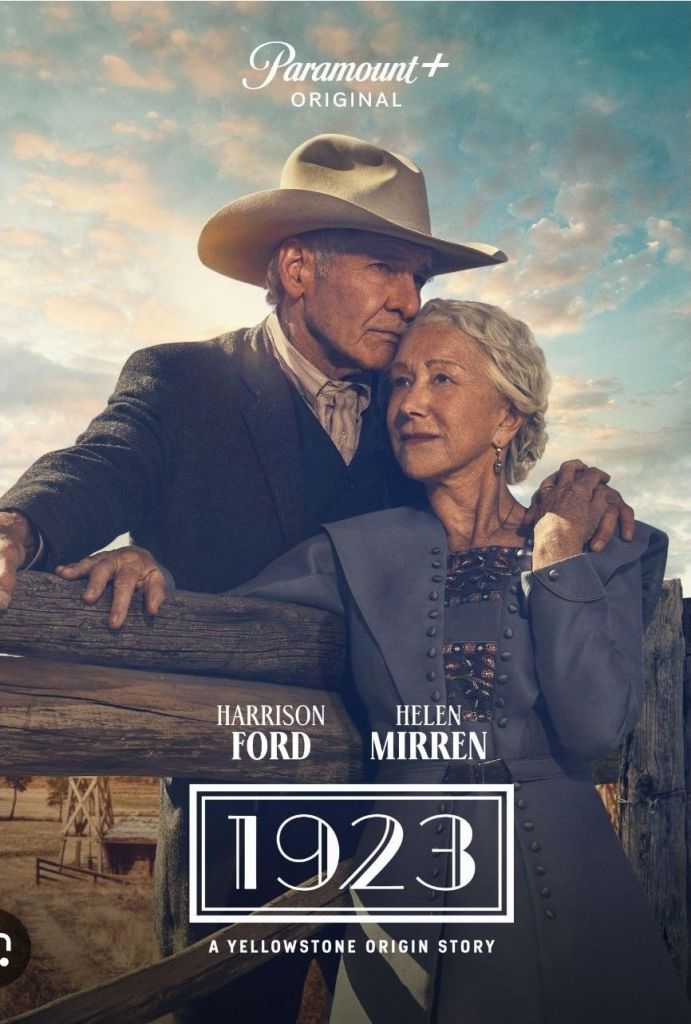
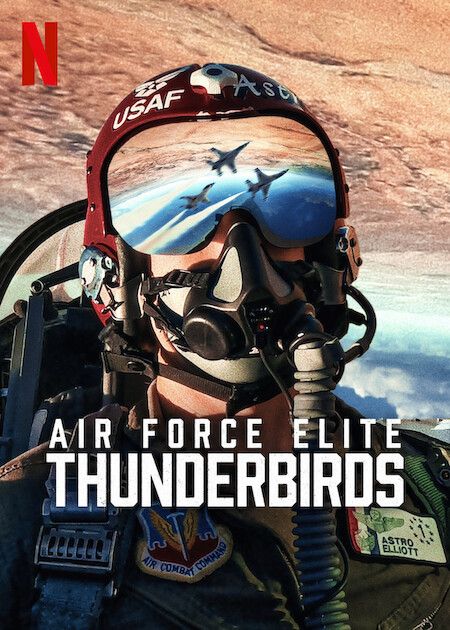
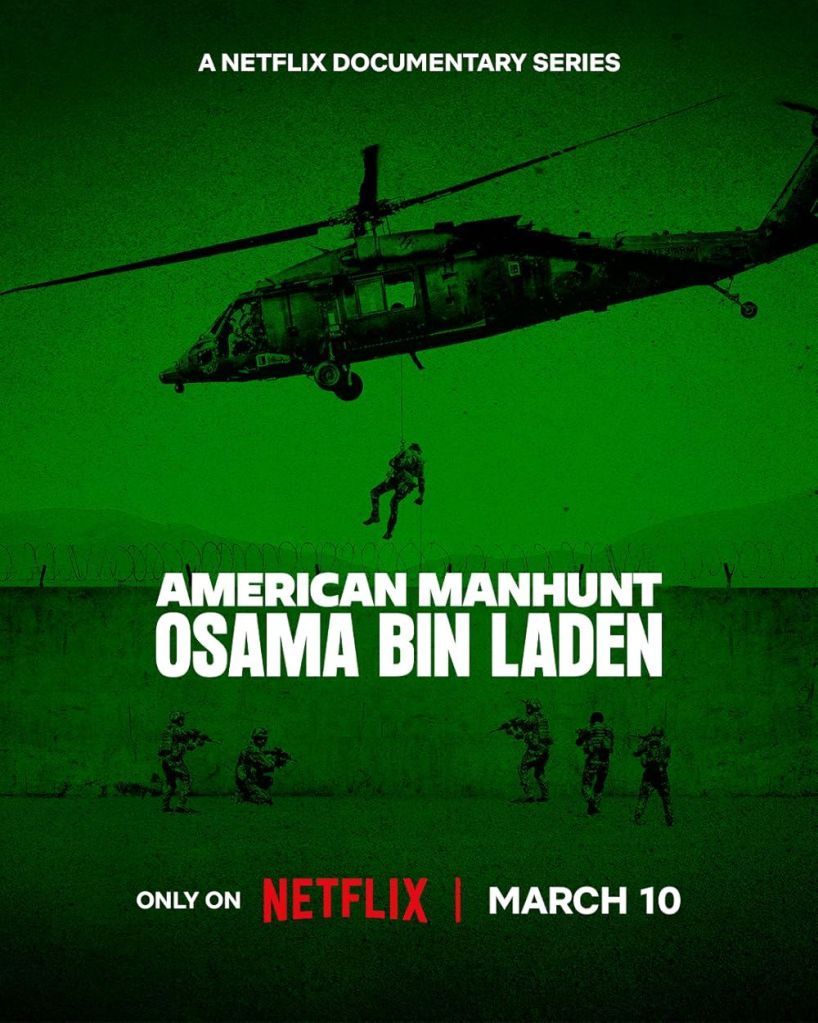

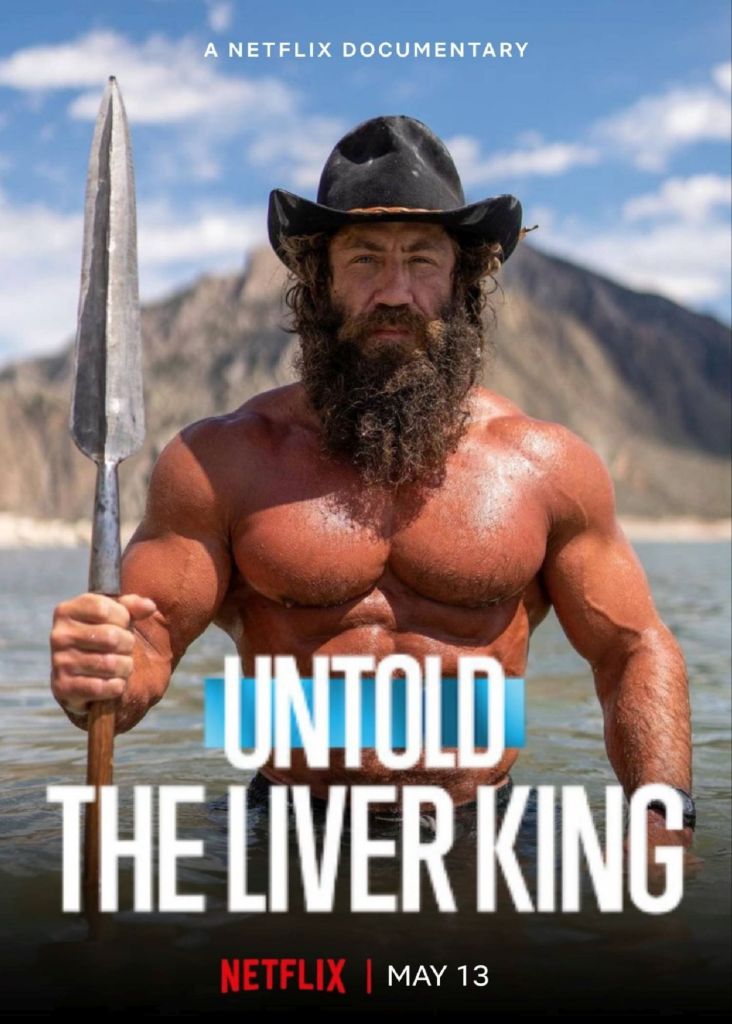

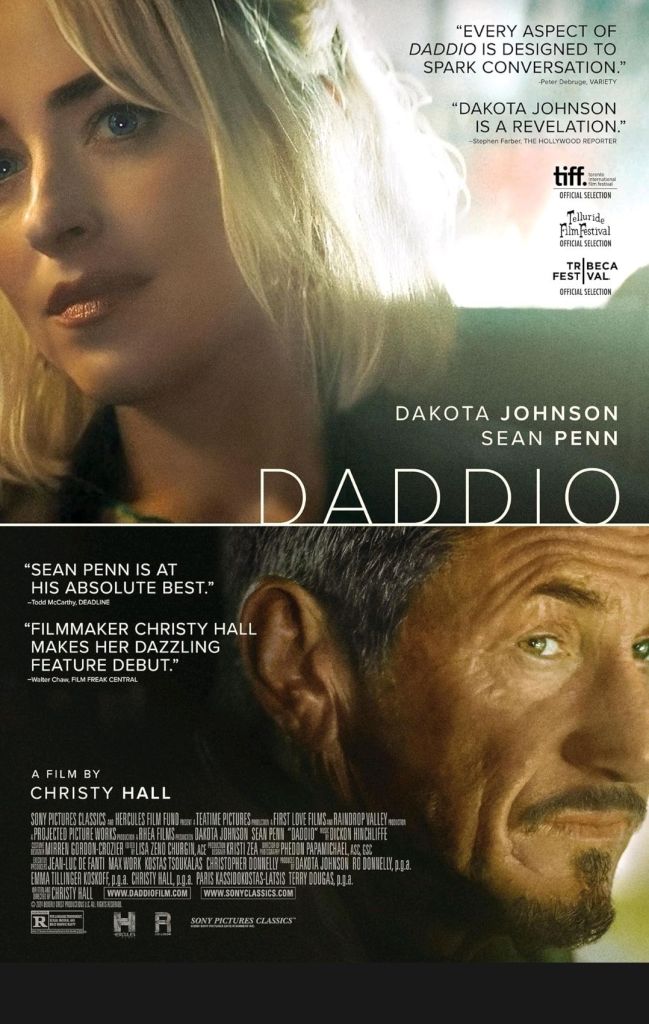
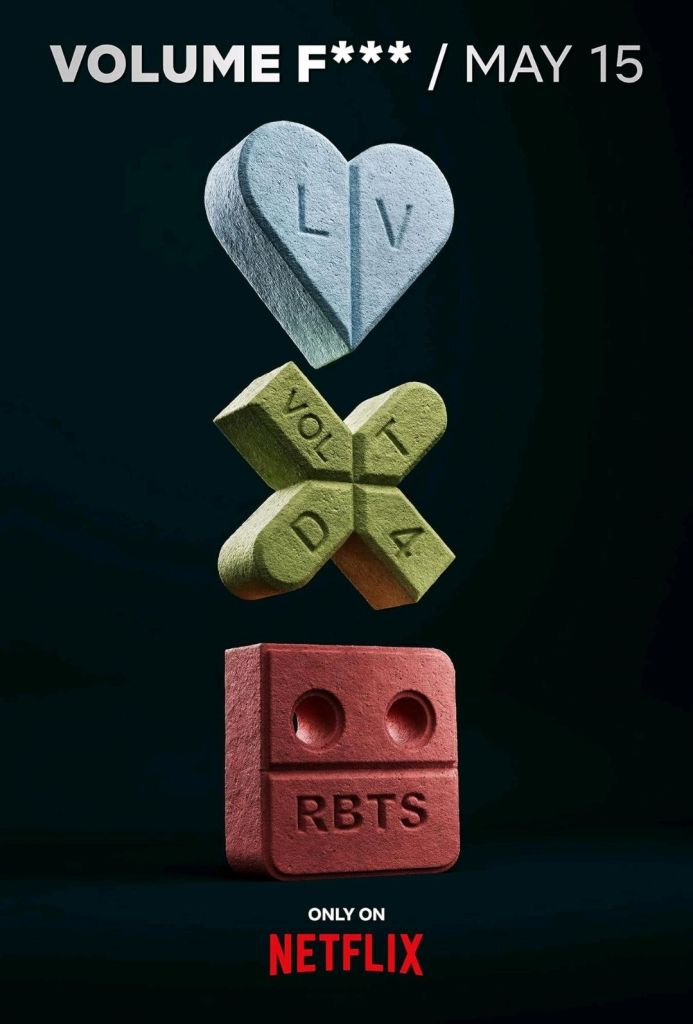
 RMS INSIGHTS ✍🏾