TFL 🥣 The Clean Flame ☕ Caffeine, Fasting, and the Art of Precision


A Dialogue Between Metabolism and Mindfulness


Most people greet dawn through steam. A familiar scent, a splash of bitterness, a small warmth between the palms — the morning cup feels like permission to begin. Coffee became the modern sunrise, its aroma a signal that the mind may now proceed. For years I followed that ritual, until fasting taught me to subtract noise and see what remained.

The day I replaced my cup with a caffeine pill, silence walked in first. No steam, no scent, no ceremony. Just a small white capsule resting in my palm like a vow of discipline. Swallowed with cool water, it worked without theater. Focus bloomed quietly, hunger softened, the body steadied itself in a new rhythm of energy and restraint. Coffee flatters the senses; caffeine, stripped of its costume, serves the will.

Fasting asks what happens when comfort steps aside. In that question, the caffeine pill became my metronome — exact, predictable, and pure. No acids, no tannins, no oily residue to irritate the fasting stomach. A precise dose, not a performance. Coffee hits like weather; the pill behaves like mathematics.

I began to notice how my pulse stayed even, how my breath deepened rather than quickened. The absence of ritual uncovered the essence: a clean stimulant, not a sensory indulgence. Fasting loves that austerity — the way silence amplifies thought, and precision replaces habit.


CORE INTELLIGENCE MODULES

Physiology—Appetite, Metabolism, and the Thermogenic Edge

Caffeine works by stimulating catecholamines — adrenaline and noradrenaline — messengers that heighten alertness and gently suppress hunger. It increases fat oxidation and slightly raises the body’s metabolic rate, a thermogenic effect meaning it produces heat and modestly accelerates energy expenditure. During fasting, this helps the body transition from relying on glucose to burning stored fat.

Unlike coffee, which provokes gastric acid and can unsettle an empty stomach, the pill enters cleanly. The gastrointestinal system remains calm, the liver continues fat metabolism without interference, and insulin sensitivity improves. Fasting thrives in quiet chemistry; caffeine pills respect that quiet.


Neuroscience—Dopamine and Attention

The pill also engages the brain’s reward and focus circuitry. It blocks adenosine receptors that normally signal fatigue and elevates dopamine — the neurotransmitter that tells the mind effort carries meaning. Dopamine translates intention into drive. During fasting, that matters; hunger becomes signal, not enemy. Clarity rises without the caffeine crash typical of multiple cups.


Hydration and Control

Coffee deceives hydration — a liquid that steals liquid. Caffeine’s diuretic effect remains, but without the illusion of water intake. When the pill replaces the cup, hydration becomes a conscious act: measured water, balanced electrolytes, and deliberate pacing. The body stays aligned; the mind remains clear.


Practice — Precision as Kindness

A caffeine pill offers predictability. Each dose declares itself: 100 milligrams, clean and repeatable. The body learns consistency, not confusion. The slower release stabilizes energy for several hours, free from the peaks and valleys of espresso enthusiasm. I take one in the morning with an echinacea capsule — a plant compound that supports immune readiness and eases inflammation. Together they act like two quiet sentinels: one sharpening focus, the other fortifying defense.


Philosophy — Ritual and Detachment

Coffee’s ceremony can charm discipline into dependency. The cup’s warmth, the café’s hum, the clink of spoons — lovely distractions that slowly take command of the mind. Fasting, however, is the practice of sovereignty. To choose the capsule over the cup is to reclaim authorship of energy. Precision replaces pageantry. The stimulant becomes a servant, not a master.


Metaphor — The Clean Flame

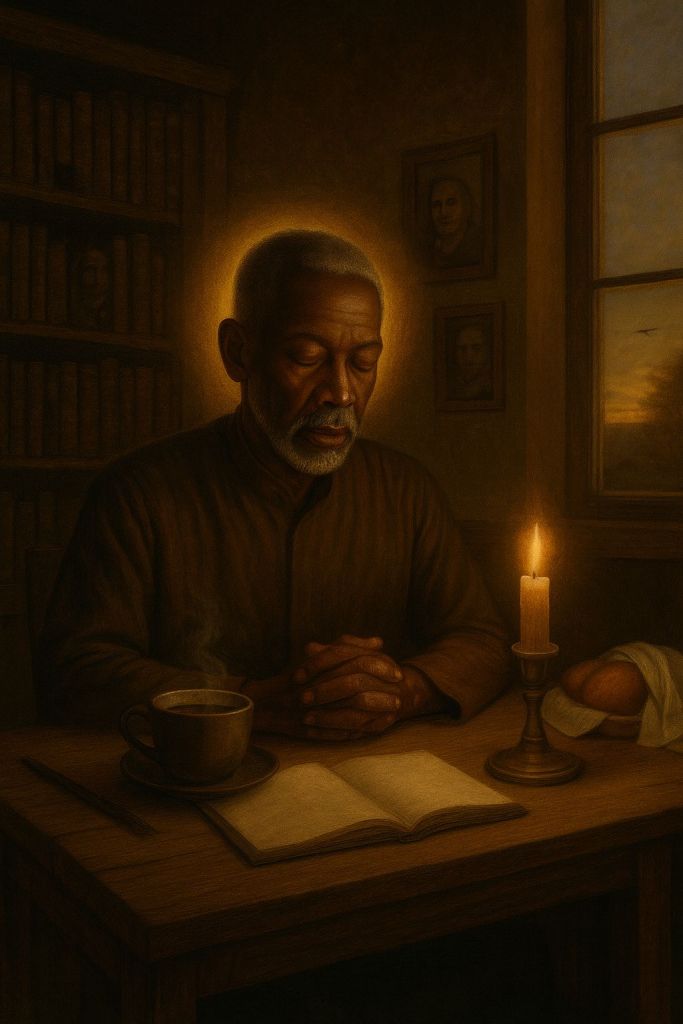
Coffee burns like a bonfire: dramatic, consuming, and often leaving smoke. The caffeine pill burns like a candle: contained, bright, untroubled. One seduces; the other sustains. The fast prefers the second flame.


Integration — From Morning to Mastery

Every fast begins with a choice between comfort and control. I reach for the pill, and the gesture itself becomes a lesson — that energy can arrive without indulgence, that clarity can live without ceremony, and that the simplest rituals often hold the deepest discipline.


🌅 GRATITUDE

I have learned through fasting that energy need not disguise itself in pleasure. The caffeine pill stripped my mornings of fragrance and revealed what the ritual concealed: my dependence on comfort. What replaced it felt lighter — precision instead of indulgence, focus without ornament.

I have learned through fasting that exactitude carries compassion. The stomach rests quietly, the breath steadies, and the mind works without tremor. I drink water with awareness, breathe through the nose, and feel gratitude for the body’s silent intelligence. Clarity, once earned, becomes its own reward.


🏛️ WISDOM’S LENS

Philosophical

Epictetus: “No great thing is created suddenly, any more than a bunch of grapes or a fig. If you tell me that you desire a fig, I answer that there must be time. Let it first blossom, then bear fruit, then ripen.”

Seneca: “No person has the power to have everything they want, but it lies in their power not to want what they do not have, and to cheerfully make the most of what they do have.”

🔎 Through fasting and the clean discipline of the caffeine pill, I practice both patience and sufficiency. Each deliberate act becomes a quiet refusal of excess — the fruit ripens through restraint, and gratitude replaces craving.


🏛️ WISDOM’S LENS

Physiological

Patrick McKeown, The Oxygen Advantage: “Light breathing through the nose harnesses the body’s chemistry; carbon dioxide and oxygen fall into balance, blood flow improves, and the nervous system moves from agitation toward calm control.”

🔎 When I pair nasal breathing, hydration, and a modest stimulant, my nervous system steadies into coherence. The energy I feel no longer comes from tension but from harmony — metabolism and mind moving in one direction.


🪶 The Cup and the Pill

Morning once arrived
in porcelain.
Steam climbed the air
like a promise I never questioned,
and bitterness passed for bravery
as I swallowed whatever the cup offered.

I called it focus.
I called it warmth.
Mostly, I called it mine.

Then fasting entered
and cleared the table.
No cream, no sugar,
no swirl of comfort to hide behind—
only an empty stomach,
a glass of water,
and a small white tablet
resting in my palm
like an honest confession.

No fragrance rose
to charm my memory.
No mug warmed my fingers.
Only chemistry spoke,
quiet and exact,
whispering to blood and brain:
stay awake,
burn clean,
do the work.

Hunger sharpened
instead of shouted.
Thoughts aligned
like disciplined soldiers
instead of racing like tourists
through a crowded market.
The day grew taller
as my rituals grew smaller.

I did not stop loving
the old cups and conversations,
the clink of spoons,
the soft murmur of cafés.
I simply stopped pretending
that my power lived there.

Now, some mornings,
I let the pill fall
into the river of my throat,
chased by water so clear
it carries no story at all.
In that simplicity,
I meet a different kind of fire—
one that does not roar
or dazzle,
one that does not stain
what it touches.

A clean flame,
steady and precise,
rises through the quiet body,
and I remember
that discipline rarely needs applause.
It only needs a willing hand,
an honest dose,
and a mind that has learned
to shine
without the smoke.

— R. M. Sydnor


🙏🏾 AFFIRMATION

I MUST choose clean energy over comforting ritual.
I MUST honor my fast with tools that clarify rather than confuse.
I MUST train my mind to value discipline over drama.
I MUST burn with a steady flame that serves both body and soul.

TFL 🥣 Breath Before Movement

The Quite Power of Breath


A Dialogue Between Breath and Discipline

Modern life rewards urgency; speed masquerades as virtue. Mouths gape, air rushes high into the chest, shoulders creep toward the ears, posture buckles beneath invisible deadlines. Breath slips into the background, yet breath governs state, and state governs choice. Fasting corrects the drift. You decline the easy yes of appetite and recover authorship over attention.

Hunger arrives, sometimes with theater; discipline answers without spectacle. Through the nose, you invite air on purpose: warmed, filtered, slightly pressurized, enriched with nitric oxide. Oxygen then releases where labor occurs; carbon dioxide remains high enough to permit that release. The diaphragm descends; the abdominal wall lends quiet support; the spine lengthens rather than surrenders. Movement gains intelligence because breath leads.

You stretch while fasting to practice grace, not domination. The core steadies the column; ribs widen with each measured inhale; hips unlearn their grudges. Muscles let go through persuasion rather than force. Fasting removes noise; breath supplies meaning. Perception sharpens. The body stops negotiating survival and begins expressing clarity. Nasal breathing also tutors the nervous system—calm vigilance rather than alarm. Mouth breathing scatters; nasal breathing gathers. Vagal tone rises; heart rate settles; attention concentrates. Stretching now listens. Effort no longer argues with fear.

Breath before movement prevents reactive strain. Each inhale invites alignment; each exhale releases refusal. Hunger becomes information, not command. Stillness gains structure; motion gains intention. You feel the proof: a spine that climbs, a pelvis that anchors, limbs that lengthen from a composed center. Reciprocal inhibition plays out like chamber music—engage the prime mover, and the antagonist yields. The body cooperates because the breath conducts.

Fasting heightens honesty. Without digestion absorbing focus, awareness travels freely through fascia and joint capsules; you notice texture, warmth, tremor, the soft thrum of release. Breath organizes these sensations into conversation. You listen. Hunger cannot hijack; comfort cannot seduce. Within this dialogue, restraint stops feeling like deprivation and begins reading as freedom. Control does not crush desire; control directs desire.

Think of the nose as a philosopher and a craftsman. It filters, paces, and refines. It measures the world before permitting entry. That restraint creates strength. Breath shapes posture; posture shapes thought; thought shapes action; action shapes character. The sequence begins at the gate.

One deliberate nasal inhale teaches presence. One long, unbroken exhale teaches relinquishment without collapse. Practice those two moves, and mastery over impulse emerges as a byproduct. Fasting without breath drifts toward punishment. Breathing without awareness dissolves into habit. Stretching without discipline becomes mere contortion. But when breath leads, fasting sharpens, stretching liberates, and attention honors the body entrusted to it.

Breath before movement. Breath before hunger. Breath before choice. Always breath first.


🌅 Gratitude

I have come to see fasting as an apprenticeship in authorship. Breath trains the hand that writes my choices. Through restraint and attention, I reclaim order—spine rising, ribs opening, core steady, hunger speaking truth without ruling it. Gratitude follows that order like a shadow follows light.


🙏🏾 Affirmation

I MUST breathe through the nose to anchor attention.
I MUST let strength gather at the center and allow grace to radiate outward.
I MUST direct desire rather than obey it.


🏛️ Wisdom’s Lens

Laozi: “He who conquers others shows force; he who conquers himself shows strength. Restraint accomplishes what aggression cannot; when nothing rushes, everything completes its course.”

🔎 Nasal breathing tutors self-mastery: slow air through the nose steadies the nervous system, permits patient length in the tissues, and converts raw effort into composed power—strength that arrives without violence.

🏛️ Wisdom’s Lens

James Nestor (Breath): “The nose filters, warms, and pressurizes air; it blends each inhale with nitric oxide, a molecule that widens blood vessels and improves oxygen delivery. Nasal breathing encourages diaphragmatic motion and efficient gas exchange—the body receives what it needs, not a flood that it can’t use.”

🔎 When air enters through the nose, the diaphragm drops and the ribs articulate; the core stabilizes, the spine regains height, and reciprocal inhibition frees the limbs—mechanics that turn tension into structure and structure into grace.


🪶 Breath Before Movement


In the hush before motion, the breath begins—
a tide returning to the shore of the ribs.
The spine rises through quiet awakening,
vertebrae remembering their grace.

The abdominals vow support,
steadying strength beneath release.
Exhale confesses.
Inhale forgives.

Fasting empties the plate.
Breath empties the noise.
Together they ask:
How gently must we let go
to rediscover what holds us upright?

I bow—
not from exhaustion,
but from gratitude for the stillness
that teaches me how to move.

R.M. Sydnor

TFL 🥣 Why Fasting Sharpens Cognition 🥣 A Dialogue Between Neuroscience and Stoicism

The Philosopher’s Fast


The Modern Noise of Consumption

We live in a century that eats without hunger and speaks without silence. The body stays busy, and so does the mind. Food arrives before appetite; distraction precedes desire. Fasting, in such a world, becomes an act of rebellion — a deliberate pause in the hum of consumption.

To fast is to begin a dialogue with stillness. The body quiets; the mind starts to listen. Hunger, disciplined and deliberate, becomes a tuning fork for awareness.


The Art of Subtraction

Fasting is not only about what we remove; it reveals what remains. As the body empties, the mind sharpens. In those hours before the first meal, when blood sugar falls and digestion rests, there comes a lightness unlike any other — an alert calm that feels both ancient and newly discovered.

The ancients called this contemplation; neuroscience calls it metabolic clarity. Both are right. Clarity, whether spiritual or biochemical, begins when the unnecessary fades.


Narrative of the Fast — The Body in Motion

At the start, hunger feels noisy — a pulse in the stomach, a restless tapping in the brain. Around the sixth hour, the body begins to switch fuels. The quick burn of glucose wanes; the steadier flame of ketones rises.

By the tenth hour, those ketones cross into the brain, feeding neurons cleanly and efficiently. The result is focus — a steadier kind of energy, smooth and silent, without the spikes of sugar or the fog of digestion.

In this state, perception grows linear and uncluttered. Vision sharpens. Words come easier. Thought steadies into rhythm. The brain, now fueled by ketones instead of glucose, runs cooler and cleaner — the cognitive equivalent of high-efficiency combustion.

Behind the poetry lies chemistry: reduced oxidative stress, lower inflammation, and a rise in norepinephrine and dopamine, the neurotransmitters of alertness. Fasting doesn’t starve the mind; it primes it for precision.


The Neuroscience of Clarity

Inside the fasting brain, the neuron doesn’t rest — it adapts. Levels of Brain-Derived Neurotrophic Factor (BDNF) rise, nourishing synapses and promoting new connections. This is neuroplasticity in its purest form — learning sharpened by limitation.

Meanwhile, the body’s repair systems activate. Japanese biologist Yoshinori Ohsumi’s Nobel Prize-winning research on autophagy revealed that fasting triggers cellular recycling — damaged proteins break down, and new ones replace them.

It’s not deprivation; it’s renovation. The mind clears because the cells themselves are cleaning house.

Simultaneously, insulin levels drop, improving metabolic sensitivity, while mitochondrial function becomes more efficient. The result? A calmer nervous system and a brain tuned for longevity.

Evolution embedded fasting into our survival code. When the body lacks food, the brain reads the signal not as despair but as command: focus, move, solve. Our ancestors survived scarcity by thinking faster. We, in our abundance, dull that reflex.


The Stoic Understanding of Restraint

Long before laboratories measured BDNF or ketones, the Stoics spoke of this same power in moral terms Epictetus warned, “No man is free who is not master of himself.” To fast was to practice dominion over desire.


Seneca observed that indulgence weakens thought, not through food itself, but through dependence. To abstain, even briefly, built internal freedom — an independence from appetite’s tyranny.

Marcus Aurelius, in his Meditations, wrote: “If you seek tranquility, do less — or rather, do only what is essential.”
Modern neuroscience calls it efficiency; the Stoics called it virtue. Both describe the same mastery: the disciplined mind governing its own impulses.


The Union of Biology and Philosophy

The connection between neuroscience and Stoicism isn’t coincidence — both seek clarity through simplification.
Biology trims excess from the body; philosophy trims excess from the soul.

Fasting recalibrates both systems at once: insulin and intention, ghrelin and gratitude.

When hunger quiets, the self speaks. The scientist observes new neurons forming; the philosopher observes new wisdom emerging. Both reach the same conclusion: strength grows in restraint.

In biochemical terms, fasting boosts mitochondrial efficiency and upregulates longevity genes such as SIRT1 and FOXO3.

In spiritual terms, fasting reveals that abundance without control is poverty of the will.


The Philosopher’s Meal

When the fast ends, the return of food feels sacred. The first bite humbles you. Flavors sharpen; gratitude deepens. Fasting refines appetite as much as thought.

The scientist would note the parasympathetic nervous system reactivating — digestion, calm, and balance restored.

The Stoic would call it alignment — body and soul returning to symmetry.

Fasting, at its best, becomes the meditation of the body: a pause that teaches. It doesn’t weaken; it dignifies. It doesn’t punish; it purifies.
In scarcity, we rediscover sufficiency.


🌅 Reflections of Gratitude

I have come to see fasting not as absence, but as dialogue — between hunger and intention, body and awareness.

Each empty hour becomes a rehearsal for lucidity. The mind that thrives without food learns to thrive without noise, indulgence, or distraction.

That is the quiet wisdom of The Philosopher’s Fast: clarity born not from indulgence, but from restraint; nourishment drawn not from matter, but from mindfulness.


🙏🏾 Affirmation

I will practice stillness as a scientist of my own body and a philosopher of my own soul.

I will fast not to deny myself, but to refine myself — to let the chemistry of restraint awaken the clarity of thought.


In the quiet between hunger and satiety, I will remember that the mind feeds best on simplicity.


🪶 The Philosopher’s Fast


When silence learns to hum, and hunger finds its hymn,
the mind becomes a lantern — steady, fierce, and thin.
The body folds its engines, the pulse slows into grace,
and reason, clear as winter air, walks lightly through the space.

No sugar rush, no fleeting flame, no meal to dull the sight,
just thought itself, distilled and clean, a kingdom built from light.
Beneath the noise of appetite, the deeper self begins —
the one that feeds on discipline, and drinks what silence gives.

In emptiness, the senses bloom, in absence, insight grows;
the fast reveals the architecture that fullness never shows.

And when the first taste breaks the spell, when bread returns to hand,
you understand what hunger meant — it taught the mind to stand.