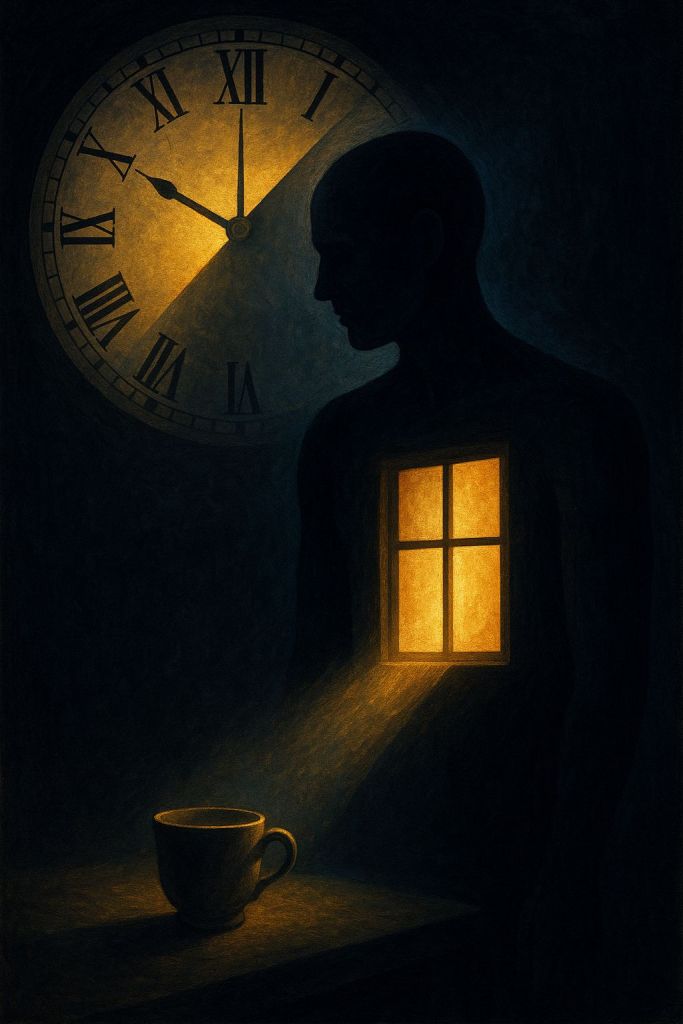

TFL 🥣 Hunger, Signal, Discipline


Hunger, Signal, Discipline

A Dialogue Between Metabolism and Moral Philosophy

There is a quiet moment at dawn when the world has not yet imposed its noise. The street is still, nerves are calm, the stomach is empty, and the body is reset from a night of cellular repair. Metabolism, unprovoked, sits in its natural posture. In that stillness, some reach for breath, others for silence — and many now reach for an injection that mutes appetite or a breakfast doctrine that promises “scientific optimization.” New prescriptions have arrived: wake early, absorb light, exercise, and swallow a heavy high-protein, high-fiber breakfast in the opening hour. There is forceful confidence to the recommendation, voiced as biological necessity.

Yet when one listens carefully to the research, to circadian physiology, to the choreography of insulin, ghrelin, digestion, and mitochondrial signaling, one hears a different story: the body is not always best served by compulsory morning feeding, nor is hunger best conquered through pharmacological silence. Both trends reveal a deeper cultural assumption — that discomfort must be neutralized instead of understood.

GLP-1 agonists such as semaglutide work by amplifying the incretin effect, slowing gastric emptying, dulling appetite through receptor signaling, modulating insulin release, and quieting the hormonal dance that produces hunger. For some patients under medical guidance — particularly those with complex metabolic history — such tools can produce measurable improvements. But their rising mainstream use carries a warning: if you can no longer feel hunger’s whisper, you lose the internal compass that teaches restraint, pattern recognition, and metabolic flexibility. Hunger, when experienced with discipline and respect, is not a defect but a signal — and fasting is the training in how to interpret it.

The Washington Post doctor who prescribes a morning protocol of immediate breakfast, sunlight, exercise, and protein-dense fuel speaks from earnest intent. Yet the trial landscape around breakfast timing, insulin sensitivity cycles, digestive readiness at waking, and intermittent fasting does not support a universal claim.

Randomized trials involving hundreds of participants show no consistent weight-loss advantage to mandatory breakfast consumption. Time-restricted eating has repeatedly demonstrated improvements in insulin profiles, reduced visceral fat, better glucose handling, and improved cardiometabolic markers — even without weight loss.

Other investigations show that those who skip breakfast do not reliably consume more calories later and sometimes eat less overall. Insulin sensitivity follows circadian rhythm, but eating immediately after sleeping does not guarantee metabolic superiority; for some bodies, a cold digestive system responds poorly to heavy early intake.

After sleep, enzyme activity may remain minimal, motility slow, and digestive signaling not yet primed. Heavy protein and fiber at such a moment can provoke sluggishness, glucose fluctuations, and a subtle sense of force, rather than alignment. Fasting, when performed with intelligence rather than bravado, gives the system space to complete its nocturnal repair cycle.

The overnight fast is not accidental; it is designed physiology. Hormonal cascades shift, oxidative stress moderates, autophagic processes engage, insulin resets, the body clears metabolic residue from the day before. Truncating that process may forfeit benefits. When the doctor prescribes breakfast “for energy,” she frames alertness as a function of immediate caloric delivery rather than as a product of circadian coherence, nasal breathing, sleep architecture, rib mechanics, nitric oxide concentration, and metabolic continuity from the night.

There is a difference between eating because one’s rhythm calls for nourishment and eating because an article framed it as mandatory. Appetite can be shaped by habit, but hunger — the true, clean hunger that arrives after a period of metabolic quiet — is the teacher. When fasting is practiced with hydration, micronutrient balance during eating windows, reasonable protein intake, movement, respect for sleep, and attention to emotional triggers, it becomes something more than abstention. It becomes inquiry. It reveals whether desire is genuine or conditioned. It exposes reflexive eating patterns, screens out false fatigue, and trains the mind not to confuse distraction with need. Fasting hands authority back to the individual rather than to the clock, a newspaper prescription, or a pharmacologic silencing agent.

GLP-1 medications are powerful precisely because they interfere with the sensation that fasting trains you to master. They flatten the appetite signal and soften the inner negotiation that would otherwise teach you where your limits live. The body becomes obedient — not through understanding, but through chemical persuasion. Over months or years, appetite signaling may erode; subconscious dependence may replace active self-command. The stomach empties more slowly. Reward circuits reshape. Hunger’s edge dulls. When hunger loses clarity, choice loses weight. And without the honest tension between desire and restraint, self-governance loses texture.

Structured fasting, by contrast, preserves signaling. It teaches negotiation with the internal voice that demands comfort. It strengthens metabolic flexibility, forcing the body to move between fuel sources rather than rely entirely on the fast caloric stream. It improves insulin modulation. It refines the relationship between appetite and action. It invokes self-assessment rather than sedation. And it calls the individual to ask a harder question: “What do I become when discipline is trained, rather than outsourced?”

None of this denies that fasting can be misused. Excessive fasting, neglected protein, poor nutrition after breaking the window, insufficient sleep, late-night eating after long restriction — all carry risks. Chronotype matters. Stress matters. What one eats at the end of the fast matters more than whether a morning meal was consumed. But fasting at its best is not punishment. It is calibration. The body identifies patterns, internal sensors sharpen, glucose spikes smooth, nighttime rest deepens, and hunger becomes an honest conversation between physiology and intention.

The breakfast doctrine assumes that food must be introduced as soon as a serotonin-bright sunrise touches the skin. Such certainty sounds empirical but oversimplifies a system of clock genes, tissue-level circadian shifts, leptin curves, melatonin clearance, and organ-specific metabolic timing. Many metabolic benefits attributed to “early feeding” belong not to breakfast itself, but to the termination of eating before circadian decline. If someone eats late at night, any breakfast the next morning intrudes on repair. If someone sleeps irregularly, broad declarations crumble. If someone trains the body to metabolize in longer fasted intervals, the timing of that first meal deserves evaluation through personal physiology rather than a static protocol.

The wisdom in fasting is that you pay attention: to the breath, the posture, the anterior tilt of the pelvis, the widening of the ribs, the state of the gut, the clarity of the mind. Hunger becomes a question rather than a threat. Should the first meal arrive at 9am, 1pm, or not until your body sends an honest signal? That answer cannot be prescribed for everyone. It is discovered through self-observation joined with respect for biology. And it is that discovery, that relationship with hunger, that no medication or forced breakfast can replace.

Fasting creates a moral dimension that GLP-1 shortcuts and rigid breakfast prescriptions do not engage. If your hunger is silent because a needle engineered it so, you have not learned courage with appetite. You have anesthetized it. When discomfort is muted, discipline cannot grow; when metabolic signals are suppressed, agency withers. The quiet patience of waiting for true hunger, the strength to sit with emptiness, the calm of clarity during a fasted morning — these qualities form the architecture of the self. They are rehearsals for every other form of restraint life demands.

Thus, fasting and thoughtful meal timing do not reject science. They are built on it. They ask for insulin to settle after the sleep cycle, for digestive enzymes to awaken before being summoned, for circadian slopes to guide windows, for the individual to experiment within metabolic truth and personal rhythm. Fasting is the blend of physiology and philosophy: science as structure, discipline as embodiment.


🙏🏾 Gratitude

I have learned through fasting that hunger can become an ally rather than an adversary. When the morning arrives and the stomach remains quiet, I listen rather than rush. I choose water, breath, and posture before food. I allow insulin to settle and circadian repair to complete its arc. I break the fast when clarity, not habit, signals me. And in doing so, I find a deeper respect for the system entrusted to me.

I have come to see fasting as a mirror — one that shows whether I reach for food to escape restlessness, or because nourishment is due. In that recognition, I learn restraint, patience, and the solid dignity of self-command

🏛️ Wisdom’s Lens — Philosophical

Epictetus: “No man is free who is not master of himself. If you would be noble, first govern your desires and what you choose to tolerate. The disciplined mind does not run from hunger but uses discomfort as training, so that no appetite owns the soul.”

🔎 When breakfast arrives because hunger has earned it rather than doctrine demanded it, food becomes a choice shaped by awareness rather than reflex; fasting sharpens the distinction between desire and need, granting the person authority over impulses that once ruled them.


🏛️ Wisdom’s Lens — Anatomical

Andrew Huberman synthesis: “During fasting windows, ghrelin signals rise and fall, triggering neural pathways that sharpen attention, improve metabolic flexibility, and reinforce self-regulatory circuits; hunger, when not feared, becomes a physiological teacher.”

🔎 When one remains fasted through the early hours, ghrelin waves are allowed to express their cycles, sharpening mental presence, improving hormonal clarity, and preserving the metabolic architecture that pharmaceutical appetite blunting would flatten.


🪶 When Hunger Speaks

Morning
breath steady
stomach calm
signal clean

I wait
not as denial
but as respect

metabolism wakes
gut warms
enzymes rise

and when hunger speaks
I answer
by choice
not habit
and not fear

R.M. Sydnor


🗣️ Affirmation

I MUST honor hunger as signal rather than discomfort.
I MUST restrain reflex and listen for clarity before feeding.
I MUST build discipline instead of outsourcing it to pills or prescriptions.
I MUST remain faithful to the long arc of fasting, where strength is forged in quiet neutrality and self-command.

TFL 🥣 What is The Fasting Life?

Art Description


A Dialogue Between Metabolism and Mindfulness


🥣 The Stillness Before Hunger

Before hunger speaks, there is a stillness — that subtle quiet before the body remembers it is a living machine. Each dawn begins in that suspended hour when the body has already been fasting, and the mind has not yet resumed its appetite for noise. In that stillness, a truth emerges: fasting is not a diet, nor an act of denial. It is design revealed by restraint.

We all fast — every night, every pause between breaths, every moment we choose awareness over impulse. The difference lies in whether we fast consciously or merely accidentally. To live The Fasting Life is to awaken that unconscious rhythm and extend it across every dimension of living — eating, thinking, moving, even speaking.

The fast, properly understood, is not a refusal but a refinement. It is the art of tuning intake to purpose. The body fasts to renew its precision; the mind fasts to recover clarity; the spirit fasts to regain proportion.

The ancients intuited what modern physiology confirms: the human system thrives in cycles of emptiness and fullness. The pulse of creation itself follows this cadence — tide and ebb, inhale and exhale, sunrise and dusk. Fasting simply restores the body to nature’s tempo.

Yet this discipline extends beyond the gut. To fast well is to master the mechanics of being. It is to consume wisely, to move deliberately, to sleep without residue, and to wake without regret.


🥣 The Physiology of Precision

In the physiological sense, fasting orchestrates a biochemical symphony. After twelve hours, insulin levels decline, glucose stores deplete, and the body begins to draw on its reserve energy — not as a punishment, but as liberation. The cell, freed from constant digestion, turns inward to repair, recycle, and purge. Autophagy — “self-eating” — begins.

What a term of paradox: self-eating. Yet that is the biological translation of renewal. Within that microscopic act lies a moral metaphor — the consumption of what no longer serves, the burning of debris, the quiet alchemy of discipline.

When insulin falls, human growth hormone rises. When glucose fades, clarity increases. Fasting tilts the chemistry of the brain toward alertness — norepinephrine rises, dopamine sharpens, and mitochondrial efficiency improves. The body, temporarily denied, responds with intelligence. It does not collapse; it awakens.

And so the fast becomes the body’s reminder that restraint is not deprivation — it is precision. Each pause in consumption becomes an interval of renewal. The system that once craved constant supply learns to metabolize its own excess.

That mechanism, translated into the realm of behavior, is the essence of mastery. The disciplined individual performs a kind of psychological autophagy: consuming wasted thoughts, outdated resentments, unnecessary attachments. Renewal is biological before it is moral, and moral before it is spiritual.


🥣 The Biomechanics of Flow

Movement, too, obeys the laws of fasting. The body cannot contract what it never releases. Tension must alternate with recovery, strength with surrender. To fast from stillness is to rediscover flow.

In training, we speak of intervals — exertion followed by rest. Yet the deeper principle is rhythm. The diaphragm teaches it with every breath, the heart with every beat. When we lift, stretch, or sprint, the mechanics of fasting are present: momentary deprivation for greater capacity.

A muscle strengthens through micro-injury and repair; fasting simply applies the same architecture to metabolism. The break, not the act, defines growth.

In the fasting life, exercise ceases to be compensation for excess and becomes communion with equilibrium. A well-executed fast is not an austerity but a choreography — ribs opening, spine lengthening, oxygen saturating, nitric oxide blooming through the sinuses.

One learns, through motion, the same truth discovered through hunger: that energy, like meaning, flows best through space intentionally left open.


🥣 The Neuroscience of Attention

The brain, ever restless, learns its greatest lessons during restraint. In fasting, neural networks recalibrate. The anterior cingulate cortex, a region tied to focus and emotional regulation, activates more efficiently under conditions of caloric moderation.

Vagal tone improves — heart rate variability increases, signaling resilience. Dopamine pathways, no longer oversaturated by sugar and stimuli, begin to reward subtler satisfactions: patience, calm, achievement earned rather than purchased.

It is no coincidence that monks, mystics, and modern athletes all speak of the same serenity during fasting. What they feel is neurochemical coherence — attention purified of static.

Modern science calls it ketosis. Ancient language called it clarity. In both, the mind discovers its rhythm without interruption.

🥣 Consumption as Character

Fasting extends beyond food into the moral terrain of appetite. The body’s craving for sugar mirrors the mind’s craving for distraction. The scroll, the snack, the sarcasm — each a small surrender to consumption unmeasured.

The fasting life demands a different arithmetic. You eat when the body requests nourishment, not entertainment. You speak when words serve precision, not vanity. You rest when exhaustion signals renewal, not escape.

To live in moderation is not to live small. It is to live measured. The fast becomes a governing metaphor for all choices: the practice of leaving enough room for consciousness to breathe.

Consumption, unexamined, leads to the same spiritual obesity as overeating leads to physical decline — heavy, slow, and easily provoked. Fasting lightens the self until meaning moves through it without friction.


🥣 The Philosophy of Restraint

Epictetus taught that no man is free who cannot command himself. The fasting life is his wisdom made cellular.

Hunger is not the enemy; it is a form of instruction. It teaches that appetite does not require obedience, that sensation need not become submission. To master hunger is to master impulse itself.

Eastern disciplines echo the same truth. Laozi wrote that the wise man empties himself daily. The Tao, like metabolism, depends on flow — nothing forced, nothing hoarded.

Fasting thus becomes the intersection where Stoic endurance meets Taoist surrender. The restraint that once felt rigid becomes rhythmic. Control softens into grace.

To fast is to practice liberty. The man who can fast cannot be manipulated. He lives beneath no tyranny of craving, no empire of indulgence. His joy is not purchased; it is cultivated.


🥣 The Integration of Practice

Every discipline, to be complete, must reach embodiment. The fasting life therefore integrates three pillars: breath, movement, and timing.

Morning: Delay consumption until awareness, not habit, dictates it. Drink water as ritual, not reaction.

Midday: Move before you eat — align muscles before feeding them. Let hunger sharpen attention, not dull it.

Evening: Fast from noise — reduce screens, voices, and external input. The final fast of the day belongs to the mind.


Through repetition, the system recalibrates. The circadian rhythm stabilizes. Cortisol finds its cadence. Sleep deepens, digestion simplifies, the skin clears, and thought elongates.

The fast ceases to be a technique and becomes temperament — a living architecture of intervals.


🙏🏾 Gratitude

I have come to see fasting as the most honest dialogue between body and mind. It is the body whispering, you have enough, and the mind finally learning to believe it.

Through fasting, I have learned that strength arises not from abundance but from accuracy. The fewer variables you feed into the system, the more precise the outcome. The fast has taught me to trust simplicity — water, breath, motion, stillness.

I have come to see that hunger is not suffering. It is the body’s way of calling the mind home.

🏛️ Wisdom’s Lens — Philosophical

Laozi: “He who conquers others is strong; he who conquers himself is mighty.”

🔎 The discipline of fasting transfers conquest inward, where strength is measured not by domination but by discernment — the capacity to pause between craving and choice.


🏛️ Wisdom’s Lens — Anatomical

Dr. Yoshinori Ohsumi, Nobel Laureate, on autophagy: “Cells degrade and recycle components — a process essential for survival and adaptation.”

🔎 The same cellular mechanism that preserves life through renewal mirrors the moral process of reflection: we must consume the obsolete within ourselves to remain vital.


🏛️ Wisdom’s Lens


Marcus Aurelius: “When you have assumed these names — good, modest, truthful, rational, a man of equanimity — take care that you do not change these names; and if you should lose them, quickly return to them.”

The fasting life is the practice of returning — of burning away excess until only the essential name remains.


🏛️🔎 Wisdom’s Lens — Physiological

Nestor and McKeown: “Nasal breathing filters, slows, and enriches air with nitric oxide; the body receives nourishment designed for precision, not panic.”

🔎 When breath aligns with hunger, awareness deepens. The diaphragm becomes the metronome of mindfulness, guiding the body toward calm metabolic command.


🗣️ Affirmation

I MUST honor the hunger that teaches humility.
I MUST sustain the intervals that strengthen insight.
I MUST feed discipline before desire.
I MUST live as a fasted vessel — clear, aligned, awake.


🪶 The Feast of Silence

The pulse slows.
The noise retreats.
The ribs widen like shutters in wind.

Hunger hums —
not a cry,
but a chorus of renewal.

In that music,
the mind bows,
and the body,
grateful,
forgets its name.

The fast continues —
not as absence,
but as alignment.

The feast was never food.
It was the silence that fed us.

R.M. Sydnor


Postscript

Fasting is the body’s most elegant teacher. It speaks without words, corrects without cruelty, and rewards without spectacle. To live The Fasting Life is to cultivate intervals that magnify meaning — to eat with awareness, move with measure, and breathe with devotion.

The modern world mistakes fullness for success. The fasting life reverses the equation: clarity first, then consumption. What remains is not less — it is pure.

TFL 🥣 The Clean Flame ☕ Caffeine, Fasting, and the Art of Precision


A Dialogue Between Metabolism and Mindfulness


Most people greet dawn through steam. A familiar scent, a splash of bitterness, a small warmth between the palms — the morning cup feels like permission to begin. Coffee became the modern sunrise, its aroma a signal that the mind may now proceed. For years I followed that ritual, until fasting taught me to subtract noise and see what remained.

The day I replaced my cup with a caffeine pill, silence walked in first. No steam, no scent, no ceremony. Just a small white capsule resting in my palm like a vow of discipline. Swallowed with cool water, it worked without theater. Focus bloomed quietly, hunger softened, the body steadied itself in a new rhythm of energy and restraint. Coffee flatters the senses; caffeine, stripped of its costume, serves the will.

Fasting asks what happens when comfort steps aside. In that question, the caffeine pill became my metronome — exact, predictable, and pure. No acids, no tannins, no oily residue to irritate the fasting stomach. A precise dose, not a performance. Coffee hits like weather; the pill behaves like mathematics.

I began to notice how my pulse stayed even, how my breath deepened rather than quickened. The absence of ritual uncovered the essence: a clean stimulant, not a sensory indulgence. Fasting loves that austerity — the way silence amplifies thought, and precision replaces habit.


CORE INTELLIGENCE MODULES

Physiology—Appetite, Metabolism, and the Thermogenic Edge

Caffeine works by stimulating catecholamines — adrenaline and noradrenaline — messengers that heighten alertness and gently suppress hunger. It increases fat oxidation and slightly raises the body’s metabolic rate, a thermogenic effect meaning it produces heat and modestly accelerates energy expenditure. During fasting, this helps the body transition from relying on glucose to burning stored fat.

Unlike coffee, which provokes gastric acid and can unsettle an empty stomach, the pill enters cleanly. The gastrointestinal system remains calm, the liver continues fat metabolism without interference, and insulin sensitivity improves. Fasting thrives in quiet chemistry; caffeine pills respect that quiet.


Neuroscience—Dopamine and Attention

The pill also engages the brain’s reward and focus circuitry. It blocks adenosine receptors that normally signal fatigue and elevates dopamine — the neurotransmitter that tells the mind effort carries meaning. Dopamine translates intention into drive. During fasting, that matters; hunger becomes signal, not enemy. Clarity rises without the caffeine crash typical of multiple cups.


Hydration and Control

Coffee deceives hydration — a liquid that steals liquid. Caffeine’s diuretic effect remains, but without the illusion of water intake. When the pill replaces the cup, hydration becomes a conscious act: measured water, balanced electrolytes, and deliberate pacing. The body stays aligned; the mind remains clear.


Practice — Precision as Kindness

A caffeine pill offers predictability. Each dose declares itself: 100 milligrams, clean and repeatable. The body learns consistency, not confusion. The slower release stabilizes energy for several hours, free from the peaks and valleys of espresso enthusiasm. I take one in the morning with an echinacea capsule — a plant compound that supports immune readiness and eases inflammation. Together they act like two quiet sentinels: one sharpening focus, the other fortifying defense.


Philosophy — Ritual and Detachment

Coffee’s ceremony can charm discipline into dependency. The cup’s warmth, the café’s hum, the clink of spoons — lovely distractions that slowly take command of the mind. Fasting, however, is the practice of sovereignty. To choose the capsule over the cup is to reclaim authorship of energy. Precision replaces pageantry. The stimulant becomes a servant, not a master.


Metaphor — The Clean Flame

Coffee burns like a bonfire: dramatic, consuming, and often leaving smoke. The caffeine pill burns like a candle: contained, bright, untroubled. One seduces; the other sustains. The fast prefers the second flame.


Integration — From Morning to Mastery

Every fast begins with a choice between comfort and control. I reach for the pill, and the gesture itself becomes a lesson — that energy can arrive without indulgence, that clarity can live without ceremony, and that the simplest rituals often hold the deepest discipline.


🌅 GRATITUDE

I have learned through fasting that energy need not disguise itself in pleasure. The caffeine pill stripped my mornings of fragrance and revealed what the ritual concealed: my dependence on comfort. What replaced it felt lighter — precision instead of indulgence, focus without ornament.

I have learned through fasting that exactitude carries compassion. The stomach rests quietly, the breath steadies, and the mind works without tremor. I drink water with awareness, breathe through the nose, and feel gratitude for the body’s silent intelligence. Clarity, once earned, becomes its own reward.


🏛️ WISDOM’S LENS

Philosophical

Epictetus: “No great thing is created suddenly, any more than a bunch of grapes or a fig. If you tell me that you desire a fig, I answer that there must be time. Let it first blossom, then bear fruit, then ripen.”

Seneca: “No person has the power to have everything they want, but it lies in their power not to want what they do not have, and to cheerfully make the most of what they do have.”

🔎 Through fasting and the clean discipline of the caffeine pill, I practice both patience and sufficiency. Each deliberate act becomes a quiet refusal of excess — the fruit ripens through restraint, and gratitude replaces craving.


🏛️ WISDOM’S LENS

Physiological

Patrick McKeown, The Oxygen Advantage: “Light breathing through the nose harnesses the body’s chemistry; carbon dioxide and oxygen fall into balance, blood flow improves, and the nervous system moves from agitation toward calm control.”

🔎 When I pair nasal breathing, hydration, and a modest stimulant, my nervous system steadies into coherence. The energy I feel no longer comes from tension but from harmony — metabolism and mind moving in one direction.


🪶 The Cup and the Pill

Morning once arrived
in porcelain.
Steam climbed the air
like a promise I never questioned,
and bitterness passed for bravery
as I swallowed whatever the cup offered.

I called it focus.
I called it warmth.
Mostly, I called it mine.

Then fasting entered
and cleared the table.
No cream, no sugar,
no swirl of comfort to hide behind—
only an empty stomach,
a glass of water,
and a small white tablet
resting in my palm
like an honest confession.

No fragrance rose
to charm my memory.
No mug warmed my fingers.
Only chemistry spoke,
quiet and exact,
whispering to blood and brain:
stay awake,
burn clean,
do the work.

Hunger sharpened
instead of shouted.
Thoughts aligned
like disciplined soldiers
instead of racing like tourists
through a crowded market.
The day grew taller
as my rituals grew smaller.

I did not stop loving
the old cups and conversations,
the clink of spoons,
the soft murmur of cafés.
I simply stopped pretending
that my power lived there.

Now, some mornings,
I let the pill fall
into the river of my throat,
chased by water so clear
it carries no story at all.
In that simplicity,
I meet a different kind of fire—
one that does not roar
or dazzle,
one that does not stain
what it touches.

A clean flame,
steady and precise,
rises through the quiet body,
and I remember
that discipline rarely needs applause.
It only needs a willing hand,
an honest dose,
and a mind that has learned
to shine
without the smoke.

— R. M. Sydnor


🙏🏾 AFFIRMATION

I MUST choose clean energy over comforting ritual.
I MUST honor my fast with tools that clarify rather than confuse.
I MUST train my mind to value discipline over drama.
I MUST burn with a steady flame that serves both body and soul.

TFL 🥣 Why Fasting Sharpens Cognition 🥣 A Dialogue Between Neuroscience and Stoicism

The Philosopher’s Fast


The Modern Noise of Consumption

We live in a century that eats without hunger and speaks without silence. The body stays busy, and so does the mind. Food arrives before appetite; distraction precedes desire. Fasting, in such a world, becomes an act of rebellion — a deliberate pause in the hum of consumption.

To fast is to begin a dialogue with stillness. The body quiets; the mind starts to listen. Hunger, disciplined and deliberate, becomes a tuning fork for awareness.


The Art of Subtraction

Fasting is not only about what we remove; it reveals what remains. As the body empties, the mind sharpens. In those hours before the first meal, when blood sugar falls and digestion rests, there comes a lightness unlike any other — an alert calm that feels both ancient and newly discovered.

The ancients called this contemplation; neuroscience calls it metabolic clarity. Both are right. Clarity, whether spiritual or biochemical, begins when the unnecessary fades.


Narrative of the Fast — The Body in Motion

At the start, hunger feels noisy — a pulse in the stomach, a restless tapping in the brain. Around the sixth hour, the body begins to switch fuels. The quick burn of glucose wanes; the steadier flame of ketones rises.

By the tenth hour, those ketones cross into the brain, feeding neurons cleanly and efficiently. The result is focus — a steadier kind of energy, smooth and silent, without the spikes of sugar or the fog of digestion.

In this state, perception grows linear and uncluttered. Vision sharpens. Words come easier. Thought steadies into rhythm. The brain, now fueled by ketones instead of glucose, runs cooler and cleaner — the cognitive equivalent of high-efficiency combustion.

Behind the poetry lies chemistry: reduced oxidative stress, lower inflammation, and a rise in norepinephrine and dopamine, the neurotransmitters of alertness. Fasting doesn’t starve the mind; it primes it for precision.


The Neuroscience of Clarity

Inside the fasting brain, the neuron doesn’t rest — it adapts. Levels of Brain-Derived Neurotrophic Factor (BDNF) rise, nourishing synapses and promoting new connections. This is neuroplasticity in its purest form — learning sharpened by limitation.

Meanwhile, the body’s repair systems activate. Japanese biologist Yoshinori Ohsumi’s Nobel Prize-winning research on autophagy revealed that fasting triggers cellular recycling — damaged proteins break down, and new ones replace them.

It’s not deprivation; it’s renovation. The mind clears because the cells themselves are cleaning house.

Simultaneously, insulin levels drop, improving metabolic sensitivity, while mitochondrial function becomes more efficient. The result? A calmer nervous system and a brain tuned for longevity.

Evolution embedded fasting into our survival code. When the body lacks food, the brain reads the signal not as despair but as command: focus, move, solve. Our ancestors survived scarcity by thinking faster. We, in our abundance, dull that reflex.


The Stoic Understanding of Restraint

Long before laboratories measured BDNF or ketones, the Stoics spoke of this same power in moral terms Epictetus warned, “No man is free who is not master of himself.” To fast was to practice dominion over desire.


Seneca observed that indulgence weakens thought, not through food itself, but through dependence. To abstain, even briefly, built internal freedom — an independence from appetite’s tyranny.

Marcus Aurelius, in his Meditations, wrote: “If you seek tranquility, do less — or rather, do only what is essential.”
Modern neuroscience calls it efficiency; the Stoics called it virtue. Both describe the same mastery: the disciplined mind governing its own impulses.


The Union of Biology and Philosophy

The connection between neuroscience and Stoicism isn’t coincidence — both seek clarity through simplification.
Biology trims excess from the body; philosophy trims excess from the soul.

Fasting recalibrates both systems at once: insulin and intention, ghrelin and gratitude.

When hunger quiets, the self speaks. The scientist observes new neurons forming; the philosopher observes new wisdom emerging. Both reach the same conclusion: strength grows in restraint.

In biochemical terms, fasting boosts mitochondrial efficiency and upregulates longevity genes such as SIRT1 and FOXO3.

In spiritual terms, fasting reveals that abundance without control is poverty of the will.


The Philosopher’s Meal

When the fast ends, the return of food feels sacred. The first bite humbles you. Flavors sharpen; gratitude deepens. Fasting refines appetite as much as thought.

The scientist would note the parasympathetic nervous system reactivating — digestion, calm, and balance restored.

The Stoic would call it alignment — body and soul returning to symmetry.

Fasting, at its best, becomes the meditation of the body: a pause that teaches. It doesn’t weaken; it dignifies. It doesn’t punish; it purifies.
In scarcity, we rediscover sufficiency.


🌅 Reflections of Gratitude

I have come to see fasting not as absence, but as dialogue — between hunger and intention, body and awareness.

Each empty hour becomes a rehearsal for lucidity. The mind that thrives without food learns to thrive without noise, indulgence, or distraction.

That is the quiet wisdom of The Philosopher’s Fast: clarity born not from indulgence, but from restraint; nourishment drawn not from matter, but from mindfulness.


🙏🏾 Affirmation

I will practice stillness as a scientist of my own body and a philosopher of my own soul.

I will fast not to deny myself, but to refine myself — to let the chemistry of restraint awaken the clarity of thought.


In the quiet between hunger and satiety, I will remember that the mind feeds best on simplicity.


🪶 The Philosopher’s Fast


When silence learns to hum, and hunger finds its hymn,
the mind becomes a lantern — steady, fierce, and thin.
The body folds its engines, the pulse slows into grace,
and reason, clear as winter air, walks lightly through the space.

No sugar rush, no fleeting flame, no meal to dull the sight,
just thought itself, distilled and clean, a kingdom built from light.
Beneath the noise of appetite, the deeper self begins —
the one that feeds on discipline, and drinks what silence gives.

In emptiness, the senses bloom, in absence, insight grows;
the fast reveals the architecture that fullness never shows.

And when the first taste breaks the spell, when bread returns to hand,
you understand what hunger meant — it taught the mind to stand.

TFL 🥣 Can You Work Out During a Fast?


Runner at Dawn


The Body Knows More Than We Think

You’ve heard it in gyms, whispered in locker rooms, scribbled into the margins of glossy fitness magazines: Never train on an empty stomach.
But the truth is more elegant than myth, more nuanced than cliché.

When you work out during a fast, your body does not stumble into weakness; it awakens a deeper intelligence. The absence of food is not the absence of strength—it is the invitation to tap into reserves far older, far steadier, than your last meal.

Our ancestors hunted, climbed, carried, and fought not after a stack of pancakes but after long hours of hunger. The human body carries a design for fasting woven into its very sinews. The question is not whether we can train while fasting. The question is whether we will allow the body to show us what it has known for millennia.

The answer is yes. Absolutely yes.


The Science of Fasting and Fitness

Hormonal Symphony

When insulin rests low during a fast, lipolysis—the release of fat from adipose tissue—flows more freely. Adrenaline and noradrenaline rise just enough to sharpen energy and focus. Growth hormone climbs, protecting muscle while opening the door to fat metabolism. The body, in this state, sings a symphony of readiness.


Metabolic Flexibility

Ingesting food before every workout trains the body to depend on glucose as its first violin. Fasted training, however, teaches the body to bring in the bass line of fat oxidation. This adaptation, over time, increases metabolic flexibility—the ability to shift gracefully between fuel sources. Research shows higher activation of AMPK and greater expression of GLUT4 transporters in muscle fibers after fasted training, which means improved insulin sensitivity and better long-term energy balance.


Fat Oxidation and Endurance

During endurance workouts, the body in a fasted state learns to rely on stored fat. Athletes who occasionally train fasted improve their capacity to spare glycogen for when it is truly needed. This metabolic economy makes long efforts more sustainable.


Resistance Training in the Fasted State

Even for strength work, training fasted does not rob the lifter of gains if proper nutrition follows. Studies reveal that muscle protein synthesis remains intact so long as post-training protein is adequate. The difference lies in signaling: a fasted lift tells the body to recruit energy with sharper efficiency, even as it primes muscles to absorb nutrients more eagerly afterward.


The Ritual: My Tea Before the Fasted Workout

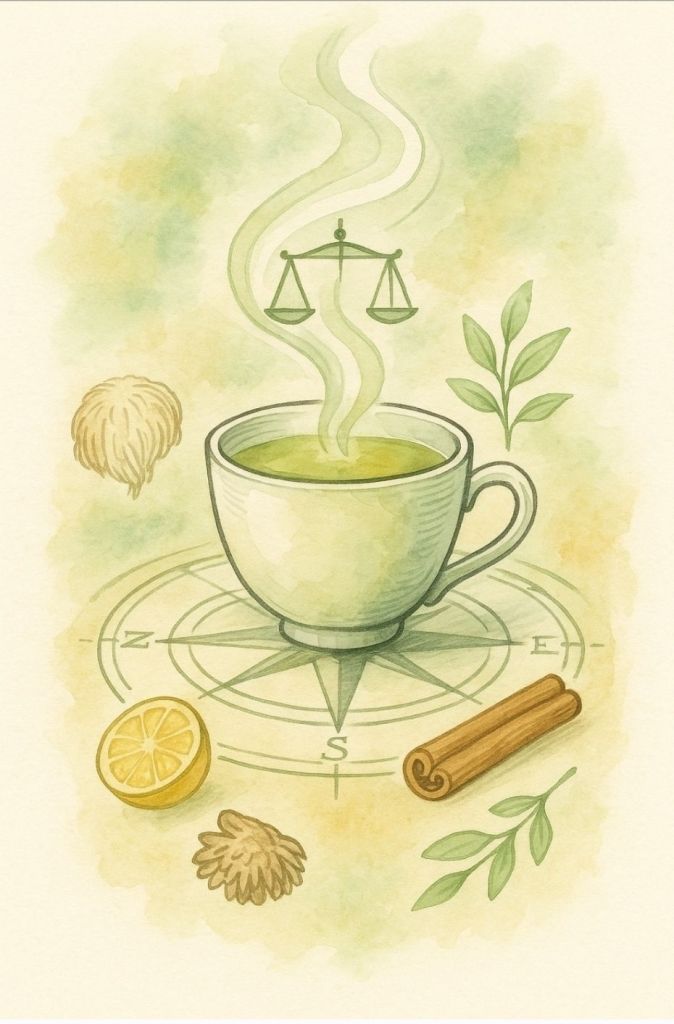
Here is where my own practice enters. Before I train in the fasted state, I drink a tea I have crafted: green tea infused with Lion’s Mane mushroom, glutamine, cinnamon, L-theanine, and beta-alanine.

It looks simple in the cup. But inside, it is a small symphony of compounds working in harmony with the fast. And here is what matters most: this tea does not break the fast. None of these ingredients carry significant calories or provoke an insulin response. They support the fast rather than disrupt it. Let’s explain each element:

Green Tea:
The foundation. It provides catechins like EGCG, which increase fat oxidation, especially in the fasted state. Its modest caffeine content energizes, while its natural L-theanine balances stimulation with calm focus. Together, they create alert clarity without jitters.

Lion’s Mane Mushroom:
A cognitive ally. Lion’s Mane stimulates nerve growth factor, improving focus, memory, and mental sharpness. In fasting, when clarity already heightens, Lion’s Mane amplifies the edge. Its caloric load is negligible, so it does not break the fast.

Glutamine:
The safeguard. An amino acid that supports muscle recovery and gut health. Alone, in small supplemental amounts and without carbohydrates, it does not spike insulin. Instead, it protects muscle tissue during fasted workouts.

Cinnamon:
The stabilizer. Cinnamon helps balance blood sugar, preventing spikes and crashes. This allows for steady energy throughout a workout. Its active compounds add a gentle thermogenic effect, nudging metabolism without calories.

L-Theanine:
The equalizer. Paired naturally with caffeine in green tea, additional L-theanine deepens the effect: alertness without anxiety, concentration without strain. This state of calm focus is ideal for fasted training.

Beta-Alanine:
The extender. By raising carnosine levels in muscle, beta-alanine buffers lactic acid, reducing the burn of fatigue. It allows longer endurance and sharper intensity, with no caloric disruption to fasting.


Together, these ingredients do not feed the stomach; they feed the system. Not with calories, but with clarity. Not with fuel, but with focus.

This ritual, repeated daily, embodies the philosophy of fasting: remove the noise, keep the essentials, amplify the signal.


The Psychological Dimension

Fasted training is not just physiological. It is spiritual and mental.

The stomach may feel empty, but the mind grows sharp.
The workout becomes less about calories and more about clarity.

When paired with my tea, the experience transforms further. Hunger becomes focus; silence becomes strength. I lift weights not with a full belly, but with a full mind. I run not with sugar coursing through me, but with the subtle edge of plant, mushroom, spice, and amino acid—each chosen not to replace food, but to heighten the fast itself.


Objections Answered

Won’t I lose muscle?

Not if you refuel wisely. Muscle loss comes from chronic deficiency, not from one fasted session with tea in your system and protein awaiting afterward.


Won’t I feel weak?

Perhaps at first. But with adaptation—and with rituals such as this tea—the body shifts. Many athletes report more energy once their systems recalibrate.

Doesn’t the tea break the fast?

No. None of the ingredients carry significant calories or provoke insulin spikes. The tea supports fasting physiology rather than disrupts it.

Isn’t cortisol dangerous?

Cortisol rises, yes. But so does growth hormone. The balance strengthens when managed with recovery, rest, and nourishment.


How to Train Wisely While Fasting

1. Start with Moderation: Begin with light cardio or bodyweight sessions. Let the body acclimate.


2. Hydrate Deeply: Water and electrolytes matter. Tea, too, can be a companion, but hydration remains king.


3. Keep Early Sessions Short: Forty minutes, not four hours.


4. Listen Closely: Fatigue means pause, not punishment.


5. Refuel After: Protein, essential fats, nutrient-dense foods. Break the fast with intention.


6. Cycle It: Use fasted workouts as a tool, not a dogma. Some days fed, some days fasted.


Beyond Calories: The Philosophy

Fasting and training together whisper a truth larger than fitness:

Discipline sharpens joy.
Restraint makes room for revelation.
Stillness becomes strength.

And the tea becomes part of that philosophy. It is not indulgence. It is alignment. Not fuel for gluttony, but fuel for clarity.

When you work out during a fast, you prove that you are not chained to the myth of constant feeding. When you drink a tea of green leaves, mushrooms, spice, and amino acids, you show that wisdom lies not in abundance of food, but in the abundance of focus.

This is not deprivation. This is abundance revealed.


🏛️ Wisdom Lens

The body does not weaken in the absence of food; it awakens to its deeper design. With fasting and the right rituals, energy rises not from the plate but from the harmony of discipline, clarity, and intention.


🙏🏾 Affirmation

I train not from fullness of stomach but from fullness of spirit. In fasting, sharpened by my tea, I find not emptiness, but strength.

The cup hums with leaves and roots,
a small orchestra before the weight of day.
No feast within me,
yet the body sings.


🪶 Poem

The Fasted Body and the Cup

Hunger at dawn,
yet the kettle whispers.
Green leaves unfurl,
Lion’s Mane awakens,
spice and amino acid
rise in steam.

No feast behind me,
no banquet ahead,
only the quiet furnace within.

The weights rise,
the miles unfold,
the heart remembers
an older fuel.

I do not train in lack.
I train in abundance.
The tea and the fast—
two rivers,
one strength.

TFL 🥣 Cyclical Fasting: Beyond the Misnomer of Intermittence

The Cycle of Silence

🗓️ 25-09-27-Sa | 12
15:56 PST | 🌥️  |
🌡️78° – 63° | Northridge, CA
🌒 Waxing crescent moon is in ♐  | 🌿 Season (Late Summer)
📍 Week 39 | Day 270/365 | 95 Days Remaining
🌇 Sunset: 18:43
National Day 🙏🏾 National Forgiveness Day


The phrase intermittent fasting has surged in popularity. Health bloggers tout the method, doctors prescribe windows, and wellness influencers wrap the practice in digital ribbons. Yet the term feels incomplete, even false. To label fasting “intermittent” misses the essence. Fasting doesn’t mark an occasional break in life’s rhythm—it composes the rhythm.


Why “Intermittent” Rings Hollow

Intermittent implies randomness and inconsistency, a revolving door you stroll through when convenient. The word suggests a toggle: switched on for a season, off the next; adopted for weight loss, dropped when pounds fall. In other words, the marketplace sells intermittent fasting as an event rather than a way of being.

Fasting never belonged to the event category. The practice inhabits the structure of life. We all fast, every single day. Sleep creates a nightly fast, and morning breaks it. Calling that universal cadence intermittent shrinks something elemental into a scheduling hack.


Fasting as a Natural Cycle

To understand fasting rightly, see it as cyclical. Nature turns by cycles: day yields to night, the moon waxes and wanes, tides rise and recede. Breath alternates—inhale, exhale. Work leans on rest. Speech yields to silence. Feasting meets its counterpart in fasting.

Fasting never ruptures life’s rhythm; it returns as a recurring note. Humanity learned this early and wove the pattern into religious observance, seasonal practice, and instinctive self-care. Every culture recognized the cycle—sacred fasts, agricultural lean seasons, healing pauses. The body recognizes the cycle as well, using food-free intervals to repair, restore, and renew.


The Error of the Label

Why does modern culture cling to “intermittent fasting”? Novelty sells. Rebrand an ancient practice, add graphs and timers, and a timeless discipline becomes a clickable program. Depth, however, often gets stripped away.

Intermittent frames fasting as unusual, even exotic—something reserved for special projects and quick fixes. Fasting requires no exotic frame. It belongs to everyone. To call it intermittent resembles renaming sunrise “intermittent light therapy.” The phrasing misses the point.


A Better Name: Cyclical Fasting

Language directs perception. Choose the right word and the mind sees more clearly. Choose poorly and the mind trips. Cyclical fasting restores dignity and accuracy. Cycles carry authority—seasons, tides, heartbeats, circadian clocks. Fasting joins that family.

Cyclical fasting affirms partnership: eating and abstaining belong together like inhaling and exhaling. One mode without the other distorts the melody; the pair completes the measure. The name also invites steadiness. Instead of a gimmick with on/off weeks, you cultivate a cadence you can live with for a lifetime.


Philosophy Meets Practice

Heraclitus observed, “The hidden harmony is better than the obvious.” Fasting embodies that hidden harmony. What looks like absence—the empty plate, the quiet kitchen, the pause between meals—reveals order beneath appetite. Rhythm shapes health; restraint grants meaning to abundance.

Speak of cyclical fasting and the mind shifts from manipulation to alignment. You no longer chase tricks. You rejoin the pattern the body and the seasons already keep.


Why the Words Matter

Some shrug at terminology. The practice matters, not the label, they say. But labels train habits. Call fasting intermittent and people treat the discipline like a stunt—occasional, optional, outside the grain of daily life. Call it cyclical and people recognize a built-in pattern—normal, humane, sustainable.

Language has reshaped other domains. Mindfulness reframed meditation for millions. Recycling reframed waste into stewardship. A precise name unlocks cultural adoption. Cyclical fasting can do that work for this practice—anchoring it in nature’s logic rather than in novelty’s glare.


The Spiritual Dimension

Faith traditions have long honored fasting as a returning discipline, not a sporadic spectacle. Ramadan circles back. Yom Kippur returns. Lent arrives each year. Ekadashi dots the lunar calendar. These cycles don’t interrupt life; they tune it—toward humility, gratitude, clarity, compassion. When you call fasting cyclical, you stand with a lineage that understood rhythm as teacher.


Science in Harmony

Modern research describes benefits with the language of rhythm: circadian alignment, hormonal cycling, cellular housekeeping through autophagy. These processes don’t flicker on as fads; they unfold as repeating patterns that recovery and renewal depend on. Biology hums, philosophy nods, tradition smiles—the chorus sings the same refrain: fasting belongs to cycles.


Toward a Truer Understanding

This essay doesn’t dismiss those who follow plans marketed as intermittent fasting. The practice still helps many people tremendously. The problem lives in the frame. A thin label flattens a rich discipline. Fasting doesn’t sit outside life; fasting undergirds life. Rename the practice with care and the body, the spirit, and the culture remember what the ancestors never forgot.

Choose the name that fits the truth. Choose cyclical fasting.


🏛️ Wisdom’s Lens

Heraclitus: “The hidden harmony is better than the obvious.”

🔎 The strength of fasting comes from alignment with enduring cycles, not from occasional interruption.


🌅 Closing Meditation

We never step outside fasting; we move within its current. The pause between meals, the surrender of sleep, the hush before dawn—each measures the music that carries us. Intermittence distracts; cycle conducts. Fasting sets the tempo for appetite, gratitude, and grace.

🔎 Name the practice as rhythm, and the body remembers how to heal.


🙏🏾 Affirmation

I live by fasting’s rhythm. Each pause restores, each return renews. I choose the cycle over the stunt, the harmony over the hype.


🪶 The Cycle of Silence

R.M. Sydnor 

We do not break the rhythm—
we live within its breath.
Night folds us into fasting’s arms,
day lifts us back from death.

The table waits with quiet grace,
yet hunger teaches more:
that fullness means remembering
the emptiness before.

The tide withdraws, the tide returns,
as moonlight pulls the sea.
So fasting draws the soul to rest,
then frees it into glee.

Call not this gift “intermittent,”
as if it comes and goes.
It circles like the turning sun,
the ancient pattern knows.

Here silence sings, here bodies mend,
here wisdom takes her seat.
The cycle never pauses—
its harmony complete.

TFL 🥣 The Breakfast Illusion: Breaking the Fast or Breaking the Spell?


Marketing crowned breakfast “the most important meal of the day.” The word itself whispers another story. Breakfast means breaking a fast. In Old English, they called it morgenmete—morning meat. Nobles often skipped it as vulgar, monks delayed it as discipline, laborers grabbed scraps. Custom—not biology—built the ritual.

But does breakfast require seven a.m.? Eight? No clock dictates when we lift the fork. We can wait until noon or one. By delaying, we extend digestion’s rest, allow the gut to finish its night patrol, and step into the day lighter, not sluggish. Breakfast belongs to choice, not tyranny of the clock.

Sleep gives us a built-in fast. Digestion slows, the gut rests, the liver rations glycogen, and hormones take their shifts. This nightly abstinence repairs tissues and clears cellular clutter. Ancient rhythm. Modern advantage.

Stretch the fast into the morning and the story deepens. Without food flooding the bloodstream, the body leans on fat stores, nudges ketone production, steadies insulin, and sharpens focus. Hunger arrives later, softer—especially with my tea: green tea, glutamine, lion’s mane, cinnamon, lemon. Appetite trims, clarity rises, energy steadies. Hunger retreats; focus takes the stage.

Now let’s walk into the real morning America lives: Starbucks and Dunkin’ Donuts. A grande Starbucks latte with flavored syrup often carries 200–350 calories and 25–45 grams of sugar. Dunkin’s “light and sweet” coffee piles on cream and sugar, easily 100–150 calories before the donut even lands. Add that glazed ring of joy—another 250–300 calories—and you’ve turned “morning fuel” into dessert in disguise. Pancakes with syrup? They coast past 500–800 calories before you can say “stack.” For children, this is worse—sugar highs whip focus, crashes sink energy, and the habit grooves long-term insulin resistance. Adults endure the same carnival: thicker waists, thinner energy, cravings that nag like car alarms.

What happens inside? Blood sugar shoots up—often beyond 180 mg/dL. Insulin bolts out to mop up. Fat burning halts. The liver tucks excess energy into belly fat—the dangerous visceral kind that hugs organs and feeds diabetes. Spike. Crash. Crave. Repeat. Call it breakfast if you want; in truth, it looks like a sugar carnival in corporate packaging.

The fix doesn’t require banning foods. Eggs, bacon, pancakes—even syrup—can stay. Shift the timing. Eat them at noon or one. By then, insulin sensitivity sharpens, movement through the day channels energy into muscle, not waistlines. Same calories, different destiny. Window matters.

Digestion loves the pause. With space, bloating calms, motility steadies, stools shift toward type 3–4 on the Bristol Chart—formed, smooth, comfortable. Contrast that with morning sugar habits, which often yield loose, rushed, type 5–7 results. Quiet gut, better output, more dignity.

The microbiome—our invisible metropolis—thrives during silence. Without nonstop snacking, beneficial bacteria expand, short-chain fatty acids rise, inflammation cools. Give the orchestra quiet, and it retunes; bombard it with muffins and frappuccinos, and it screeches by noon.

Hormones thank us too. Cortisol wakes us gently. Delay food, and insulin stays calm. Energy doesn’t collapse in mid-morning slumps. Many who stretch the fast describe liberation, not deprivation: fewer cravings, more focus, a steady current of energy. Less chase, more charge.

History, biology, humor—they converge here. Breakfast never came etched in stone; advertising carved it into habit. We break our fast every day, but we choose when. Some end it with eggs and toast; others extend it and harvest sharper energy, calmer digestion, and yes—even better stools. Call that a victory.

Think of the gut as a night guard. All evening it patrols, files reports, keeps order. To dump a heavy tray of syrup-drenched pancakes or a latte-donut combo onto its desk at dawn counts as workplace cruelty. Give the guard time. Let it stretch. Wait until noon. Productivity follows.

So what remains? Choice. Control. A smarter window. Eat what you love later, and the same calories serve you instead of sabotage you. Live lighter, clearer, freer—one well-timed morning at a time.


🏛️ Wisdom’s Lens

Hippocrates: “Let food be thy medicine and medicine be thy food.”

🔎 Hippocrates anchors the truth that what we consume heals or harms, not only by its content but by its timing. Food functions as either cure or curse depending on when we invite it in.

James Baldwin: “People are trapped in history and history is trapped in them.”

🔎 Baldwin reminds us that our breakfast rituals are not biology but inheritance—habits passed down, marketed, and repeated until they feel inevitable. To change the morning plate is to step outside history’s trap.

George Orwell: “To see what is in front of one’s nose needs a constant struggle.”

🔎 Orwell points to the blindness of routine. A latte, a donut, a stack of pancakes—comforts so familiar that their costs vanish from sight. Struggle wakes us. Struggle clears the nose, the eyes, the mind.

Together these voices whisper one lesson: food shapes destiny, history shapes habit, and habit blinds us—unless we struggle for clarity. The fast broken wisely frees us; the fast broken poorly enslaves us.


🙏🏾 Affirmation

I step beyond the trap of history.
I see what rests before my eyes—
not comfort but consequence.
I claim the freedom of timing,
turning food into medicine,
habit into wisdom,
and each morning into a field of choice.


✒️ Poem

The Breakfast Illusion: Breaking the Fast or Breaking the Spell?

Morning greets with steam and sweetness,
foam-topped lattes, donuts glazed with ease,
pancakes shimmering in syrup’s amber.
We call them nourishment,
yet they kneel as sugar’s soldiers,
marching straight to the belly’s storehouse.

History whispers in these rituals.
Nobles once scoffed, monks once delayed,
but marketing carved breakfast into creed.
We inherited slogans,
not science.
And we bow to clocks
instead of listening to bodies.

Hippocrates counsels medicine in food.
Baldwin warns of traps we inherit.
Orwell urges us to notice what waits
right in front of our noses.
The wisdom converges:
open your eyes,
lift the spell,
choose the hour,
choose the life.

The gut keeps vigil through the night,
sorting, filing, repairing.
At dawn we drop syrup-laden burdens
on its weary desk.
Cruelty disguised as custom.
Grant it pause.
Grant it grace.
Let noon carry the tray.

So the fast becomes gift,
the body steadies,
the mind clears,
the spirit brightens.
We break not by command,
but by wisdom—
and in that choice
we live lighter,
freer,
truer—
one morning at a time.

TFL 🥣 My Fasting Assurance Blend — 🍵Tea, Science, Taste, and Why It Outlasts Pills


This is not an ordinary tea. It is my tea—prepared across two days, transformed by patience, and consumed as both nourishment and meditation. What begins as leaves in water becomes, through time and ritual, a fasting assurance blend: steadying hunger, sharpening clarity, and sustaining the discipline of fasting.


Why Not the Pills?

Pharmaceutical appetite suppressants like Ozempic and Mounjaro promise easy hunger control. Yet their story is shadowed by side effects—nausea, digestive distress, fatigue—and long-term safety remains uncertain. Worse, they create dependency: discipline outsourced to a prescription.

My blend chooses another path. It is not about reliance; it is about resilience. Rooted in tradition, powered by compounds proven safe over centuries, it cultivates autonomy instead of dependency.


The Two-Day Steep (The Science of Preparation)

Each morning, I boil water in my Cosori kettle and pour it over a green tea bag. I cover the cup and let it steep for hours. Around noon, I transfer the tea into a metal container, seal it, and let it rest overnight. By the next morning, the liquid has transformed—mellow, rounded, and enriched with active compounds.

What the Long Steep Unlocks

Catechins (e.g., EGCG): Tea antioxidants that support fat metabolism, reduce oxidative stress, and soften hunger signals.

Flavonoids: Plant compounds that regulate inflammation, strengthen circulation, and stabilize metabolism.

Theanine (L-theanine): Tea’s unique amino acid; it crosses the blood-brain barrier and promotes alpha brain waves—calm, focused alertness.

Polyphenols: The broad family of plant antioxidants (including catechins and flavonoids) that defend cells, metabolism, and cardiovascular health.


Extended steeping concentrates these benefits. Bitterness fades, antioxidants deepen, and the tea acquires both softness and power.


Why Green Tea Works

For centuries, green tea has anchored both ritual and remedy. Science explains why:

Catechins spark fat-burning pathways and blunt hunger.

Caffeine sharpens focus while curbing appetite.

Theanine balances caffeine, turning jitters into calm focus.

Polyphenols shield metabolism and cells with broad antioxidant defense.


This synergy—discipline in ritual, strength in science—turns green tea into a fasting companion.


Energy and the Brain: Why Tea Sharpens the Morning

Fasting is not only about appetite control; it is about clarity of thought and steadiness of energy. Tea excels here because it nourishes both metabolism and neurotransmission.

Caffeine blocks adenosine, the brain’s sleep signal, lifting alertness. Unlike coffee, its dose in green tea is gentler, avoiding the crash.

Theanine enters the brain, boosts calming alpha waves, and balances caffeine for calm, sharp focus.

Catechins and Polyphenols protect mitochondria, the cell’s energy engines, reducing oxidative stress and helping energy systems run more efficiently.

Neurotransmitters: Tea naturally elevates dopamine (motivation), serotonin (mood), and norepinephrine (focus). Together, these chemicals set the mind into clear drive—steady energy with heightened perception.


This is why, in the morning, tea doesn’t just wake the body—it aligns the mind. Where coffee jolts, tea tunes.


Types of Green Tea

Not all green teas taste the same, and each offers its own personality:

Sencha: Bright, grassy, vegetal clarity.

Matcha: Stone-ground, creamy intensity.

Gunpowder: Bold, slightly smoky, tightly rolled leaves.

Dragonwell (Longjing): Nutty, toasty, and smooth.


Each variety carries the same health benefits but sings in a different voice. My daily choice? Costco’s green tea. Balanced, reliable, accessible, and—at 38 cents per cup—the perfect partner for daily discipline.


The Morning Blend

Day two: the steeped tea becomes the foundation. Into a Vitamix, I add:

L-glutamine (½ tsp): An amino acid that calms cravings, stabilizes gut health, and tempers sugar impulses.

Beta-alanine (¼–½ tsp): An amino acid that builds carnosine in muscle, delaying fatigue. (Known for a harmless tingling called paresthesia at higher doses.)

Lion’s Mane Mushroom (¼–½ tsp): A medicinal mushroom rich in hericenones (fruiting body) and erinacines (mycelium). These compounds stimulate nerve growth factor (NGF), supporting brain clarity and resilience.

L-theanine (¼ tsp or 200 mg): The calming amino acid that smooths caffeine into steady focus.

Cinnamon (pinch–¼ tsp): A spice loaded with polyphenols; it regulates blood sugar and warms the blend.

Lemon juice (1 tsp): Brightens flavor, aids digestion, and refreshes the palate.


Blended for 10–20 seconds, the mixture turns velvety and even. Reheated to steaming, it becomes my morning companion. Within fifteen minutes, appetite fades and focus heightens—fasting holds with ease.


How It Tastes

Taste is the forgotten proof of discipline. My fasting blend earns its place not only by science but by sensation.

Aroma: The fragrance opens bright with lemon, deep with green tea, and warm with cinnamon. Steam carries woodland notes from lion’s mane—earthy, grounding, contemplative.

First Sip: Crisp and clarifying, like a mountain stream rushing over stone. The lemon awakens, tea steadies, cinnamon whispers warmth.

Mouthfeel: Smooth, rounded, almost broth-like in body. Glutamine softens the edges, while beta-alanine leaves a subtle spark beneath the tongue—a flicker of energy without agitation.

Flavor Layers: Cinnamon glows quietly in the background. Lion’s mane lends a woodland richness, grounding the brightness. Theanine rounds the sharpness of caffeine, turning it into composure.

Finish: Lemon lingers sharp, cinnamon hums low, and green tea leaves a mellow, satisfying completeness. Restraint made delicious.

Reheat Evolution: Each reheat shifts the profile slightly—cinnamon rising in one cup, lemon brightening in another, green tea’s nutty undertone deepening with time.


It is not deprivation. It is flavor as discipline—proof that austerity can taste exquisite.


Autophagy — The Body’s Renewal System

Autophagy (Greek auto = self, phagein = to eat) is the body’s way of cleaning house: dismantling damaged cells, recycling their parts, and renewing function. Fasting amplifies this process, which is why it has profound health benefits.

Do these additions stop autophagy? No. In the amounts used, they do not meaningfully affect insulin, nor do they halt fasting’s repair cycle. The blend supports the fast rather than breaking it.


Purists vs. Practitioners

Fasting purists declare that even a drop of lemon or a spoonful of lion’s mane breaks the fast. Their rigidity misses the point. The body responds to physiology, not dogma.

Discipline is not about brittle denial; it is about sustainable practice. Supplements that calm hunger, sharpen clarity, and extend endurance do not sabotage fasting—they make it livable. My blend proves that fasting can be rigorous without becoming punishment.


Empowering, Not Enslaving

Compare the two approaches:

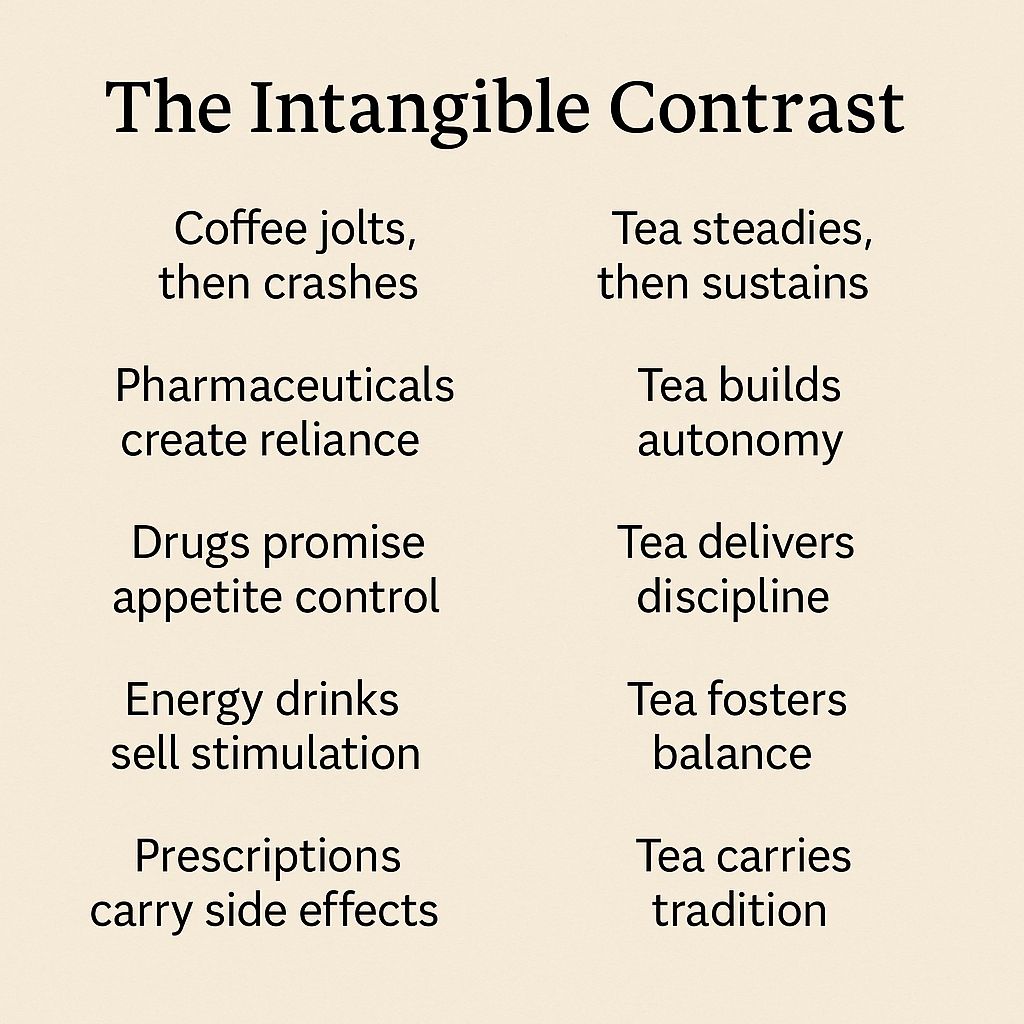
Pharmaceuticals: Dependency, side effects, uncertainty.

My Blend: Autonomy, ritual, tradition, proven safety.

Pharmaceuticals: Suppress appetite chemically.

My Blend: Harmonizes body and mind through daily ritual.


Each cup is not dependency but empowerment—discipline brewed daily.


Cost Confidence

At roughly 38 cents per serving, the blend is radically affordable. Appetite-suppressant drugs like Ozempic and Mounjaro can cost hundreds to more than a thousand dollars per month without insurance. Even with coverage, co-pays accumulate. My tea provides strength without draining resources.

Over a year, it saves hundreds compared to coffee chains or energy drinks. But the deeper savings are intangible: no crashes, no jitters, no restless nights. Only clarity, patience, and balance.


The Promise

In fifteen minutes, appetite dissolves. Focus sharpens. Fasting stretches with ease. All for less than forty cents—a cup of patience and clarity.


Glossary of Key Terms

Green Tea Catechins (EGCG): Antioxidants that aid fat burning and ease hunger.

Caffeine: Natural stimulant that boosts alertness while calming appetite.

Theanine (L-theanine): Amino acid that balances caffeine, creating calm focus.

Glutamine: Amino acid that nourishes the gut, eases cravings, and soothes digestion.

Beta-Alanine: Amino acid that forms carnosine, buffering acid in muscle and delaying fatigue.

Lion’s Mane Mushroom: Contains hericenones and erinacines, compounds that stimulate nerve growth factor (NGF), supporting brain clarity and resilience.

Cinnamon: Spice rich in polyphenols, regulates blood sugar, and adds warmth.

Lemon Juice: Brightens, aids digestion, and refreshes flavor.

Polyphenols: A family of plant antioxidants (including catechins and flavonoids) that protect metabolism and cells.

Norepinephrine: The body’s own neurotransmitter for focus and alertness; fasting naturally elevates it.

Autophagy: The body’s process of “self-eating”—breaking down damaged cells and recycling them for renewal.

🪶 Ode to the Fasting Assurance Blend

Steam rises like dawn from the waiting cup,
patience steeped in silence, discipline poured in heat.
Green leaves surrender their secrets slowly,
time coaxing catechins, theanine, and calm.

Into the blender—hum of morning thunder—
glutamine whispers, lion’s mane clears the fog,
cinnamon warms, lemon flashes bright,
a choir of powders dissolving into harmony.

Purists may cry, “It is broken!”—
but their creed is brittle glass.
This cup is no heresy,
it is refinement, endurance, a vow renewed.

Sip by sip, hunger bends its knee,
focus sharpens like a blade on stone.
Not austerity, but clarity.
Not deprivation, but discipline.

For less than a coin, I drink composure,
a ritual richer than lattes or cans.
Each swallow a meditation,
each morning a promise kept in heat and silence.

                                   —R.M. Sydnor 

TFL 🥣 Windows of Consumption

Windows of Consumption


A window defines both what it admits and what it excludes. Light floods through its frame not because the sun changes, but because the aperture allows it. In fasting, our “windows of consumption” are not about how much food passes through the body, but when. By narrowing that frame, we do not diminish abundance—we concentrate it.

For me, this practice has become second nature. I often fast 18 hours a day, sometimes stretching to 22 or 23. My window of consumption opens in the late afternoon—14:00, 15:00, sometimes 19:00—and within that compressed span the day’s nourishment is taken in. At nearly 70 years old, I attribute much of my vitality, lean figure, and clarity of mind to this discipline. But what is happening physiologically when we shrink the window of eating, even if the total calories remain unchanged?

Science is beginning to answer. Researchers call it time-restricted eating (TRE), a practice that sits at the intersection of nutrition and chronobiology. Unlike calorie restriction, which simply reduces intake, TRE synchronizes eating with the body’s circadian rhythm. Human metabolism is not a flat line; it follows the rise and fall of light. Hormones, enzymes, and cellular repair all operate on clocks. To eat against that rhythm is to confuse the system; to eat with it is to amplify efficiency.

Consider insulin, the hormone that escorts glucose into cells. A controlled study led by Courtney Peterson and Satchidananda Panda found that early time-restricted feeding—an eating window that closed by mid-afternoon—reduced fasting insulin by ~26 mU/L and improved insulin sensitivity by over 30%, independent of weight loss. Even when calories were identical, timing changed how the body handled them. This means the same meal at 09:00 and 21:00 does not land the same way in the bloodstream.

In people with metabolic syndrome, a 10-hour window improved not only weight and abdominal fat, but also blood pressure, cholesterol, and glucose regulation. In type 2 diabetics, a 12-week trial of TRE lowered blood glucose, improved insulin sensitivity, and induced modest weight loss—again, without requiring calorie reduction or added exercise. The act of eating within rhythm became its own form of medicine.

Meta-analyses reinforce these findings. A synthesis of 20 studies showed that TRE reduced body weight by ~1.4 kg, fat mass by ~0.75 kg, and waist circumference by ~1.87 cm—even when total calories were controlled. Early windows (aligned with daylight) proved most effective. Notably, benefits extended beyond body composition: markers of inflammation, oxidative stress, and cardiovascular strain were improved.

The mechanism lies deeper than digestion. By lengthening the daily fast, we activate autophagy—cells clearing debris, proteins folding correctly, mitochondria repairing themselves. We allow insulin to rest, cortisol to follow its natural morning peak, and melatonin to anchor night. TRE is less about subtraction than about allowing the body’s symphony to play on time.

Yet science also issues cautions. A Johns Hopkins randomized trial showed that time restriction, when calories were tightly controlled, did not outperform standard calorie reduction for weight loss. The message is not that windows don’t matter, but that discipline in timing is not magic. It is rhythm—most powerful when paired with restraint, sleep hygiene, and movement.

Philosophically, this makes sense. A window is not a feast; it is a frame. It is the difference between light scattered and light focused, between noise and music. Fasting narrows the span, not to deny abundance, but to direct it. Each pang is a reminder: freedom often lives inside form.

Across cultures, this truth has echoed. From Islamic Ramadan to the Vedic traditions of Ekadashi, from Stoic discipline to monastic hours, windows of consumption have always existed. They were not counted in calories but in hours of prayer, work, and rest. In the modern age, science now speaks what wisdom long intuited: to live well, we must not only ask what we eat, but when.

So the question becomes: What is your window of consumption? Where do you frame the day so that nourishment, clarity, and presence all align? Mine is a pane of glass, narrow and deliberate, through which the rest of life feels sharper, leaner, more luminous.


Wisdom’s Lens

Satchidananda Panda: “The benefits of fasting may come less from how much we eat and more from when we eat.”

🔎 Panda reframes fasting as timing, not tally—reminding us that rhythm itself can be the medicine.


Affirmation

I honor the rhythm of my body by narrowing the window through which I feed it.


🪶 Poem

Windows of Consumption

The frame is narrow,
but the view expands.
Light gathered,
time contained.

Hunger waits,
not as absence,
but as aperture—
a window that steadies the soul.

— R.M. Sydnor


POETRY ANALYSIS

ARTWORK DETAILED DESCRIPTION


Closing Thought

The narrower the window, the wider the freedom.


Annotated References

1. Sutton EF, Beyl R, Early Time-Restricted Feeding Improves Insulin Sensitivity, Blood Pressure, and Oxidative Stress Even Without Weight Loss in Men with Prediabetes. Cell Metabolism. 2018.

This landmark study tested a 6-hour eating window (8am–2pm) in overweight men with prediabetes. Despite identical calorie intake, participants improved insulin sensitivity by 31%, reduced blood pressure, and lowered oxidative stress—all without losing weight. Timing alone improved metabolic health.


2. Wilkinson MJ, Manoogian ENC, Zadourian A, et al. Ten-Hour Time-Restricted Eating Reduces Weight, Blood Pressure, and Atherogenic Lipids in Patients with Metabolic Syndrome. Cell Metabolism. 2020.

In this 12-week trial, adults with metabolic syndrome shifted to a 10-hour eating window. Participants lost weight, reduced waist circumference, lowered blood pressure, and improved cholesterol markers—demonstrating TRE’s impact in high-risk populations.


3. Jamshed H, et al. Early Time-Restricted Feeding Improves 24-Hour Glucose Levels and Fasting Insulin in Men with Prediabetes. Diabetes Care. 2019.

By compressing eating into an early window, men with prediabetes saw significant drops in fasting insulin and improved glucose control. The findings show that early alignment with circadian rhythms provides an edge over late-night eating.


4. Liu K, et al. Effect of Time-Restricted Eating Combined with Caloric Restriction on Weight Loss: A Systematic Review and Meta-Analysis. European Journal of Clinical Nutrition. 2023.

Reviewing 20 studies, this analysis found that TRE consistently reduced weight, fat mass, and waist circumference, even when calories were matched. It highlighted that early TRE (daylight aligned) yielded the strongest effects.


5. Chow LS, et al. Time-Restricted Eating Effects on Weight Loss and Other Metabolic Parameters in Adults with Obesity. JAMA Internal Medicine. 2022.

This large randomized controlled trial tempered enthusiasm, showing that TRE did not outperform calorie restriction for weight loss when calories were strictly controlled. The study cautions that TRE is not a silver bullet but part of a broader lifestyle strategy.


6. Cienfuegos S, et al. Effects of 4- and 6-Hour Time-Restricted Feeding on Weight and Metabolic Disease Risk Factors. Nutrition and Healthy Aging. 2020.

Tested ultra-short eating windows (4–6 hours). Results showed reduced calorie intake, weight loss, and improvements in insulin resistance. Suggests that extreme narrowing of the window amplifies benefits, but sustainability remains a question.


7. Panda S. The Circadian Code: Lose Weight, Supercharge Your Energy, and Transform Your Health from Morning to Midnight. Rodale, 2018.

Panda’s book synthesizes years of circadian biology research, arguing that aligning eating, sleeping, and activity with circadian rhythms restores metabolic health. It popularizes TRE with scientific grounding and practical application.